
An air purifier can reduce airborne mold spores and fragments, but it cannot remove visible mold or fix moisture problems that cause mold growth. Used correctly, a high-efficiency particle filter helps lower the amount of spores you breathe while you address leaks, humidity, and contaminated materials. This article explains what works, what does not, and how to use a purifier as one part of a mold-control strategy.
If you are dealing with musty odors, damp rooms, or known mold contamination, it is important to understand the limits of air cleaners, HEPA filters, and other mold air treatment devices. You will see where an air purifier for mold spores makes a practical difference, how to size and place it, and which common mistakes to avoid so you are not relying on filtration to solve a moisture problem it can never fix.
What an Air Purifier for Mold Spores Can and Cannot Do
Mold problems start with moisture on surfaces, but mold spores travel through indoor air. An air purifier is designed to remove particles from the air stream, including many common mold spores in the 1–20 micron size range. That makes it a useful support tool, especially in bedrooms, living rooms, and home offices where you spend many hours breathing.
However, it is only one piece of the puzzle. A purifier does not dry out walls, repair leaks, or clean contaminated carpet. Thinking of it as a “mold removal machine” sets you up for disappointment. Thinking of it as a “spore reduction tool” that works alongside dehumidifiers, ventilation, and cleaning is much more realistic.
In most homes, an air purifier is most helpful for:
- Reducing airborne mold spores and fragments already suspended in the room air
- Limiting the spread of disturbed spores when you walk, make the bed, or move stored items
- Supporting comfort for people sensitive to airborne particles (without making medical claims)
It is not a stand-alone solution for:
- Removing visible mold on walls, ceilings, furniture, or belongings
- Fixing leaks, damp foundations, wet basements, or chronic condensation
- Making a heavily contaminated area safe to occupy without proper remediation
When you understand these boundaries, you can choose a purifier that fits your situation and budget, instead of chasing devices that promise to “kill mold everywhere” without addressing moisture.
Key Concepts: How Filtration Reduces Mold Spores
Because mold spores are particles, mechanical filtration is the main technology that directly reduces them in air. Air purifiers for mold spores rely on a fan that pulls room air through filters and pushes cleaner air back out.
Filter types that matter for mold
- High-efficiency particle filters (HEPA or similar): Designed to capture very small particles, including typical mold spores. Most spores are larger than the benchmark size these filters are tested against, so they fall well within the capture range.
- Pre-filters: Coarser filters that trap larger dust, hair, and lint before air reaches the fine filter. This helps keep the main filter from clogging quickly and maintains airflow.
- Activated carbon layers: Target gases and odors, including some musty smells from damp materials. They do not remove spores but can make a mold-affected room more comfortable while other work is done.
Airflow, CADR, and air changes
Even an excellent filter will not help much if too little air passes through it. Two related ideas help you match a purifier to your room:
- Clean Air Delivery Rate (CADR): A measure of how much filtered air the unit delivers, usually in cubic feet per minute (CFM).
- Air Changes per Hour (ACH): How many times per hour the purifier can theoretically move the room’s air volume through its filters.
You can use CADR and ACH together to estimate whether a purifier is likely to keep up with the room. Higher ACH generally means faster reduction of airborne spores, as long as the air in the room is well mixed.
| Room type | Approx. room size (sq ft) | Typical concern | Suggested ACH range | Approx. CADR planning idea (CFM) |
|---|---|---|---|---|
| Small bedroom | 100 | Occasional musty smell, nearby bathroom | 4–7 | 60–90 |
| Typical bedroom | 150 | Known past mold issue, want extra reduction | 5–8 | 80–130 |
| Home office | 200 | Above a damp basement or crawlspace | 5–8 | 110–180 |
| Living room | 300 | Open to hallway or kitchen, mixed sources | 4–7 | 160–270 |
| Large open area | 500 | Open plan, partial mold history in one zone | 4–6 | 300–450 |
These numbers are planning tools, not strict rules. Real performance depends on layout, doors, furniture, and how consistently you run the purifier.
Technologies that are often misunderstood
- Ozone generators: Devices that intentionally produce significant ozone are not appropriate for occupied living spaces. Ozone is a lung irritant and does not solve underlying mold growth.
- Ionizers and electrostatic devices: These can cause particles to clump or settle but do not physically remove settled spores from the room. Some designs may also create small amounts of ozone as a byproduct.
- UV-C lamps inside purifiers: UV-C can inactivate microbes if exposure time and intensity are high enough, but it does not remove particles and often adds little compared with a well-designed particle filter.
For mold spore reduction in typical homes, a straightforward purifier with strong mechanical filtration, adequate airflow, and good seals usually provides the most predictable results.
Real-World Mold Situations and How a Purifier Fits In
Understanding how an air purifier contributes in everyday scenarios makes it easier to decide where to place one and what else you need to do.
| Situation | Role of air purifier | Other high-priority steps | What to watch for over time |
|---|---|---|---|
| Visible mold patch on wall in bedroom | Helps reduce airborne spores while you clean and repair | Remove damaged material, fix leak or condensation, control humidity | New staining, peeling paint, or musty smell returning |
| Damp basement with musty odor | Optional support for breathing comfort in occupied areas | Add or adjust dehumidifier, improve drainage and ventilation | Standing water, rust, or condensation on pipes and walls |
| Bedroom over a damp crawlspace | Often useful to reduce spores that migrate upward | Address crawlspace moisture, seal gaps, manage insulation | Odors stronger after rain or seasonal humidity spikes |
| Bathroom without exhaust fan | Limited benefit for growth prevention | Install or upgrade exhaust, manage shower steam, dry surfaces | Persistent condensation on mirrors and walls, peeling caulk |
| Renovation near a past mold area | Useful to capture dust and disturbed spores in the work zone | Contain work area, use protective gear, remove contaminated debris | Fine dust on surfaces outside the work zone, lingering odors |
| Generally dry home but dusty | Good fit to lower overall particle load including spores | Improve cleaning routines, check filters in HVAC system | Dust buildup on vents, furniture, and electronics |
Two practical placement examples:
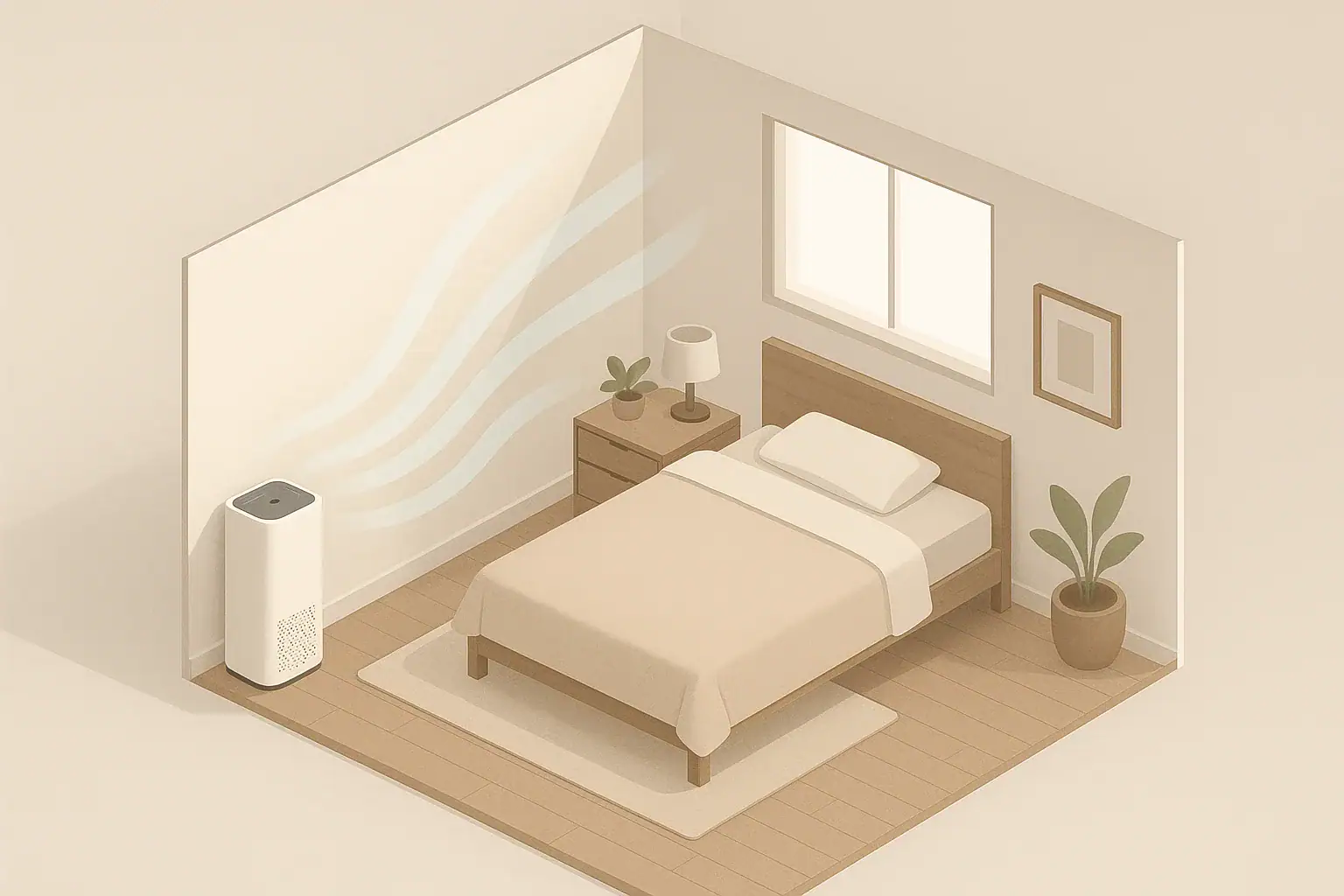
- Bedroom with a history of mold: Place the purifier where it has clear air around the intake and outlet, such as along a wall a few feet from the bed. Run it on a steady low or medium setting so it can keep up with spores that drift in from other parts of the home.
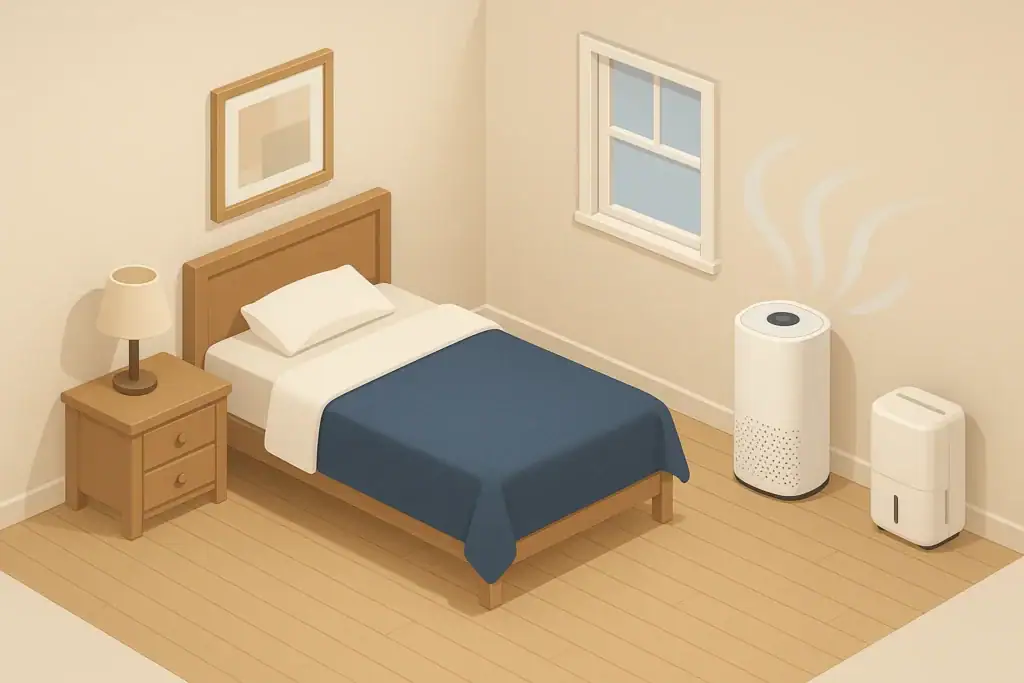
- Damp lower level used as a family room: Use a dehumidifier to keep relative humidity in a comfortable range, then add an air purifier sized for the space. Position it away from visibly moldy surfaces so the outlet airflow does not blast directly onto contaminated materials.
In open-plan homes, you may need more than one unit or a combination of a central purifier in the main living area plus a separate unit in the primary bedroom to get meaningful spore reduction where you sleep.
Common Mistakes and Troubleshooting Mold Spore Control
Many people buy an air purifier for mold spores, run it for a few weeks, and decide it “does not work.” Often the issue is not the basic technology but how it is used or what is left unaddressed elsewhere in the home.
Frequent mistakes
- Relying on filtration instead of fixing moisture: If a leak, wet basement, or chronic condensation continues, new mold growth will keep releasing spores no matter how strong the purifier is.
- Choosing a unit that is too small: A compact purifier in a large open room may barely change spore levels. If you constantly run the fan on the highest setting and still see dust building up quickly, undersizing may be part of the problem.
- Blocking airflow: Placing the purifier behind furniture, under a table, or flush against a wall can starve it of air and reduce effective coverage.
- Ignoring filter replacement: A clogged filter reduces airflow and can make the unit little more than a noisy fan.
- Expecting odor removal without addressing sources: A musty smell that returns quickly after you turn the purifier off usually points to active moisture and mold on materials, not just spores in the air.
Troubleshooting cues to pay attention to
- Odors: If musty odors get stronger after rain or showers, focus on moisture sources and ventilation before blaming the purifier.
- Visible dust and film: Rapid dust buildup on surfaces near the purifier can indicate poor placement or insufficient CADR for the room size.
- Noise changes: A fan that becomes louder or develops a whine may be pushing against a dirty filter or blocked intake.
- Filter appearance: A heavily darkened or warped filter, or one with visible growth, is a sign to replace it and review humidity control.
- Health and comfort feedback: While no purifier can guarantee symptom relief, if multiple people in the home notice more irritation near a particular room, recheck for hidden mold and ventilation problems there.
When troubleshooting, work in layers: verify moisture control first, then confirm purifier sizing and placement, then check filter condition. Adjusting all three often produces far better results than changing equipment alone.
Safety Basics When Using Air Purifiers Around Mold
Any device that moves air and collects particles needs to be handled thoughtfully when mold is involved. Safety has two sides: avoiding technologies that can add new risks, and using your existing purifier in a way that does not spread contamination.
Avoiding risky or misleading technologies
- High-output ozone devices: Ozone can irritate lungs and react with indoor materials to form additional byproducts. It is not a safe everyday strategy for mold spore control in occupied homes.
- Unclear “mold-killing” claims: Coatings, catalysts, or special light sources may inactivate some microbes in lab tests, but they do not replace the need for moisture repair and physical removal of moldy materials.
- Unvented attempts at “shock treatments”: Sealing a room and running any strong device for hours without ventilation can trap byproducts and humidity. Mold problems are better solved with controlled drying, cleaning, and ventilation.
Safer day-to-day operation
- Handle used filters carefully: Turn the unit off before opening it, then remove filters slowly and place them directly into a bag before carrying them through the home.
- Avoid directing airflow at moldy surfaces: Strong airflow over a visibly moldy wall or carpet can lift more spores into the air.
- Keep electrical safety in mind: Do not place the purifier where it can be splashed, flooded, or tipped into standing water, especially in basements or near dehumidifier buckets.
- Maintain clear space around vents: Give both intake and outlet several inches of clearance so the motor does not overheat and so the unit can move air efficiently.
Used within these boundaries, an air purifier adds relatively little risk and can be run for many hours per day as part of a broader mold management plan.
Maintenance and Long-Term Use for Mold Spore Reduction
For mold control, an air purifier works best when treated as a long-term appliance, not a short trial. Consistent use and simple maintenance habits keep filtration effective.
Filter schedules and reminders
- Pre-filters: These often need cleaning or replacement every one to three months, depending on dust levels and pet hair. A dirty pre-filter can quickly choke airflow.
- Fine particle filters: Replacement intervals vary but are often in the range of six to twelve months with continuous use. Damp or dusty environments may require more frequent changes.
- Odor or carbon layers: These saturate over time and may need replacement even if they still look clean, especially in musty or smoky environments.
Simple habits such as writing the installation date on the filter frame or setting calendar reminders help you stay on track without relying on memory alone.
Storage and seasonal use
- Before storage: Replace very dirty filters, or at least remove them and store separately in a dry bag if you plan to pause use for several months.
- Storage location: Keep the purifier in a dry, temperature-stable area so plastic parts and seals do not warp or crack.
- Restarting after a break: Inspect for dust buildup, insects, or moisture inside the housing before turning it back on, and consider starting with fresh filters if the old ones sat in a damp space.
Because mold issues often flare with seasonal humidity changes, many homeowners run purifiers more aggressively during wet or humid months and then reduce fan speed, but not necessarily shut units off, during drier seasons.
Putting It All Together: Practical Plan and Specs to Look For
To get the most from an air purifier for mold spores, think in terms of a step-by-step plan rather than a single purchase. Address moisture, remove damaged materials, and then use filtration to manage what remains in the air.
- Step 1 – Find and fix moisture: Check for leaks, damp basements, wet crawlspaces, and chronic condensation. Control humidity so surfaces can dry.
- Step 2 – Remove or clean moldy materials: Clean small areas safely and seek professional help for extensive contamination, porous materials, or repeated growth.
- Step 3 – Add a properly sized purifier: Choose a unit with strong mechanical filtration and enough CADR for the room where you spend the most time.
- Step 4 – Run it consistently: Use steady low or medium speeds for many hours per day rather than short bursts on high.
- Step 5 – Maintain filters and revisit placement: Replace filters on schedule and adjust the unit’s location if you see poor dust control or airflow blockages.
Specs to look for in an air purifier for mold spores
When you are ready to choose or upgrade a purifier, use this checklist to compare options:
- Filter type: High-efficiency particle filter (HEPA or similar) as the main stage for spores, plus a pre-filter. An optional carbon layer can help with musty odors.
- Room coverage: CADR suitable for your room volume and desired ACH, especially in bedrooms and main living spaces.
- Sealed design: Filters that fit snugly with gaskets or frames to reduce bypass around the edges.
- Fan settings: Multiple speeds, including a quiet mode you can tolerate while sleeping, and a higher mode for faster cleanup when the room is empty.
- Filter access: Simple front or top access that makes it easy to change filters without disturbing dust throughout the room.
- Indicator lights or timers: Basic filter-change reminders or hour counters to help you keep up with maintenance.
- Power and noise information: Clear wattage and sound level listings so you can estimate energy use and comfort for long-term operation.
Used this way, a well-chosen air purifier becomes a reliable support tool: it does not replace moisture repair or remediation, but it can meaningfully reduce airborne mold spores and make your home’s air feel cleaner and more comfortable over the long term.
Frequently asked questions
What specifications and features matter most when choosing an air purifier to reduce mold spores?
Prioritize a high-efficiency particle filter (HEPA or equivalent), sufficient CADR and airflow to provide multiple air changes per hour for your room, and a well-sealed filter housing to prevent bypass. A washable or replaceable pre-filter, an activated carbon stage for odors, multiple fan speeds, and clear filter-change indicators also improve long-term performance.
Is relying only on an air purifier enough to solve a mold problem?
No. Air purifiers reduce airborne spores but cannot remove visible mold on surfaces or address moisture sources that feed growth. Fixing leaks, drying wet materials, and removing contaminated items are necessary to stop ongoing mold production.
Are ozone generators or ionizers safe to use around mold in occupied rooms?
High-output ozone generators are not safe for occupied spaces because ozone irritates the lungs and can create harmful byproducts; some ionizers also produce small amounts of ozone and generally do not remove settled mold. For typical homes, mechanical filtration with a true particle filter is the safer choice.
How should I size and position an air purifier for the best mold-spore reduction?
Match the unit’s CADR and ACH to your room volume and aim for higher ACH in bedrooms or problem areas. Place the purifier with clear space around the intake and outlet (not blocked by furniture or walls) and consider multiple units for open-plan homes or separate sleeping areas.
How often should filters be inspected or replaced when dealing with mold concerns?
Check pre-filters monthly and clean or replace them every 1–3 months depending on dust and pet hair; replace fine particle filters roughly every 6–12 months with continuous use, sooner in damp or very dusty environments. Replace or refresh carbon/odor layers when they stop reducing smells, and bag used filters before disposal if they appear moldy.
- Clear sizing logic (room size → CADR/ACH)
- HEPA vs carbon explained for real use-cases
- Humidity + ventilation basics to reduce mold risk






About this site
Home Air Quality Lab publishes practical, independent guides about indoor air quality—clear sizing, safer use, and real-world expectations.
Affiliate disclosure
Some links on this site may be affiliate links. If you buy through these links, we may earn a small commission at no extra cost to you. This helps support our content. Learn more.