
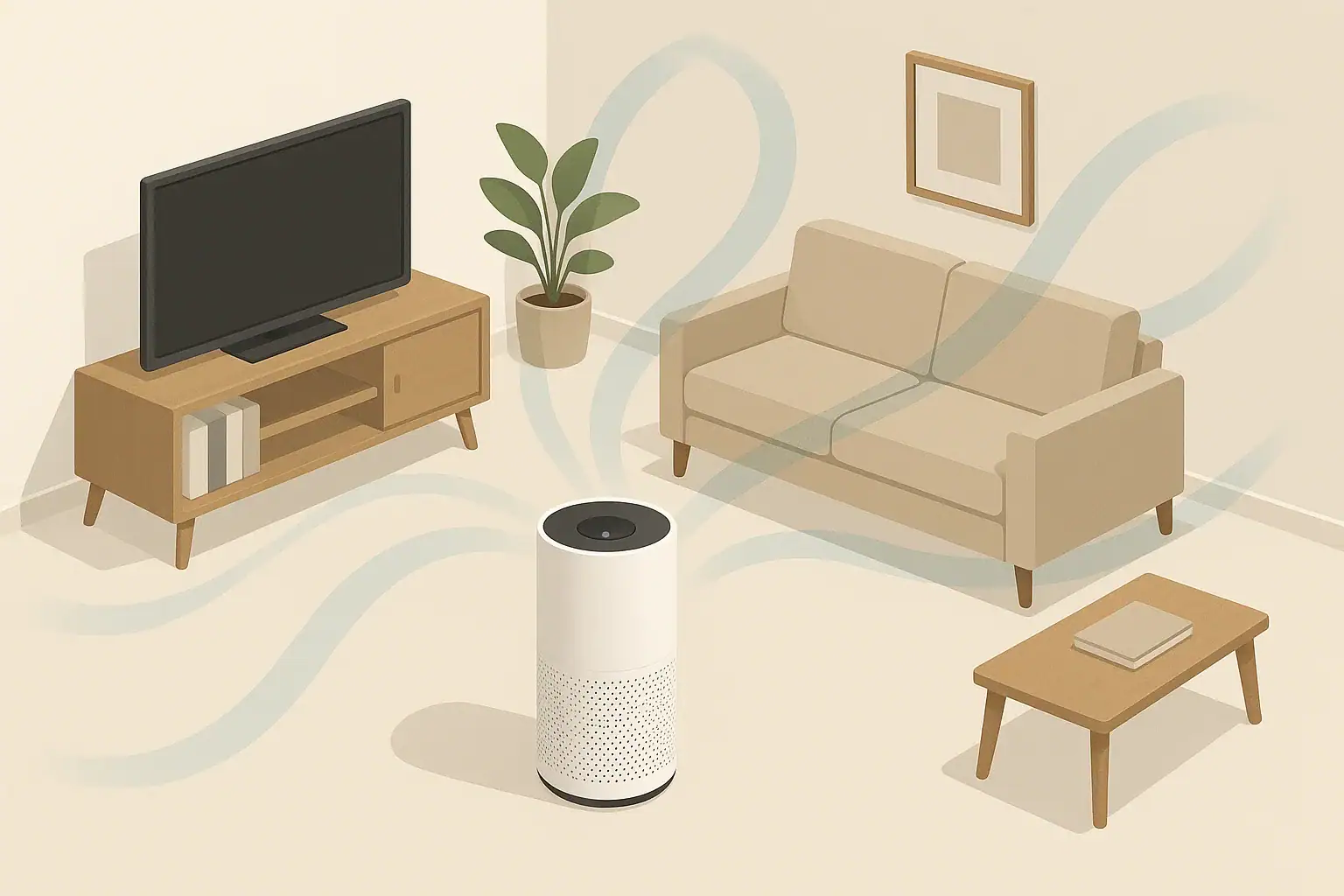
The best place to put an air purifier is in the room where you spend the most time, in an open spot with several inches of clearance on all sides and the clean-air outlet aimed toward your breathing zone. Good placement matters just as much as filter quality if you want real-world results, not just a high rating on the box.
Air cleaner placement affects how much of the room’s air actually passes through the filters, how quickly pollutants are reduced, and whether the purifier is quiet and comfortable enough to run all day. Smart positioning can improve performance, reduce dead zones, and help you get closer to the device’s advertised coverage and CADR without increasing fan speed.
This guide explains how to place a portable air purifier in different rooms, how to avoid common mistakes, and what to adjust if you are not seeing the air quality improvement you expected.
What Air Purifier Placement Really Means (And Why It Matters)
Air purifier placement is simply the position and orientation of the unit within a room: how far it is from walls, doors, and windows; how close it is to people and pollution sources; and whether air can move freely around it. Because purifiers work by pulling in dirty air and pushing out cleaner air, any placement that blocks that airflow reduces how much air is cleaned per hour.
Good air purifier placement helps you:
- Lower particle and gas levels where people actually breathe, not just in one corner.
- Use the room’s natural airflow (fans, HVAC, open doors) instead of fighting it.
- Balance effectiveness with noise and drafts so the unit can run for long periods.
- Extend filter life by avoiding extreme hotspots such as right next to stoves or heavy smoke.
Poor placement, on the other hand, can make a strong purifier behave like a weak one. A device hidden behind a couch or pressed into a tight alcove may clean only a small pocket of air, leaving the rest of the room unchanged.
Key Airflow Concepts for Smarter Air Purifier Placement
Most portable air purifiers follow the same basic pattern: air enters through intake grilles, passes through filters, then exits through an exhaust vent. Where you put the unit determines how well that cleaned air mixes into the room.
Clearance and airflow basics
- Leave breathing room: Aim for at least a few inches of space on all sides and a clear path for the exhaust. If intake vents are on the back or sides, avoid pushing the unit tightly against a wall.
- Keep the top clear: If the purifier blows air upward, do not place objects on top of it or under low shelves that block the outlet.
- Think in 3D: Air moves up, down, and sideways. Corners, alcoves, and heavy curtains can trap air and reduce circulation.
Room size, coverage, and realistic expectations
Manufacturers usually rate purifiers for a certain room size. That rating assumes ideal, open placement with good mixing. If you put the unit in a hidden or cramped location, the effective coverage shrinks.
| Room type | Typical floor area (sq ft) | Suggested placement zone | Notes for better coverage |
|---|---|---|---|
| Small bedroom | 100–150 | 3–8 ft from bed, open floor beside or at foot of bed | Angle exhaust toward pillow area without creating a direct draft. |
| Medium living room | 180–300 | Near center of seating zone, a few ft from walls | Avoid tight corners; use low fan plus ceiling fan for mixing. |
| Home office | 100–200 | Beside desk or along side wall | Place between you and printers or other emission sources. |
| Open-plan area | 300–600+ | Near main seating or work cluster | Consider more than one unit for far corners or separate zones. |
Height: floor vs. elevated placement
- On the floor: Works well for most units, especially larger models designed to sit on the ground and pull in heavier particles that settle low.
- On a sturdy table or dresser: Useful in bedrooms to bring clean air closer to your face, or in homes with pets to reduce direct intake of hair and debris.
- Avoid near the ceiling: Very high placement can trap clean air above the breathing zone and reduce effectiveness.
Working with existing airflow
- Use, do not fight, your HVAC: Place the purifier where it can catch air moving from supply vents toward the center of the room.
- Fans on low: A ceiling or floor fan on low speed can help mix clean air without overpowering the purifier’s airflow.
- Doors and windows: Open doors connect rooms and help spread clean air; open windows can either dilute indoor pollution or bring more in, depending on outdoor conditions.
Real-World Air Purifier Placement Examples by Room
Translating general rules into specific room layouts makes placement decisions much easier. Use these examples as starting points, then adjust for your furniture and habits.
Bedroom placement scenarios
- Standard bedroom: Place the purifier 3–8 feet from the head of the bed, on the floor or a low table, with the exhaust aimed roughly toward the side of your pillow. Keep curtains and bedding away from the intake vents.
- Small bedroom with limited floor space: Use a compact unit on a dresser or stable shelf, at or slightly above mattress height, angled so the airflow crosses your sleeping area without blowing directly on your face.
- Shared bedroom or nursery corner: Position the purifier between beds or between the bed and crib, giving equal access to both sleeping zones while keeping cords out of reach of children.
Living room and family room examples
- Couch-centered layout: Place the purifier on the floor 3–6 feet in front of or beside the main seating area, not behind the couch. Aim the exhaust toward the center of the room.
- Living room open to kitchen: Put the purifier near the boundary between the two spaces, closer to the seating area than to the stove, so it can catch cooking particles that drift out without being exposed to high heat or grease.
- Pet-heavy living space: Place the unit where it can pull in air from pet beds and high-traffic areas, but not so close that fur and dander immediately clog the intake. A slight elevation can help.
Home office and hobby room examples
- Desk-focused office: Put the purifier on the floor beside your desk or just behind it, with the exhaust sweeping across your breathing zone.
- Printer or craft area: Place the purifier between you and equipment that generates particles or odors, such as laser printers, 3D printers, or painting tables.
- Small workshop corner: Elevate a compact unit on a sturdy bench or shelf so the intake stays above the heaviest settled dust, but still close to where you stand or sit.
Special situations: open plans, basements, and entryways
- Open-plan home: Focus first on the area where you sit or work most. If the room is very large, consider one purifier near the seating area and another closer to bedrooms or a frequently used workspace.
- Basement with musty odors: Place the purifier in the occupied zone (near a sofa or desk), away from visibly damp walls or floors. Use it alongside dehumidification and moisture control rather than as a standalone solution.
- Entryway or hallway buffer: In a small apartment, a purifier in a wider hallway near the front door can help intercept smoke, exhaust, or hallway odors, provided it does not block walking paths.
| Scenario | Better placement choice | What it improves |
|---|---|---|
| Bedroom with purifier behind headboard | Move to open floor beside bed, 3–6 ft from pillow | Unblocks intake, delivers clean air directly to breathing zone. |
| Living room unit hidden behind couch | Shift to visible spot near coffee table edge | Improves circulation through seating area instead of trapped corner. |
| Purifier next to stove in small kitchen | Relocate to adjacent dining area | Reduces heat and grease stress on filters while still catching cooking particles. |
| Hallway unit in narrow corridor | Move into main room near door | Improves safety and airflow, reduces tripping risk. |
Common Air Purifier Placement Mistakes and How to Fix Them
Many people set an air purifier down once and never move it again, even if the results are disappointing. Small adjustments often solve the problem.
Hiding the purifier for aesthetics
Problem: The unit is placed behind furniture, inside a cabinet, or under a table with low clearance to keep it out of sight.
What you may notice: Little change in dust on surfaces, lingering odors, or air quality readings that barely improve.
Fix: Move the purifier into a more open, visible location. You can still choose a spot that looks tidy, such as beside a console or next to a bookcase, as long as the intake and exhaust are unobstructed.
Blocking vents with objects or textiles
Problem: Books, plants, or decor are stacked on top of the purifier, or curtains and blankets hang across intake grilles.
What you may notice: Louder fan noise at the same speed, a hot or strained feeling from the unit, or a noticeable drop in airflow from the exhaust.
Fix: Clear at least several inches around all vents. Tie back curtains, move furniture a little farther away, and keep the top of the unit free of objects.
Putting the purifier too close to strong sources
Problem: The purifier sits right next to a smoker, incense burner, candle cluster, or heavily used stove.
What you may notice: Filters clog or discolor quickly, odors seem intense near the purifier, or people sitting nearby still experience irritation.
Fix: Place the purifier at a moderate distance with a clear line between the source and the seating area. This allows some dilution while still intercepting pollutants before they spread throughout the room.
Ignoring room airflow patterns
Problem: The unit is tucked into a dead corner while most air moves along another path, such as from a window to a door or between HVAC vents.
What you may notice: Clean air seems to stay near the purifier, but odors or stuffiness linger in the main occupied area.
Fix: Observe where air naturally moves (you can use a light tissue or incense stick to visualize airflow if it is safe to do so). Relocate the purifier into that path so it can treat the main flow of room air.
Troubleshooting checklist when results are disappointing
- Is the purifier in the same room where you spend the most time?
- Are all vents clear of furniture, curtains, and decor?
- Is the exhaust aimed toward, not away from, the occupied area?
- Is the unit sized appropriately for the room and fan speed set high enough?
- Have you tried moving it a few feet and rechecking dust, odor, or monitor readings?
Safety Basics for Air Purifier Placement
Safe placement protects people, pets, and the purifier itself. Most portable units are straightforward to use, but a few precautions go a long way.
Electrical and cord safety
- Plug the purifier directly into a wall outlet when possible, not into overloaded power strips.
- Route cords along walls or behind furniture to reduce tripping hazards, especially in hallways and children’s rooms.
- Do not run cords under rugs or where they can be pinched by doors or furniture.
Avoiding water, heat and damage
- Keep purifiers away from sinks, bathtubs, showers, and humidifiers that could splash water onto the housing or filters.
- Do not place units directly beside heat sources such as radiators, space heaters, or stoves.
- Avoid locations where they can be knocked over easily, such as at the edge of narrow tables or in very tight walkways.
Child and pet considerations
- In homes with small children, avoid placing purifiers where controls are at eye level and easy to press; consider slightly higher placement or child-lock features if available.
- Keep intakes out of reach of curious pets that might shed directly into the grille or chew on cords.
- Ensure the unit is stable enough that a bump or tug on the cord will not tip it over.
Filter and emissions awareness
- Follow the manual for filter replacement; overly clogged filters can strain the motor and reduce airflow.
- If your purifier has any feature that can generate reactive gases (such as certain ionizing or oxidizing modes), follow all manufacturer guidance about room size, distance, and run time.
- If you ever notice unusual odors, excessive heat, or rattling noises, switch off the unit and inspect it before continuing use.
Long-Term Use, Maintenance, and Seasonal Placement Tweaks
Placement is not a one-time decision. As seasons, activities, and room layouts change, your optimal setup may change too.
Routine maintenance that affects placement
- Filter changes: Replace or clean filters on schedule so the purifier can maintain good airflow in its chosen spot.
- Dusting the housing: Wipe intake and exhaust grilles regularly; thick dust on the outside is a sign that airflow is being restricted.
- Noise checks: If a previously quiet unit becomes louder in the same location, check for obstructions or filter issues before moving it.
Adjusting placement with the seasons
- Allergy season: Prioritize bedrooms and main living areas where you rest and spend time with windows closed.
- Winter heating: Use the purifier near areas where dry, heated air enters the room, but not directly against radiators or heaters.
- Summer cooling: Coordinate with fans and air conditioning so the purifier sits in the path of circulating air rather than in a stagnant corner.
Storage and temporary relocation
- If you move the purifier to another room temporarily (for example, after cooking or cleaning), return it to your primary room once the short-term source is gone.
- When storing a unit, clean the exterior, remove or protect filters according to the manual, and keep it in a dry area away from extreme temperatures.
- After storage, check for dust buildup and verify that the fan spins freely before placing it back into regular use.
Practical Takeaways and Specs to Look For
Effective air purifier placement is about matching the device’s airflow to your real life: where you sleep, sit, work, and cook. A well-placed midrange purifier can outperform a poorly placed high-end model in everyday use.
- Start with the room where you spend the most continuous time, usually the bedroom or main living area.
- Give the purifier open space and a clear line of sight to your breathing zone.
- Watch how air naturally moves through the room and place the unit in that path.
- Revisit placement whenever you rearrange furniture, change seasons, or add new pollution sources.
Specs to look for that influence placement
When you compare purifiers, certain specifications can make placement more flexible and effective.
- Clean Air Delivery Rate (CADR): Higher CADR gives you more flexibility in placement within a room, since the unit can process more air per hour.
- Recommended room size: Match this to your actual room; if your room is near the upper limit, prioritize more central, open placement.
- Air intake and exhaust direction: Check where the vents are so you can plan clearance (front, sides, back, top) before deciding on a corner, wall, or table.
- Noise levels at each fan speed: Lower noise at medium or high speeds makes it easier to keep the unit close to beds and desks without discomfort.
- Physical dimensions and weight: Slim or lighter units are easier to position between furniture or move between rooms as needs change.
- Control location and indicators: Front or top controls and visible filter-change lights help when the unit sits against a wall or beside furniture.
- Cord length: A longer cord provides more options to avoid running extension cords across walkways.
By pairing the right specifications with thoughtful placement, you can turn a simple portable air purifier into a reliable part of your overall indoor air quality strategy.
Frequently asked questions
What specs or features should I prioritize when choosing an air purifier for effective placement?
Look first at the CADR and the manufacturer’s recommended room size so the unit can process enough air for your space. Also consider filtration type (true HEPA for particles, activated carbon for gases), intake/exhaust layout, noise levels at usable fan speeds, and physical factors like cord length and dimensions that affect where you can place it.
How close should an air purifier be to walls, furniture, or beds for best performance?
Give the unit several inches of clearance on all sides so intakes and exhausts are not blocked; many recommendations suggest keeping it a few feet from beds to direct clean air toward the breathing zone. Avoid pushing the purifier tightly against walls or hiding it behind furniture, which reduces effective airflow and coverage.
Is it okay to hide an air purifier behind furniture to keep my room looking tidy?
Hiding a purifier is a common mistake because blocked intakes or exhausts sharply reduce cleaning performance. Instead, choose a tidy but open spot—beside a console, along a wall with clearance, or near seating—so airflow remains unobstructed while still fitting the room’s aesthetic.
Are there safety concerns I should consider when placing an air purifier?
Yes. Keep purifiers away from water sources, direct heat (radiators, stoves), and areas where they could be knocked over, and avoid running cords under rugs. Follow the manual for any modes that produce reactive gases and observe filter-replacement schedules to prevent motor strain.
Will a single air purifier work in an open-plan area, or do I need multiple units?
It depends on the total square footage and the unit’s CADR; large open-plan spaces often require multiple purifiers to eliminate dead zones and cover separate seating or sleeping areas. If you only have one unit, place it near the main occupied zone to maximize benefit.
Should I place my air purifier on the floor or elevate it on furniture?
Both options can work: floor placement is effective for heavier, settling particles, while elevating the unit brings clean air closer to the breathing zone and can help with pet hair or desk setups. Avoid placing it too high near the ceiling where cleaned air may not mix into the occupied area.
- Clear sizing logic (room size → CADR/ACH)
- HEPA vs carbon explained for real use-cases
- Humidity + ventilation basics to reduce mold risk