
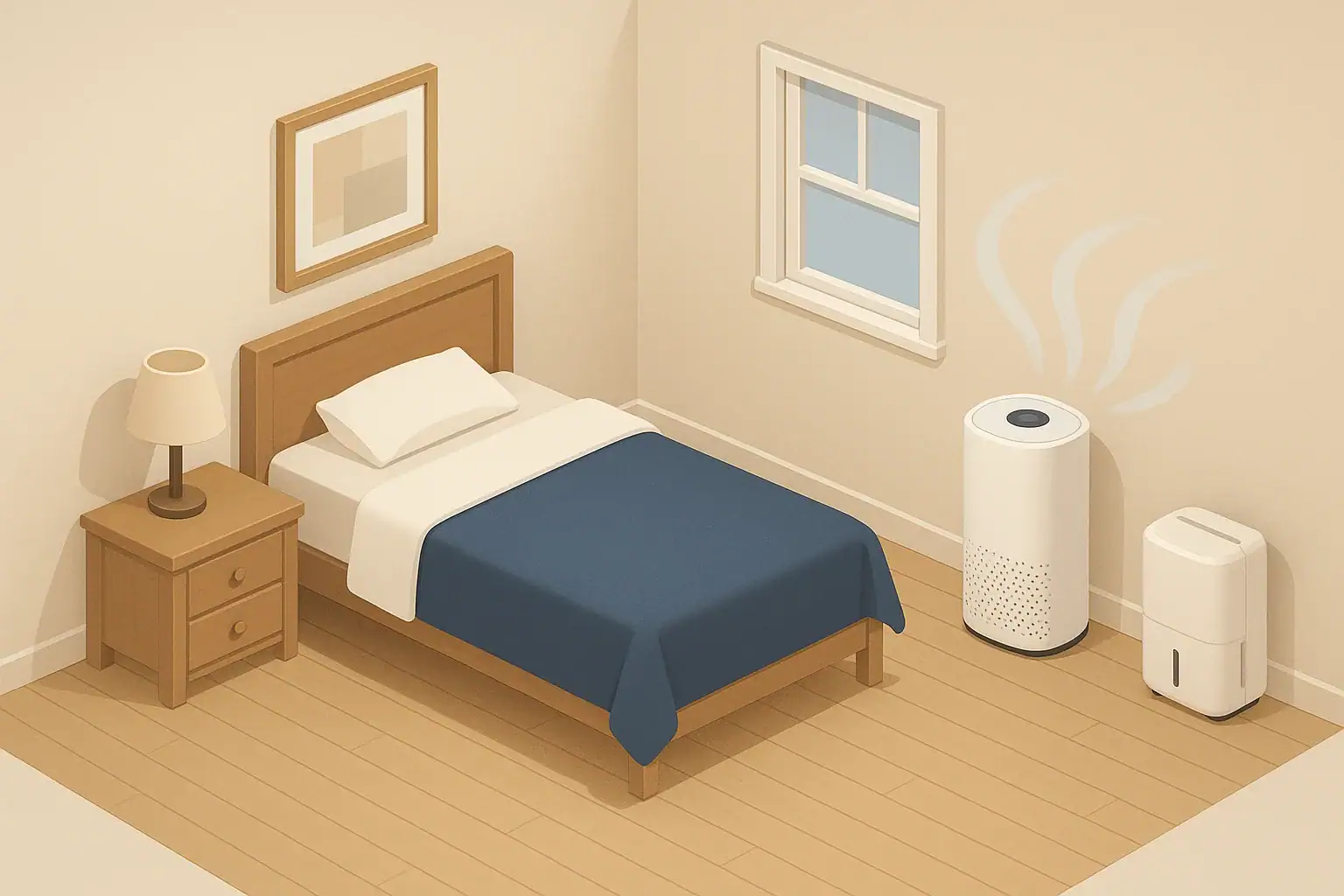
Using an air purifier in a humid room is usually fine, but high humidity can shorten filter life, reduce odor control, and increase mold risk if you ignore moisture. An air purifier cleans particles and some gases, while humidity describes how much water vapor is in the air. In damp bedrooms, basements, and bathrooms, these two factors interact in ways that affect performance, comfort, and long-term reliability.
This guide explains what actually happens when you run an air cleaner in muggy conditions, how relative humidity levels change filter behavior, and when you should prioritize dehumidification or ventilation instead of more filtration. You will see concrete room examples, a comparison table to help decide which device to use first, and a troubleshooting section for common humidity-related issues like musty smells or clogged filters. By the end, you will know how to place, maintain, and select an air purifier so it keeps working effectively even when your home feels warm and damp.
What It Means to Use an Air Purifier in a Humid Room (and Why It Matters)
When people talk about an air purifier in a humid room, they are usually describing a space that feels clammy, smells slightly musty, or shows signs of condensation while a purifier runs in the background. The key point is that an air purifier does not remove humidity. It moves air through filters; it does not remove water vapor the way a dehumidifier does.
Humidity is typically measured as relative humidity (RH). In many homes, a practical target is roughly 30–50% RH. Above that range, rooms can feel sticky, dust can clump, and surfaces may stay damp long enough to support mold growth. Below that range, air can feel very dry and irritating, especially in winter.
This matters for air purifiers because filters and internal parts are designed around normal indoor conditions. In a consistently humid room, you may see:
- Faster filter loading and reduced airflow
- Weaker odor and gas removal from activated carbon
- Higher chance of musty smells from dirty, damp filters
- More stress on electronics and metal components over time
Understanding this relationship helps you decide when an air purifier is enough on its own and when you also need moisture control to protect both your indoor air quality and your equipment.
How Humidity Affects Air Purifier Components and Performance
An air purifier in a humid room still moves air and captures particles, but moisture changes how efficiently different components work. Most home units include three main stages: a pre-filter, a fine particle filter (often HEPA or similar), and an activated carbon stage for odors and gases.
Pre-filters and coarse dust
The pre-filter catches large debris such as hair, lint, and coarse dust. In high humidity, these particles can clump and form a thicker mat on the pre-filter surface. That can:
- Increase resistance to airflow sooner than expected
- Push the fan to work harder for the same air movement
- Send more fine particles toward the HEPA filter once the pre-filter is overloaded
Regular cleaning of the pre-filter is especially important in muggy rooms with a lot of textiles, pet hair, or laundry activity.
HEPA and fine particle filters
Fine particle filters are made from dense fiber mats. In moderate humidity, they perform very well. Problems are more likely when humidity is:
- Frequently above about 60–70% RH, or
- Combined with visible dampness, condensation, or leaks
Under those conditions, you may notice:
- Faster clogging because moist air carries sticky particles that pack into the fibers
- Warping or softening of the filter frame or media if it absorbs moisture
- Musty odors from organic material trapped in a filter that stays damp
The purifier will still run, but the clean air delivery rate can drop while noise and energy use stay the same or increase.
Activated carbon and odor control
Activated carbon works by adsorbing gases and odors onto its large internal surface area. In very humid air, water molecules compete for those same adsorption sites. This can:
- Temporarily reduce how well the purifier removes smells and volatile organic compounds
- Shorten the useful life of the carbon filter if it repeatedly cycles between very humid and dry conditions while loaded with pollutants
In practice, that often shows up as cooking, pet, or musty odors returning sooner than the manufacturer’s nominal replacement schedule would suggest.
Airflow, electronics, and housing
Fans and electronics in modern purifiers are generally designed for typical indoor humidity. However, in damp basements or bathrooms where you see condensation on metal or glass, long-term exposure can lead to:
- Dust and lint sticking to fan blades and grills
- Corrosion on exposed screws or metal screens
- Intermittent noises or reduced airflow as moving parts encounter more resistance
These effects develop gradually. Regular inspection and basic cleaning usually keep them from becoming serious problems.
| Room situation | Typical humidity pattern | Main problem | Device to prioritize first |
|---|---|---|---|
| Finished basement feels damp, slight musty odor, no visible leaks | Often 60–70% RH for many hours | Chronic moisture and mold risk | Dehumidifier, then add air purifier for particles and odor |
| Bedroom near a busy road, windows closed, air feels a bit stuffy | Around 40–55% RH most of the time | Fine particles and stale air | Air purifier, plus occasional window or fan use |
| Bathroom without exhaust fan, mirror fogs for a long time after showers | Short spikes near 90% RH, then slow drop | Moisture buildup on surfaces | Ventilation (fan or window); purifier only for residual odors |
| Open-plan living room in humid climate, light cooking odors linger | 50–65% RH, higher on rainy days | Odors and light dampness | Air purifier with carbon, plus targeted dehumidification if RH stays high |
| Home office over crawl space, floor feels cool and clammy | 55–70% RH, especially in summer | Moisture from below and comfort issues | Dehumidifier or building fixes first; purifier for dust and allergens |
Real-World Examples of Air Purifiers in Humid Rooms
Seeing how humidity and air purifiers interact in specific rooms makes it easier to plan your setup. The following scenarios are common in many homes.
Humid bedroom with allergies
Imagine a small bedroom that feels slightly sticky in summer. Relative humidity hovers around 60–65% at night. You run an air purifier for allergies and wake up with less congestion, but the room still smells a bit stale.
In this case, the purifier is helping with pollen and dust, but humidity is high enough to keep bedding and carpets from fully drying between uses. Over time, the HEPA filter may load faster, and the carbon stage may struggle to completely remove body and fabric odors. Adding a small dehumidifier or improving whole-home air conditioning settings often brings humidity back into a more comfortable range, making the purifier’s work more noticeable.
Finished basement media room
A finished basement with carpet and furniture frequently sits at 65–70% RH in spring and summer. You run an air purifier to handle pet dander and musty smells, but the odor comes back within a day after changing the carbon filter.
Here, the main issue is chronic moisture. The purifier can remove airborne particles stirred up by walking or vacuuming, yet the musty smell is mostly from damp surfaces, wall cavities, or subfloor materials. Without lowering humidity, odor molecules keep entering the air, and the carbon filter saturates quickly. A dehumidifier and moisture source control are needed before the purifier can make a lasting difference.
Bathroom and laundry area
In a combined bathroom and laundry space, humidity spikes during showers and washing cycles. Mirrors fog, and towels dry slowly. You place a small air purifier inside the room to deal with fabric lint and detergent smells.
The purifier can help with lint and some odors once humidity drops, but it should not sit directly in the steam path or next to the shower. It is more effective in an adjacent hallway or open doorway, running continuously on a low setting. The primary moisture control tools should still be an exhaust fan, open window, or door gap to let steam escape quickly after use.
Kitchen and open living area
In an open-plan kitchen and living room, cooking adds both moisture and odors. On humid days, windows stay closed, and indoor humidity creeps above 60% RH during dinner time. An air purifier with a carbon stage can reduce cooking smells, but performance drops when the air is very damp.
Here, a combination of strategies works best: use the range hood or window to vent moisture and fumes while cooking, then let the purifier run afterward to polish the air. If the home is in a very humid climate, a whole-house or room dehumidifier may be needed so humidity does not stay elevated all evening.
| What you notice | Likely humidity link | Quick checks | Practical next steps |
|---|---|---|---|
| Musty smell near the purifier, even with a new filter | Dirty filter stored or used in a damp room | Inspect filter for discoloration or soft spots | Replace filter, lower room humidity, and run purifier regularly |
| Weaker airflow on the same fan setting | Pre-filter and HEPA loaded faster in moist air | Check pre-filter for lint mat; feel outlet airflow | Clean pre-filter, consider earlier HEPA replacement, reduce moisture sources |
| Odors return quickly after cooking or laundry | Carbon filter competing with high moisture and heavy odor load | Note RH level during and after activities | Vent during source activities; replace carbon more often if RH stays high |
| Condensation on walls or windows near purifier | Room humidity above safe range | Measure RH with a simple meter | Move purifier away from cold surfaces; use dehumidifier or better ventilation |
| New rattling or humming sounds over time | Dust and moisture buildup on fan components | Unplug and look for dust mats on grills | Clean exterior, check filters, and improve room dryness |
Common Mistakes and Troubleshooting in Humid Rooms
Many problems blamed on a “bad” air purifier are actually humidity or placement issues. Avoiding a few common mistakes can preserve performance and extend filter life.
Mistake 1: Expecting the purifier to dehumidify the room
An air purifier can make air feel fresher, but it cannot lower humidity. If your main complaints are sticky walls, condensation, or slow-drying towels, a dehumidifier or better ventilation should be your first step. Use the purifier for particles and odors once humidity is under better control.
Mistake 2: Placing the purifier in direct steam or splash zones
Putting an air purifier next to a shower, sink, or leaky window exposes the filters and electronics to liquid water, not just humid air. That can quickly warp filters, cause musty smells, and in extreme cases damage the unit.
Troubleshooting cue: If you can see droplets or condensation on the purifier housing, it is too close to a moisture source. Move it farther away and elevate it off very cold or damp floors.
Mistake 3: Ignoring early signs of filter stress
In humid rooms, filters may darken, sag, or smell musty before they reach their advertised service life. Waiting for a reminder light alone can leave you running with poor filtration.
Troubleshooting cue: If surfaces seem dustier or odors linger even with the purifier on, open the unit (unplugged) and examine the filters. Replace any that look warped, smell musty, or show heavy loading.
Mistake 4: Turning the purifier off for long periods in a damp space
In a humid room, turning the purifier completely off for days allows trapped particles and moisture in the filter to sit without airflow. That stagnant environment is more favorable for microbial growth on dirty media.
Troubleshooting cue: If a purifier smells musty when you first turn it back on after a long break in a damp room, consider replacing the filter and running the unit more consistently on a low setting.
Mistake 5: Storing spare filters in damp areas
Even unused filters can absorb moisture and odors if they are stored in basements, garages, or laundry rooms. When installed later, they may already be compromised.
Troubleshooting cue: If a brand-new filter has a musty or damp smell out of the package, it may have been stored in poor conditions. Store spare filters in a dry, conditioned space instead.
Safety Basics for Air Purifiers in Humid Conditions
Most air purifiers are safe to use in normal indoor humidity, but damp rooms introduce additional safety considerations. Paying attention to moisture, power, and placement reduces risks.
Keep electricity away from liquid water
Humid air alone is not usually a shock hazard, but standing water is. Do not place an air purifier where it can sit in puddles from leaks, plumbing issues, or minor flooding. Keep cords and power strips off the floor in basements that occasionally get wet.
Avoid blocking vents and intakes
In an attempt to hide a purifier or protect it from moisture, some people push it tightly against walls or behind furniture. That can overheat the motor and reduce filtration.
- Leave several inches of clearance around both intake and outlet grills.
- Do not drape damp towels, clothing, or curtains over the purifier.
Be cautious with ozone or ion-producing technologies
Some air cleaning technologies can produce byproducts such as ozone. In humid rooms with poor ventilation, these byproducts can accumulate more than in well-ventilated spaces. Always follow manufacturer guidance about safe operation, especially in small, closed rooms.
Use appropriate extension cords and outlets
If you must use an extension cord in a basement or laundry area, choose one rated for the purifier’s power draw and keep it out of traffic paths and away from wet areas. Never run cords under rugs where moisture can accumulate unseen.
Know when to shut the unit down
If you notice unusual smells like burning plastic, see visible corrosion around the plug, or find that the unit has been splashed or partially submerged, unplug it immediately. Allow it to dry completely and have it inspected or replaced before using it again.
Maintenance and Long-Term Use in Humid Rooms
Humidity mainly shows up as a maintenance issue. With a few adjusted habits, you can keep an air purifier working reliably even in climates or rooms that run on the damp side.
Filter inspection schedule in humid environments
In a typical home with moderate humidity, many users inspect filters every few months. In a humid room, it is wise to:
- Check pre-filters monthly for lint mats and sticky dust.
- Inspect HEPA or fine filters every 3–4 months for discoloration, warping, or odor.
- Assess carbon filters whenever odors return, even if that is earlier than the nominal replacement interval.
Cleaning practices around moisture
When cleaning the purifier:
- Unplug the unit before wiping grills or surfaces.
- Use a dry or slightly damp cloth; avoid soaking any part of the housing.
- Do not wash non-washable HEPA or carbon filters with water unless the manufacturer explicitly states they are washable.
After cleaning, let the exterior dry fully before plugging the unit back in, especially in already humid rooms.
Storing purifiers and filters between seasons
If you store an air purifier seasonally, humidity matters:
- Store the unit in a dry, conditioned area rather than a damp basement or garage.
- Remove and discard heavily used filters before long-term storage.
- Keep new or lightly used filters sealed in their packaging in a dry closet.
When you bring the purifier back into service, inspect the interior for dust or any signs of moisture damage before running it.
Using humidifiers and dehumidifiers alongside purifiers
Many homes use a humidifier in winter and a dehumidifier in summer along with air purifiers. To avoid one device undermining another:
- Do not aim humidifier mist directly at the purifier’s intake.
- Place the dehumidifier closer to the moisture source and the purifier closer to where you sit or sleep.
- Use a simple humidity meter to keep RH roughly in the 30–50% range where possible.
Key Takeaways and Specs to Look For in a Purifier for Humid Rooms
Using an air purifier in a humid room is generally safe and helpful for particles and some odors, but it is not a substitute for moisture control. High humidity can shorten filter life, weaken odor removal, and increase the risk of musty smells if you ignore underlying dampness.
In most homes, a balanced approach works best:
- Use dehumidifiers and ventilation to control moisture.
- Use air purifiers to handle particles, allergens, and some gases.
- Place and maintain both with humidity in mind.
Specs to look for when choosing a purifier for humid spaces
When you are selecting an air purifier that will often run in a humid bedroom, basement, or living area, pay attention to these practical specifications and features:
- Clean Air Delivery Rate (CADR): Choose a CADR appropriate for your room size so the purifier can cycle the air several times per hour even on a medium setting.
- Filter design and availability: Look for clearly labeled pre-filters, fine particle filters, and optional carbon stages, with replacement filters that are easy to find.
- Sealed or well-fitted filter housing: A good seal helps ensure that damp, particle-laden air passes through the filter media instead of around it.
- Multiple fan speeds and a low continuous mode: A quiet low or sleep mode lets you run the purifier more consistently, which is useful in humid rooms where stopping and starting can leave filters damp.
- Filter change indicators based on hours or pressure: Indicators that track actual use can be more reliable than fixed calendar reminders, especially when humidity accelerates filter loading.
- Energy efficiency: Look for models with modest power draw at low and medium speeds, since long runtimes are common in damp climates.
- Solid construction and corrosion-resistant parts: Units with sturdy housings and protected metal components tend to tolerate humid environments better over the long term.
- Clear guidance on washable vs. non-washable filters: Knowing exactly which parts can be cleaned with water helps you avoid accidental damage in moisture-prone areas.
By combining the right purifier features with sensible humidity control, placement, and maintenance, you can keep indoor air cleaner and more comfortable even in rooms that naturally run warm and muggy.
Frequently asked questions
Which purifier specifications most affect performance in humid rooms?
CADR relative to room size, a well-sealed filter housing, and an effective pre-filter are the most important specs because they determine how much air is processed and how quickly filters load. Materials and corrosion-resistant construction also matter for long-term reliability in damp environments. Multiple fan speeds and accurate filter-life indicators help you run the unit continuously without overstressing the media.
Can an air purifier replace a dehumidifier in a damp room?
No. An air purifier removes particles and some gases but does not remove water vapor from the air. If you have condensation, persistent high RH, or mold risk, a dehumidifier or improved ventilation is the primary solution; the purifier can help with airborne allergens and residual odors once moisture is controlled.
Are there safety risks to using an air purifier in very humid rooms?
Yes — the main safety concerns are exposure to standing water or direct splashes, which can create electrical hazards and corrosion, and the potential buildup of byproducts if the unit uses ionizing or ozone-producing technologies in poorly ventilated spaces. Keep units away from splash zones, elevate cords and power strips off the floor, and unplug the device if it gets wet.
How frequently should I check or replace filters when indoor humidity is high?
Check pre-filters monthly and inspect HEPA or fine filters every 3–4 months as a starting point, adjusting based on visible dirt, odor, or reduced airflow. Carbon filters should be assessed whenever odors return, which may be earlier than the nominal schedule in humid conditions. Replace or clean filters sooner if they look warped, smell musty, or noticeably reduce airflow.
What common placement mistakes reduce purifier effectiveness in moist spaces?
Putting the purifier directly in a steam path, tight against walls, or under damp fabrics reduces effectiveness and increases moisture exposure. Also avoid placing it on very cold floors where condensation forms; instead, provide several inches of clearance on all sides and locate the unit where air circulates through the occupied space.
How can I prevent musty smells from developing in purifier filters?
Keep room RH in the recommended range (roughly 30–50%), run the purifier more consistently on a low setting to avoid long stagnant periods, and replace or clean filters promptly when they show signs of dampness or odor. Store spare filters in a dry area and prioritize ventilation or dehumidification to remove the underlying moisture source.
- Clear sizing logic (room size → CADR/ACH)
- HEPA vs carbon explained for real use-cases
- Humidity + ventilation basics to reduce mold risk