
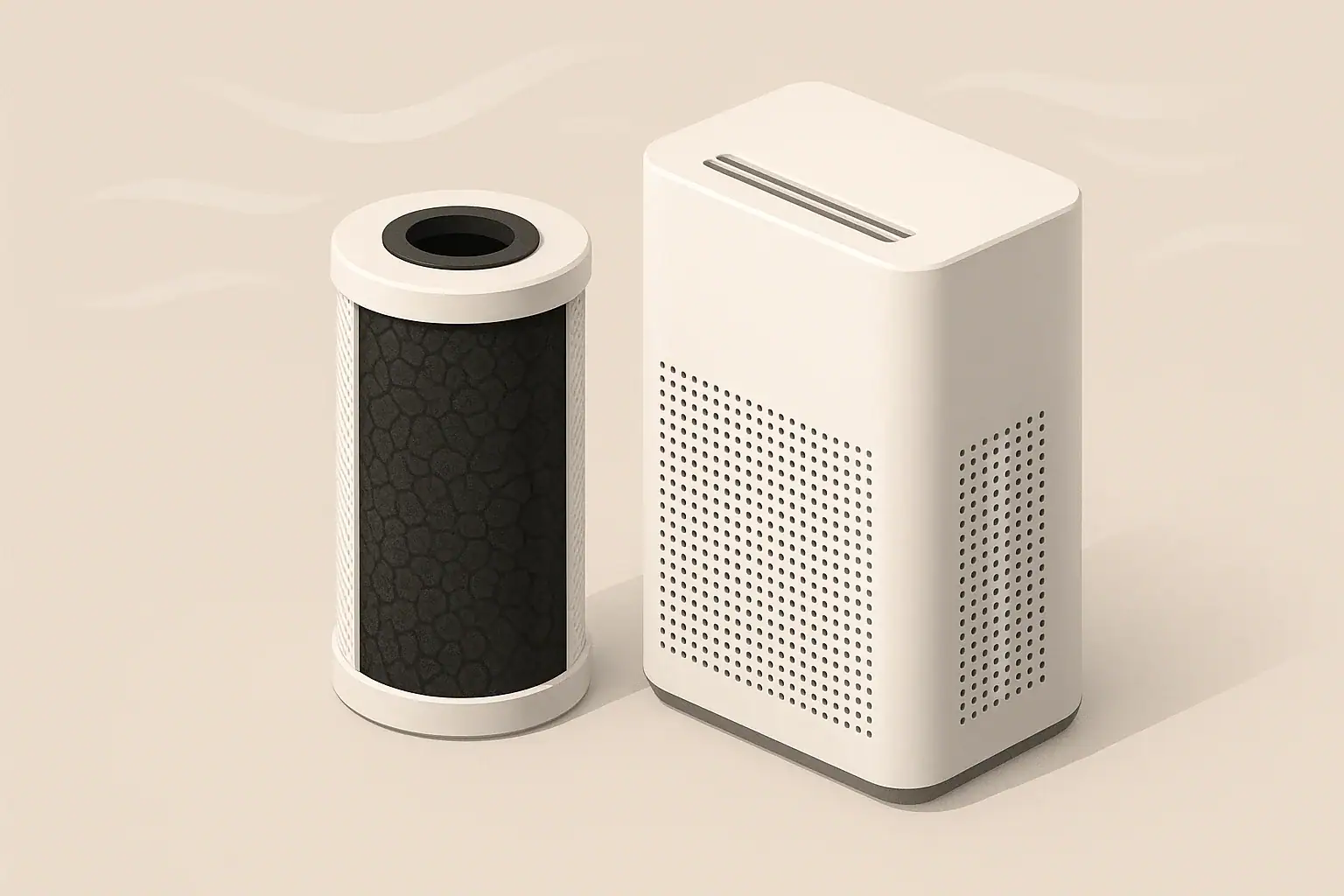
Paint fumes indoors are best reduced by combining outdoor-air ventilation, source control, and, when helpful, an air purifier with meaningful activated carbon rather than relying on one method alone.
Most indoor painting projects release a mix of odors and volatile organic compounds, often shortened to VOCs, plus small amounts of particles from sanding, dust, or overspray. Safe re-entry depends on the paint type, room size, ventilation, drying conditions, and the product label. The goal is practical: move fumes outdoors, avoid spreading them through the home, and give the room enough time to dry and air out.
Quick answer
- Ventilate during painting and for at least 24 to 72 hours afterward when practical, with longer airing for oil-based, solvent-based, or strongly odorous coatings.
- Aim for cross-ventilation when possible: one opening for fresh air in, another for exhaust out, supported by a window fan exhausting outdoors.
- Re-enter when the coating is dry as directed, odor is low, and the room has been aired out; sensitive occupants may choose a longer waiting period.
- Activated carbon can help reduce some paint odors and VOCs, but it has limited capacity and should not replace ventilation.
- HEPA filtration is useful for dust and fine particles, especially after sanding, but it does not capture most paint vapors by itself.
What paint fumes indoors means and why it matters
Paint fumes are a general term for the odors and airborne chemicals released while paint, primer, stain, sealer, or coating products are applied and dried. The exact mix depends on the product. Water-based paints often have lower odor than many solvent-based coatings, but low odor does not always mean no emissions.
Indoors, fumes can linger because rooms have limited air exchange. Closets, bathrooms, bedrooms, and basements may clear more slowly than a large room with open windows. Temperature and humidity also matter. Cool, damp conditions can slow drying and extend the time that odors remain noticeable.
Good indoor air quality planning for painting is not about panic. It is about reducing unnecessary exposure, keeping the work area controlled, and using the right tool for the job. Ventilation removes polluted indoor air. Carbon adsorption can reduce some gases. Particle filtration captures dust. Each has a different role.
Ventilation and carbon filter basics
Ventilation is the primary strategy for paint fumes indoors because it replaces indoor air with outdoor air. The simplest setup is cross-ventilation: open a window or door on one side of the room and exhaust air out another opening. A fan placed to blow out a window can help move fumes directly outdoors instead of mixing them through the home.
A practical target for many home projects is to keep a steady flow of outdoor air during painting and continue it afterward. When conditions allow, airing out for 24 to 72 hours is a common general range for water-based products. Projects using oil-based paint, solvent-based primer, floor finish, spray coatings, or multiple coats may need longer, especially if odor remains strong.
Activated carbon filters work differently. Carbon has a porous surface that can adsorb some gases and odors. In air purifiers, carbon usefulness depends on how much carbon is present, contact time, airflow, and whether the purifier seals air through the filter rather than around it. Thin deodorizing sheets may reduce light odors but can saturate quickly during painting.
HEPA filters capture particles, not most vapors. They are still useful around painting projects when sanding, scraping, patching compound, or dust cleanup is involved. For fumes, however, HEPA alone is not the main tool.
| Option | What it helps with | Best use | Key limitation |
|---|---|---|---|
| Open-window ventilation | General fumes and odors | Mild weather and safe outdoor conditions | Depends on wind, window layout, and outdoor air |
| Window exhaust fan | Directing fumes outdoors | Creating negative pressure in the work room | Needs a safe exhaust path and make-up air |
| Activated carbon purifier | Some VOCs and odors | Supplementing ventilation after painting | Carbon can saturate and may need replacement |
| HEPA purifier | Dust, sanding particles, fine debris | Prep work and cleanup | Does not remove most paint vapors by itself |
| Closing interior doors | Limiting spread to other rooms | Bedrooms, offices, apartments | Still needs planned exhaust or fresh air |
| Low-VOC product choice | Reducing source strength | Planning before the project starts | Label terms vary; follow the product instructions |
Common mistakes and troubleshooting cues
One common mistake is blowing a fan from the painted room into the rest of the home. That can dilute odor in the work room while spreading fumes to bedrooms, hallways, and HVAC returns. If a fan is used, the preferred direction is usually outward through a window or door to the exterior.
Another mistake is assuming an air purifier labeled for odors can handle a fresh painting project. Carbon capacity matters. Once carbon is saturated, it may stop adsorbing effectively and can sometimes allow odors to pass through. If the room still smells strong with the purifier running, increase ventilation and check whether the carbon filter is due for replacement.
Watch for practical cues. If paint feels tacky longer than expected, if odor increases when the room is closed, or if adjacent rooms begin to smell like paint, the ventilation pattern is not working well. Reopen the air path, exhaust outdoors, and keep interior doors closed where possible.
TVOC readings from consumer monitors can be useful for trends, but they are not a clearance test. Different sensors respond to different gases, and readings may drift. Use them as a supporting clue, not as proof that a room is risk-free.
A practical ventilation and re-entry checklist
Before painting
- Read the paint or coating label for ventilation, drying, and cleanup instructions.
- Choose lower-odor or low-VOC products when they fit the project requirements.
- Remove unnecessary soft furnishings from the room, or cover them if removal is not practical.
- Seal or close interior doors to limit spread into the rest of the home.
- Plan an exhaust path to the outdoors and a fresh-air path into the room.
During painting
- Keep air moving outdoors rather than toward living areas.
- Use fans safely on stable surfaces and keep cords away from wet paint and walkways.
- Close paint containers when not in use.
- Avoid running central HVAC in a way that pulls fumes through the whole building, unless the system is intentionally being used for fresh-air ventilation as designed.
After painting
- Continue ventilation for at least a day when practical, and longer if odor remains noticeable.
- Wait for the product-specified dry or cure stage before regular use of the room.
- Use activated carbon as a supplement, especially when weather limits open-window time.
- Return soft furnishings after odor has decreased and surfaces are dry.
For safe re-entry basics, combine the label instructions with real-room conditions. A bedroom used overnight may deserve more airing time than a hallway. A nursery, sleeping area, or small apartment room with limited ventilation should be treated conservatively, without assuming that one open window is enough.
Real-world examples for homes and apartments
Painting one bedroom
Open the bedroom window and place a fan so it exhausts outdoors. Keep the bedroom door mostly closed, with a small gap or another opening for make-up air if needed. After the final coat, keep exhausting for several hours, then continue intermittent ventilation for the next one to three days as conditions allow.
Painting in an apartment
Apartments can be harder because there may be fewer windows and shared corridors. Avoid venting fumes into common hallways. If the only window is on one wall, use a fan to exhaust out that window and allow make-up air from another window in the apartment when possible. Keep the painted room separated from sleeping areas.
Painting a bathroom or closet
Small enclosed rooms can trap odor. A bathroom exhaust fan may help if it vents outdoors and is in good working order, but it may move less air than a window fan. For a closet, remove painted shelves or doors to a better-ventilated space when possible, or leave the closet open to a ventilated room after the strongest odor period has passed.
After sanding or patching
If sanding was part of the project, use dust control before focusing on fumes. Wipe surfaces with appropriate methods for the material, vacuum with a fine-particle filter if available, and run a HEPA-type particle purifier if you have one. Then use ventilation and carbon for the odor side of the project.
Safety and standards considerations
Follow the product label and safety data information for the coating you use. Some coatings require stronger ventilation, protective equipment, or professional handling. This is especially true for solvent-based finishes, spray applications, specialty primers, and coatings used on floors, cabinets, or industrial surfaces.
Be cautious with ozone generators, ionizers, and devices that intentionally produce reactive gases. Ozone is not a general home solution for paint fumes and can add indoor air concerns of its own. Do not use a device in a way that conflicts with its instructions or with basic occupied-space safety guidance.
UV-C features in some air cleaners are aimed at certain biological contaminants under specific design conditions. They are not a primary method for VOC removal. If a device includes UV-C or ionization, assess it carefully for emissions information and use it only as directed.
Combustion appliances, attached garages, and gas tools should not be used as part of a painting ventilation strategy. Do not modify appliances, block vents, or bypass safety systems to change airflow. Keep the plan simple: exhaust the work room outdoors, bring in fresh air, and use filtration only as a supplement.
Maintenance, filter replacement, and cost planning
Painting can load filters faster than normal daily use. A carbon filter that handled light cooking odors may become saturated quickly when exposed to fresh paint fumes. If odor returns soon after the purifier is turned off, or if the exhaust air from the purifier smells similar to the room, the carbon may be spent.
Particle filters can also load during prep and cleanup. Sanding dust, drywall residue, and fine debris can reduce airflow. Check the prefilter and housing after the project, following the manufacturer’s cleaning instructions. Do not wash filters unless the instructions clearly say they are washable.
Plan for filter replacement as part of project cost if you expect to use an air purifier heavily during painting. For a one-room refresh, one carbon replacement may be enough. For multi-room work or solvent-heavy coatings, ventilation and scheduling matter more than trying to solve everything with replacement filters.
| Filter or part | Typical interval range | What changes it | Reminder |
|---|---|---|---|
| Activated carbon filter | Weeks to months | Fresh paint, strong odors, solvent use | Replace sooner if odor passes through |
| Thin carbon sheet | Days to weeks during heavy odor | Low carbon amount and high VOC load | Useful for light odor, not major fumes |
| HEPA or particle filter | Months to a year | Sanding dust, drywall dust, long runtime | Check airflow and visible loading |
| Washable prefilter | Every few weeks as needed | Dusty prep work and pet hair | Dry fully before reinstalling |
| Window fan or box fan grille | After the project | Dust, overspray, lint buildup | Clean only when unplugged |
| Room surfaces | After paint is dry | Settled dust and residue | Use cleaning methods suited to the surface |
Related guides: Ventilation vs Air Purifier: When You Need One, the Other, or Both • Activated Carbon Filters Explained: VOCs, Odors, and What They Can’t Do • HEPA vs Carbon Filters: When Each One Matters Most • When to Replace Carbon Filters (And How to Tell They’re Spent)
Frequently asked questions
How long should I ventilate after painting indoors?
For many water-based projects, ventilation for 24 to 72 hours after painting is a common practical range when conditions allow. Oil-based, solvent-based, or strongly odorous coatings may need longer airing out. Follow the product label and extend ventilation if odor remains noticeable.
Does an air purifier remove paint fumes indoors?
An air purifier can help, but only if it uses substantial activated carbon for gases and odors. HEPA filters mainly capture dust and particles, not most paint vapors. Ventilation is still the primary method for reducing paint fumes indoors.
What is the best way to set up a fan for paint fumes?
Place the fan so it exhausts air outdoors through a window or door rather than blowing fumes into other rooms. If possible, create cross-ventilation with a second opening for fresh air to enter. This helps move contaminated air out instead of circulating it inside.
When is it safe to sleep in a freshly painted room?
Sleep in the room only after it is dry as directed, odor has dropped to a low level, and the room has been aired out well. Some people, especially children, older adults, and sensitive occupants, may prefer a longer waiting period. If the smell is still strong, wait longer and keep ventilating.
Can I use HEPA instead of carbon for paint fumes indoors?
No. HEPA is useful for sanding dust, drywall particles, and cleanup debris, but it does not capture most paint vapors. For paint fumes indoors, carbon and ventilation address the odor and gas side, while HEPA handles particles.
Why do paint fumes linger in small rooms like closets and bathrooms?
Small rooms have limited air volume and often less natural air exchange, so fumes concentrate more easily. Humidity, cool temperatures, and closed doors can also slow drying and trap odor. Keeping air moving outdoors is especially important in these spaces.
Summary takeaways for paint fumes indoors
For paint fumes indoors, start with source control and ventilation. Choose appropriate products, keep containers closed, isolate the work room, and exhaust air outdoors when possible. Continue airing out after painting, commonly for 24 to 72 hours for many water-based projects and longer when odor, product type, or room conditions call for it.
Use activated carbon as a helpful supplement for some odors and VOCs, not as a substitute for fresh air. Use HEPA filtration for dust and particles from prep work and cleanup. For re-entry, rely on the product label, dryness, reduced odor, and practical room use. A calm plan before painting usually works better than trying to fix lingering fumes afterward.
Recommended next:
- Activated Carbon Filters Explained: VOCs, Odors, and What They Can’t Do
- How Much Activated Carbon Do You Need to Remove Odors?
- Carbon Filter vs HEPA: What Each One Removes (And What It Doesn’t)
- Formaldehyde in Homes: Sources, Risks, and How to Reduce It
- Activated Carbon Types: Pellet vs Granular vs Impregnated Carbon
- How Much Carbon Do You Need for Odors? Weight, Depth, and Contact Time
- More in Carbon Filters & VOCs →
- Clear sizing logic (room size → CADR/ACH)
- HEPA vs carbon explained for real use-cases
- Humidity + ventilation basics to reduce mold risk