
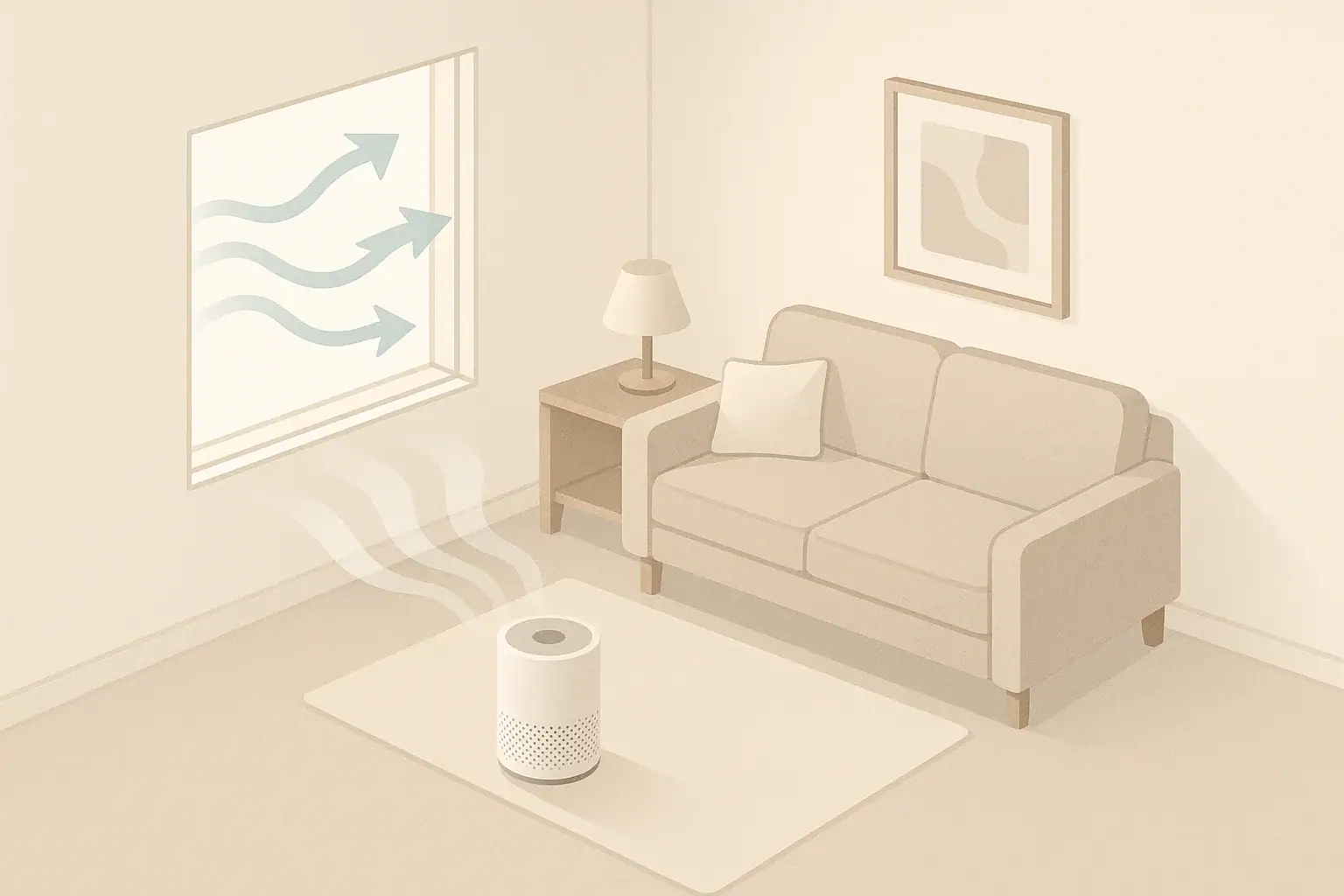
Ventilation is better for removing stale air, moisture, and CO2, while an air purifier is better for removing indoor particles like dust, pollen, and smoke; many homes need both at different times. When you compare ventilation vs air purifier, you are really choosing between bringing in fresh outdoor air or cleaning the air you already have indoors.
Understanding when to open windows, when to run exhaust fans, and when to rely on a portable air cleaner can dramatically improve indoor air quality, comfort, and mold risk. The right mix changes with seasons, outdoor pollution, and what is happening inside your home.
This guide walks through how ventilation and air purifiers work, where each one shines, and how to troubleshoot common problems like stuffy rooms, lingering odors, and wildfire smoke. You will also find simple decision tools, safety tips, and a practical checklist of specs to look for when choosing or upgrading equipment.
What Ventilation and Air Purifiers Do (and Why It Matters)
Ventilation and air purification are two different tools for managing indoor air quality, not direct substitutes for each other.
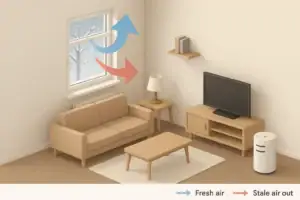
Ventilation is the intentional exchange of indoor air with outdoor air. It dilutes indoor pollutants, removes excess moisture, and helps keep CO2 and odors from building up. It can be as simple as opening a window or as complex as a whole-house mechanical system.
Air purifiers are recirculating devices that pull indoor air through filters or other media to remove particles and some gases. They do not bring in fresh air or control humidity, but they can significantly reduce dust, pollen, smoke, and some odors inside a room.
Why this matters:
- Relying only on ventilation when outdoor air is smoky or polluted can make indoor air worse.
- Relying only on an air purifier in a tightly sealed room can leave CO2 and moisture high, so the space still feels stuffy.
- Matching the tool to the problem (and sometimes combining both) is key to healthier, more comfortable air.
A helpful way to think about it is: ventilation controls how much new air you get, while an air purifier controls how clean that indoor air becomes once it is inside.
How Ventilation and Air Purifiers Work
Both tools move air, but they move and treat it in very different ways.
How Home Ventilation Works
Most homes use a mix of these ventilation approaches:
- Natural ventilation: Opening windows and doors or relying on small leaks and cracks in the building. Wind and temperature differences drive the airflow.
- Spot (local) exhaust: Bathroom fans, kitchen range hoods, and laundry exhausts remove air from specific rooms where moisture and pollutants are generated.
- Whole-house mechanical ventilation: Dedicated fans and ducts bring in outdoor air and exhaust indoor air on a schedule. Some systems recover heat or energy to reduce the impact on heating and cooling.
Ventilation is especially important for:
- Keeping CO2 from building up in occupied rooms.
- Removing moisture from showers, cooking, and drying clothes.
- Clearing strong odors and fumes at the source.
How Air Purifiers Work
Portable air purifiers recirculate indoor air through a series of filters or media:
- Pre-filter: Catches hair, lint, and larger dust so the main filter lasts longer.
- Fine particle filter (often HEPA-type): Captures very small particles such as dust, smoke, pollen, and pet dander.
- Activated carbon or other sorbent media: Adsorbs some odors and volatile organic compounds (VOCs) from cooking, smoke, or off-gassing materials.
Some devices add technologies like ionizers or UV lights. These can change how particles behave or attempt to affect microorganisms, but they do not replace good mechanical filtration. Many people prioritize units that focus on strong particle filters and adequate carbon while avoiding added ozone.
Comparing Tools: Which Problem Needs Which Solution?
| Indoor air problem | Ventilation priority | Air purifier priority | Most effective first step |
|---|---|---|---|
| Stuffy room, several people, no windows open | High | Low | Increase outdoor air (open window or run fresh-air system) to reduce CO2 and odors. |
| Wildfire smoke outside, hazy sky | Low | High | Close windows and run a purifier with a good fine particle filter in main rooms. |
| High humidity after showers, fogged mirrors | High | Low | Run bathroom exhaust fan and consider dehumidification; purifier will not remove moisture. |
| Everyday dust and pet dander in living room | Medium | High | Use a purifier sized for the room and keep up with cleaning and vacuuming. |
| Strong cooking odors that linger | High | Medium | Use the range hood during cooking and ventilate; purifier with carbon can help with leftover odor. |
| Pollen season, windows occasionally open | Medium | High | Ventilate when outdoor air is comfortable, then run a purifier to reduce indoor pollen. |
| New furniture or paint smell | Medium | Medium | Combine added ventilation with a purifier that includes ample sorbent media. |
In many situations, you will use both tools at different times of day or different seasons, adjusting based on weather and outdoor air quality.
Real-World Scenarios: When to Use Each (or Both)
It is easier to choose between ventilation and an air purifier when you connect them to everyday situations in your home.
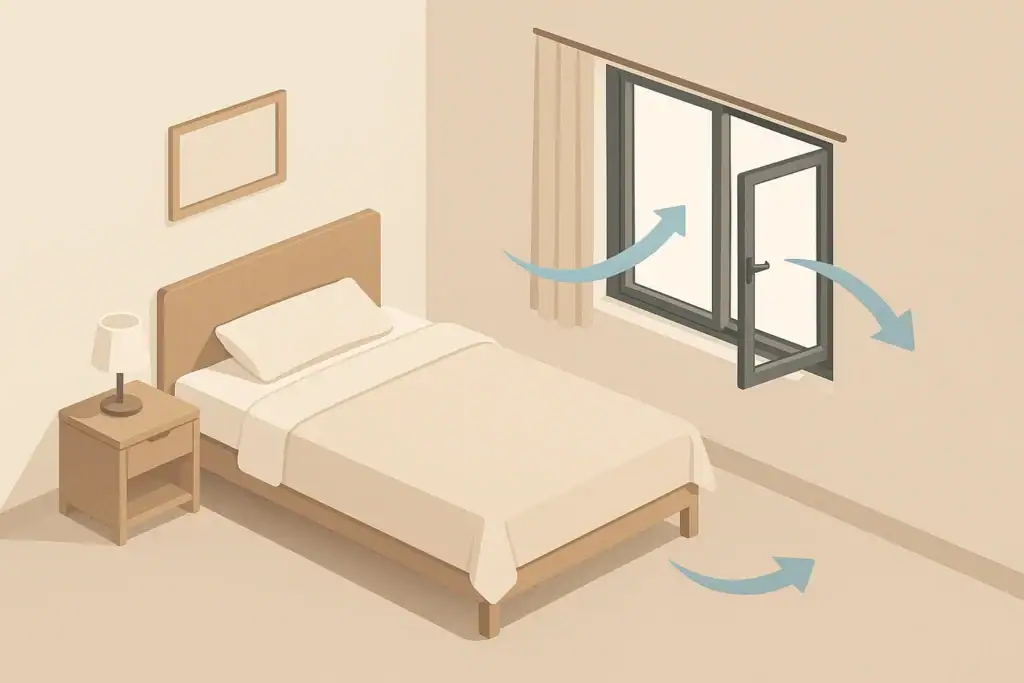
Scenario 1: Stuffy Bedroom at Night
Several hours after going to bed, the room feels heavy and air seems stale even though it is not visibly dusty.
- Likely issue: CO2 and other exhaled pollutants building up in a closed room.
- Better tool: Ventilation first. Crack a window if outdoor air is acceptable, or use a mechanical fresh-air option if available.
- How a purifier helps: It can reduce particles and allergens but will not lower CO2 on its own. Use it in addition to, not instead of, fresh air.
Scenario 2: Wildfire Smoke in the Region
The outdoor air is visibly hazy, and local reports mention elevated smoke and fine particles.
- Likely issue: High outdoor PM2.5 that can easily leak indoors.
- Better tool: Air purifier. Keep windows and doors closed as much as practical and run a purifier with a strong fine particle filter in the rooms you use most.
- Ventilation approach: Temporarily reduce natural ventilation; use only the minimal amount of outdoor air needed for safety and comfort until outdoor conditions improve.
Scenario 3: Bathroom Moisture and Mold Spots
After showers, mirrors stay fogged for a long time, and small mold spots show up on ceiling corners.
- Likely issue: Excess humidity and poor moisture removal.
- Better tool: Ventilation. Run the bathroom exhaust fan during showers and for at least 20–30 minutes afterward. If there is no fan, opening a window can help when outdoor air is not humid.
- Role of purifier: An air purifier does not remove humidity and will not fix the underlying moisture problem, though it can help with musty odors after moisture is controlled.
Scenario 4: Persistent Cooking Odors
Cooking with high heat or frying leaves a noticeable smell that lingers into the next day.
- Likely issue: Inadequate kitchen exhaust and lingering particles and VOCs.
- Better tool: Ventilation first. Use a range hood that vents outdoors whenever you cook, and continue running it for a short period after finishing.
- Supplement with purifier: A purifier with both fine particle and sorbent media can help reduce greasy particles and some odors in adjacent rooms.
Scenario 5: Allergies, Pets, and Dust
Someone in the home has allergies, there are pets, and dust seems to settle quickly between cleanings.
- Likely issue: Elevated indoor particles from pet dander, tracked-in dust, and everyday activities.
- Better tool: Air purifier. Use one sized appropriately for the bedroom and main living area, and run it on a higher setting when symptoms are worse.
- Ventilation role: Normal ventilation is still important, but it will not selectively remove allergens the way filtration can.
Scenario 6: Small Apartment Near a Busy Road
Opening windows lets in traffic noise and sometimes noticeable outdoor pollution, but keeping them closed makes the air feel stale.
- Likely issue: Need to balance fresh air with outdoor pollution and noise.
- Strategy: Use short, targeted ventilation periods when outdoor air is cleaner (early morning or late evening) and rely on a purifier the rest of the time to reduce indoor particles.
- Extra step: If there is a bathroom or kitchen fan, use it briefly to flush air after activities that create moisture or strong odors.
Common Mistakes and Troubleshooting Cues
Many air quality problems persist not because the wrong equipment was purchased, but because it is used in the wrong way or for the wrong problem.
Typical Missteps with Ventilation
- Running bathroom fans for only a few minutes. Moisture remains on surfaces and in the air, increasing mold risk.
- Using recirculating range hoods as if they were outdoor vents. These often only pass air through a simple filter and blow it back into the room, so smoke and moisture are not fully removed.
- Never opening windows in mild weather. In moderate outdoor conditions, brief window openings can quickly reduce CO2 and odors at very low cost.
- Over-ventilating during pollution events. On high-smoke or high-smog days, more outdoor air can increase indoor particle levels.
Typical Missteps with Air Purifiers
- Buying a unit that is too small. A purifier undersized for the room may run constantly without noticeably improving air quality.
- Placing the purifier in a corner or behind furniture. Restricted airflow reduces how much room air passes through the filters.
- Running on the quietest setting only. Lowest speeds may not provide enough clean air delivery during high-pollution periods.
- Ignoring filter replacement indicators. Clogged filters reduce performance and can cause air to bypass the filter media.
Quick Troubleshooting Guide
| Symptom | Likely cause | What to check | Adjust ventilation or purifier? |
|---|---|---|---|
| Room feels stuffy, mild headache, especially with several people | Low fresh air, elevated CO2 | Windows always closed, fans off, tightly sealed room | Increase ventilation first; keep purifier for particles if needed. |
| Visible haze or smell of smoke indoors during regional fires | Outdoor particles leaking inside | Windows cracked open, gaps around doors, HVAC bringing in unfiltered air | Close leaks where practical and run purifier on higher speed. |
| Condensation on windows and mold near corners | High indoor humidity, poor moisture removal | Bathroom/kitchen fans underused or not vented outdoors | Improve exhaust and consider dehumidification; purifier is secondary. |
| Dust quickly returns after cleaning | Ongoing particle sources and resuspension | Vacuum type, pet activity, purifier size and speed | Use purifier more consistently and improve cleaning methods. |
| Purifier seems loud but air still feels dirty | Undersized unit or blocked airflow | Room size vs purifier rating, placement, filter condition | Reposition unit, replace filters, or use a higher-capacity purifier. |
Safety Basics for Ventilation and Air Purifiers
Most ventilation and air-cleaning strategies are straightforward, but a few safety points are important.
Ventilation and Combustion Safety
- Avoid backdrafting. Strong exhaust fans in tight homes can sometimes pull combustion gases from fireplaces or fuel-burning appliances back into the living space. If you notice soot, smoke smell, or unusual drafts near these appliances when fans run, have the system evaluated.
- Do not ignore carbon monoxide alarms. If a CO alarm sounds, follow emergency guidance immediately and ventilate the space, then address the combustion source before returning to normal operation.
- Use unvented combustion appliances carefully. Devices such as unvented space heaters add moisture and combustion byproducts directly to the room air. Adequate ventilation is essential when they are used.
Air Purifier Safety Considerations
- Check for ozone-related features. Some devices use technologies that can generate ozone as a byproduct. Excess ozone can irritate lungs and should be avoided indoors.
- Follow electrical and placement guidelines. Keep purifiers away from water sources, do not pinch cords under furniture, and avoid blocking air inlets or outlets.
- Filter changes and dust exposure. When replacing dirty filters, handle them gently and consider placing them directly into a bag to reduce dust release.
Balancing Safety with Air Quality
During outdoor pollution events, it can be tempting to seal a home completely. Maintain at least minimal ventilation for health and safety, especially if there are combustion appliances in use. Use air purifiers to reduce particles while keeping necessary levels of fresh air.
Long-Term Use, Maintenance, and Seasonal Adjustments
Ventilation systems and air purifiers work best when they are maintained and adjusted with the seasons.
Maintaining Ventilation Systems
- Bathroom and kitchen fans: Periodically clean fan grilles and check that air is actually moving outside by holding a tissue near the fan while it runs.
- Ducted systems: Make sure exterior vents are not blocked by debris, nests, or vegetation.
- Seasonal operation: In cooler months, you may rely more on mechanical ventilation; in mild weather, windows can handle a larger share of air exchange.
Maintaining Air Purifiers
- Pre-filters: Clean or replace them on the schedule recommended by the manufacturer, or more often in dusty environments.
- Fine particle filters: Replace when indicated or when airflow or performance clearly drops.
- Sorbent media: Odor-absorbing filters eventually saturate; if odors return quickly, it may be time to replace this stage even if it still looks clean.
Seasonal Strategy Shifts
- Spring and fall: Outdoor air is often more comfortable, so you may use more natural ventilation and rely on purifiers for pollen and dust.
- Summer: In humid climates, limit open windows during the hottest, most humid hours and use exhaust fans strategically to control moisture.
- Winter: Homes are typically closed up, so mechanical ventilation and purifiers become more important for managing CO2, moisture, and indoor-generated pollutants.
Putting It All Together: Practical Takeaways and Specs to Look For
Choosing between ventilation and an air purifier is not a one-time decision. It is an ongoing adjustment based on what the air needs on a given day.
- Use ventilation whenever you need to remove moisture, CO2, and strong odors at the source, especially in bathrooms and kitchens.
- Use an air purifier when you need to reduce particles and some gases indoors, especially during smoke events, pollen season, or in homes with pets and dust sensitivity.
- Combine both tools in most homes: ventilation for freshness and moisture control, and purifiers for targeted particle and odor reduction in key rooms.
Specs to Look For: Air Purifier Checklist
- Room size rating: Check that the stated coverage area matches or exceeds the square footage of the room you plan to use it in.
- Clean Air Delivery Rate (CADR): Higher CADR values for smoke and dust generally mean faster particle removal. Look for values that provide several air changes per hour in your room size.
- Filter types: A dedicated fine particle filter plus a separate pre-filter and sorbent stage provide more complete coverage of common indoor pollutants.
- Noise levels: Look for sound levels that you can tolerate at the speeds you will actually use, especially in bedrooms.
- Filter replacement indicators: Built-in reminders help maintain performance over time.
- Energy use: Consider power draw at typical operating speeds, since purifiers often run for many hours per day.
Specs to Look For: Ventilation and Exhaust
- Bathroom fan airflow: A fan should be appropriately sized for the room and able to clear moisture within a reasonable time after showers.
- Range hood performance: Hoods that vent outdoors and capture steam and smoke directly above the cooking surface are generally more effective.
- Whole-house ventilation controls: Simple, understandable controls make it easier to adjust runtime with seasons and occupancy.
- Noise and user comfort: Quieter fans are more likely to be used consistently, especially at night.
By matching these specifications to your home’s layout, climate, and everyday habits, you can build a balanced strategy where ventilation and air purification work together to keep indoor air cleaner, drier, and more comfortable over the long term.
Frequently asked questions
Which specifications and features matter most when choosing an air purifier or ventilation system?
For air purifiers, prioritize room-size coverage, Clean Air Delivery Rate (CADR) for relevant pollutants, filter types (HEPA for particles plus activated carbon for gases/odors), noise, and energy use. For ventilation, look at airflow capacity (CFM), whether the system vents outdoors or recirculates, and user-friendly controls; heat- or energy-recovery features can reduce heating/cooling impacts. Match specs to your room size, typical pollutants, and how you plan to use the device.
Is it OK to rely only on an air purifier instead of ventilating a room?
Not always. Air purifiers are effective at removing particles and some gases but do not remove CO2 or humidity produced by occupants and activities. For occupied, sealed spaces you still need some ventilation to control CO2, moisture, and combustion byproducts, while a purifier can supplement particle control.
Are there any safety concerns I should know about when using ventilation or air purifiers?
Yes. For ventilation, excessive exhaust in tight homes can cause backdrafting from combustion appliances, and carbon monoxide alarms must be heeded. For air purifiers, avoid devices that produce ozone or other harmful byproducts, and follow electrical and filter-handling guidance to reduce dust exposure and fire risk.
How often should I change or clean air purifier filters and check ventilation components?
Follow the manufacturer’s guidance, but typical intervals are: pre-filters cleaned monthly or as needed, HEPA filters replaced every 6–12 months depending on use and pollution levels, and sorbent/carbon media replaced when odors return. For ventilation, inspect and clean fan grilles periodically and check that exterior vents are clear at least once or twice a year.
Where is the best place to put a portable air purifier for maximum effectiveness?
Place the purifier where airflow is unobstructed, ideally near the center of the room or between the main pollutant source and occupants, and not tucked into a corner or behind furniture. Elevating the unit slightly off the floor can improve circulation, and ensure inlet/outlet areas are kept clear for the rated airflow to be achieved.
How should I balance ventilation and filtration during outdoor pollution events like wildfires?
Close windows and doors during high outdoor pollution and run a HEPA-capable purifier indoors to reduce infiltrated particles. Limit ventilation to brief, targeted periods when outdoor air quality improves; maintain minimal ventilation needed for combustion safety if fuel-burning appliances are in use.
- Clear sizing logic (room size → CADR/ACH)
- HEPA vs carbon explained for real use-cases
- Humidity + ventilation basics to reduce mold risk

About this site
Home Air Quality Lab publishes practical, independent guides about indoor air quality—clear sizing, safer use, and real-world expectations.
Affiliate disclosure
Some links on this site may be affiliate links. If you buy through these links, we may earn a small commission at no extra cost to you. This helps support our content. Learn more.