
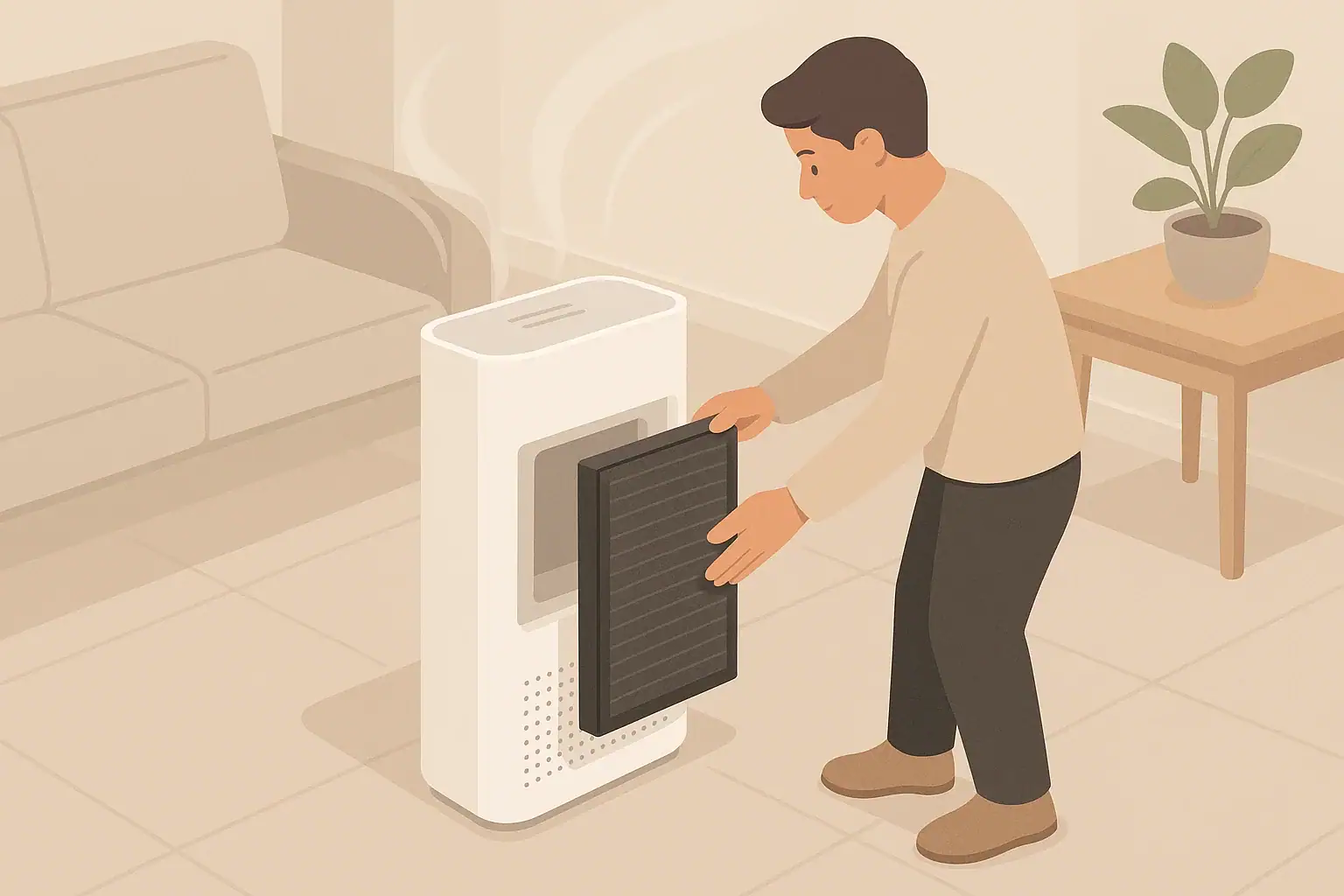
Carbon filters are a common component in many household air-cleaning devices, and knowing when to replace them helps maintain comfort and indoor air quality. This article explains how carbon filtration works, typical lifespans for different home settings, practical signs that a carbon stage is spent, and straightforward checks you can do without lab equipment. It also covers handling and disposal, factors that affect filter life, and tips for scheduling replacements alongside other routine maintenance. Use these guidelines to develop a consistent replacement plan tailored to your home’s cooking habits, occupancy, and ventilation—so you can avoid lingering odors and ensure your purifier or range hood performs as intended. The sections below link to the main topics, making it easy to jump to the parts most relevant to your setup.
What Carbon Filters Do (And Why They Wear Out)
Carbon filters are commonly used in home air purifiers, range hoods, and some HVAC systems to help reduce odors and certain airborne chemicals. They work very differently from particle filters like HEPA, and that difference is the reason they wear out in a less obvious way.
Instead of trapping particles in a dense fiber web, carbon filters use activated carbon (sometimes called activated charcoal). This material is processed to have a huge internal surface area. Gases and vapors bump into that surface and are held there in a process called adsorption.
In a home setting, carbon filters are often used to reduce:
- Cooking odors and lingering smells from strong foods
- Household odors from garbage, pets, or bathrooms
- Some volatile organic compounds (VOCs) from cleaning products, paints, and furnishings
- Smoke odors from cooking, fireplaces, or nearby outdoor smoke
Over time, those gases and odors fill up the available sites on the carbon surface. Once most of those sites are occupied, the filter is effectively spent and can no longer capture much more, even if it still looks clean. That saturation is the main reason carbon filters must be replaced periodically.
Typical Lifespan of Home Carbon Filters
Unlike particle filters, which often have a more predictable replacement schedule, the lifespan of a carbon filter depends heavily on what it is exposed to and how often air passes through it. However, some general ranges are commonly used for planning.
General time ranges you are likely to see
For many home applications, these are typical example ranges manufacturers and professionals may suggest:
- Portable air purifier carbon filters: about 3–6 months of regular use
- Heavy-use situations (frequent cooking, smoke, strong odors): potentially as short as 1–3 months
- Light-use situations (intermittent operation, low odor/VOC loads): sometimes up to about 9–12 months
- Range hood carbon inserts (recirculating mode): often around 3–6 months of regular cooking
- HVAC add-on carbon panels: commonly 3–6 months, checked when other filters are serviced
These are not strict rules. A carbon filter can be saturated long before its calendar date in a home with frequent frying, strong cleaning products, or indoor smoking. In a very low-odor home where the device is run only occasionally, the same filter might still be serviceable after many months.
Example values for illustration.
| Filter type | Best at handling | Not designed for | Replacement driver |
|---|---|---|---|
| Activated carbon filter | Odors, some VOCs, smoke smells | Fine particles like dust and pollen | Odor/VOC saturation, time in service |
| Granular carbon cartridge | Higher odor and gas loads | Capturing hair and large debris | Odor breakthrough, heavy use |
| Thin carbon-impregnated sheet | Light odors, pre-filtering | High levels of gases or smoke | Quick saturation, mechanical wear |
| True HEPA filter | Fine particles (dust, pollen, dander) | Gases, VOCs, most odors | Visible dirt buildup, airflow drop |
| Pre-filter (mesh or foam) | Hair, lint, large particles | Odors and gases | Dust loading, clogging |
Key Signs Your Carbon Filter Is Spent
Because spent carbon often still looks clean, it helps to use a mix of time-based and symptom-based checks. No single sign is perfect, but several together usually give a clear picture.
1. Odors return faster than they used to
One of the clearest indicators is a change in how your home smells:
- Cooking or pet odors that used to fade quickly now linger for hours.
- Smoke or strong smells from outside are more noticeable indoors.
- You find yourself running the purifier longer to get the same odor reduction.
If your usage habits and room conditions are the same but odors break through much sooner than when the filter was new, the carbon is likely saturated.
2. The filter has been in use longer than its recommended window
Even if you do not notice strong smells, an overdue calendar age is a practical indicator. If the manual or label suggests replacement every few months and you are at or beyond that range, it is reasonable to assume performance has declined, especially in kitchens, living rooms, or other odor-prone spaces.
3. The unit smells musty or sour when it starts up
A carbon filter can sometimes pick up moisture and organic material along with odors. Over time, that combination can lead to stale or musty smells, especially if the air purifier or range hood sits unused for a while.
If you notice a sour, musty, or stale smell directly from the purifier or vent when it first turns on, it is a strong sign the filter assembly (including carbon and pre-filters) needs attention. Always follow the appliance manual, and do not attempt to wash a carbon filter unless the manufacturer explicitly states it is designed for that.
4. The appliance indicator light calls for replacement
Many air purifiers and some HVAC accessories include a filter change light or timer. In many units, this indicator is time-based rather than sensor-based—it counts hours of operation instead of measuring gas saturation directly.
Even though it is not a perfect measure of remaining capacity, the indicator is still a useful reminder. Treat it as a minimum starting point: if you live in a home with heavy cooking, smoke, or strong products, you might replace carbon filters slightly before the light comes on in future cycles.
5. Air still flows well, but odor performance is poor
Clogged particle filters often cause reduced airflow and noise changes. Carbon filters typically saturate without a dramatic airflow change, particularly when they are designed as open, granular beds or thin carbon sheets.
If your purifier still moves air strongly but its odor reduction has clearly declined, the carbon stage is likely the limiting factor, even if the HEPA filter is still catching dust effectively.
How Often to Replace Carbon Filters in Common Home Setups
If your appliance manual specifies a schedule, that should be your primary reference. When guidance is vague or missing, you can use simple rules of thumb based on how and where the filter operates.
Portable air purifiers in living areas
For a purifier running several hours per day in a typical living room:
- Plan on carbon replacement about every 3–6 months.
- Shorten the interval toward 3 months if you cook frequently, burn candles often, or live near busy roads or wildfire-prone areas.
- Extend closer to 6 months for low-odor homes with modest purifier use.
Bedroom purifiers
Bedrooms usually have fewer odor sources but may run overnight for many hours:
- Replacement every 4–9 months can be reasonable, depending on usage and home conditions.
- If you notice morning stuffiness or lingering smells (for example, from nearby cooking), move toward the shorter end of that range.
Kitchen and cooking areas
Kitchens expose carbon filters to hotter, more concentrated odor and grease loads:
- Recirculating range hoods using carbon pads or cartridges often benefit from replacement about every 3–6 months.
- Portable purifiers placed near cooking areas may need more frequent changes than those in bedrooms, especially if used to reduce frying and strong food odors.
When in doubt in a kitchen setting, it is usually better to err on the side of more frequent carbon replacement because grease and heavy cooking odors can saturate filters quickly.
HVAC returns and whole-house setups
Some homes use carbon panels in return registers or in the main air handler:
- Check these at the same time you inspect your main HVAC filter.
- A practical window is often 3–6 months, but it can vary with climate, occupancy, and cooking habits.
- Because they see all of the home’s circulated air, they can saturate steadily even if no single room smells strongly.
How to Check a Carbon Filter Without Lab Equipment
You do not need specialized tools to make reasonable decisions about carbon filter replacement. Simple, repeatable checks can guide you.
1. Track time in use
Use a calendar, note app, or label on the purifier to record the installation date. Then:
- Count months of use rather than just calendar months if you turn the device off for extended periods.
- Consider total hours: a purifier that runs 24/7 will consume carbon much faster than one used only a few hours per day.
2. Do a simple odor comparison test
This is an informal but practical method:
- Run the purifier or exhaust for a set period (for example, 30–60 minutes) after a typical odor event, such as cooking or using a cleaning product.
- Step into another part of the home or briefly outside, then return and notice how much odor remains.
- Repeat the same test every few weeks under similar conditions.
If performance noticeably declines over time while your habits remain consistent, it signals that the carbon stage is losing capacity.
3. Visual and touch inspection (with care)
After switching the appliance off and following safety instructions in the manual, you can:
- Look for obvious dust buildup on pre-filters that sit before the carbon stage.
- Check for oiliness or heavy grime in kitchen installations.
- Avoid poking or compressing granular carbon, which can damage the structure and create bypass gaps.
Remember that a carbon filter can look intact and still be chemically saturated, so visual checks supplement but do not replace time and odor-based judgments.
4. Rely on a conservative replacement habit
Because there is no simple homeowner test for remaining adsorption capacity, many people choose a conservative approach: replace slightly earlier than the maximum suggested interval, especially in higher-exposure rooms. This simplifies decisions and helps maintain more consistent odor control.
What Affects Carbon Filter Lifespan?
Several factors can shorten or extend how long your carbon filter stays useful.
1. Odor and VOC load
The more gases the filter must handle, the faster it saturates. Sources include:
- Frequent frying, grilling, or high-odor cooking
- Indoor smoking or frequent incense burning
- Heavy use of strong cleaners, air fresheners, or solvents
- Recent painting, new furnishings, or renovations
Reducing avoidable sources (for example, improving ventilation while painting) can help extend filter life somewhat.
2. Airflow rate and runtime
Carbon filters process more air when you run appliances on higher settings or around the clock. More air processed means more exposure to odors and VOCs per day, which can be useful for improving comfort but also uses up capacity faster.
A balanced approach is to use higher speeds during odor events (such as cooking) and quieter, lower speeds the rest of the time if your appliance allows it.
3. Temperature and humidity
Extremely high humidity or steam can reduce adsorption efficiency for some gases. In kitchens and bathrooms, this can combine with grease and moisture to age filters more quickly.
Simple steps like using lids while boiling, running exhaust during showers, and letting steam clear before turning a purifier back to normal settings can help limit unnecessary stress on the filter.
4. Filter design and amount of carbon
Carbon filters vary in thickness, density, and form (granules, pellets, or thin impregnated mats). In general, more carbon material can offer more capacity, but design details and airflow patterns matter too.
Because designs differ, two filters of the same size can have different service lives even under the same conditions. This is one reason it is helpful to rely partly on your own observation rather than on a single generic time rule.
Safe Handling and Disposal of Used Carbon Filters
Used carbon filters are usually handled as general household waste, but it is still worth treating them carefully.
1. Avoid shaking or tearing the filter
When removing the filter:
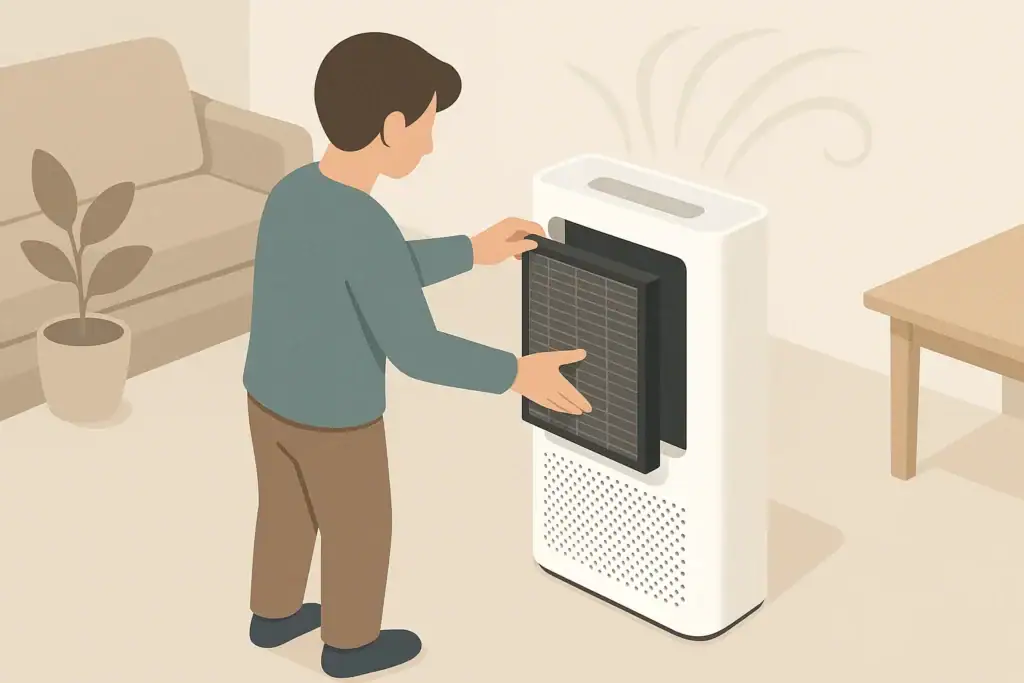
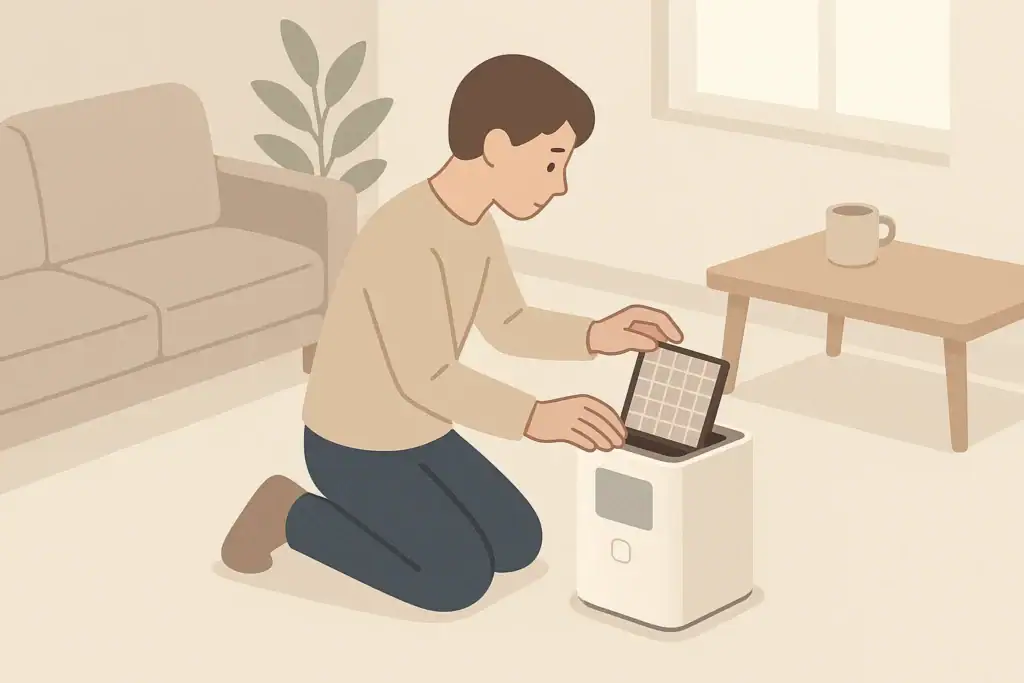
- Switch off and unplug the appliance before opening panels or doors.
- Lift the filter out gently, holding it so granular material does not spill.
- Avoid hitting or compressing the filter, which can release dust and small particles.
2. Basic personal protection
While routine filter changes are not typically hazardous, some people prefer added precautions:
- Wear disposable gloves if the filter is greasy or soiled.
- Change filters in a well-ventilated area if possible.
- Place the used filter directly into a bag and seal it before disposing with household trash, especially if it has captured noticeable smoke or chemical odors.
3. Follow local guidance if available
Most areas treat carbon filters like other household disposables, but if your local waste authority offers specific instructions for filters or odor-control media, those should take priority.
Practical Replacement Planning at Home
Maintenance routine integration: Making carbon filter replacement part of a broader maintenance routine can simplify indoor air management and help your equipment perform more consistently.
1. Pair carbon changes with other maintenance tasks
To keep track without constant reminders, combine carbon checks with other recurring chores:
- Inspect or replace carbon filters when you change your HVAC filter.
- Add them to seasonal home checklists (for example, at the start of heating or cooling seasons).
- Check portable purifiers when you deep-clean kitchens or bedrooms.
2. Keep a simple log
A few lines in a notebook or note app can track:
- Installation date and room location
- Approximate daily runtime (for example, 8 hours vs. 24 hours)
- Any changes in odor performance you notice over time
After a few cycles, this information will help you fine-tune replacement intervals for your specific home rather than relying only on generic ranges.
3. Combine carbon filters with good ventilation and source control
Carbon filters work best as part of a bigger strategy rather than the only tool you rely on. Helpful habits include:
- Using kitchen and bathroom exhaust fans to remove steam and odors at the source.
- Opening windows when outdoor air quality and weather conditions allow.
- Storing strong chemicals, paints, or solvents in well-ventilated or designated areas.
- Following manufacturer instructions for filter installation to minimize bypass around the carbon media.
Example values for illustration.
| Filter type | Typical interval range | What changes it | Reminder |
|---|---|---|---|
| Purifier carbon in living room | About 3–6 months | Cooking odors, outdoor pollution, smoke | Replace sooner if odors linger longer than before |
| Bedroom purifier carbon | About 4–9 months | Nightly runtime, nearby cooking or traffic | Check at least twice per year |
| Kitchen range hood carbon insert | About 3–6 months | Frying, grilling, strong spices | Inspect if cooking smells linger after meals |
| HVAC return carbon panel | About 3–6 months | Whole-house airflow, occupancy | Check whenever you change main HVAC filters |
| Thin carbon-impregnated pre-filter sheet | About 1–3 months | Dust loading, high odor events | May need more frequent replacement than main filter |
Putting It All Together
Carbon filters are a useful tool for managing odors and certain gases at home, but they are consumable: once the adsorption sites are filled, performance declines even if the filter still looks clean. Watching for odor breakthrough, tracking time in service, and pairing carbon replacement with other routine maintenance can keep your equipment working closer to its intended performance.
By combining carbon filtration with practical ventilation, thoughtful placement of purifiers, and responsible use of odor-producing products, you can set up a straightforward, low-stress approach to indoor air comfort that fits the way your household actually lives.
Frequently asked questions
How can I tell when to replace carbon filters if the filter still looks clean?
Look for symptom-based signs: odors or smoke that used to clear quickly now linger, a musty smell when the unit starts, or declining odor reduction in repeat tests. Combine those observations with the time the filter has been in service (months or total runtime) to decide on replacement.
How often should I replace carbon filters in a kitchen compared with a bedroom?
Kitchens usually require more frequent changes—about 3–6 months for range hoods or purifiers near cooking areas—because of heat, grease, and concentrated odors. Bedrooms typically see lower odor loads and can often use carbon filters for roughly 4–9 months depending on nightly runtime and nearby sources.
Can I clean or reactivate a spent carbon filter to extend its life?
Most household carbon filters cannot be reliably cleaned or reactivated at home; washing usually removes binder and reduces performance, and thermal reactivation requires industrial temperatures and equipment. Follow the appliance’s instructions—when in doubt, replace the media rather than attempting DIY reactivation.
Will a saturated carbon filter cause reduced airflow like a clogged particle filter?
Not usually: carbon stages often saturate chemically without producing a large airflow drop, especially when the design is a loose granular bed or thin sheet. If you notice reduced airflow or noise changes, check pre-filters and particle filters first, since those are more likely to cause mechanical airflow restrictions.
What is the recommended way to dispose of used carbon filters?
Most used carbon filters can be disposed of with household waste; handle them gently to avoid spilling granular carbon and seal them in a bag if they are greasy or smell strongly. Always follow local disposal guidance if your waste authority provides specific instructions.
Recommended next:
- Clear sizing logic (room size → CADR/ACH)
- HEPA vs carbon explained for real use-cases
- Humidity + ventilation basics to reduce mold risk
About this site
Home Air Quality Lab publishes practical, independent guides about indoor air quality—clear sizing, safer use, and real-world expectations.
Affiliate disclosure
Some links on this site may be affiliate links. If you buy through these links, we may earn a small commission at no extra cost to you. This helps support our content. Learn more.