
What to do immediately
If your dehumidifier smells like burning, turn it off and stop using it. Unplug it only if the plug and outlet are safely accessible and there is no smoke, flame, sparking, melted plastic, or excessive heat. A persistent burning odor can indicate an overheated motor, blocked airflow, failing electrical component, or damaged power connection.
If there is smoke or fire, leave the area and contact emergency services rather than trying to inspect or move the unit. The U.S. Fire Administration’s electrical fire guidance provides general information about damaged cords, overloaded outlets, and other electrical hazards.
Checks to make after the unit cools
Do not remove the cabinet. Dehumidifiers can contain components that retain an electrical charge after the unit is unplugged. Limit your inspection to accessible exterior parts and routine maintenance described in the owner’s manual.
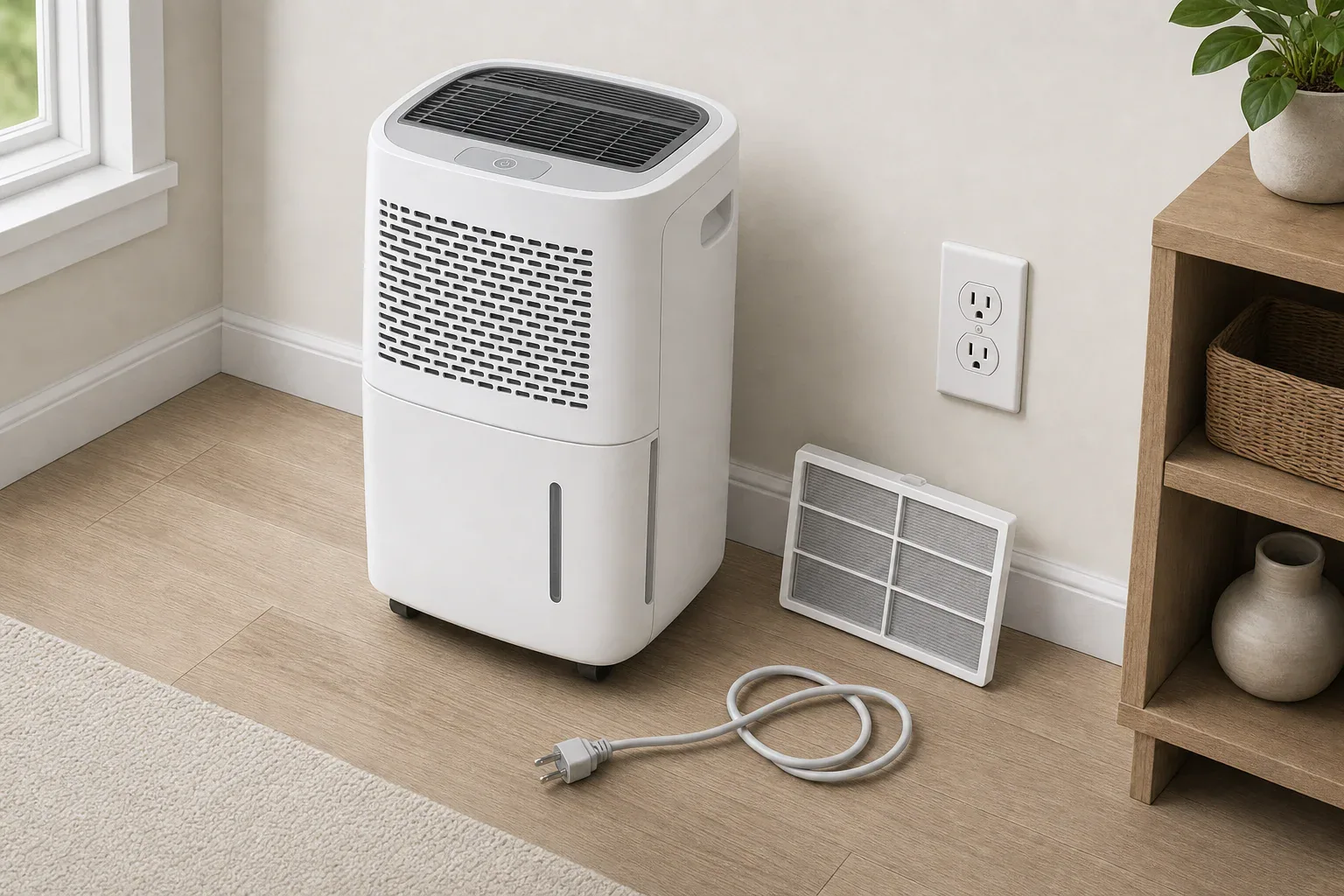
- Inspect the cord and plug. Look for discoloration, cracking, melting, exposed wire, or deformed prongs. Do not reuse the appliance if any damage is present.
- Examine the wall outlet. Stop if you see scorching, looseness, melting, or other damage. An electrician can assess a suspect outlet.
- Check the air filter. A heavily clogged filter can restrict airflow and increase operating temperatures. Clean or replace it according to the manual.
- Clear the grilles. Remove dust from accessible intake and exhaust grilles with the unit unplugged. Do not insert tools through the openings.
- Confirm adequate clearance. Curtains, furniture, laundry, and walls should not block airflow. Follow the manufacturer’s placement instructions.
- Look for water intrusion. A misaligned bucket, leaking hose, or internal overflow may allow moisture to reach areas where it does not belong. Do not restart a wet or leaking unit.
Likely causes of the odor
Restricted airflow
A dirty filter, blocked grille, or poor placement can reduce cooling around the compressor, fan motor, and electronics. The odor may come from hot dust or insulation. Cleaning accessible airflow paths may correct a minor dust-related odor, but it should not be treated as a repair for recurring overheating.
Fan motor or fan obstruction
A failing motor may overheat, while debris or a damaged fan can prevent normal airflow. Warning signs include grinding, buzzing, intermittent fan operation, or airflow that is noticeably weaker than usual.
Compressor or starting-component problem
A compressor that struggles to start may hum, stop, and retry. Relays, capacitors, wiring, and control boards can also fail and produce a hot electrical odor. These parts are not appropriate for an exterior-only inspection and require qualified service.
Damaged cord, plug, or outlet
A loose or deteriorated connection can generate heat at the plug or receptacle. Discoloration, melting, crackling, or an unusually hot connection means the appliance should remain disconnected until the affected equipment is evaluated.
Dust after long storage
Dust on internal surfaces can create a brief hot-dust odor when a stored unit returns to service. Because that smell can be difficult to distinguish from electrical overheating, stop using the dehumidifier if the odor is sharp, worsening, accompanied by unusual noise, or returns after the filter and exterior grilles are cleaned.
New-material odor
A new appliance may release a mild plastic or manufacturing odor during early operation. Do not assume that a sharp, smoky, acrid, or intensifying smell is normal. Follow the manual and contact the manufacturer if the odor persists.
When not to restart the dehumidifier
Keep the unit unplugged if you find or notice any of the following:
- Smoke, sparking, scorching, melted plastic, or visible wiring damage
- A damaged cord or plug
- A loose, discolored, or damaged outlet
- A burning smell that returns after basic cleaning
- Repeated breaker trips
- Buzzing, grinding, stalled fan operation, or repeated start attempts
- Water reaching the cord, plug, controls, or internal electrical areas
Do not repeatedly reset a breaker or bypass a plug, switch, sensor, or other protective component. A qualified appliance technician can diagnose internal failures; an electrician is the appropriate professional for a suspect receptacle or household circuit.
Check for a recall
Record the model and serial number from the rating plate, then search the U.S. Consumer Product Safety Commission recall database. Follow the recall instructions if the exact model is listed rather than continuing to operate or repair it independently.
Repair or replace?
Service may be reasonable when the cabinet, power connection, and major sealed components are intact and a qualified technician can identify a replaceable part. Replacement may be more practical when there is heat damage, repeated electrical trouble, extensive corrosion, a sealed-system failure, or unavailable parts. Do not base the decision on odor alone; the source must first be identified.
Related guides: Dehumidifier Short Cycling: Causes and How to Fix It • Dehumidifier Noise: What to Expect and How to Make It Quieter • How to Size a Dehumidifier (Sq Ft, Pints/Day, and Real-World Tips)
Frequently asked questions
Can I run the dehumidifier again after cleaning the filter?
Only consider restarting it if the unit has cooled, there is no damage to the cord, plug, outlet, or cabinet, and the owner’s manual permits the routine cleaning you completed. Stop using it if the burning odor returns or if it makes unusual noises, trips a breaker, or operates abnormally.
Why does my dehumidifier smell hot but still remove water?
A unit can continue removing water while a fan motor, compressor starting component, electrical connection, or airflow path is overheating. Water collection does not confirm that the appliance is safe to operate, so a persistent hot or burning odor warrants stopping use and identifying the source.
Should I use an extension cord for a dehumidifier that smells like burning?
No. Do not use an extension cord or power strip to work around a hot, loose, or damaged plug or outlet. Keep the appliance disconnected and have the unit or household receptacle evaluated as appropriate.
Summary
Turn off a dehumidifier that smells like burning and disconnect it only when doing so is safe. After it cools, inspect the cord, plug, outlet, filter, grilles, clearance, and visible water path without opening the cabinet. Do not restart it if the odor returns or if there are signs of electrical damage, abnormal operation, or overheating.
- Clear sizing logic (room size → CADR/ACH)
- HEPA vs carbon explained for real use-cases
- Humidity + ventilation basics to reduce mold risk