
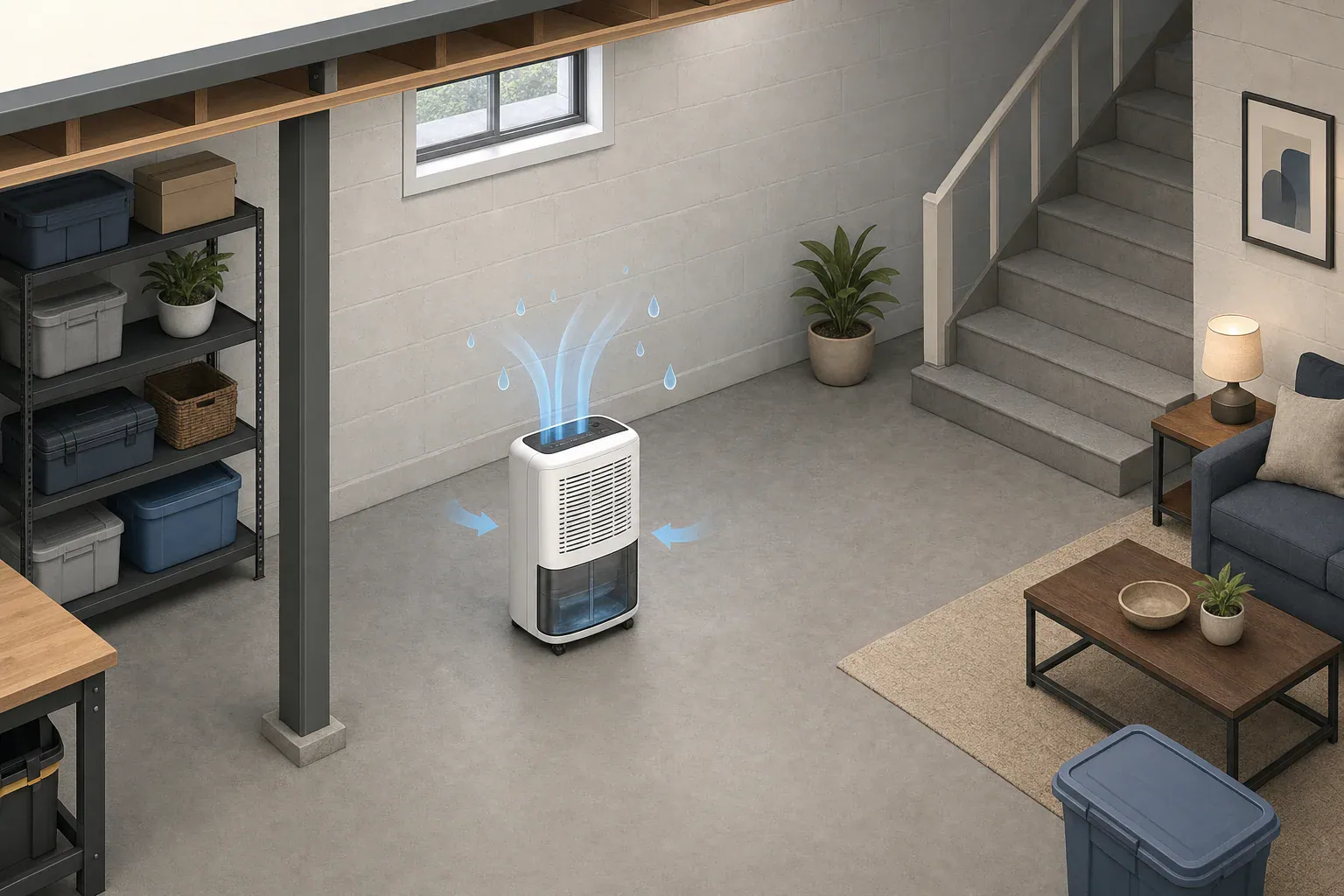
Expect hours, not minutes
A dehumidifier may produce a noticeable humidity drop within a few hours in a closed room, but a damp basement or moisture-loaded space can take 12 to 24 hours or longer to approach the selected setting. These are practical estimates rather than guarantees. Run time depends on the unit, room conditions, and whether moisture is continuing to enter the space.
The initial reading can fall relatively quickly as water is removed from the air. Progress may then slow because concrete, wood, furnishings, and other materials can release stored moisture back into the room.
What determines the run time?
- Starting and target humidity: A larger difference generally requires more time.
- Room size and layout: Large rooms, open stairways, and divided spaces contain more air and may have uneven circulation.
- Dehumidifier capacity: A higher-capacity unit can remove more water under its rated conditions, but actual removal varies with temperature and humidity.
- Ongoing moisture: Outdoor air, wet materials, laundry, plumbing leaks, and ground moisture can offset water removal.
- Temperature: Many portable refrigerant dehumidifiers remove less water in cooler conditions and may pause for automatic defrosting.
- Airflow: A clogged filter, blocked intake, restricted outlet, or poor placement can slow moisture removal.
How to judge whether it is working
- Record the starting relative humidity before turning on the unit.
- Close exterior windows and doors when practical so the unit is not continually processing humid outdoor air.
- Set the dehumidifier on a stable surface with the clearances specified in its manual.
- Let it run for several hours before evaluating the trend. Frequent readings taken only minutes apart are not very informative.
- Check whether water is collecting in the bucket or reaching the drain as intended.
- Compare readings from the same location and similar room conditions.
Built-in humidistats can differ from a separate hygrometer because the sensors are in different locations. Air near the machine may also be warmer or drier than air elsewhere in the room. Compare trends rather than expecting two devices to show identical numbers.
Why humidity may stop falling
If the reading drops at first and then levels off, the dehumidifier may have reached equilibrium with the room’s moisture load. It is removing water, but moisture is entering or evaporating into the air at a similar rate.
Check for open windows, an obstructed filter, limited airflow, a full bucket, an incorrect setting, or a drainage problem. In a persistently damp area, also look for a continuing moisture source rather than relying on longer run time alone.
A unit that runs continuously without collecting water may be operating in conditions that limit extraction or may need service. Follow the manufacturer’s troubleshooting instructions rather than opening or modifying the appliance.
Initial drying versus maintenance
The first drying cycle is usually the longest because the unit is removing moisture from both the air and room materials. After the space stabilizes, the dehumidifier may cycle on and off to maintain its setting. A new moisture event or a change in outdoor conditions can increase run time again.
The capacity printed for a dehumidifier is not a promise that it will remove that amount every day in every home. Rated capacity is measured under specified conditions; cooler or less humid rooms generally produce less condensate.
Related guides: How to Size a Dehumidifier (Sq Ft, Pints/Day, and Real-World Tips) • Desiccant vs Compressor Dehumidifiers: Which Is Better for Cold Rooms? • Basement Dehumidifier Setup: Drainage, Placement, and RH Targets
Frequently asked questions
Can I leave a dehumidifier running overnight?
Many units are designed to run automatically until the selected humidity level is reached, subject to the instructions in their manual. Make sure the bucket or drain setup is working properly and keep the intake and outlet clear.
What humidity setting should I use?
A practical setting depends on the room, season, and the moisture problem being managed. Start with a moderate setting, then use hygrometer readings and comfort in the space to decide whether an adjustment is needed.
Why is my dehumidifier collecting less water after the first day?
Once the air and room materials have dried somewhat, there may be less available moisture for the unit to condense. Collection can also vary as room temperature, outdoor conditions, and moisture sources change.
Bottom line
Look for a downward humidity trend after several hours, while allowing a day or longer for a large or thoroughly damp space. If there is little change, evaluate unit capacity, airflow, temperature, room openings, drainage, and ongoing moisture sources before simply extending the run time.
- Clear sizing logic (room size → CADR/ACH)
- HEPA vs carbon explained for real use-cases
- Humidity + ventilation basics to reduce mold risk