
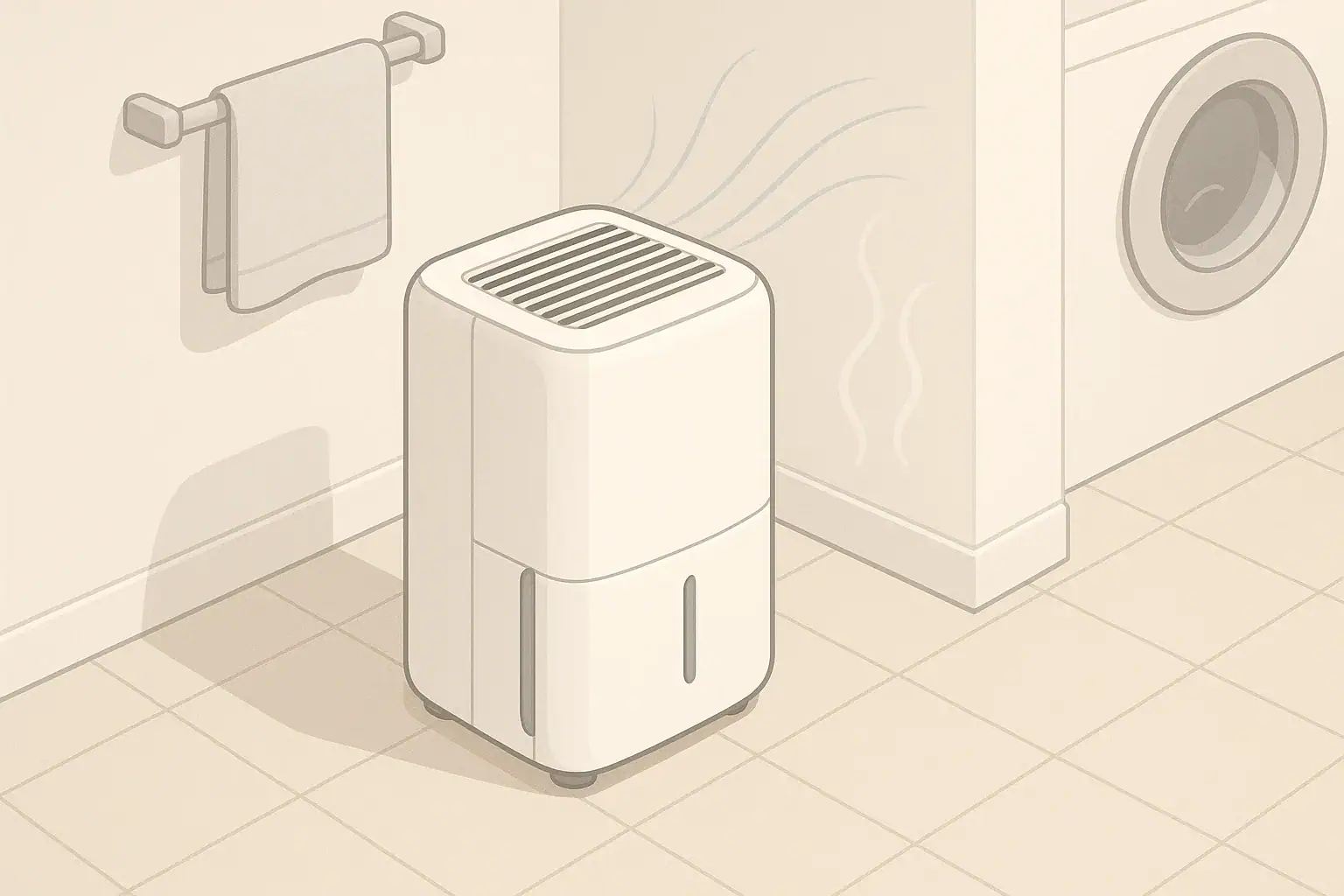
Dehumidifier short cycling is usually caused by an oversized unit, restricted airflow, a poorly placed humidistat, low room temperature, a full or misread bucket, or a control problem, and the fix is to verify humidity, improve airflow and placement, clean the unit, and match capacity to the space.
Short cycling means the dehumidifier turns on and off repeatedly instead of running long enough to remove moisture steadily. A few normal pauses are expected, but frequent starts every few minutes can reduce moisture control, increase noise, and add wear to the compressor or fan.
- A practical indoor humidity target is often about 40% to 50% relative humidity, with many homes aiming to stay below 60% to limit dampness.
- If the unit shuts off within a few minutes, check the filter, intake clearance, exhaust clearance, bucket seating, drain hose, and humidistat setting first.
- Allow at least 6 to 12 inches of open space around most intake and exhaust areas, unless the manual says otherwise.
- In cool areas below about 60°F to 65°F, many compressor dehumidifiers may cycle more often or enter defrost mode.
- If humidity stays high while the compressor short cycles, stop repeated restarting and consider professional service or replacement sizing review.
What Dehumidifier Short Cycling Means
A dehumidifier normally cycles. It senses room humidity, runs until it reaches the set point, pauses, and starts again when humidity rises. Short cycling is different: the run periods are unusually brief and repeat often, sometimes before the room has had time to mix air or drop humidity.
It helps to separate three behaviors:
- Normal cycling: The unit runs for a reasonable period, pauses, and humidity remains near the target.
- Fan-only cycling: The fan may sample air or continue briefly while the compressor is off. This may be normal depending on the design.
- Problem short cycling: The compressor or whole unit starts and stops frequently while the room remains damp or the display changes rapidly.
Short cycling matters because dehumidifiers work best when they pull room air across cold coils long enough to condense moisture. Very brief bursts can dry only the air close to the machine, leaving the rest of the room humid.
Why It Happens: Humidity, Sizing, and Controls
Most short cycling is related to how the dehumidifier senses humidity and how quickly the nearby air changes. The humidistat may be built into the unit, so it reads the air immediately around the appliance rather than the whole room.
Humidity set point and measurement
If the set point is close to the current room humidity, the unit may turn on and off often. For example, if the room is near 50% and the set point is 49% or 50%, small air changes can trigger the control. A separate indoor hygrometer placed several feet away can help confirm whether the room is actually changing or just the sensor area.
Capacity and room conditions
An oversized dehumidifier can remove moisture near the machine quickly and stop before air from the rest of the room mixes in. An undersized unit usually has the opposite problem: it runs for long periods and may not reach the target. Room size, ceiling height, open doors, damp materials, laundry, showers, basement walls, and outdoor humidity all affect cycling.
Temperature effects
Compressor-style dehumidifiers generally work less efficiently in cooler spaces. In a cool basement or garage-like area, frost can form on the coil, triggering defrost cycles or brief compressor operation. That can look like short cycling even when the control system is protecting the unit.
Example values for illustration.
| What you notice | Possible cause | Practical check |
|---|---|---|
| Runs for a few minutes, then stops | Set point is too close to current humidity | Compare with a separate hygrometer and adjust target by 5% |
| Stops with bucket light or warning | Bucket is full, misaligned, or float is stuck | Empty, reseat, and inspect the float without forcing parts |
| Cycles but room stays damp | Poor air mixing or blocked airflow | Clear intake and exhaust and move unit away from walls |
| Starts and stops in a cool room | Frost or defrost behavior | Check room temperature and review the operating range |
| Cycles rapidly after cleaning or moving | Sensor is exposed to outlet air or a dry pocket | Relocate away from supply vents and corners |
| Runs briefly, then trips power | Electrical or compressor issue | Stop using it and arrange qualified service |
Common Causes of Dehumidifier Short Cycling
Oversized capacity for the space
A high-capacity unit in a small room can satisfy its local sensor quickly. This is common in small bedrooms, closets, bathrooms, or laundry areas with the door partly closed. The room may still have moisture sources, but the air next to the unit reaches the target first.
Blocked intake or discharge airflow
Dehumidifiers need airflow across the coil. A dirty filter, lint buildup, furniture, walls, curtains, or storage boxes can reduce airflow. Restricted airflow may cause poor moisture removal, coil frosting, overheating protections, or rapid cycling. Dehumidifiers in winter can be more likely to show this kind of behavior in cooler spaces.
Humidistat placement and sensor lag
Because many units measure humidity at the machine, placement matters. If the exhaust air loops back into the sensor, the unit may think the room is drier than it is. If the unit sits in a corner, behind a door, or near an HVAC supply vent, readings may not represent the room. Placement and RH targets matter because poor positioning can make a unit respond to a dry pocket instead of the whole space.
Bucket, float, or drain problems
A dehumidifier may shut off when the bucket is full or not seated correctly. If a continuous drain hose is kinked, too high, or partially clogged, water may back up and trigger a shutoff. The float switch should move freely, but it should not be bent, taped, or bypassed.
Low temperature, frost, or dirty coils
Cooler air holds less moisture, and cold coils can frost in low-temperature conditions. A dirty filter or coil surface can make that worse. If you see ice, stop the unit, let it thaw, clean only accessible parts according to the manual, and avoid chipping ice or opening sealed components.
Step-by-Step Troubleshooting Checklist
Start with simple, safe checks before assuming the appliance is failing. These steps do not require modifying the unit or bypassing any safety feature.
- Confirm the humidity. Place a separate hygrometer 5 to 10 feet from the unit, away from direct exhaust air, windows, and vents. Compare readings after 20 to 30 minutes.
- Choose a practical set point. Try 45% to 50% relative humidity for many living spaces and basements. If the room is already near that range, short cycling may simply mean the unit is maintaining the target.
- Improve placement. Move the unit to a more open location. Keep intake and exhaust areas clear, and close only the doors needed to define the space you want to dry.
- Clean the filter. A washable prefilter or intake screen can collect dust and lint. Clean it as the manual directs and let it dry before reinstalling.
- Check the bucket and drain. Empty and reseat the bucket. If using a hose, make sure it slopes continuously to the drain and is not kinked or submerged.
- Check room temperature. If the space is cool, compare it with the operating range in the manual. A room that is too cool for the unit can cause repeated defrost or shutdown behavior.
- Give the compressor time. Avoid unplugging and immediately restarting the unit. Many appliances include a built-in delay to protect the compressor.
- Stop if electrical issues appear. Burning smells, tripped breakers, repeated power faults, or unusual loud starts are reasons to unplug the unit and seek qualified help.
If the unit short cycles only after reaching the set humidity, it may be operating normally. If it short cycles while humidity remains high, the likely causes are airflow, sensor location, temperature, drainage, or a mechanical fault.
Real-World Examples and Practical Fixes
Small bedroom with a large dehumidifier
A compact room may not need a large unit. If the dehumidifier runs for three to five minutes, stops, and the separate hygrometer still shows a stable 45% to 50%, cycling may be normal maintenance. If the room feels unevenly damp, open the door periodically or use a small fan to mix air rather than lowering the set point excessively.
Basement corner near storage
Basements often have cooler temperatures, concrete surfaces, and limited airflow. A unit tucked between boxes may read dry air at its sensor while the far side of the basement remains humid. Moving the unit to a central open area, cleaning the filter, and keeping interior doors open can improve run time and moisture removal. A basement dehumidifier guide can help you compare drainage and energy-use trade-offs.
Laundry area with a drain hose
A dehumidifier in a laundry space may cycle because the drain hose rises before reaching the drain or has lint buildup. Water backs up, the float switch activates, and the unit stops. The fix is usually to route the hose downward, remove kinks, and clean accessible hose ends without forcing internal parts.
Cool utility room
In a cool room, a compressor dehumidifier may frost and pause. If short cycling happens mostly during cooler nights, temperature may be the main driver. Review the appliance operating range and consider whether the space needs targeted ventilation, warmth, or a different humidity-control approach. If you are comparing technologies, desiccant vs compressor dehumidifiers is a useful place to start.
Safety and Standards to Keep in Mind
Dehumidifiers combine electricity, water collection, moving air, and in many models a sealed refrigerant system. Basic safety practices matter, especially in basements, bathrooms, and laundry areas.
- Use a properly rated outlet and follow the manual for grounded or GFCI-protected locations where applicable.
- Avoid extension cords unless the manual specifically allows them and the cord is correctly rated.
- Do not bypass float switches, thermal protections, compressor delays, or door interlocks.
- Do not open sealed refrigerant parts, puncture tubing, or attempt compressor repairs.
- Keep the unit upright, especially after transport, and follow the manual before restarting.
- Unplug the unit before cleaning accessible filters, grilles, or the bucket area.
Ozone generators, ionizers, and UV-C devices are not solutions for dehumidifier short cycling. Moisture control is handled by ventilation, source control, drainage, heating where appropriate, and dehumidification. Any add-on air treatment technology should be evaluated cautiously and should not be used to mask dampness or odors from moisture problems.
Maintenance That Helps Prevent Short Cycling
Regular maintenance keeps airflow steady and helps sensors respond more predictably. The right interval depends on dust, lint, pet hair, laundry use, basement conditions, and how many hours the unit runs.
- Filter or intake screen: Check every few weeks during heavy-use seasons. Clean when dust or lint is visible.
- Bucket: Empty before it overfills, rinse periodically, and let it dry to reduce residue.
- Drain hose: Inspect for kinks, low spots, and buildup. Replace if it becomes stiff, cracked, or difficult to clean.
- Coil area: Keep the intake side clean. Use only the cleaning methods allowed by the manual.
- Placement: Recheck clearance after moving furniture, adding storage, or changing laundry routines.
- Humidity monitor: Use a separate hygrometer as a reference, especially if the unit display changes quickly.
Maintenance also helps with ownership costs. A clean unit can move air more easily, which may reduce unnecessary runtime and make the appliance less likely to cycle from preventable airflow restrictions.
Example values for illustration.
| Goal | Simple actions | Tools | Note |
|---|---|---|---|
| Verify room humidity | Measure away from the unit outlet | Separate hygrometer | Wait for readings to stabilize |
| Maintain comfort range | Try a 45% to 50% setting | Built-in control | Adjust for season and room use |
| Reduce dampness risk | Keep many spaces below 60% | Hygrometer or monitor | Look for persistent sources of moisture |
| Improve air mixing | Open interior doors or use a gentle fan | Portable fan | Avoid blowing exhaust into the sensor |
| Prevent drain shutoff | Maintain downward hose slope | Drain hose | Inspect for kinks and clogs |
| Limit frost-related cycling | Use within the listed temperature range | Room thermometer | Cool rooms may need a different approach |
Related guides: Dehumidifier Sizing: Liters/Day, Room Type, and Dampness Levels • Basement Dehumidifier Guide: Targets, Drainage, and Energy Use • Dehumidifier in Winter: Does It Work in Cold Basements?
Frequently asked questions
What are the most common dehumidifier short cycling causes?
The most common dehumidifier short cycling causes are an oversized unit, restricted airflow, incorrect humidistat placement, a full or misread bucket, low room temperature, and control or sensor problems. A unit that is too large for the space can satisfy its local sensor quickly and shut off before the rest of the room dries.
How do I know if my dehumidifier is short cycling or just working normally?
Normal cycling usually means the unit runs long enough to lower humidity near the target, then pauses for a while. Short cycling is more likely if it starts and stops every few minutes while the room still feels damp or a separate hygrometer shows humidity is not dropping. If the room is already near the set point, brief cycles can be expected.
Can a dirty filter cause a dehumidifier to short cycle?
Yes. A dirty filter or blocked intake reduces airflow across the coil, which can make moisture removal less effective and trigger safety or defrost-related cycling. Cleaning the filter and keeping the intake and exhaust areas clear are simple first checks.
Why does my dehumidifier short cycle more in a cool basement?
Compressor dehumidifiers are less efficient in cooler air, and frost can form on the coil when temperatures are low. That can lead to brief compressor runs or defrost pauses that look like short cycling. If the room is below the unit’s recommended operating range, performance often drops.
Should I lower the humidity setting to stop short cycling?
Not always. If the set point is already close to the actual room humidity, changing it by a few percentage points may help, but a lower setting will not fix blocked airflow, poor placement, or a drainage issue. For many spaces, 45% to 50% relative humidity is a practical target.
When should I stop using a dehumidifier that short cycles?
Stop using it if you notice burning smells, repeated breaker trips, unusual loud starts, visible electrical faults, or if the unit keeps shutting down while humidity remains high. Those signs can point to a mechanical or electrical problem that needs qualified service. Do not bypass safety switches or try to force the compressor to keep running.
Summary: What to Check First
Dehumidifier short cycling usually comes down to sensing, airflow, drainage, temperature, sizing, or a fault. Start by confirming the room humidity with a separate hygrometer, then check the set point, filter, clearances, bucket, drain hose, and room temperature.
Aim for practical humidity control rather than the lowest possible number. For many homes, about 40% to 50% relative humidity is a reasonable comfort-oriented target, and staying below 60% helps reduce general dampness concerns. If the unit keeps starting and stopping while humidity remains high, or if there are electrical faults, repeated icing, or unusual noises, stop using it and get qualified service advice.
Recommended next:
- How to Size a Dehumidifier (Sq Ft, Pints/Day, and Real-World Tips)
- Desiccant vs Compressor Dehumidifiers: Which Is Better for Cold Rooms?
- Basement Dehumidifier Guide: Targets, Drainage, and Energy Use
- Dehumidifier Running Cost: How Much Electricity Will It Use?
- Dehumidifier Sizing: Liters/Day, Room Type, and Dampness Levels
- Basement Dehumidifier Setup: Drainage, Placement, and RH Targets
- More in Dehumidifiers →
- Clear sizing logic (room size → CADR/ACH)
- HEPA vs carbon explained for real use-cases
- Humidity + ventilation basics to reduce mold risk