
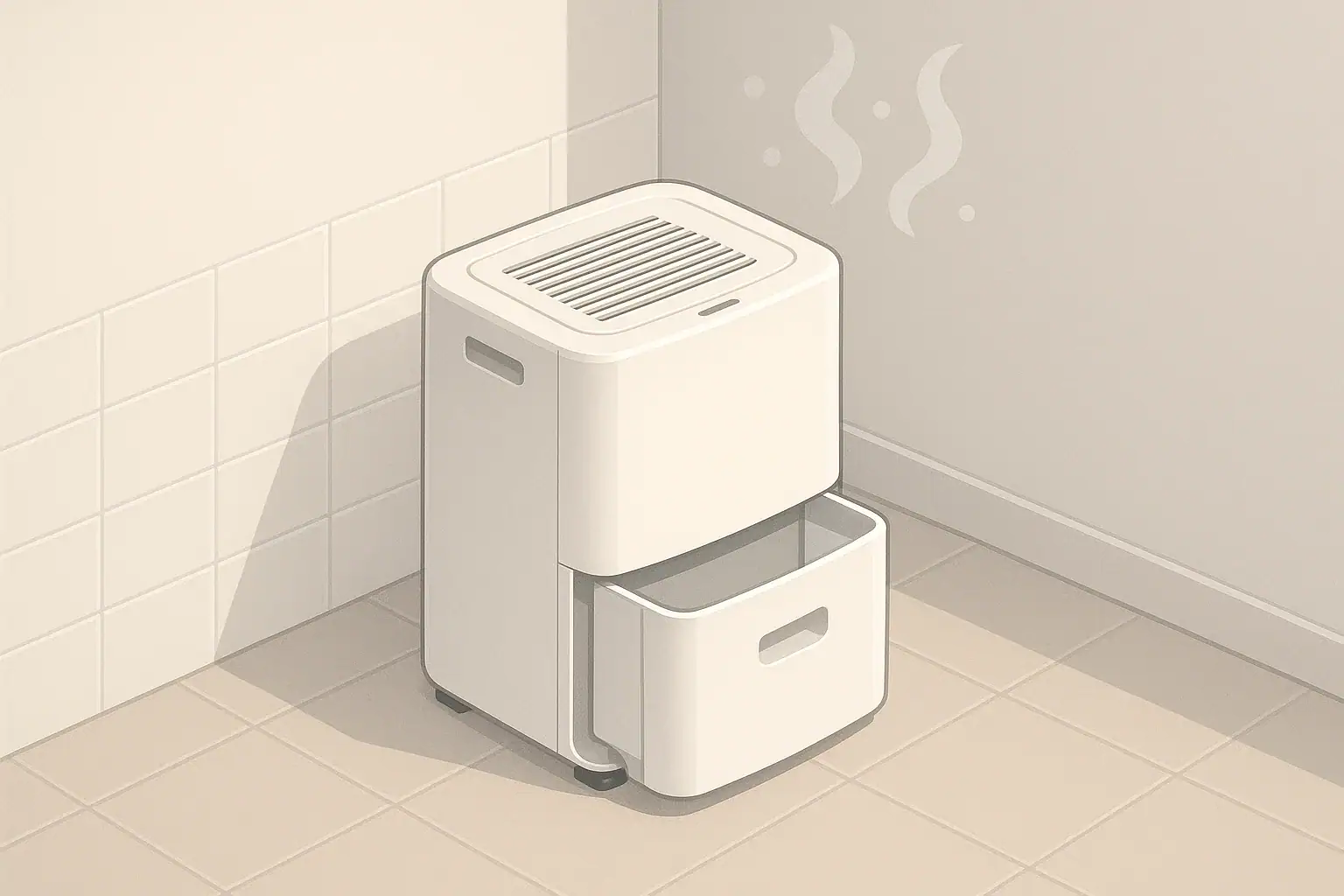
Most dehumidifier buckets need emptying once or twice a day in a damp room, while every few days can be normal in a smaller or moderately humid space.
The normal schedule depends on room humidity, temperature, room size, bucket capacity, air leaks, and the moisture source. A bucket filling very fast is not automatically a problem, but it is a useful clue about how much moisture the unit is pulling from the air.
Quick answer
- Once per day: common in basements, laundry areas, and damp rooms during humid weather.
- Twice per day or more: can be normal if the room starts above about 60% relative humidity, has active moisture, or uses a small bucket.
- Every 2–4 days: often reasonable in a smaller room that stays near a general indoor target of about 40%–50% relative humidity.
- Sudden changes matter: a bucket that fills much faster than usual may point to open windows, wet materials, plumbing moisture, or poor drainage outdoors.
- Use the humidistat: set a practical target, often around 45%–50%, rather than running continuously unless conditions require it.
What a normal dehumidifier bucket schedule means
A normal emptying schedule is the pace at which your dehumidifier collects water under your actual room conditions. There is no single number that fits every home because the bucket is only the collection point. The real question is how much water is available in the air and in surrounding materials.
In a damp basement after a rainy week, daily emptying may be expected. In a bedroom with air conditioning, closed windows, and moderate humidity, the bucket may fill slowly. In a laundry room, bathroom-adjacent area, or crawl-space access room, the bucket may fill quickly because moisture is being added repeatedly.
Relative humidity is the most useful number to watch. For general home comfort and dampness control, many households aim for roughly 40%–50% relative humidity, with about 60% commonly used as a practical upper warning point for persistent dampness. Exact comfort varies by season, building, and climate.
Why dehumidifier buckets fill at different speeds
A dehumidifier removes moisture by pulling room air across a cold surface, condensing water, and collecting it in a bucket or routing it to a drain. The more moisture the unit encounters, the faster the bucket fills.
Humidity, temperature, and air movement
Warm air can hold more moisture than cool air. A warm, humid room can produce water quickly, while a cool basement may slow collection even when it feels damp. Air movement also matters: if the unit is tucked into a corner or blocked by furniture, it may not sample the whole room well.
Room size and moisture sources
A larger space contains more air, but the bigger factor is often what adds moisture. Common sources include damp concrete, wet laundry, showers, cooking, open windows during humid weather, foundation seepage, and poor outdoor drainage. New construction materials, recent cleaning, or water intrusion can also raise moisture temporarily.
Bucket capacity and settings
Two units can remove the same amount of water while needing different emptying schedules if one has a smaller bucket. Continuous mode, a low humidity setpoint, or a fan that runs frequently will also collect more water than a unit set to cycle off at a moderate target.
| Bucket pattern | Possible meaning | What to check |
|---|---|---|
| Fills in a few hours | Very damp air, active moisture source, or small bucket | Leaks, wet materials, open windows, drain issues |
| Fills once per day | Common in damp rooms during humid periods | Whether humidity is trending toward the setpoint |
| Fills every 2–4 days | Often normal in a moderate room | Humidity level and comfort |
| Rarely fills | Room may already be dry, unit may be off-cycle, or airflow may be poor | Humidistat reading, filter, placement |
| Suddenly fills faster | New moisture source or weather change | Rain, laundry, plumbing, outdoor humidity |
| Stops collecting water | Setpoint reached, cold-room operation, full bucket switch, or maintenance issue | Bucket position, room temperature, filter, settings |
How to tell if your emptying schedule is normal
The best way to judge normal is to compare bucket fill rate with the room’s humidity trend. If the room starts at 65% relative humidity and drops toward 50% while the bucket fills daily, the unit is probably doing useful work. If the room stays high and the bucket fills constantly, the moisture load may be larger than the unit can comfortably manage.
Use a separate humidity monitor if the built-in humidistat seems inconsistent. Built-in sensors are helpful for control, but their readings can be affected by location near the unit’s airflow. A small standalone monitor placed away from direct discharge air can give a more balanced room reading.
Look for patterns over several days rather than judging one fill cycle. A thunderstorm, a load of laundry, or a day with open windows can change the result. Notes such as “rained all day,” “used shower,” or “windows open” can make troubleshooting easier.
Common reasons a bucket fills too fast
A fast-filling bucket usually means the unit is finding moisture. That can be expected in humid weather, but it is worth checking for preventable sources.
- Open windows or doors: humid outdoor air can keep replacing the air you just dried.
- Wet surfaces: damp carpet, stored cardboard, concrete, or wood can release moisture for days.
- Laundry and showers: drying clothes indoors and nearby bathrooms can add steady moisture.
- Basement seepage: small amounts of water entry can keep humidity elevated even without standing water.
- Low setpoint: setting the unit to 35% may make it run much more than necessary in many homes.
- Undersized capacity or small bucket: the unit may remove water, but the bucket may not match the moisture load.
If a room remains above about 60% relative humidity for long periods despite frequent emptying, consider reducing moisture at the source. Dehumidification helps manage indoor humidity, but it does not fix leaks, drainage problems, or repeated water entry.
Practical ways to empty the bucket less often
If the unit is working well but the bucket is inconvenient, start with simple adjustments before changing equipment. The goal is to reduce unnecessary moisture and let the dehumidifier cycle normally.
Set a practical humidity target
A target around 45%–50% is a common starting point for many indoor spaces. If the room feels comfortable and surfaces stay dry, pushing much lower may only increase runtime and bucket emptying. In very damp areas, it may take time for materials to dry before the unit cycles less often.
Improve placement and airflow
Place the unit on a level surface with open space around the intake and exhaust. Avoid pushing it tightly against walls, curtains, storage bins, or furniture. Better airflow can help the unit read the room more accurately and remove moisture more efficiently.
Control moisture at the source
- Run bathroom exhaust fans during and after showers when available.
- Use kitchen ventilation when cooking creates steam.
- Keep windows closed when outdoor humidity is high.
- Move wet laundry drying to a better-ventilated area if possible.
- Store absorbent items off damp floors and away from foundation walls.
For spaces with a floor drain or utility sink, a continuous drain hose may reduce bucket emptying. Follow the appliance manual and keep the hose routed downhill where gravity drainage is required. Do not alter safety switches or bypass the bucket shutoff system.
Real-world examples of normal emptying frequency
These examples are general because every home is different, but they show how conditions change the bucket schedule.
Basement after heavy rain: The room starts at 68% relative humidity and the bucket fills by evening. Daily emptying may be normal while the foundation and stored materials release moisture. If humidity eventually stabilizes near the setpoint, the schedule may slow.
Small bedroom in summer: The room stays around 48%–52% with air conditioning. The bucket may take several days to fill because the air conditioner is already removing some moisture and the room has fewer moisture sources.
Laundry area: The bucket fills quickly on wash days, especially if clothes are air-dried nearby. On non-laundry days, it fills more slowly. This difference suggests the appliance is responding to a predictable moisture source.
Bathroom-adjacent hallway: The bucket fills faster after repeated showers. Exhaust fan use, door position, and towel drying habits can all affect how often the bucket needs attention.
Safety, placement, and indoor air quality context
Use the dehumidifier on a stable, level surface and plug it in according to the manufacturer’s instructions. Keep the air openings clear, do not place the unit where it can sit in standing water, and empty the bucket before it overflows. A working full-bucket shutoff is an important safety and spill-prevention feature.
A dehumidifier is not a substitute for an air purifier or ventilation. It manages moisture; it does not capture fine particles the way a mechanical particle filter can, and it does not remove gases the way appropriate ventilation or sorbent media may help. For indoor air quality planning, think of humidity control, filtration, and ventilation as separate tools that can complement each other.
Be cautious with devices or features marketed around ozone, ionization, or UV-C. Ozone should not be generated intentionally in occupied indoor spaces. UV-C and ionizing features vary by design and should be evaluated carefully, with attention to safety instructions and independent standards where available.
Maintenance that affects bucket fill rate
Maintenance does not create moisture, but it affects how well the unit can remove it. A dirty filter can reduce airflow and make the unit less effective. A mis-seated bucket can trigger shutoff or leaking. Dust on coils can also reduce performance over time.
Check the washable intake filter on the schedule recommended in the manual, or more often in dusty spaces. Let it dry fully before reinstalling. Wipe the bucket periodically to reduce residue, especially if water sits for several days between emptying.
In cool rooms, frost or reduced collection can occur depending on the unit design and operating conditions. If the unit has a defrost mode, allow it to operate as intended. Do not scrape coils with sharp tools or modify the appliance.
| Goal | Simple actions | Tools | Note |
|---|---|---|---|
| Track normal fill rate | Note emptying times for one week | Notebook or reminder app | Compare similar weather days |
| Keep humidity moderate | Try a 45%–50% setpoint | Humidistat or humidity monitor | Adjust for season and comfort |
| Reduce added moisture | Use exhaust fans and close windows on humid days | Fans and weather awareness | Source control lowers runtime |
| Improve airflow | Clear space around intake and exhaust | Basic room layout | Avoid blocked corners |
| Prevent bucket problems | Seat bucket firmly after emptying | Visual check | Full-bucket switches need proper alignment |
| Limit maintenance losses | Clean filter and bucket as directed | Manual and mild cleaning supplies | Let parts dry before reinstalling |
Related guides: Basement Dehumidifier Guide: Targets, Drainage, and Energy Use • Dehumidifier Sizing: Liters/Day, Room Type, and Dampness Levels • Basement Dehumidifier Setup: Drainage, Placement, and RH Targets
Frequently asked questions
How often to empty dehumidifier bucket in a normal room?
In many homes, emptying every 2 to 4 days can be normal in a smaller or moderately humid room. In damp basements or during humid weather, once a day or even twice a day may be expected. The better check is whether the room’s humidity is moving toward your target.
Is it normal for a dehumidifier bucket to fill overnight?
Yes, that can be normal in a very damp room, near open windows, or if the space has an active moisture source. A small bucket or a low humidity setting can also make the bucket fill quickly. If the room still reads high humidity after the unit runs, look for hidden moisture sources or airflow problems.
Why does my dehumidifier bucket fill faster when it rains?
Rain often raises outdoor humidity and can increase moisture entering through leaks, foundation gaps, or open windows and doors. Basements and lower-level rooms are especially likely to collect more water during wet weather. If the faster fill rate happens every time it rains, check for seepage or drainage issues.
What humidity level should I aim for so the bucket does not fill too fast?
For many indoor spaces, a target around 45% to 50% relative humidity is a practical starting point. Going much lower can increase runtime without adding much comfort in many homes. If the room has moisture-sensitive materials or a specific climate issue, the best target may vary.
Does a bucket filling quickly mean my dehumidifier is working properly?
Often, yes. A fast-filling bucket usually means the unit is removing moisture from the air, which is the expected job. The key question is whether room humidity is actually dropping to a reasonable level and staying there.
Summary: what to take away
Emptying a dehumidifier bucket once or twice a day can be normal in a damp room, especially during humid weather or after rain. Emptying every few days can also be normal when the space is smaller, drier, or already near the humidity setpoint.
The most useful check is not the bucket alone; it is the relationship between bucket fill rate and relative humidity. If humidity is moving toward a practical target, the unit is likely doing its job. If the bucket fills constantly and humidity stays high, look for moisture sources, airflow limitations, or sizing issues.
For everyday use, set a reasonable humidity target, keep the unit clear of obstructions, empty and clean the bucket regularly, and control moisture at the source when possible. That approach gives you a predictable routine without guessing from the bucket alone.
Recommended next:
- How to Size a Dehumidifier (Sq Ft, Pints/Day, and Real-World Tips)
- Desiccant vs Compressor Dehumidifiers: Which Is Better for Cold Rooms?
- Basement Dehumidifier Guide: Targets, Drainage, and Energy Use
- Dehumidifier Running Cost: How Much Electricity Will It Use?
- Dehumidifier Sizing: Liters/Day, Room Type, and Dampness Levels
- Basement Dehumidifier Setup: Drainage, Placement, and RH Targets
- More in Dehumidifiers →
- Clear sizing logic (room size → CADR/ACH)
- HEPA vs carbon explained for real use-cases
- Humidity + ventilation basics to reduce mold risk