
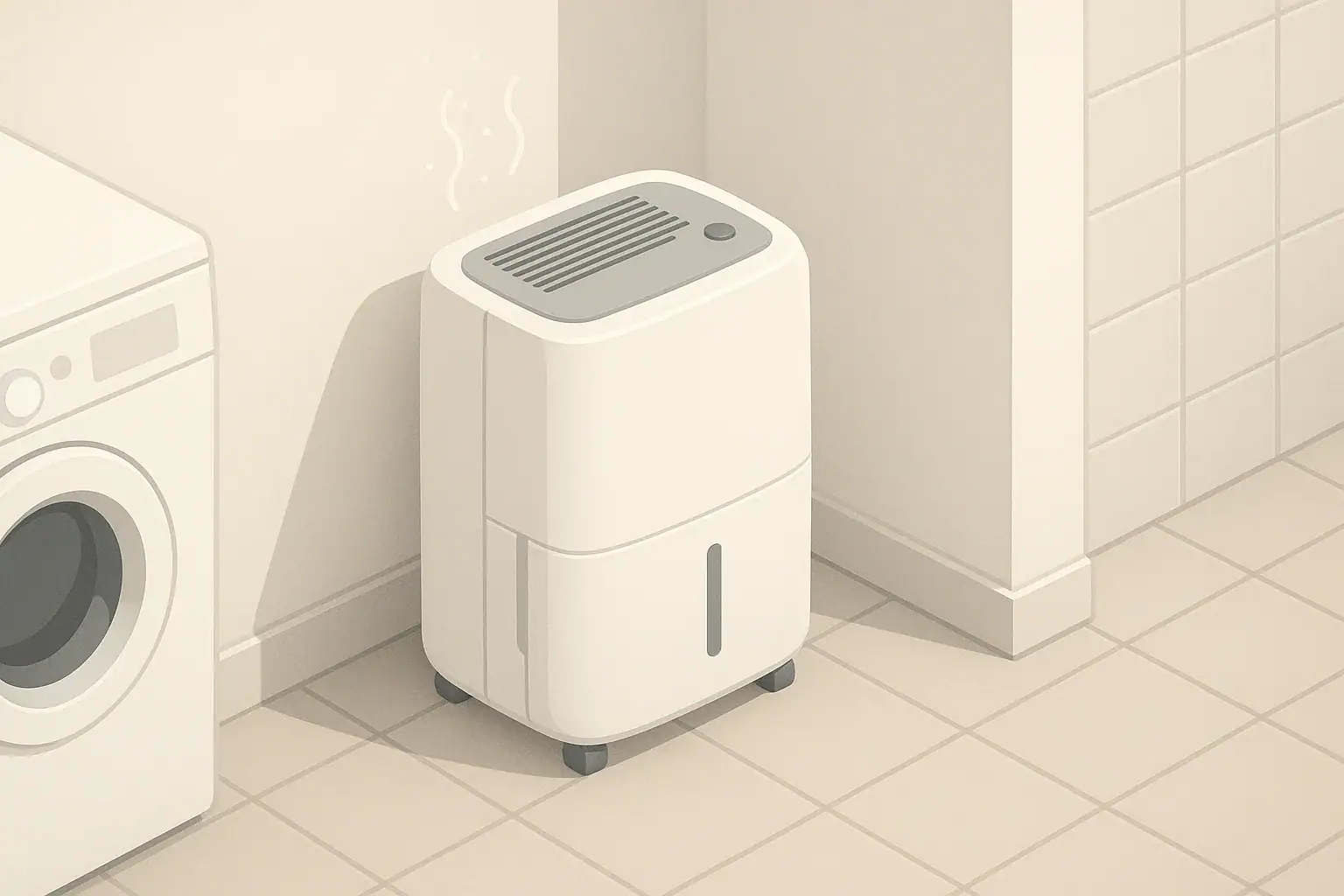
For most genuinely cold rooms, a desiccant dehumidifier is usually more reliable than a compressor dehumidifier, but the best choice depends on how cold the space actually gets. If your room stays closer to normal indoor temperatures, a compressor (refrigerant) dehumidifier can still be the better fit.
This guide walks through desiccant vs compressor dehumidifiers for cold basements, garages, crawl spaces, and three-season rooms. You will see how each type works, how temperature affects moisture removal, and what that means for mold prevention, condensation control, and comfort in real homes.
By the end, you should be able to match the right dehumidifier type to your specific space, avoid common mistakes that waste energy, and know which specs to check before you buy or move a unit into a cooler area.
Why Dehumidifier Type Matters in Cold Rooms
Cold rooms behave differently from the rest of your home. Concrete walls, uninsulated floors, and limited heating all make these areas feel damp and musty even when the rest of the house seems fine. Choosing between a desiccant and a compressor dehumidifier is not just a technical detail; it directly affects how much water you actually remove and how much you pay to run the unit.
In cool and cold spaces, three things change compared with a typical living room:
- Air holds less moisture at lower temperatures, so the same relative humidity can still cause condensation and mold on cold surfaces.
- Standard compressor dehumidifiers struggle as temperatures drop, often frosting, shutting off, or collecting far less water than their rated capacity.
- Desiccant dehumidifiers are less sensitive to cold air, but they add more heat and may remove less water per hour in warmer conditions.
Understanding these differences helps you decide which technology is better for your cold basement, garage, or crawl space, and whether you need to adjust how and when you run an existing unit.
How Desiccant and Compressor Dehumidifiers Work
Both desiccant and compressor dehumidifiers remove moisture from the air, but the way they do it explains why they behave so differently in cold rooms.
Compressor (Refrigerant) Dehumidifiers
Compressor dehumidifiers use a refrigeration cycle similar to a small air conditioner.
- A fan pulls humid room air across very cold metal coils (the evaporator).
- Water vapor condenses on the cold surface and drips into a bucket or drain hose.
- The now-drier air passes over warm coils (the condenser) and returns to the room slightly warmer.
In a warm room, this process is efficient: the air is warm enough to give up moisture easily, and the coils stay cold without freezing. In a cold room, the coils can drop to freezing temperature quickly, ice builds up, and the unit must pause to defrost. During defrost cycles, you are using electricity but not removing much (or any) water.
Desiccant Dehumidifiers
Desiccant dehumidifiers rely on moisture-absorbing materials instead of cold coils. For room-sized units, the most common design uses a rotating desiccant wheel and a small heater.
- A fan moves humid air through the desiccant material, which captures water vapor.
- A separate, warmed airstream passes through part of the wheel, drying it out.
- The released moisture is condensed and collected or drained away, and the regenerated desiccant rotates back into the main airflow.
Because the system depends on absorption and gentle heating instead of pushing coils below freezing, performance stays more consistent in cool air, within the temperature range listed in the product specs.
| Aspect | Desiccant dehumidifier | Compressor dehumidifier |
|---|---|---|
| Typical effective temperature range | About 40–70 °F (check product rating) | About 60–90 °F (some rated to ~41–45 °F) |
| Performance at 45–55 °F | Generally stable moisture removal | Often reduced; may cycle into defrost |
| Heat added to the room | Noticeable warming; can feel like a small space heater | Mild warming; usually less noticeable |
| Typical use in homes | Cold basements, unheated rooms, garages above freezing | Main living areas, warm basements, summer humidity control |
| Noise character | Fan noise; generally steady, low vibration | Fan plus compressor hum; may cycle on and off |
| Water removal per day (same size class) | Often lower in warm rooms, but more consistent in cool rooms | High in warm, humid rooms; can drop sharply in cold rooms |
| Best match for very cool but occupied spaces | Often preferred | Only if the room stays within rated temperature |
Real-World Cold Room Scenarios and What Works Best
To decide between desiccant vs compressor dehumidifiers, start with how cold your space actually gets and how you use it. The same house might need different approaches in different areas.
Cool but Not Frigid Basements (Around 55–65 °F)
Example: A partly finished basement with storage, a laundry corner, and a TV area. It feels cool year-round, and in summer the air smells a bit musty.
- If the temperature usually stays above the compressor unit’s minimum rating, a compressor dehumidifier can work well and often removes more water per hour.
- If the basement frequently dips into the low 50s or high 40s, a desiccant unit may maintain more consistent humidity without constant defrosting.
Practical cue: If you already use a compressor model and notice long run times with very little water in the bucket during cooler months, it may be operating near its limit.
Unheated Garages and Workshops
Example: A garage where you store tools, seasonal items, or a hobby workbench. It may be 40–50 °F in spring and fall, and near freezing in winter.
- In shoulder seasons when the garage is cool but above freezing, a desiccant dehumidifier rated for low temperatures is often the more dependable option.
- Standard compressor dehumidifiers are usually not designed for prolonged use near freezing and can ice up or shut down.
Practical cue: If condensation forms on metal tools or car parts, you need better humidity control or more ventilation. A low-temperature-rated dehumidifier can help, but only if the space stays within its operating range.
Crawl Spaces and Underfloor Areas
Example: A low crawl space with bare soil or a thin plastic vapor barrier. It smells earthy, and floor joists show signs of surface mold.
- Crawl spaces often track outdoor temperature and can be quite cool, especially at night.
- Specialty low-temperature compressor units or desiccant systems are commonly used, but they are most effective when combined with ground vapor barriers and drainage improvements.
Practical cue: If you see standing water or obvious leaks, address those first. No dehumidifier type can overcome liquid water problems or poor drainage.
Three-Season Rooms and Enclosed Porches
Example: A sunroom that is comfortable on sunny days but drops to 45–55 °F at night in spring and fall. Windows fog on cool mornings.
- When the room is warmed by the sun and stays above about 60 °F, a compressor dehumidifier can be efficient.
- On consistently cool, damp days, a desiccant unit can reduce condensation on windows and furniture more reliably.
Practical cue: If you only notice issues during a few damp weeks each year, a portable unit that can be moved between warm and cool spaces may make more sense than a permanently placed dehumidifier.
| Cold-room scenario | Typical temperature range | Often better choice | Key reason |
|---|---|---|---|
| Partly finished basement used year-round | 55–65 °F | Either; desiccant if often below ~60 °F | Balance between steady performance and energy use |
| Unheated garage with stored tools | 40–55 °F (above freezing) | Desiccant (if rated for low temps) | More reliable drying in cool air |
| Crawl space under main living area | Close to outdoor temperature | Low-temp-rated unit (often desiccant or specialty compressor) | Must handle cooler, variable conditions |
| Three-season room with cool nights | 45–70 °F | Compressor when warm; desiccant when consistently cool | Switch type or move unit seasonally |
| Storage-only basement with little heat | 50–60 °F | Desiccant | Stable performance and slight warming benefit |
Common Mistakes and Troubleshooting in Cold Rooms
Many people assume a dehumidifier will work the same in every room. In cold areas, a few specific mistakes cause poor performance, icing, or wasted energy.
Mistake 1: Ignoring Minimum Operating Temperature
Every dehumidifier lists an operating temperature range. Running a compressor unit below its minimum can cause:
- Ice on the coils and frequent defrost cycles.
- Loud clicking or short cycling as the unit repeatedly shuts off.
- Very little water in the bucket despite long run times.
Fix: Check the temperature of the room with a simple thermometer. If it is below the unit’s rating, move the dehumidifier to a warmer space or switch to a low-temperature-capable or desiccant model.
Mistake 2: Expecting a Small Unit to Dry a Large, Cold Space
Cold rooms often have more exposed concrete and outside walls, so humidity loads can be higher than you expect. A small dehumidifier in a large basement or garage may run constantly and never catch up.
- Signs include constant operation, little change in humidity, and persistent musty odors.
- This can happen with both desiccant and compressor models.
Fix: Estimate the square footage and typical humidity level, then choose a capacity that matches the size and dampness of the space, not just the size label on the box.
Mistake 3: Poor Placement and Blocked Airflow
In cold rooms, people often push dehumidifiers against exterior walls or into tight corners to keep them “out of the way.” This can choke off airflow and reduce performance.
- Signs include warm air blowing but little water collected, or the unit feeling hot to the touch.
- Dust buildup on intake grilles and filters is another clue.
Fix: Leave space around the unit on all sides, keep filters clean, and avoid placing the exhaust directly against cold surfaces where condensation can re-form.
Mistake 4: Using a Dehumidifier to Solve Liquid Water Problems
Dehumidifiers control airborne moisture, not leaks. In cold rooms, water can enter through foundation cracks, unsealed slab joints, or clogged exterior drains.
- If you see puddles, flowing water, or obvious seepage, address drainage and sealing first.
- Running any dehumidifier in the presence of ongoing leaks will waste energy and may shorten the unit’s life.
Troubleshooting Checklist for Cold-Room Dehumidifiers
- Unit runs but collects little water: Check room temperature, humidity level, and filter cleanliness. Confirm the unit is sized correctly and within its rated temperature range.
- Ice on coils (compressor type): Room may be too cold, airflow may be blocked, or the unit may be in a long defrost cycle.
- Room still smells musty: Inspect for hidden moisture sources (leaks, damp materials), improve air circulation, and check actual humidity with a hygrometer.
- Room feels too warm (desiccant type): Reduce fan speed if available, increase ventilation slightly, or run the unit on a timer instead of continuously.
Safety Basics for Using Dehumidifiers in Cold Rooms
Dehumidifiers are generally safe when used as directed, but cold rooms add a few extra considerations related to condensation, freezing, and electrical safety.
Electrical and Moisture Safety
- Place the dehumidifier on a stable, level surface above any areas that might collect water.
- Keep cords and plugs away from damp floors, floor drains, and areas where condensation drips.
- Do not run extension cords through standing water or across wet concrete.
- In garages or utility spaces, route hoses and cords where vehicles, tools, or storage bins will not crush them.
Temperature and Freezing Concerns
- Do not operate any dehumidifier below its specified minimum temperature, especially if the space may drop below freezing.
- Water left in internal reservoirs or hoses can freeze, expand, and damage components.
- If your cold room regularly freezes, plan to shut down and properly drain the unit during the coldest months.
Heat Build-Up and Ventilation
- Desiccant units can noticeably warm small, enclosed rooms. Ensure there is enough ventilation to avoid stuffy conditions.
- Do not cover the unit or block vents to “trap” more heat; this can cause overheating or safety shutoffs.
- In tiny rooms, consider running the unit on a lower setting or using a timer to avoid unnecessary heat build-up.
Safe Drainage Practices
- When using a continuous drain hose, maintain a downward slope with no kinks or loops that can trap water.
- Secure the hose outlet so it cannot slip out of a drain and leak onto the floor unnoticed.
- Periodically check the hose for clogs, especially in dusty crawl spaces or garages.
Maintenance and Seasonal Storage for Cold-Room Dehumidifiers
Proper maintenance helps any dehumidifier last longer and perform better, but it is especially important in cool, dusty, or seldom-visited spaces.
Routine Maintenance Tasks
- Filters: Clean or replace air filters on the schedule recommended in the manual. Dusty basements and crawl spaces may need more frequent attention.
- Coils and grilles (compressor type): Gently vacuum or wipe accessible surfaces to keep airflow unobstructed.
- Water bucket and drain lines: Rinse buckets periodically and flush hoses to prevent slime or mineral buildup.
- Hygrometer checks: Compare the unit’s humidity reading (if it has one) to a separate hygrometer a few times per year.
Seasonal Use Patterns
In many climates, cold rooms are dampest in spring and fall when outdoor air is cool and moist and heating is off or minimal.
- Use built-in humidistats or timers so the unit runs mainly when humidity is actually high.
- In very cold, dry winter conditions, you may be able to reduce run time or turn the unit off entirely.
- In summer, a compressor unit may be moved from a cold basement into a warmer living area where it is more efficient.
Storing a Dehumidifier in a Cold Space
- Before storage, empty the bucket, drain internal water according to the manual, and allow the unit to run in fan-only mode (if available) for a short time to dry out.
- Store the unit upright to protect the compressor and internal components.
- If the storage area can freeze, make sure no water remains in hoses or internal reservoirs.
- Cover the unit loosely to keep dust off, but do not wrap it tightly in plastic where trapped moisture could encourage corrosion.
Practical Takeaways and Specs to Look For
Choosing between desiccant vs compressor dehumidifiers for cold rooms comes down to matching the technology to your temperature range, room size, and how you use the space.
- For consistently cool rooms (roughly 40–60 °F), desiccant dehumidifiers typically provide more stable performance and add a bit of welcome warmth.
- For rooms that are only occasionally cool and mostly stay above about 60 °F, compressor dehumidifiers are often more energy-efficient for heavy moisture loads.
- If you already own a compressor unit, monitor how it behaves as temperatures drop before deciding whether you need a different type.
Specs to Look For When Choosing a Dehumidifier for Cold Rooms
Before purchasing or moving a dehumidifier into a cold space, review these key specifications and features:
- Operating temperature range: Confirm that the minimum temperature is at or below the coldest conditions you expect in the room.
- Moisture removal capacity: Check daily pint or liter ratings and match them to your room size and dampness level, not just the label on the box.
- Type of technology: Decide whether desiccant or compressor is better suited to your typical temperature and usage pattern.
- Humidistat and controls: Look for adjustable humidity settings, multiple fan speeds, and timer options to avoid over-drying and reduce energy use.
- Drainage options: Continuous drain ports, built-in pumps, or gravity-drain compatibility are especially useful in basements, crawl spaces, and garages.
- Noise level: If the cold room is also a living or work space, check published sound levels or user descriptions of noise.
- Power draw: Note the wattage and consider how many hours per day the unit will likely run in your climate.
- Dimensions and weight: Make sure the unit fits through access doors, around obstacles, and into tight spaces if used in crawl spaces or small rooms.
- Air filter type and access: Easy-to-remove filters encourage regular cleaning, which is important in dusty cold areas.
When you combine the right dehumidifier type with appropriate sizing, safe installation, and basic maintenance, even difficult cold rooms can stay drier, less musty, and more protective of your home’s structure and stored belongings.
Frequently asked questions
Which technical specs should I prioritize for a dehumidifier used in cool areas?
Prioritize the unit’s minimum operating temperature and moisture removal capacity (pints or liters per day) for your room size. Also check drainage options, humidistat controls, power draw and noise, and ease of filter access; a low-temperature rating or clear defrost behavior is especially important for cool areas.
Can a dehumidifier fix water leaks or standing water in a basement?
No. Dehumidifiers remove airborne moisture rather than bulk liquid, so you should repair leaks, improve drainage, and seal entry points first. Running a dehumidifier while liquid water is present wastes energy and may not resolve mold or structural damage.
Is it safe to use a dehumidifier in a cold, damp room like an unheated garage?
Yes if the unit is rated for the room’s temperatures and you follow basic precautions: place it on a stable surface above puddles, avoid using extension cords, route drain hoses safely, and prevent stored water from freezing. If the space can freeze regularly, drain and store the unit during the coldest periods to avoid damage.
How can I tell if a compressor dehumidifier is icing or struggling in a cold room?
Signs include visible ice on coils, long run times with very little water collected, frequent defrost cycles, or the unit repeatedly shutting off. Check the room temperature against the unit’s minimum rating, ensure airflow isn’t blocked, and clean filters to confirm whether the environment or the unit is the issue.
Will a desiccant dehumidifier make a small room noticeably warmer?
Yes. Desiccant units use a heated regeneration process and can raise the temperature in small, enclosed rooms, which can be beneficial in cool spaces. If the added heat is unwelcome, run the unit on a lower setting, use timers, or increase ventilation.
What is a common placement mistake that reduces dehumidifier performance?
Putting the unit against a wall or in a tight corner so the intake or exhaust is blocked is a frequent error; clogged filters and restricted airflow also reduce efficiency. Leave clearance around the unit and maintain clean filters for best performance.
- Clear sizing logic (room size → CADR/ACH)
- HEPA vs carbon explained for real use-cases
- Humidity + ventilation basics to reduce mold risk