
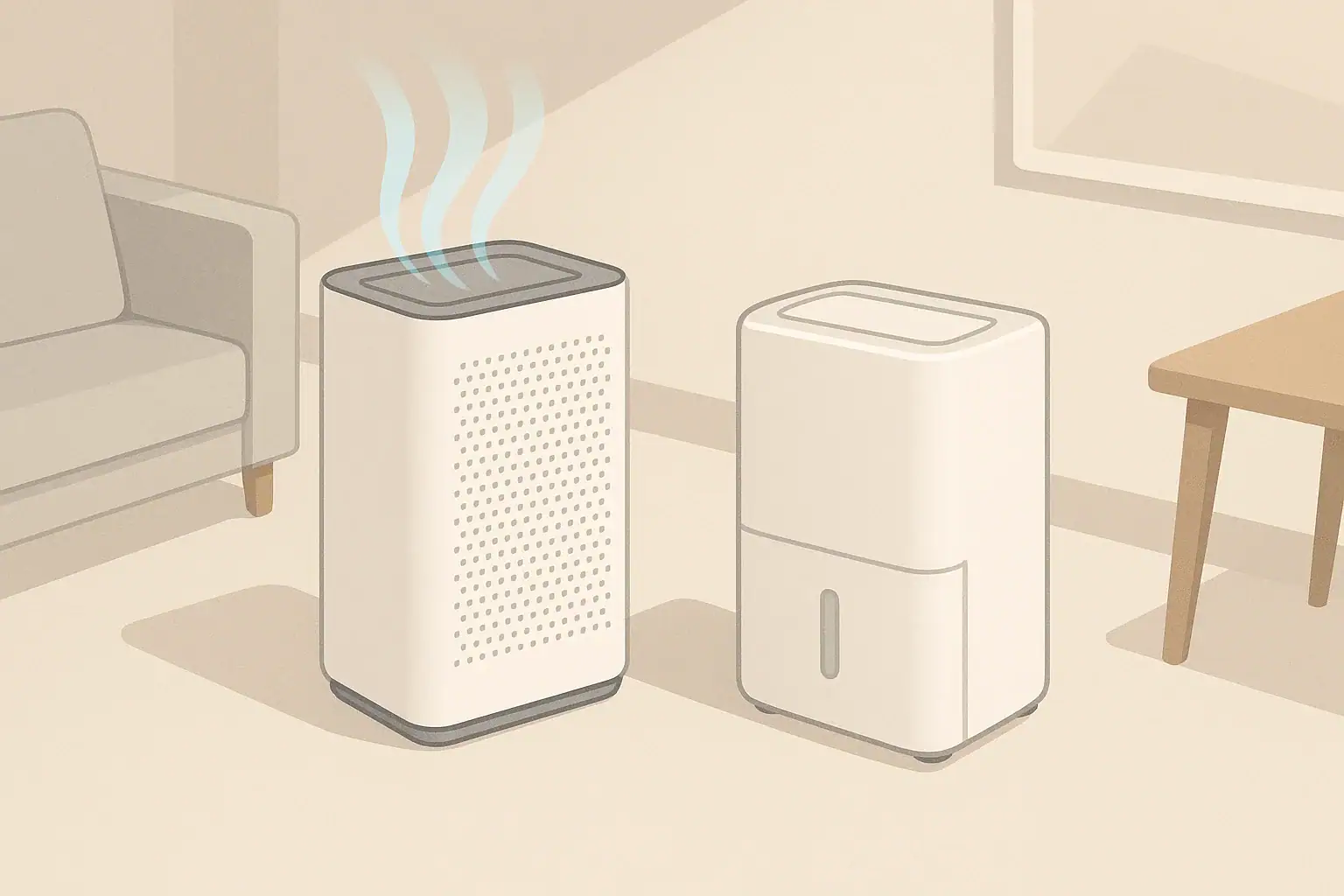
If the air in your home smells musty, a dehumidifier is usually the first tool to fix it, and an air purifier is often the second. Musty air is almost always tied to excess moisture plus stagnant, particle-filled air, so deciding between an air purifier vs dehumidifier comes down to which problem is bigger in your space.
This guide walks through what actually causes musty smells, how air purifiers and dehumidifiers work, and how to match each device to basements, bedrooms, bathrooms, and closets. You will see concrete examples, warning signs to watch for, and specs that matter when you are ready to buy. The goal is simple: turn a damp, stale room into a space that smells neutral and feels comfortable, without wasting money on the wrong device.
Use this as a practical checklist-style reference as you track humidity, test different settings, and fine-tune your home’s air quality over time.
What Musty Air Really Means and Why It Matters
Musty air is the stale, earthy, sometimes “wet basement” smell that lingers in closed rooms. It often shows up in basements, bathrooms, laundry areas, and older homes, but even newer houses can develop it in closets, under-stair storage, or rooms that stay closed up.
Under the surface, musty air usually means some combination of:
- Elevated humidity that keeps surfaces and fabrics slightly damp
- Poor ventilation, so odors and moisture are trapped
- Dust, spores, and other particles hanging in the air
- Past or ongoing moisture events (minor leaks, condensation, or flooding)
When these conditions persist, odors soak into carpets, drywall, cardboard boxes, and stored fabrics. That is why a quick spray of fragrance or a short burst of fresh air rarely solves the problem for long.
Understanding whether moisture or airborne particles and odors are driving your musty smell is the key to choosing between an air purifier and a dehumidifier—and knowing when you actually need both.
How Air Purifiers and Dehumidifiers Work on Musty Air
Air purifiers and dehumidifiers both improve indoor air quality, but they act on different parts of the problem. One targets what is floating in the air; the other targets how wet the air is.
What an air purifier actually does
An air purifier pulls room air through internal filters and pushes cleaner air back out. Typical stages include:
- Pre-filter: Catches larger debris like hair and lint.
- Fine particle filter (often HEPA-type): Traps small particles such as dust, pollen, and many airborne spores.
- Odor or gas filter (often carbon-based): Adsorbs some odor-causing molecules that contribute to musty smells.
For musty air, an air purifier helps by:
- Reducing the “dusty” or “stale” feel of the air
- Lowering airborne spores and fine debris stirred up from damp materials
- Softening light musty odors if an odor filter is included
However, an air purifier does not remove moisture. If walls, carpets, or storage boxes are damp, a purifier alone will not dry them out or stop new musty odors from forming.
What a dehumidifier actually does
A dehumidifier pulls in room air, cools it so water condenses out, then reheats and releases drier air. The collected water drains into a tank or hose.
For musty air, a dehumidifier helps by:
- Lowering relative humidity so surfaces gradually dry
- Reducing condensation on windows, pipes, and cool walls
- Making rooms feel less clammy and reducing the conditions that create musty odors
But a dehumidifier is not a fine air filter. Its built-in screen or filter is mainly there to protect the machine, not to clean the air the way an air purifier does.
Side-by-side comparison for musty rooms
| Symptom you notice | Likely main problem | More helpful first device | What to check |
|---|---|---|---|
| Strong earthy smell, cool damp walls, sticky floors | High humidity and damp materials | Dehumidifier | Measure humidity; look for leaks or past water damage. |
| Air feels stale, dust on surfaces, mild musty hint | Particles and light odor | Air purifier | Check if humidity is normal but dust builds quickly. |
| Basement smells musty after rain, better in dry weather | Seasonal moisture swings | Dehumidifier | Track humidity after storms vs dry spells. |
| Bedroom smells musty only with windows closed | Poor ventilation and particles | Air purifier | Note if smell improves quickly when aired out. |
| Closet smells musty, especially near outside wall | Localized dampness and low airflow | Dehumidifier for room | Feel wall and floor; check for cold spots and clutter. |
| Finished basement: damp in summer, dusty in winter | Humidity plus particles | Dehumidifier, then air purifier | Use dehumidifier in humid months; add purifier for daily use. |
Real-World Musty Room Scenarios and What Works
Seeing how these tools behave in real rooms makes the choice clearer. Below are typical home situations and what usually helps most.
Musty basement or lower level
Basements often have:
- Humidity that stays high, especially in warm months
- Concrete or masonry that absorbs and releases moisture
- Stored cardboard boxes, seasonal clothes, and soft furniture
In this case, a dehumidifier is almost always the first purchase. Over a few days to weeks, lower humidity helps:
- Dry out carpets and area rugs
- Reduce that “wet concrete” smell
- Cut down on condensation on windows or metal surfaces
If people spend a lot of time in the basement (TV room, playroom, home gym), an air purifier can then be added to reduce dust, spores, and any remaining stale odor in the air.
Stuffy bedroom with light musty smell
Bedrooms often develop a mild musty or stale odor when:
- Windows stay closed for long periods
- Doors are kept mostly shut
- Soft furnishings (bedding, curtains, rugs) collect dust
If a hygrometer shows humidity in a comfortable range, an air purifier is usually more helpful than a dehumidifier. It can:
- Capture dust and fine particles kicked up when you move around
- Reduce light musty or body odors when paired with an odor filter
- Help sensitive sleepers breathe easier at night
Small bathroom or laundry area
Bathrooms and laundry rooms create moisture quickly. Mustiness here often comes from:
- Steam from showers or hot water
- Damp towels and laundry piles
- Limited or no exhaust ventilation
Practical steps include longer exhaust fan use, hanging towels to dry, and cracking a door after showers. If humidity still spikes and lingers, a small dehumidifier in or near the room usually helps more than an air purifier, because it directly removes the excess moisture that keeps smells hanging around.
Closets and storage spaces
Closets and under-stair storage often smell musty even when the rest of the house seems fine. Common patterns include:
- Closet backs up to an exterior or foundation wall
- Cardboard boxes and packed clothing with no airflow
- Cooler temperatures that encourage condensation
Here, a room dehumidifier plus decluttering usually beats putting a small purifier inside the closet. Elevate boxes off the floor, switch to sealed plastic storage where possible, and leave closet doors slightly open when practical so drier room air can circulate.
Common Mistakes and Troubleshooting Musty Air
Many people buy a device, plug it in, and hope the smell disappears. When that does not happen, it is usually because of one of these common mistakes.
Using the wrong device for the main problem
- Mistake: Buying an air purifier when the room is clearly damp.
- Result: Air may feel a bit cleaner, but surfaces stay wet and odor soon returns.
- Better approach: Measure humidity; if it regularly runs high, prioritize a dehumidifier first.
- Mistake: Buying a dehumidifier for a room that is dusty but not humid.
- Result: Humidity readings stay normal, musty or stale smell remains because particles and odors are not being filtered.
- Better approach: Add an air purifier and improve cleaning and ventilation.
Undersizing or misplacing the device
- Undersized dehumidifier: Struggles to bring humidity down in a large or very damp basement. Tank fills quickly, but readings barely change.
- Undersized air purifier: Only cleans the air very close to it; the rest of the room still feels stale.
- Poor placement: Units shoved into corners, behind furniture, or in closets where air cannot circulate freely.
As a rule of thumb, place devices where air can move around them and choose capacities that match the room size and typical moisture level, not just the purchase price.
Ignoring moisture sources and surface contamination
Even the best dehumidifier or air purifier cannot fully overcome:
- Active leaks from plumbing, roofs, or foundations
- Standing water in crawlspaces or sump pits
- Heavily water-damaged carpets, drywall, or insulation
If you see stains, peeling paint, soft drywall, or warped flooring, address those issues directly. Devices are most effective after obvious moisture sources are controlled and damaged materials are evaluated or replaced as needed.
Maintenance mistakes that bring musty smells back
- Running an air purifier with clogged filters until airflow drops and odors return.
- Letting a dehumidifier bucket overflow or stay dirty, adding its own stale smell.
- Allowing dust to build up on intakes and outlets so devices cannot move enough air.
Consistent, simple maintenance often makes the difference between “it helped a little” and “the room finally smells neutral.”
Troubleshooting guide: when results are disappointing
| What you notice | Likely cause | Practical next steps |
|---|---|---|
| Dehumidifier runs nonstop, humidity barely drops | Room too large or very wet; unit undersized | Close doors to limit area, check for leaks, consider higher-capacity unit. |
| Air still smells musty even though humidity looks normal | Odor embedded in materials or poor filtration | Add or upgrade air purifier, deep clean fabrics, remove damaged items. |
| Odor gets better, then slowly returns | Filters or tank not maintained | Replace filters, clean dehumidifier bucket and intakes, recheck settings. |
| Musty smell stronger in corners, closets, behind furniture | Trapped moisture and limited airflow | Pull furniture off exterior walls, declutter, allow air to circulate. |
| Smell worse after heavy rain or humid weather | Moisture entering from outdoors or foundation | Run dehumidifier proactively, inspect drainage and weather sealing. |
Safety Basics When Using Air Purifiers and Dehumidifiers
Air purifiers and dehumidifiers are generally safe household appliances, but a few habits help you avoid problems and keep indoor air healthy.
Electrical and placement safety
- Plug units directly into wall outlets, not overloaded power strips.
- Keep cords out of walkways to prevent tripping or pulling units over.
- Allow recommended clearance around air inlets and outlets so motors do not overheat.
- Avoid placing dehumidifiers where leaks from the tank or hose could damage flooring.
Water handling and spill prevention
- Empty dehumidifier tanks before they are completely full to reduce spill risk.
- If you use a drain hose, route it downhill and secure it so it cannot slip out.
- Inspect hoses and connections periodically for drips that could create new damp spots.
Air quality and filter safety
- Use only the filter types the manufacturer specifies for your air purifier.
- Do not run devices with missing or improvised filters that could shed fibers or dust.
- Replace odor or gas filters before they are fully saturated to avoid re-releasing smells.
Humidity targets and comfort
- Aim for a moderate humidity range rather than extremes to avoid overly dry air.
- In very cold climates, slightly higher indoor humidity can help prevent overly dry conditions, but watch for window condensation as a warning sign.
- In very humid climates, using a dehumidifier too aggressively can feel uncomfortable if air becomes too dry; adjust settings seasonally.
Long-Term Use, Maintenance, and Storage
Musty air problems are rarely solved in a single day. Long-term improvement comes from steady moisture control, regular filtration, and simple maintenance routines.
Routine care for air purifiers
- Pre-filters: Check monthly; vacuum or wash if the design allows.
- Fine particle filters: Replace according to usage and visible dirt buildup.
- Odor filters: Replace when musty or household odors start to return sooner than before.
- Housing and vents: Wipe dust from grills and exterior surfaces so airflow stays strong.
Routine care for dehumidifiers
- Empty and rinse the water tank regularly to prevent slime or film buildup.
- Clean the intake screen or filter to keep airflow high.
- Inspect coils and vents for dust; follow manufacturer steps for safe cleaning.
- Check drain hoses for kinks, clogs, or slow drips.
Seasonal adjustments
- Humid seasons: Run dehumidifiers more continuously in basements and lower levels; monitor humidity and adjust setpoints.
- Dry seasons: You may be able to reduce dehumidifier use or turn it off; keep air purifiers running as needed for dust and odor control.
- Transitional weather: Open windows when outdoor air is dry and fresh, then close them and run devices when outdoor air is damp or polluted.
Storing devices when not in use
- Before storing a dehumidifier, empty and dry the tank, run it on fan-only (if available) to dry internal parts, and coil the hose.
- Store both devices in a clean, dry area so dust and moisture do not accumulate inside.
- When bringing them out of storage, inspect cords, filters, and housings before plugging in.
Putting It All Together: Choosing the Right Device and Key Specs
By this point, you should have a clearer sense of whether humidity or airborne particles are driving the musty air in your home. The final step is turning that insight into a smart purchase and setup plan.
A simple way to decide is:
- If surfaces feel damp, humidity readings run high, or smells spike after rain, start with a dehumidifier.
- If humidity is moderate but air feels stale, dusty, or lightly musty, start with an air purifier.
- If you have both issues and the room is frequently used, plan to use both devices in stages.
Specs to look for in a dehumidifier for musty air
- Capacity matched to room size and dampness: Larger spaces or very damp basements need higher moisture removal per day.
- Adjustable humidity setpoint: Lets you choose a target range instead of running full power all the time.
- Continuous drain option: Helpful for basements so you are not constantly emptying the tank.
- Auto restart: So the unit resumes operation after power interruptions.
- Easy-to-clean tank and filter: Smooth surfaces and accessible screens make maintenance simpler.
- Noise level appropriate for the space: Lower noise if the unit will be near living or sleeping areas.
Specs to look for in an air purifier for musty air
- Clean air delivery matched to room size: Enough airflow to cycle the room’s air several times per hour.
- Fine particle filter: A high-efficiency filter for dust, spores, and small particles.
- Dedicated odor or gas filter: A separate stage designed to adsorb musty and household odors.
- Multiple fan speeds: Higher settings for quick cleanup, lower settings for quiet nighttime use.
- Filter replacement indicators: Simple reminders so performance does not quietly decline.
- Straightforward filter access: Panels or doors that make it easy to change filters without tools.
Practical takeaways for fresher, less musty air
- Start with observation: measure humidity, note where and when smells are strongest, and look closely for moisture clues.
- Match the device to the dominant problem: moisture control first for dampness, air cleaning first for dust and light odor.
- Use ventilation, cleaning, and decluttering alongside any device to prevent musty odors from building back up.
- Plan for maintenance from the start so filters, tanks, and intakes stay clean and effective.
- Adjust settings seasonally as weather and household habits change.
With the right combination of moisture control, filtration, and simple habits, most musty rooms can be transformed into spaces that smell neutral, feel comfortable, and stay that way over time.
Frequently asked questions
Which specs or features should I prioritize when buying an air purifier or dehumidifier for musty air?
For dehumidifiers, prioritize capacity matched to the room size and moisture level, an adjustable humidity setpoint, and a continuous drain option if you expect heavy use. For air purifiers, focus on clean air delivery appropriate for the room, a high-efficiency fine particle filter, and a dedicated odor or gas filter plus clear filter-replacement indicators. Also consider noise level and ease of maintenance for either device.
What is the most common mistake people make when trying to eliminate musty air?
The most common mistake is choosing the wrong device for the main problem—buying an air purifier when the room is clearly damp or a dehumidifier when the issue is dust and stale air. Always measure humidity and inspect for moisture sources first, then match the tool to whether moisture or airborne particles are the dominant issue.
Are there any safety concerns when running an air purifier or dehumidifier continuously?
Both types of devices are generally safe to run continuously if used as instructed, but follow basic electrical and placement guidance: plug directly into a properly rated outlet, allow clearance around vents, and avoid overloading circuits. For dehumidifiers, manage water safely (empty tanks or use a secure drain) and inspect hoses periodically to prevent leaks.
Can an air purifier remove the smell of mold or mildew by itself?
An air purifier with a good odor or carbon stage can reduce airborne odor-causing molecules and lower airborne spores, which may soften moldy smells. However, smells embedded in carpets, drywall, or stored items usually require cleaning, drying, or removal of the contaminated materials plus humidity control to stop the odor from returning.
Will using a dehumidifier prevent mold and musty odors long-term?
Lowering and maintaining indoor humidity reduces the conditions that allow mold to grow and can prevent many musty odors from recurring. Long-term prevention also requires fixing leaks, drying or replacing water-damaged materials, and keeping airflow adequate so pockets of trapped moisture do not persist.
Do I need both an air purifier and a dehumidifier to fix musty air?
Some situations benefit from both devices: use a dehumidifier first where dampness and high humidity are the main problem, and add an air purifier when airborne dust, spores, or lingering odors remain. In many rooms you can start with the device that targets the dominant issue and add the other if symptoms persist.
- Clear sizing logic (room size → CADR/ACH)
- HEPA vs carbon explained for real use-cases
- Humidity + ventilation basics to reduce mold risk