
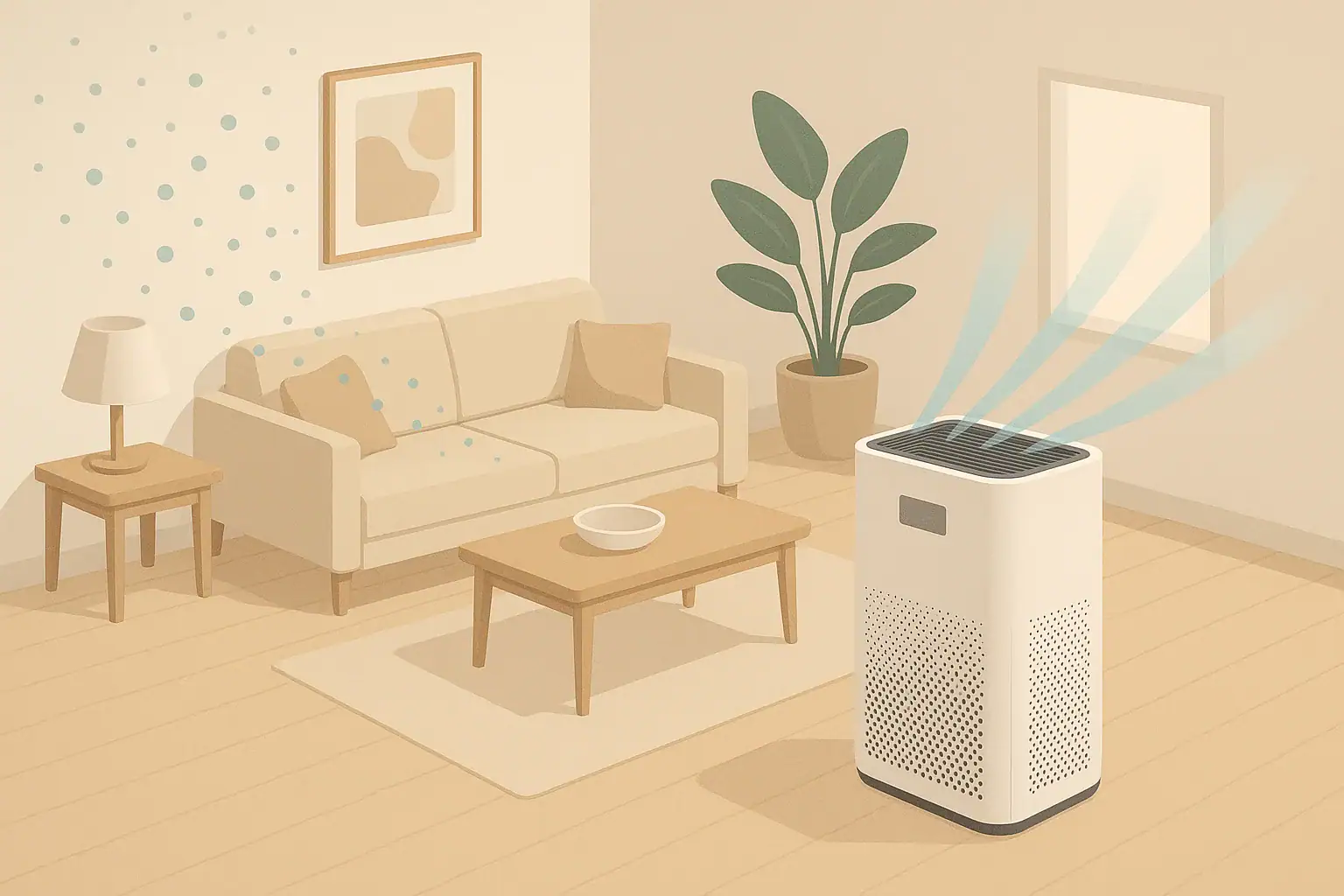
PM2.5 stands for particulate matter smaller than 2.5 micrometers in diameter. These particles are about 30 times smaller than the thickness of a human hair and are invisible to the naked eye.
Because they are so small, PM2.5 particles can stay suspended in the air for long periods and travel deep into the lungs when inhaled. Some particles are even small enough to enter the bloodstream.
PM2.5 is a focus of indoor air quality because of how deeply it can penetrate into the respiratory system. Health agencies link long- and short-term exposure to PM2.5 with a variety of issues, especially for vulnerable groups.
Possible effects include:
- Irritation of eyes, nose, and throat
- Coughing, wheezing, or shortness of breath
- Worsening of asthma or other lung conditions
- Increased risk of respiratory infections
- Strain on the heart and circulatory system with long-term exposure
Children, older adults, and people with asthma, COPD, or cardiovascular disease are generally more sensitive to PM2.5.
What Is PM2.5?
Common Sources of PM2.5 Indoors
PM2.5 can come from both outdoor and indoor sources. Typical indoor contributors include:
- Cooking – frying, grilling, broiling, toasting, and high-heat baking
- Burning fuels – gas stoves, fireplaces, candles, incense
- Tobacco or other smoke – cigarettes, cigars, or other indoor smoking
- Outdoor air infiltration – traffic pollution, wildfires, wood burning that leaks indoors
- Household activities – sweeping, dusting, vacuuming without effective filtration
- Hobbies or projects – sanding, soldering, 3D printing, some crafts
Why PM2.5 Matters for Health
How PM2.5 Is Measured
When you see a PM2.5 reading on an air quality monitor, it usually uses a laser or optical sensor to estimate how many fine particles are in the air.
Units You Will See on Monitors
Most indoor monitors show PM2.5 in one of two ways:
- Micrograms per cubic meter (µg/m³) – a mass-based measurement; how many micrograms of fine particles are in one cubic meter of air
- Air Quality Index (AQI) – a color-coded scale derived from pollutant concentrations, often based on national or regional standards
For understanding indoor conditions, µg/m³ is the most direct way to see how much particulate matter is present. However, many consumer devices convert this to a simplified index or colored bar to indicate relative risk.
Spot Measurements vs. Averages
Fine particles can change quickly. A short burst of cooking or the opening of a window can spike PM2.5 levels for a few minutes and then drop them again.
It is helpful to distinguish between:
- Instantaneous readings – current PM2.5 level at a particular moment
- Short-term averages – such as 1-hour or 24-hour averages
- Long-term averages – such as weekly or yearly averages, more relevant to chronic health effects
Most home monitors show near real-time values, sometimes with a short internal averaging period. For health guidance, organizations often rely on averages over several hours or days.
Understanding PM2.5 Numbers
It can be confusing to interpret the numbers on a monitor, especially if it also shows an index value or color. Below are general reference points in µg/m³ for PM2.5, focusing on indoor use.
Typical Indoor Ranges (µg/m³)
Actual levels vary by home, outdoor air quality, climate, and habits, but many lived-in homes tend to fall into these approximate ranges:
- 1–5 µg/m³ – very clean indoor air, often with effective filtration and low outdoor pollution
- 5–12 µg/m³ – relatively good for most homes under normal conditions
- 12–35 µg/m³ – elevated; common during cooking or periods of poor outdoor air
- 35–55 µg/m³ and above – high; more likely during heavy indoor smoke, frequent frying, or wildfire events
Short peaks above these bands during activities such as cooking are common. The aim is to keep everyday backgrounds low and reduce the duration of higher spikes.
PM2.5 vs. Air Quality Index (AQI)
Some monitors display only a numeric index or a color indicator. The index usually corresponds to a range of PM2.5 values.
While specifics vary by country, a typical scale might look like:
- Good (green) – low PM2.5; air quality is considered satisfactory
- Moderate (yellow) – acceptable, but there may be a risk for unusually sensitive people
- Unhealthy for sensitive groups (orange) – higher risk for people with heart or lung disease, older adults, and children
- Unhealthy and above (red or purple) – increased likelihood of health effects for broader portions of the population
Different regions may adjust exact breakpoints, but the concept is similar: as PM2.5 rises, index values and colors shift to indicate higher concern.
What Is a Safe PM2.5 Level Indoors?
There is no single universal number that guarantees safety for every person in every circumstance. However, health and environmental agencies publish guidelines based on large population studies to reduce risk.
Guideline Values and Practical Targets
Long-term guideline values for PM2.5 are often in the single-digit to low-teens µg/m³ range when averaged over a year. Short-term (24-hour) guideline values are often in the teens to low-twenties µg/m³.
For everyday indoor use, many people use the following practical goals:
- Background level: aim to keep typical indoor PM2.5 in the single digits or low teens when no obvious pollution source is active
- Short-term peaks: during activities like cooking, keep peaks as low as reasonably possible and reduce how long they last
- Sensitive individuals: households with asthma, COPD, or cardiovascular conditions may want to target the lower end of these ranges
These are not strict thresholds but rather helpful reference points. Lower is generally better, especially over long periods.
Considerations for Sensitive Groups
Some people experience symptoms at PM2.5 levels that others tolerate without noticing. Those who may need extra caution include:
- People with asthma or chronic lung disease
- Individuals with heart disease
- Older adults
- Infants and young children
- Pregnant individuals
For these groups, households sometimes choose to maintain very low indoor PM2.5 levels, especially in bedrooms or areas where they spend most of their time.
How PM2.5 Levels Change Indoors
PM2.5 is dynamic. It rises and falls with activities, ventilation, and filtration. Understanding these patterns helps you interpret your monitor’s numbers more accurately.
Short-Term Spikes
It is normal to see brief spikes in PM2.5 during certain tasks, including:
- Cooking – especially frying, searing, or using a wok at high heat
- Toasting bread – browning and crumbs can release fine particles
- Using candles or incense – burning materials emit fine combustion particles
- Vacuuming or sweeping – especially without high-efficiency filtration
The key question is not whether these spikes occur at all, but:
- How high they go
- How frequently they happen
- How long they remain elevated
Background Levels
Between activities, your home settles into a baseline PM2.5 level. This background is influenced by:
- Outdoor air quality (pollution, traffic, wildfires, seasonal changes)
- How leaky or tight the building envelope is
- Ventilation practices (window use, fans, mechanical systems)
- Filtration (filters in HVAC systems or standalone devices)
- Everyday habits (smoking indoors, frequent candle use, etc.)
Monitoring the lowest values you see during quiet times can tell you a lot about your home’s general air quality.
Using Monitors to Interpret PM2.5 Indoors
Low-cost consumer PM2.5 monitors make particle levels visible, but they have limitations. Understanding how to use them helps avoid misinterpretation.
Limitations of Low-Cost Sensors
Most consumer devices use optical sensors that:
- Estimate particle mass from how light scatters off particles
- Are more accurate at higher concentrations than at extremely low levels
- Can be influenced by humidity and particle type
As a result, you should treat the numbers as approximations rather than exact laboratory-grade values. Trends and relative differences (higher vs. lower) are often more meaningful than individual readings.
Practical Ways to Use PM2.5 Readings
Instead of focusing on a single number, consider these approaches:
- Observe patterns – watch how PM2.5 changes during cooking, cleaning, or opening windows
- Compare rooms – measure in different locations to see where levels stay higher
- Track changes over time – look at trends across days or weeks when you adjust ventilation or filtration
- Set personal thresholds – decide at what level you will take actions like increasing ventilation or running filtration on higher settings
How to Keep Indoor PM2.5 Levels Low
Reducing fine particles is usually a combination of source control, ventilation, and filtration.
1. Minimize Sources
Lowering emissions at the source is often the most effective first step:
- Avoid indoor smoking – smoke is a major PM2.5 contributor
- Choose cooking methods carefully – boil, steam, or bake at moderate temperatures when possible
- Use fewer open flames – reduce or avoid routine use of candles and incense indoors
- Control dusty activities – wet-wipe surfaces, and if sanding or similar work is needed, isolate the area and ventilate well
2. Ventilate Wisely
Ventilation can either improve or worsen PM2.5 levels, depending on outdoor air.
- During cooking: use range hoods that vent outdoors if available, and open windows when outdoor air quality is reasonable
- During clean outdoor conditions: airing out the home can dilute indoor pollutants
- During high outdoor pollution (e.g., wildfire smoke): keep windows closed as much as practical and limit infiltration from outdoors
Monitors can help you decide when opening windows improves or worsens indoor PM2.5.
3. Use Filtration Effectively
Filtration physically removes particles from the air as it passes through a filter medium.
- Central systems: higher-efficiency filters in heating and cooling systems can reduce whole-home particle levels when the fan runs
- Portable devices: standalone air cleaning units can target specific rooms such as bedrooms or main living areas
- Runtime: longer or continuous operation often maintains lower baseline PM2.5
For best results, filtration should be sized appropriately for the room or home volume, with consideration for airflow and run time.
4. Adjust Everyday Habits
Small behavioral changes can noticeably impact PM2.5:
- Cook with lids on pots and pans when suitable
- Start ventilation or filtration before high-emission activities
- Close interior doors to keep particles from spreading to low-priority rooms
- Clean surfaces with damp cloths instead of dry dusting
Interpreting PM2.5 Readings in Context
It is important to place any PM2.5 number in context rather than reacting to single measurements.
Questions to Ask When You See a Reading
When looking at your monitor, consider:
- What is happening right now? Cooking, cleaning, or burning candles can explain temporary increases.
- What is the outdoor air quality like? Poor outdoor conditions can raise indoor backgrounds, especially in leaky buildings.
- How long has it been elevated? Short spikes are different from hours or days of high levels.
- Are there sensitive individuals in the home? Their needs may justify stricter personal targets.
Setting Personal PM2.5 Goals
Because each home and family is different, it can be useful to define your own targets such as:
- Keeping background PM2.5 in the single digits or low teens during typical days
- Limiting high spikes (for example, from cooking) to short periods with good ventilation and filtration
- Maintaining especially low levels in bedrooms or spaces used by sensitive individuals
By pairing numerical guidance with an understanding of your home, health needs, and local environment, you can use PM2.5 readings as a practical tool to support cleaner and more comfortable indoor air.
Frequently asked questions
What indoor PM2.5 level is generally considered safe for daily life?
There is no single universal safe number for every person, but many agencies recommend annual guideline values in the single digits to low-teens µg/m³ and 24-hour guidelines in the teens to low-twenties µg/m³. For everyday indoor goals, aiming for background levels in the single digits or low teens and minimizing time spent above higher ranges is a practical approach.
What should I do if my indoor PM2.5 monitor spikes while cooking?
Reduce the source and increase ventilation: use a range hood that vents outdoors or open windows if outdoor air is clean, and run a portable high-efficiency air cleaner to capture particles. Also shorten the duration of the activity when possible and run filtration after cooking to bring levels back down.
Can outdoor air quality affect my indoor PM2.5, and when should I keep windows closed?
Yes — outdoor pollution from traffic, wildfires, or other sources can infiltrate indoor spaces and raise PM2.5. Keep windows closed and rely on filtration during periods of poor outdoor air; ventilate when outdoor air quality is good to dilute indoor sources.
Are consumer PM2.5 monitors accurate enough to set safety thresholds?
Consumer optical monitors provide useful approximations and are most valuable for identifying trends and relative changes rather than exact laboratory-grade values. Because readings can be affected by humidity and particle type, use longer averages and patterns across time to guide decisions rather than single instantaneous numbers.
What indoor PM2.5 levels should households with sensitive people aim for?
Households with people who have asthma, heart or lung disease, young children, pregnant individuals, or older adults often aim for the lower end of guideline ranges, trying to keep background PM2.5 in the single digits when feasible. Prioritize filtration (especially in bedrooms), minimize indoor sources, and reduce the duration of high spikes to protect sensitive occupants.
Recommended next:
- Clear sizing logic (room size → CADR/ACH)
- HEPA vs carbon explained for real use-cases
- Humidity + ventilation basics to reduce mold risk




About this site
Home Air Quality Lab publishes practical, independent guides about indoor air quality—clear sizing, safer use, and real-world expectations.
Affiliate disclosure
Some links on this site may be affiliate links. If you buy through these links, we may earn a small commission at no extra cost to you. This helps support our content. Learn more.