
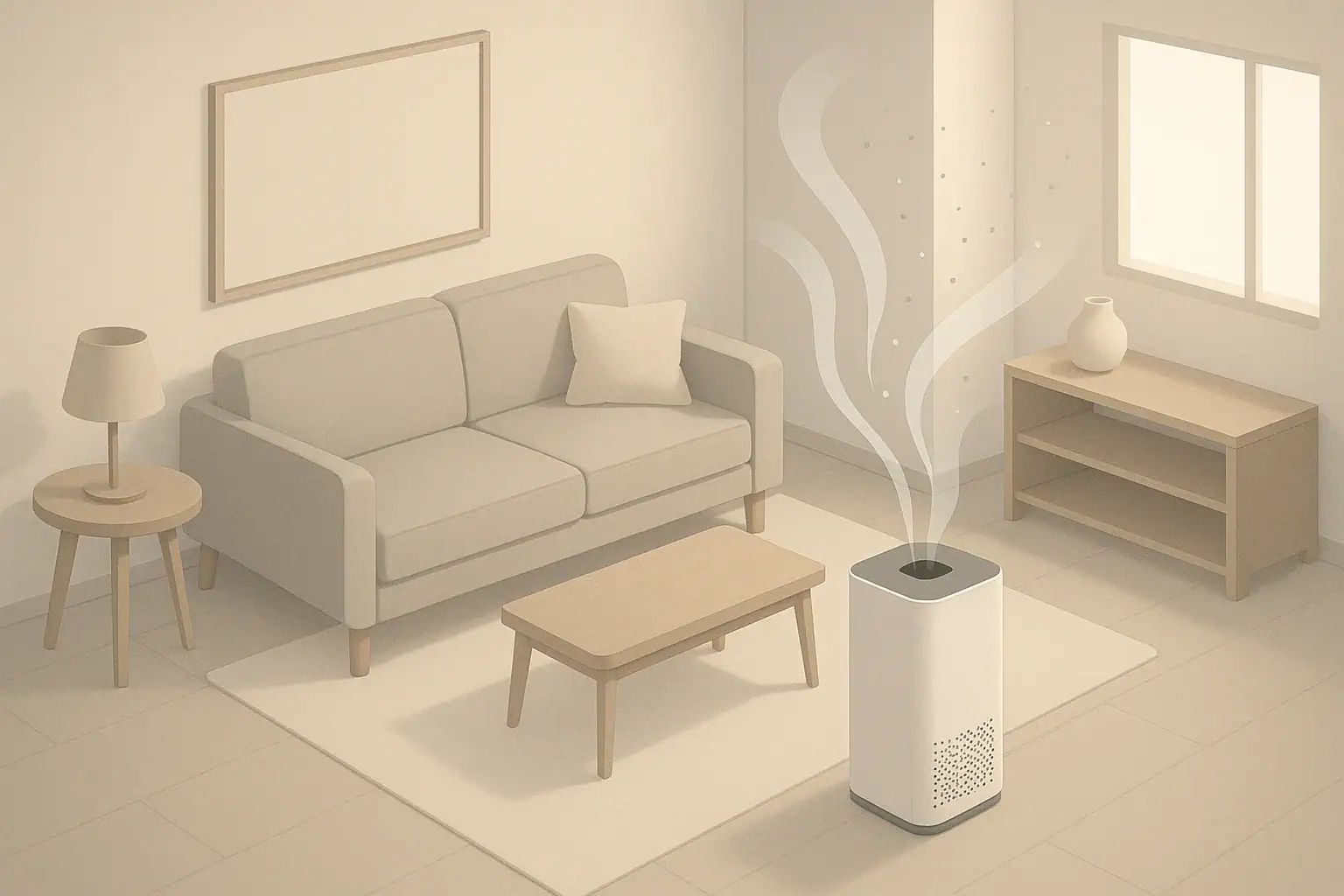
The fastest way to lower wildfire smoke indoors is to close windows, set up a single “clean room,” and run strong particle filtration there on high speed. From there, you tighten up leaks, adjust your HVAC settings, and time short bursts of ventilation for when outdoor air is cleaner.
Wildfire smoke, haze, and drifting ash can raise indoor PM2.5 in minutes, even if the fire is far away. Fine smoke particles are small enough to stay airborne, travel through cracks, and linger in bedrooms and living areas long after the outdoor plume has passed. A clear, step-by-step plan helps you act quickly instead of guessing.
This guide focuses on practical actions you can take at home: how PM2.5 behaves indoors, how to size and run air purifiers, what to do with your central HVAC, and how to avoid common mistakes that accidentally pull more smoke inside. It is written so you can follow it during an active smoke event and reuse the same plan for future fire seasons.
What Wildfire Smoke Indoors Really Means and Why PM2.5 Matters
When outdoor wildfire smoke gets inside, the main concern is fine particulate matter called PM2.5. These particles are roughly 2.5 micrometers or smaller in diameter, so they stay suspended in the air instead of settling quickly. That makes them easy to breathe in and hard to remove without filtration.
Wildfire smoke indoors is usually a mix of:
- Fine particles (PM2.5 and smaller) from burning vegetation, structures, and debris
- Gases and VOCs released during combustion
- Coarser ash and dust that tend to fall onto surfaces faster
At home, you can track PM2.5 with simple monitors that display values in micrograms per cubic meter (µg/m³). These readings are not a medical diagnosis, but they are useful feedback: if your indoor PM2.5 is dropping after you close windows and start filtration, your strategy is working.
Most effective wildfire smoke plans focus on three levers:
- Blocking new smoke from entering as much as is practical
- Filtering indoor air aggressively in at least one main room
- Ventilating briefly and strategically when outdoor air improves
Because trying to clean an entire home at once can be slow and expensive, many people rely on one or two cleaner rooms. This concentrates your filtration where you actually spend time and lets you reach lower PM2.5 faster.
Key Concepts: Clean Rooms, CADR, and Air Changes per Hour
Lowering wildfire smoke indoors is mostly about controlling how quickly smoky air leaks in versus how quickly filtered air replaces it. Three concepts help you plan: clean rooms, CADR, and air changes per hour (ACH).
Clean room basics
- Choose a bedroom or main living room with a solid door and as few exterior walls and windows as possible.
- Close and latch all windows; lock them so the seals compress fully.
- Block obvious gaps under doors with draft stoppers or rolled towels.
- Avoid rooms with open fireplaces, wood stoves, or gas ranges as your primary clean space.
CADR and room size
Clean Air Delivery Rate (CADR) describes how much filtered air an air purifier can deliver per minute. Higher CADR usually means faster particle reduction or the ability to handle a larger room.
As a rough rule of thumb for smoke response, many people aim for several air changes per hour in their clean room. You can estimate ACH from CADR and room size.
| Room size (approx.) | Example room volume* | Target ACH range | Approx. total CADR needed | Practical notes |
|---|---|---|---|---|
| Small bedroom (120 ft²) | 960 ft³ | 5–8 ACH | 80–130 cfm | Often one medium purifier on high speed |
| Medium bedroom (180 ft²) | 1,440 ft³ | 5–8 ACH | 120–190 cfm | One stronger unit or two smaller units |
| Living room (250 ft²) | 2,000 ft³ | 6–10 ACH | 200–330 cfm | High-speed operation; more benefit from sealing leaks |
| Open-plan area (400 ft²) | 3,200 ft³ | 4–6 ACH | 210–320 cfm | Multiple purifiers spaced around the space |
| Older, drafty room (200 ft²) | 1,600 ft³ | Higher end of ranges | 200+ cfm | Extra CADR plus more attention to sealing |
*Assumes 8 ft ceiling height.
You do not need to calculate ACH perfectly during an emergency. The key idea is that more CADR in a smaller, better-sealed room will usually drop PM2.5 faster.
How to run purifiers during smoke
- Start with maximum fan speed in your clean room to bring PM2.5 down quickly.
- Once levels stabilize lower, reduce to a medium setting to maintain cleaner air with less noise.
- Keep doors and windows closed while purifiers run, except during short, intentional ventilation periods.
- If you use fans, aim them so they push air toward the purifier intake instead of toward doors or windows.
Real-World Examples of Managing Wildfire Smoke Indoors
Seeing how different homes handle wildfire smoke indoors can make the steps easier to apply. The examples below illustrate common situations and how a practical plan might look.
Example 1: Small apartment near a wildfire
- Pick the bedroom as the clean room because it has one window and a solid door.
- Close and lock the window, block the door gap with a towel, and turn off the bathroom fan when not in use.
- Place a portable air purifier near the center of the room, a few feet from walls, and run it on high for the first hour while monitoring how the room feels.
- Leave the purifier on medium continuously; open the bedroom door only briefly to access other areas.
Example 2: Single-family home with central HVAC
- Choose a family room as the daytime clean room and a main bedroom as the night-time clean room.
- Install a higher-efficiency central HVAC filter that the system can handle, and make sure it is seated correctly.
- Set the thermostat fan to “on” or “circulate” so air moves repeatedly through the central filter.
- Run portable purifiers in the family room and bedroom on high when smoke peaks, then on medium to maintain lower PM2.5.
- Use kitchen and bathroom exhaust fans only when necessary, and turn them off once tasks are done.
Example 3: Older, drafty house during a regional smoke event
- Pick a smaller interior room as the primary refuge to reduce the number of leaky exterior surfaces.
- Use temporary weatherstripping, painter’s tape, or foam strips around windows and doors where you can see daylight.
- Run two portable purifiers in the same room, placed on opposite sides to improve circulation.
- Monitor comfort: if the home becomes humid and stuffy, schedule short ventilation windows early in the morning when outdoor smoke is lighter.
| Situation | Primary action | Why it helps | What to watch |
|---|---|---|---|
| Outdoor air visibly hazy, smell of smoke indoors | Set up clean room and run purifier on high | Quickly lowers indoor PM2.5 where you spend time | Door openings; pets or people frequently going in and out |
| Indoor PM2.5 still rising with windows closed | Check for leaks and increase total CADR | Reduces unfiltered air entry and boosts filtration | Gaps around windows, doors, fireplace dampers |
| Home feels stuffy but outdoor smoke still moderate | Short, timed ventilation plus high-speed filtration | Exchanges stale air while limiting smoke buildup | Vent only when outdoor air looks or reads cleaner |
| Long smoke season with repeated events | Plan filter replacements and monitor humidity | Keeps systems effective and avoids dampness issues | Filters darkening early; condensation on windows |
| Bedroom used by a sensitive individual | Prioritize higher ACH and better sealing | Maintains lower PM2.5 overnight | Balance fan noise with sleep comfort |
Common Mistakes and Troubleshooting When Smoke Gets Inside
Even with good equipment, a few common habits can keep indoor PM2.5 higher than necessary. Watching for these patterns makes troubleshooting easier.
Common mistakes that keep PM2.5 high
- Trying to clean the whole house at once. This spreads your filtration thin. Focus on one or two rooms first.
- Placing purifiers in corners or behind furniture. Restricted airflow slows down particle removal.
- Leaving windows slightly open “for fresh air.” During a smoke event, this often brings in more PM2.5 than it removes.
- Running exhaust fans continuously. Bathroom and kitchen fans can depressurize the home and pull smoky air in through leaks.
- Ignoring filter loading. In heavy smoke, filters can darken and clog much faster than usual, reducing CADR.
Troubleshooting cues and simple checks
- PM2.5 does not fall after an hour of high-speed filtration: Check for open windows, propped exterior doors, or a fireplace damper left open. Confirm that the purifier intake and outlet are unobstructed.
- PM2.5 drops in the clean room but stays high elsewhere: That is expected. Spend more time in the clean room, or add additional purifiers if you need more coverage.
- Purifier seems loud but not moving much air: Inspect the pre-filter and main filter for heavy dust or soot and replace according to the device instructions.
- Home smells smoky even when PM2.5 is lower: Odor-causing gases can linger. A carbon or other gas-adsorbing filter may help with smell, but the priority is still particle filtration.
- House feels too dry or too humid while closed up: Adjust short ventilation windows, and use dehumidifiers or humidifiers as needed to keep comfort in a moderate range.
When to reconsider your setup
- If wildfire smoke is becoming a regular seasonal problem, consider dedicating a specific room as a permanent clean room with better sealing and a purifier sized for higher ACH.
- If you notice visible dust or soot on surfaces near windows or doors, focus on sealing those specific locations before adding more filtration.
- If you rely heavily on central HVAC, talk with a qualified professional about filter compatibility and airflow so you do not over-restrict the system.
Safety Basics When Dealing With Wildfire Smoke Indoors
Managing wildfire smoke indoors is not only about comfort. There are general safety basics to keep in mind while you close up the house and run equipment harder than usual.
Ventilation and combustion safety
- Do not block or modify furnace, water heater, or boiler combustion air inlets. These are critical for safe operation.
- Do not tape over or seal exhaust vents from fuel-burning appliances, even during heavy smoke.
- Use gas stoves, fireplaces, and candles sparingly during smoke events; they add more particles and gases indoors.
- Ensure carbon monoxide alarms and smoke alarms are installed and functioning, especially if you are closing up the home more tightly than usual.
Electrical and equipment safety
- Plug portable air purifiers and dehumidifiers into properly grounded outlets; avoid overloaded power strips.
- Follow manufacturer guidance on filter replacement and cleaning to avoid damaging motors or housings.
- Keep devices on a stable, flat surface away from water sources and where cords will not be tripping hazards.
Personal comfort and health awareness
- Pay attention to how you feel in smoky conditions. If anyone in the home experiences worsening breathing problems, seek medical advice.
- Remember that air quality monitors are tools, not diagnoses. Use their trends to guide actions, not to replace medical judgment.
- If indoor air still feels irritating even after filtration and sealing, consider relocating temporarily to a cleaner area if that is an option.
Maintenance, Filter Care, and Planning for Long Smoke Seasons
Wildfire seasons are becoming longer in many areas, which means your plan for handling wildfire smoke indoors should be sustainable. Maintenance and storage choices affect how well your equipment performs year after year.
Filter care during and after smoke events
- Check purifier and HVAC filters more often than usual during active smoke days.
- Clean reusable pre-filters according to instructions so they continue to catch larger particles before they reach the main filter.
- Replace main filters when they are visibly darkened, produce less airflow, or when recommended service intervals are reached, whichever comes first.
Humidity and comfort management
- Closed-up homes can become humid in some climates. Short, targeted use of bathroom fans and dehumidifiers can help control moisture.
- In dry climates or during winter smoke events, indoor air can become very dry. Use humidifiers carefully and avoid over-humidifying, which can lead to condensation.
- As a comfort-oriented range, many households aim for moderate indoor humidity rather than extremes on either end.
Storage and readiness between seasons
- At the end of smoke season, inspect and, if needed, replace filters so devices are ready for the next event.
- Store purifiers in a dry, dust-controlled area to prevent unnecessary buildup on filters while not in use.
- Keep a small reserve of spare filters for your main purifiers and HVAC system so you are not relying on last-minute availability during a large regional fire.
Practical Takeaways and Specs to Look For
Once you understand how wildfire smoke behaves indoors, the day-to-day decisions become simpler: keep smoke out, filter what gets in, and ventilate wisely when outdoor air improves.
When you are comparing air-cleaning options or planning upgrades, it helps to have a short checklist of features and specifications that matter most for wildfire smoke indoors.
Specs to look for in air purifiers and systems
- Adequate CADR for your clean room size so you can reach at least several air changes per hour during smoke events.
- High-efficiency particle filtration (such as HEPA or similar media designed for fine particles) rather than filters aimed only at large dust.
- Optional gas and odor reduction stage (such as activated carbon) if smoke smell is a major concern.
- Multiple fan speeds, including a strong high setting for fast cleanup and quieter settings for night use.
- Clear filter access so you can replace or clean filters quickly during heavy smoke periods.
- Energy-efficient operation if you plan to run devices for many hours or days in a row.
Specs and features to consider in central HVAC
- Filter slot that accepts higher-efficiency filters compatible with the blower’s capabilities.
- Fan mode options like “on” or “circulate” so you can move air through the filter without necessarily heating or cooling.
- Accessible filter location for more frequent changes during wildfire season.
By combining a well-chosen clean room, correctly sized filtration, careful sealing, and a simple maintenance routine, you can keep indoor PM2.5 noticeably lower than outdoors during wildfire smoke events and reuse the same plan each season.
Frequently asked questions
What specifications and features matter most when choosing an air purifier for wildfire smoke indoors?
Key specs include adequate CADR for the size of your chosen clean room, high-efficiency particle filtration (HEPA or equivalent), and multiple fan speeds so you can run a strong cleanup setting. Clear filter access, energy-efficient operation, and an optional activated carbon stage for odors are also useful for smoke events.
How long should I run an air purifier to reduce indoor smoke levels?
Run the purifier on its highest compatible speed until PM2.5 readings fall and stabilize, which commonly takes 30–60 minutes in a well-sealed clean room. After that, reduce to a medium setting to maintain lower levels and use an indoor monitor to guide adjustments.
What is one common mistake that makes indoor smoke worse?
A frequent mistake is trying to clean the entire house at once, which spreads filtration capacity too thin and slows particle removal. Other pitfalls include leaving windows slightly open or running exhaust fans continuously, both of which can draw smoky outdoor air inside.
Is it safe to seal up my home completely during a wildfire smoke event?
Sealing the home to limit smoke infiltration is generally safe for short periods, but you must not block combustion appliance inlets or exhaust vents and should ensure carbon monoxide and smoke alarms are functioning. Maintain necessary ventilation for fuel-burning appliances and follow safety guidance from appliance manufacturers.
How often should I check or replace filters during an active smoke event?
Check purifier and HVAC filters more often than usual; heavy smoke can visibly darken and clog filters in days to weeks depending on intensity. Replace or clean filters when airflow drops or filters appear heavily soiled, and keep spare filters on hand.
Should I run my central HVAC fan continuously when wildfire smoke is outside?
Setting the HVAC fan to “on” or “circulate” can help move air through a properly sized, high-efficiency central filter, but the system must be compatible with higher-efficiency media and filters must be seated correctly. In drafty homes, continuous HVAC operation can pull smoky air through leaks, so many people prioritize a sealed clean room with portable purifiers as the primary strategy.
- Clear sizing logic (room size → CADR/ACH)
- HEPA vs carbon explained for real use-cases
- Humidity + ventilation basics to reduce mold risk