
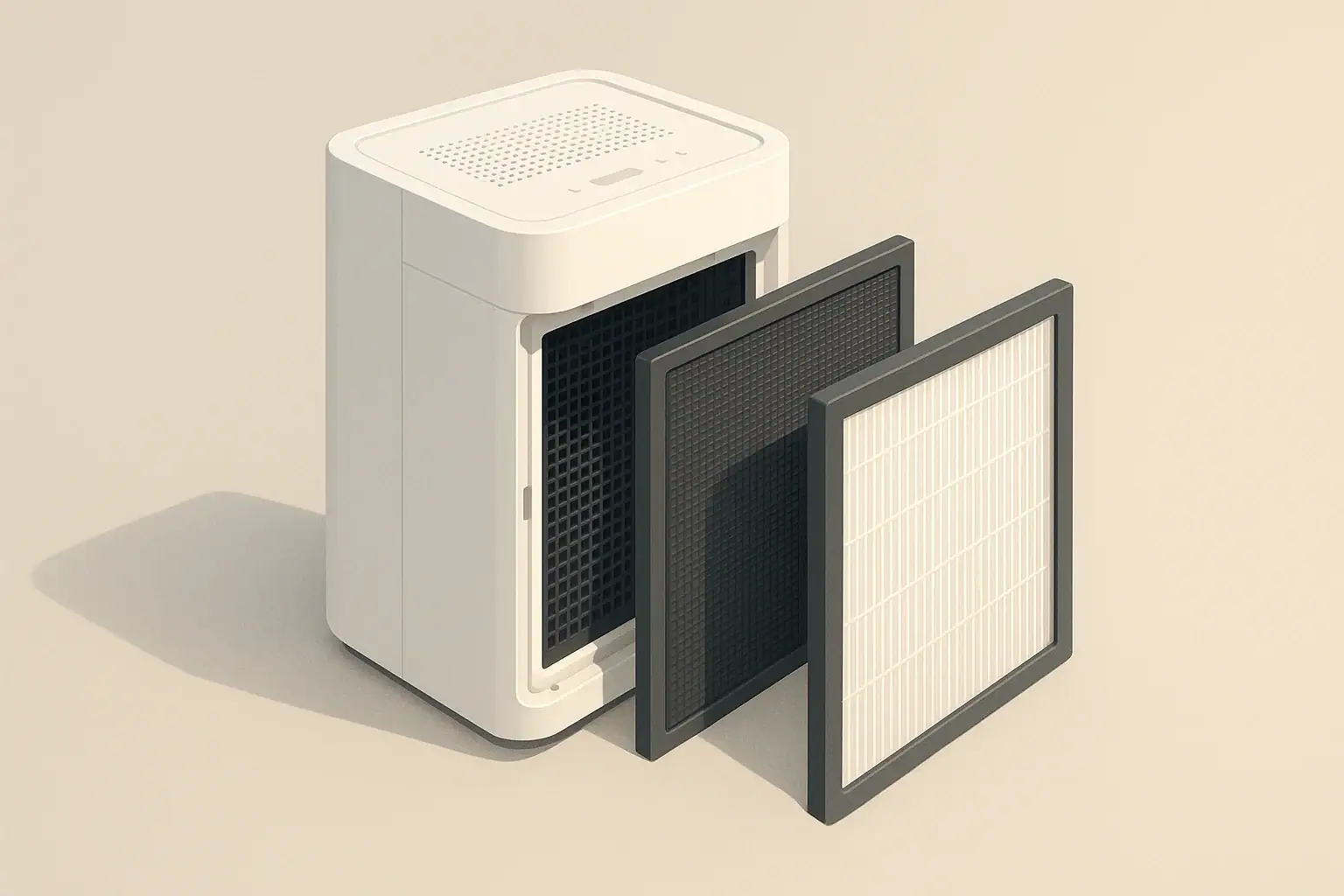
HEPA pre-filters are an often-overlooked component of many home air purifiers. Before air reaches the high-efficiency particulate air (HEPA) media, a pre-filter captures larger particles such as hair, lint, and coarse dust. That front-line protection can reduce the rate at which the main HEPA element loads with debris, helping preserve airflow and extend the life of the primary filter. The degree of benefit depends on factors such as household dust levels, pet shedding, how often the pre-filter is cleaned or replaced, and how intensively the purifier is used. This article explains what pre-filters do, how they protect HEPA filters, typical lifespan impacts, the types available, and maintenance practices that help maximize filter life. Use the table of contents below to jump to the section you need.
What Is a HEPA Pre-Filter?
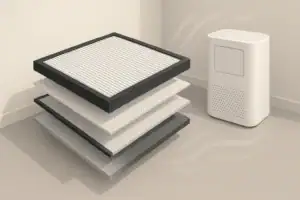
In many home air purifiers, the HEPA filter is not the first layer that incoming air touches. A HEPA pre-filter is a separate, usually less dense filter stage placed in front of the main HEPA media. Its job is to catch larger debris before it reaches the finer fibers of the HEPA filter.
Typical pre-filters are made from materials such as non-woven fabric, mesh, or foam. Some are washable or vacuumable, while others are disposable pads that are replaced more frequently than the primary HEPA element.
Pre-filters are designed to capture:
- Larger dust and lint
- Hair and pet fur
- Fibers from fabrics and carpets
- Some larger pollen and particulate matter
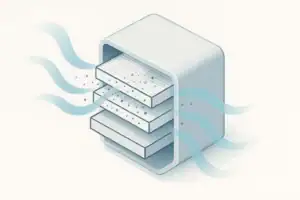
By intercepting this coarse material, the pre-filter reduces how quickly the HEPA media fills up, which can extend the useful life of the HEPA filter and help keep airflow more stable over time.
How Pre-Filters Protect HEPA Filters
The main role of a HEPA filter is to capture fine particles such as small dust, smoke particles, and other tiny airborne solids. These particles are measured in micrometers (microns), and HEPA media is engineered to trap a very high percentage of them.
However, HEPA media can clog quickly if it is asked to capture everything from coarse dust and hair to ultra-fine particles. A pre-filter acts as a first barrier, removing the bulkier material that would otherwise block the HEPA surface. This has several effects:
- Slower loading of HEPA media: The HEPA filter accumulates fine particles more gradually, delaying the point at which its airflow resistance becomes too high.
- More stable airflow and CADR: When the HEPA filter clogs more slowly, the purifier can maintain more consistent clean air delivery over its service life.
- Less visible dirt buildup: The pre-filter collects the most visually obvious debris, so the HEPA element looks cleaner for longer, even though it is still capturing fine particles.
- Potential cost savings: Because HEPA filters are usually the most expensive replacement components, protecting them with an inexpensive or washable pre-filter can reduce overall maintenance cost.
The effectiveness of a pre-filter depends on how well it is matched to the purifier’s fan capacity and HEPA area. A pre-filter that is too restrictive can reduce airflow, while one that is too open may let too much debris through. Most consumer units are designed as a system, with pre-filter and HEPA working together.
Example values for illustration.
| Setup type | What it captures first | Typical HEPA replacement interval example | Pros | Considerations |
|---|---|---|---|---|
| HEPA only | All particle sizes hit HEPA directly | About 6–12 months in average use | Simpler filter stack | HEPA clogs faster with hair and lint |
| HEPA + basic pre-filter | Hair, lint, larger dust first | About 9–18 months in similar conditions | HEPA stays cleaner longer | Pre-filter needs more frequent attention |
| HEPA + washable pre-filter | Coarse dust and pet hair | About 12–24 months in lighter use | Lower long-term filter cost | Requires regular user cleaning |
| HEPA + dense pre-filter | More fine dust before HEPA | Varies; can be longer if airflow is maintained | Extra protection for HEPA media | May reduce airflow if not maintained |
| HEPA + pre-filter + carbon layer | Coarse dust, then particles and some gases | Often aligned to 12+ months for HEPA in examples | More comprehensive filtration stack | More pieces to track for replacement |
| HEPA + pre-filter in dusty home | High dust load and lint first | Often toward lower end of any range | Better than HEPA only in same space | Maintenance interval may still be short |
How Much Do HEPA Pre-Filters Really Extend Filter Life?
There is no single percentage that applies to every purifier or home. The amount of life extension a pre-filter provides depends on several variables:
- How dusty the home is and how often it is cleaned
- Whether there are pets that shed hair and dander
- How many hours per day the purifier operates
- The fan speed used most of the time
- Whether the pre-filter is cleaned or replaced on schedule
Manufacturers often specify a general HEPA replacement interval (for example, around one year of typical use). In practice, with an effective and well-maintained pre-filter, households sometimes see the HEPA element remain serviceable for longer than the baseline estimate. In dustier conditions or with heavy use, that extra life may be more modest, but it is still usually better than running without a pre-filter.
Illustrative lifespan scenarios
The following examples are not rules, but they help show how pre-filters influence HEPA life:
- Light use, low dust: In a relatively clean apartment, running a purifier several hours a day on lower speeds with a maintained pre-filter, the HEPA element may remain within acceptable airflow and efficiency ranges beyond a year of use.
- Average use, typical dust: In a typical home with moderate dust and occasional pet hair, a good pre-filter and routine cleaning might keep HEPA replacement closer to the upper end of the usual recommended interval.
- Heavy use, high dust and pets: In a busy home with multiple pets and high fan speeds, a pre-filter may prevent very rapid clogging, but HEPA replacement could still be needed on approximately the schedule indicated in the manual, or even earlier if airflow drops noticeably.
Because indoor conditions are so variable, it is helpful to pay attention to signs that the HEPA filter is approaching the end of its useful life:
- Noticeable reduction in airflow at the same fan setting
- Filter status indicators on the device (if present)
- Visible darkening and loading of the HEPA media, especially if combined with reduced performance
Pre-filters do not eliminate the need to replace HEPA filters. Instead, they can help you reach or modestly exceed the expected interval while sustaining more consistent performance.
Types of HEPA Pre-Filters
Not all pre-filters are the same. The design affects how they protect the HEPA filter and how you maintain them.
Washable or vacuumable pre-filters
Some pre-filters are designed to be cleaned and reused. They often resemble a mesh or a sturdy non-woven fabric.
Typical characteristics include:
- Reusability: Can be washed with water (and allowed to dry fully) or vacuumed to remove dust and lint.
- Lower ongoing cost: You purchase the pre-filter less often, focusing replacement spending on the HEPA stage.
- Maintenance responsibility: Performance depends on how regularly and gently you clean the material.
It is important to follow the product manual for how and how often to clean, because some materials can be damaged by harsh scrubbing, hot water, or strong detergents.
Disposable pre-filter pads
Other systems use thin disposable pre-filter layers that are discarded and replaced. They may be separate sheets or integrated frames that sit in front of the HEPA element.
Characteristics of disposable pre-filters include:
- Convenience: No washing or drying; you simply replace on a schedule or when visibly dirty.
- More consistent performance: Each new pad starts clean and predictable, which can help maintain airflow and pre-filtration.
- Ongoing cost: You need to purchase replacements more frequently, though they are usually less expensive than HEPA filters.
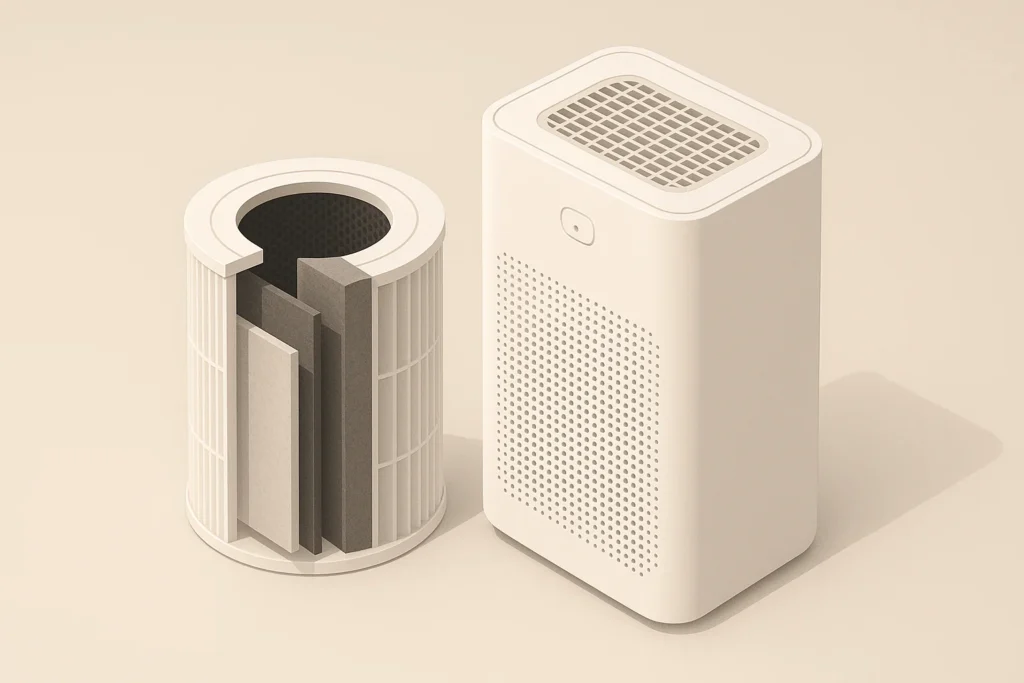
Combined pre-filter and carbon layers
In some purifiers, the pre-filter is combined with an activated carbon layer. The same piece may provide both coarse particle capture and some adsorption of odors or certain gases.
Key points about these combination layers:
- Multiple roles: They protect the HEPA and provide a separate function related to gases and odors.
- Shorter change interval: Carbon effectiveness typically declines with exposure, so this layer may need replacement more frequently than the HEPA filter.
- HEPA protection still present: Even when odor reduction fades, the layer usually continues to serve as a mechanical pre-filter until it is replaced.
Maintaining Pre-Filters to Maximize HEPA Life
The way you maintain the pre-filter is a major factor in how much extra life the HEPA filter gains. A clogged pre-filter can actually reduce airflow significantly, even if the HEPA media is still relatively clean. Regular attention keeps the entire system balanced.
Basic maintenance habits
For most home units, practical habits include:
- Check the pre-filter regularly: Inspect at least once a month in average conditions, more often if you notice high dust levels or have multiple pets.
- Follow cleaning or replacement guidance: Use the intervals suggested in the manual as a starting point, adjusting based on visible buildup and performance.
- Handle filters gently: Rough handling can tear or deform materials, creating gaps where unfiltered air can bypass the filter.
- Allow washed pre-filters to dry fully: Moisture held in the filter can restrict airflow and may create conditions that are not ideal inside the purifier.
Signs the pre-filter needs attention
Beyond calendar reminders, there are practical signs that a pre-filter is due for cleaning or replacement:
- A visible gray or fuzzy layer of dust and hair on the surface
- Noticeable reduction in airflow at familiar fan settings
- More dust settling near the purifier intake than usual
Addressing these early helps the pre-filter continue protecting the HEPA stage, supporting a longer useful life and steadier performance.
Example values for illustration.
| Filter type | Typical interval range example | What changes it | Reminder |
|---|---|---|---|
| Washable pre-filter | Clean every 1–3 months | Pets, visible dust, smoky events | Let fully dry before re-installing |
| Disposable pre-filter pad | Replace every 2–6 months | Dust load, fan speed usage | Check visually each month for heavy loading |
| Carbon pre-filter layer | Replace about every 3–6 months | Odor levels, cooking, smoking nearby | Odor reduction often fades before airflow issues |
| Main HEPA filter (with pre-filter) | About 9–18 months in average use | Hours of operation, dust, maintenance quality | Use device indicators plus airflow and visual checks |
| Main HEPA filter (no pre-filter) | About 6–12 months in average use | Higher exposure to lint and hair | Expect shorter intervals if air is dusty |
| All filters during smoky season | May need earlier attention | Extended high-speed use for fine particles | Inspect more often during and after smoke events |
Other Factors That Influence HEPA Filter Life
Pre-filters are only one piece of the picture. Several other factors can significantly affect how long a HEPA filter remains effective.
Room size and airflow
If a purifier is undersized for the room, it may run at higher speeds more often to move enough air. Higher fan speeds push more air (and particles) through the filters per hour, which can shorten the interval before the HEPA is loaded with fine particles, even with a good pre-filter.
On the other hand, using a purifier with adequate capacity for the space can allow more time at moderate speeds while still achieving sensible air changes per hour. This may help lengthen filter life while controlling noise.
Location in the home
Where the purifier sits also affects how much dust and debris it encounters:
- Near doors and hallways: May pull in more tracked-in dust and fibers.
- Low to the floor: Often exposed to more settled dust and pet hair.
- Near soft furnishings: Can draw in fibers from carpets, rugs, and upholstery.
Thoughtful placement can moderate how much heavy debris reaches the intake, supporting the work of the pre-filter.
Housekeeping and dust sources
Basic housekeeping can have a noticeable impact on filter life. Regular vacuuming with a well-maintained vacuum, dusting with damp cloths or microfiber, and controlling clutter can reduce the amount of airborne and resuspended dust. This in turn lightens the load on both the pre-filter and the HEPA stage.
Other sources to be aware of include home projects that generate dust, frequent burning of candles, and open windows during windy or dusty conditions. During these activities, filters tend to load faster. Checking the pre-filter and HEPA more often around such events can help you respond before airflow falls off sharply.
Using basic air quality monitoring as a guide
Some people use simple particle monitors that show general particulate levels in the home. While not necessary for everyone, these can help you connect filter wear with actual air conditions. For example, if background particle levels stay elevated even with the purifier running on familiar settings, it may be time to inspect the pre-filter and HEPA filter, along with considering room size, ventilation, and placement.
Used together with routine visual checks and any built-in filter indicators on the purifier, this can provide a practical picture of when maintenance is due and how effectively your pre-filter is supporting HEPA life.
Frequently asked questions
How often should I clean or replace a HEPA pre-filter?
Frequency depends on the pre-filter type and indoor conditions. Washable pre-filters are typically cleaned every 1–3 months, while disposable pads are often replaced every 2–6 months; inspect visually monthly and increase frequency if you have pets, heavy dust, or run the purifier continuously.
Can a clogged HEPA pre-filter reduce purifier performance?
Yes. A clogged pre-filter increases airflow resistance and can lower clean air delivery and make the HEPA stage work harder; cleaning or replacing the pre-filter restores airflow and helps maintain overall performance.
Do HEPA pre-filters remove odors or gases?
Plain mechanical pre-filters capture coarse particles but do not remove gases or most odors. Some units combine a pre-filter with activated carbon, which can adsorb certain odors and gases but loses effectiveness over time and requires its own replacement schedule.
How much extra life can a HEPA pre-filter add to the main HEPA element?
There is no fixed percentage because it depends on dust load, pet shedding, runtime, and maintenance. Typical illustrative ranges in consumer units show HEPA-only replacement around 6–12 months compared with about 9–18 months with a basic pre-filter and up to 12–24 months with a well-maintained washable pre-filter in lighter-use scenarios.
Is it safe to wash every pre-filter I find in a purifier?
No. Only pre-filters specified as washable should be washed; others are disposable and may be damaged by water. Always follow the manufacturer’s cleaning instructions, handle materials gently, and allow washable filters to dry completely before reinstalling.
Recommended next:
- True HEPA vs HEPA-Type: What the Labels Really Mean
- HEPA H13 vs H14: Differences, Efficiency, and When It Matters
- How Often Should You Replace a HEPA Filter?
- Do HEPA Filters Remove Viruses, Bacteria, and Allergens?
- HEPA Grades Explained (H10–H14): What’s Relevant for Homes?
- True HEPA vs HEPA-Type vs “HEPA-Like”: Label Tricks to Avoid
- More in HEPA Filters →
- Clear sizing logic (room size → CADR/ACH)
- HEPA vs carbon explained for real use-cases
- Humidity + ventilation basics to reduce mold risk
About this site
Home Air Quality Lab publishes practical, independent guides about indoor air quality—clear sizing, safer use, and real-world expectations.
Affiliate disclosure
Some links on this site may be affiliate links. If you buy through these links, we may earn a small commission at no extra cost to you. This helps support our content. Learn more.