
Yes, true HEPA filters can remove many virus-carrying particles, bacteria, and common indoor allergens from the air, but they do not sterilize a room or replace cleaning and ventilation. In real homes, HEPA filtration is best viewed as one powerful layer in an overall strategy for healthier indoor air.
If you are wondering whether a HEPA air purifier can help with airborne viruses, germs, pollen, pet dander, mold spores, or fine dust, it helps to understand what HEPA actually means, how these filters capture particles, and where their limits are. This guide walks through how HEPA filters work, what they can realistically do for infection risk and allergy control, and how to size, use, and maintain them so you get the most benefit.
Along the way you will see practical examples, simple comparisons, and common mistakes to avoid, so you can decide when HEPA filtration makes sense in your home and how to use it effectively.
What HEPA Filtration Means and Why It Matters
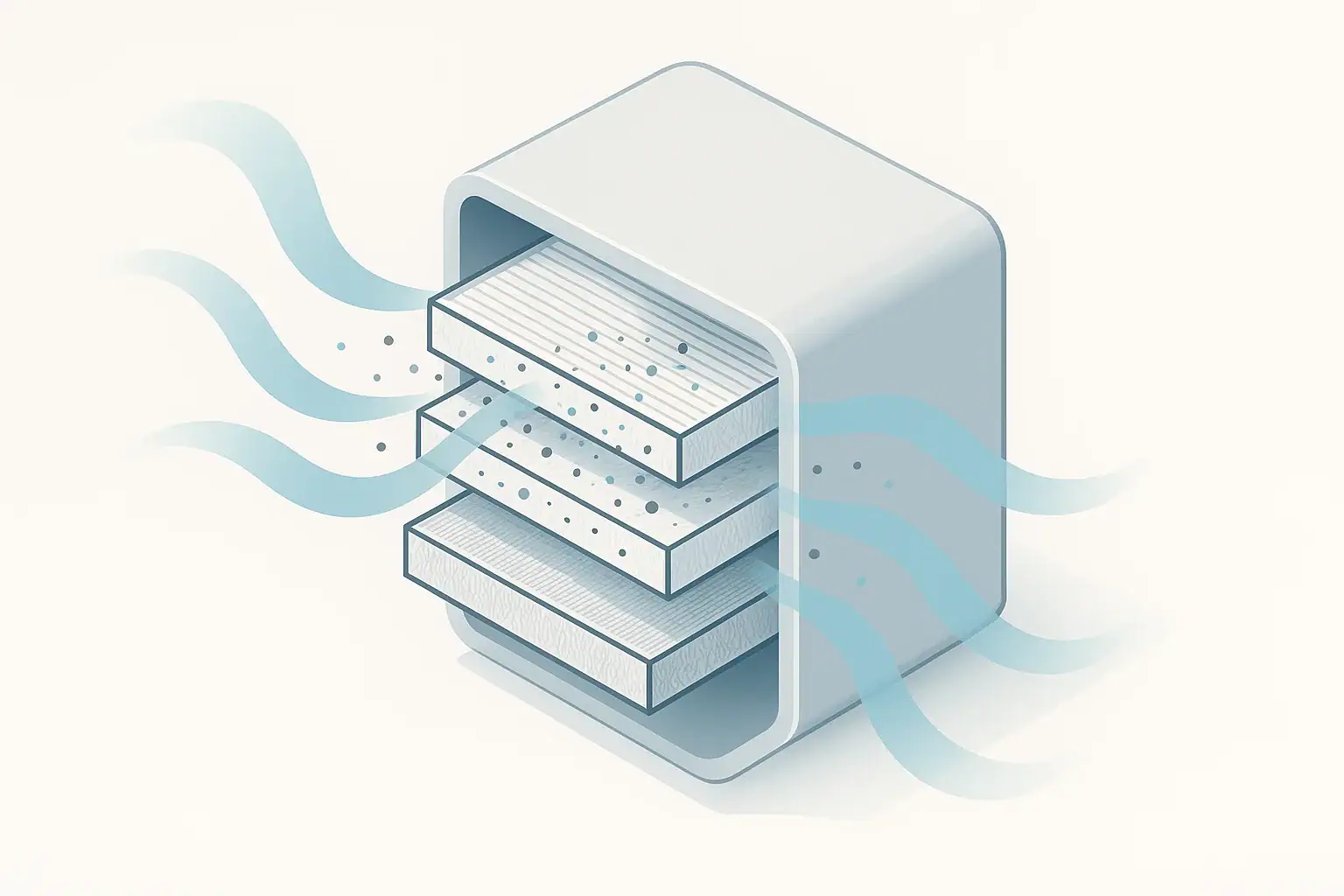
HEPA stands for High Efficiency Particulate Air. A true HEPA filter is a dense mat of randomly arranged fibers (often glass or synthetic) that forces air to weave through a maze of tiny passages. As air moves through, particles are trapped in the fibers while the cleaned air exits the filter.
The defining feature of a true residential HEPA filter is its tested efficiency: at least 99.97% removal of particles that are 0.3 microns in diameter under standardized test conditions. This 0.3-micron size is often called the most penetrating particle size because it is typically the hardest size for the filter to capture. Larger and smaller particles are usually captured as well or better.
This matters for viruses, bacteria, and allergens because most of the particles that actually float around your home do not exist as bare single microbes. They are attached to droplets, dust, or other debris that fall squarely in the size range where HEPA filters perform best.
In everyday language, you can think of a HEPA filter as a very efficient particle trap for airborne contaminants such as:
- Fine dust and smoke (including much of PM2.5)
- Pollen, pet dander, and dust mite debris
- Mold spores and fragments
- Many bacteria and virus-carrying droplets or aerosols
At the same time, HEPA filters are not magic. They do not remove gases or most odors, they do not clean surfaces, and they do not solve moisture problems that allow mold and bacteria to grow.
How HEPA Filters Capture Viruses, Bacteria, and Allergens
Despite looking like a simple pad, a HEPA filter relies on several physical mechanisms working together. Understanding these helps explain why HEPA can capture particles smaller than the visible gaps between fibers, including many microbe-containing aerosols.
Main Filtration Mechanisms
- Inertial impaction – Larger, heavier particles (for example, coarse dust or clumps of pollen) cannot follow the air as it bends around fibers. Their inertia carries them straight into a fiber, where they stick.
- Interception – Mid-sized particles follow the airflow but pass close enough to a fiber that they brush against it and adhere, like a car grazing a guardrail.
- Diffusion – Very small particles, including many ultrafine aerosols, move in random zigzag paths due to Brownian motion. This random movement makes them wander into fibers more often than their size alone would suggest.
- Sieve effect – For particles larger than the spaces between fibers, the filter acts like a screen and simply blocks passage.
These mechanisms overlap across particle sizes. The result is a U-shaped efficiency curve: very small and very large particles are often captured more easily than those near the 0.3-micron “most penetrating” size.
Particle Sizes vs. HEPA Capability
Viruses, bacteria, and allergens span a wide size range. The key question is not just how big the microbe is, but how it actually travels in indoor air.
| Particle or contaminant | Typical airborne size range | How it usually appears in indoor air | HEPA capture outlook |
|---|---|---|---|
| Individual viruses | ~0.02–0.3 microns | Embedded in droplets, droplet nuclei, or attached to dust | Indirect: HEPA targets the larger carrier particles |
| Virus-containing aerosols | ~0.5–10 microns | Respiratory droplets from breathing, talking, coughing | Generally high capture when air passes through filter |
| Airborne bacteria | ~0.3–10 microns | Single cells, clumps, or attached to dust | Often captured efficiently by true HEPA |
| Pollen | ~10–100 microns | Whole grains or fragments | Very easy for HEPA and even pre-filters |
| Dust mite allergens | ~1–20 microns | Proteins carried on dust particles | Well within HEPA capture range |
| Mold spores | ~2–20 microns | Spores and broken fragments | Generally captured effectively |
| PM2.5 (fine particles) | ≤2.5 microns | Smoke, combustion byproducts, fine dust | Core target range for HEPA filtration |
Because HEPA filters are tested at 0.3 microns and usually perform better at sizes above and below that point, they can significantly reduce airborne concentrations of many particles that carry microbes and allergens when enough air is processed through the filter.
What HEPA Filters Do Not Handle Well
HEPA filters are designed for particles, not gases. They are not the right tool for:
- Volatile organic compounds from paints, cleaning products, or new furnishings
- Most odors from cooking, smoke, or pets
- Carbon monoxide, carbon dioxide, or other gases
Other media, such as activated carbon or specialized sorbents, are typically used alongside HEPA when gas or odor control is needed.
Real-World Examples: Viruses, Bacteria, Allergens, and PM2.5
The real question behind “do HEPA filters remove viruses” is how much they can reduce the particles that matter in everyday situations. Here are practical examples of how HEPA filtration can help in typical homes.
Example 1: Respiratory Virus Season in a Living Room
In a family room where people gather, virus-containing aerosols are released whenever someone breathes, talks, coughs, or sneezes. A properly sized HEPA purifier running on an appropriate fan speed can:
- Continuously pull room air through the HEPA filter
- Capture many of the droplets and droplet nuclei that carry viruses
- Lower the average concentration of these particles over time
This does not guarantee that no one will get sick, but it can reduce one pathway of exposure, especially when combined with ventilation and other recommended health measures.
Example 2: Allergies in a Bedroom
For someone with dust mite or pet allergies, a bedroom is often the most important space to control. Running a HEPA purifier continuously in the bedroom can:
- Reduce airborne dust mite debris that is stirred up when changing bedding or moving around
- Capture pet dander that drifts in from other rooms or clothing
- Help lower nighttime exposure to pollen that enters when windows are open
When combined with encased bedding, regular vacuuming with a good filter, and limiting pet access, HEPA filtration can noticeably reduce airborne allergen levels in this key room.
Example 3: Mold Concerns After Humid Weather
After a damp season, someone may notice musty smells and worry about mold spores. A HEPA purifier can help by:
- Capturing many airborne mold spores released from contaminated materials
- Reducing the spread of spores to other rooms through the air
However, HEPA filtration does not remove visible mold from walls, carpets, or furnishings, and it does not fix the underlying moisture that allowed growth. Those issues require moisture control and, if needed, professional remediation.
Example 4: Cooking, Smoke, and PM2.5
Cooking, candles, and outdoor smoke can all raise indoor PM2.5 levels. In these cases, a HEPA purifier can:
- Capture a large portion of fine smoke and combustion particles
- Help bring PM2.5 levels down more quickly after the source stops
Because HEPA does not remove gases, some odor may remain even after particles are reduced. That is why filtration is often combined with ventilation (such as kitchen exhaust) to improve overall air quality.
Common Mistakes and Troubleshooting HEPA Performance
Many people buy a HEPA air purifier and are disappointed with the results, not because the technology fails, but because of how it is used. Avoiding a few common mistakes can make a big difference in how well a HEPA filter reduces viruses, bacteria, and allergens in your home.
Common Setup and Usage Mistakes
- Undersized purifier for the room – If the clean air delivery rate (CADR) or airflow is too low for the room size, the device may barely change particle levels.
- Running only on the lowest fan speed – Quiet settings often move less air, reducing the number of air changes per hour and slowing cleanup after particle spikes.
- Poor placement – Tucking a purifier into a corner behind furniture can block airflow and limit how much of the room air actually passes through the filter.
- Infrequent operation – Running the purifier only occasionally allows particle levels to rise again between uses.
- Ignoring filter replacement – A heavily loaded HEPA filter can restrict airflow so much that overall performance drops, even if efficiency per pass remains high.
Quick Sizing and ACH Check
A practical way to estimate whether a purifier is appropriate for a room is to compare its airflow (in cubic feet per minute, or CFM) with the room volume and your target air changes per hour (ACH). The higher the ACH, the faster particle levels can be reduced.
| Room example | Approx. room size (ft) | Room volume (cubic feet) | Target ACH | Approx. airflow needed (CFM) |
|---|---|---|---|---|
| Small bedroom | 10 × 12 × 8 | 960 | 5 ACH | ~80 CFM |
| Medium bedroom | 12 × 14 × 8 | 1,344 | 5 ACH | ~112 CFM |
| Living room | 15 × 20 × 8 | 2,400 | 5 ACH | ~200 CFM |
| Open-concept area | 20 × 25 × 9 | 4,500 | 5 ACH | ~375 CFM |
If a purifier’s rated airflow is far below what your room volume requires for your target ACH, you may need a higher-capacity unit or more than one device to achieve meaningful reductions.
Troubleshooting Cues
Signs that your HEPA setup is not working as intended include:
- Visible dust still settling quickly on surfaces despite continuous operation
- Allergy symptoms that do not improve at all after several weeks of consistent use and other controls
- Strong drafts at the outlet but almost no airflow felt at the intake (possible filter blockage or incorrect installation)
- Unusual noises or whistling sounds that suggest air is bypassing the filter through gaps
In these cases, check room sizing, fan speed, placement, and filter condition before assuming the technology itself is ineffective.
Safety Basics When Using HEPA Filters
HEPA filtration is generally safe for home use, but there are a few safety and hygiene points to keep in mind, especially when dealing with microbes and allergens.
Air and Electrical Safety
- Avoid blocking airflow – Keep the intake and outlet clear of curtains, walls, and furniture to prevent overheating and ensure proper circulation.
- Stable placement – Place the purifier on a flat, stable surface where it is unlikely to be tipped by children or pets.
- Follow electrical guidelines – Use properly grounded outlets, avoid overloading power strips, and keep cords out of walkways.
Handling Used Filters
Because HEPA filters accumulate particles, including potentially viable microbes, treat used filters as dusty waste that should be handled carefully:
- Turn the purifier off and let it sit briefly before opening, so particles settle.
- Avoid tapping or shaking the filter, which can release trapped dust and allergens.
- If you are sensitive or concerned about microbes, consider wearing a simple mask and disposable gloves while changing filters.
- Place used filters directly into a bag, seal it, and dispose of it according to local guidelines.
Ozone and Add-On Technologies
A mechanical HEPA filter by itself does not produce ozone. However, some devices combine HEPA with additional technologies that may generate ozone or other byproducts. If ozone or reactive gases are a concern, focus on units that rely on mechanical filtration and clearly state that they do not intentionally produce ozone.
Maintenance and Long-Term Use
To keep a HEPA filter working effectively against viruses, bacteria, allergens, and fine particles, consistent maintenance is essential. A neglected filter can restrict airflow and reduce the real-world benefits of the purifier.
Filter Replacement and Pre-Filter Care
- Pre-filters – Many purifiers include a washable or replaceable pre-filter to capture larger dust and hair. Cleaning or replacing this on schedule helps protect the HEPA media and maintain airflow.
- HEPA filter life – Follow the manufacturer’s recommended replacement interval, but also pay attention to visible buildup, reduced airflow, or indicator lights.
- Environment matters – Homes with heavy dust, pets, or smoke may load filters more quickly than average estimates suggest.
Simple Maintenance Schedule Example
| Task | Typical frequency | What to look for |
|---|---|---|
| Wipe exterior surfaces | Every 1–2 weeks | Dust buildup around intake and outlet grilles |
| Clean or replace pre-filter | Every 1–3 months | Visible lint, hair, and dust coating the mesh |
| Check HEPA filter condition | Every 3–6 months | Dark discoloration, musty odor, or reduced airflow |
| Replace HEPA filter | Every 6–24 months (varies) | Manufacturer interval reached or clear signs of loading |
| Inspect room placement and airflow | Every 6–12 months | New furniture or layout changes that may block circulation |
Seasonal and Storage Considerations
- Seasonal peaks – During allergy seasons or smoke events, you may need higher fan speeds or continuous operation to keep up with particle loads.
- Temporary storage – If you store a purifier for a season, remove heavily used filters, keep the unit in a dry area, and cover it to prevent dust accumulation.
- Odors from older filters – A musty smell when the purifier starts can indicate that the HEPA filter or pre-filter is overdue for replacement or cleaning.
Practical Takeaways and Specs to Look For
When you put all of this together, HEPA filtration is a strong tool for reducing airborne particles that carry viruses, bacteria, and allergens, but it works best as part of a broader indoor air quality plan that also includes cleaning, moisture control, and ventilation.
Key practical takeaways include:
- True HEPA filters can capture many virus-containing aerosols, bacteria, and common allergens, especially when sized correctly and run long enough.
- They do not sterilize air, kill all microbes, or address gases, odors, or surface contamination.
- Real-world effectiveness depends heavily on room size, airflow (ACH), placement, and maintenance.
Specs to Look For in a HEPA Air Purifier
To choose a unit that can realistically help with viruses, bacteria, and allergens in your home, pay attention to these specifications and features:
- True HEPA rating – Look for clear language indicating at least 99.97% efficiency at 0.3 microns, rather than vague “HEPA-like” or “HEPA-type” claims.
- Clean air delivery rate (CADR) or airflow (CFM) – Match these numbers to your room volume and target air changes per hour; larger rooms need higher airflow.
- Room size guidance – Prefer conservative room size recommendations and consider higher ACH targets for bedrooms, allergy control, or higher-risk situations.
- Fan speed options – Multiple speeds allow you to balance noise and performance, using higher speeds during particle spikes and lower speeds for background operation.
- Filter replacement indicators – Timers or sensors that remind you to check or replace filters help maintain long-term performance.
- Pre-filter design – A washable or easily replaceable pre-filter can extend HEPA life and keep operating costs more predictable.
- Noise levels – Check sound ratings at different fan speeds, especially for bedrooms or workspaces where continuous operation is important.
- Byproduct information – If additional technologies are included, look for clear statements about ozone and other byproducts so you can choose what aligns with your comfort level.
By focusing on true HEPA performance, adequate airflow, thoughtful placement, and regular maintenance, you can use HEPA filtration to meaningfully reduce airborne particles that carry viruses, bacteria, and allergens, supporting a cleaner and more comfortable indoor environment.
Frequently asked questions
Can HEPA filters remove viruses from indoor air?
True HEPA filters can remove many virus-containing aerosols and droplets because they capture particles in the size ranges that typically carry viruses. They reduce airborne concentrations but do not sterilize a room or guarantee prevention of transmission; combine filtration with ventilation and hygiene for better protection.
What specifications and features matter when choosing a HEPA air purifier?
Important specs include a true HEPA rating (at least 99.97% at 0.3 microns), adequate airflow or CADR matched to your room size, and useful features like multiple fan speeds and filter replacement indicators. A washable pre-filter and clear information about ozone or byproducts are also helpful for long-term performance and safety.
Why might my HEPA purifier not seem to reduce dust, smoke, or allergy symptoms?
Common causes are an undersized unit for the room, running on too-low fan speeds, poor placement that blocks airflow, or clogged pre-filters/HEPA elements. Checking sizing, operating the purifier at appropriate speeds, and following maintenance schedules usually restores expected performance.
How often should I change filters and perform maintenance for best performance?
Clean or replace pre-filters roughly every 1–3 months and inspect HEPA filters every 3–6 months, with full HEPA replacement typically recommended on a 6–24 month schedule depending on use. Regular exterior cleaning and watching for reduced airflow or odors will help maintain effectiveness.
Are HEPA filters safe to use around children, pets, and people with respiratory conditions?
Mechanical HEPA filtration is generally safe and does not produce ozone when it uses only filters and fans; ensure the unit is placed stably and intakes/outlets remain clear. Avoid devices that intentionally generate ozone or other reactive byproducts if household members are sensitive or have respiratory issues.
Will a HEPA purifier remove cooking smells or volatile organic compounds (VOCs)?
HEPA media capture particles but do not remove most gases or VOCs, so cooking odors and chemical fumes often persist after particle reduction. For odors and gases, choose a unit that pairs HEPA with activated carbon or other sorbents and use ventilation to remove the source.
- Clear sizing logic (room size → CADR/ACH)
- HEPA vs carbon explained for real use-cases
- Humidity + ventilation basics to reduce mold risk