
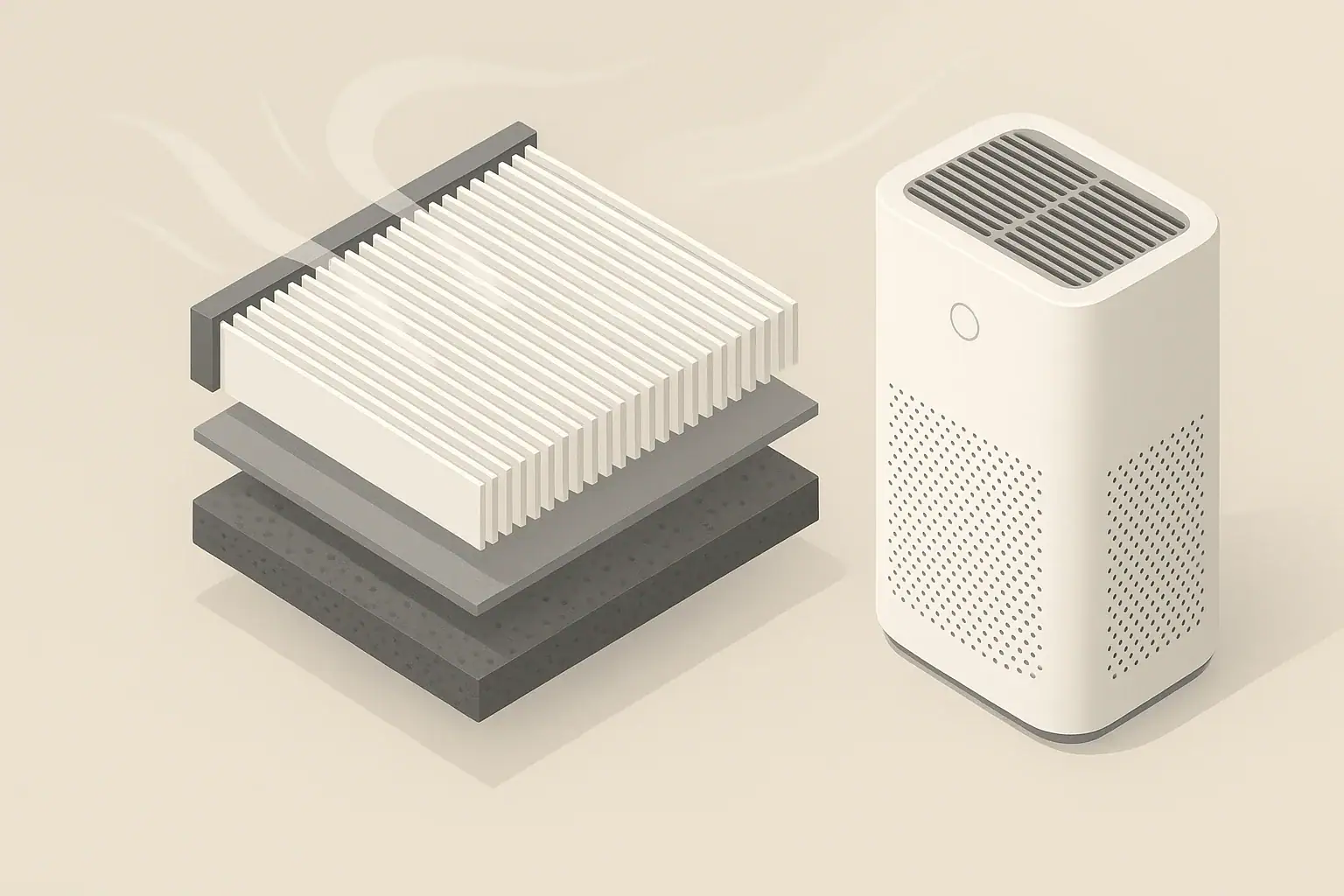
Spare HEPA filters stay clean and dry when they remain sealed, upright, and off the floor in a cool indoor space with moderate humidity.
Good HEPA filter storage is mostly about preventing dust, moisture, compression, and chemical odors from reaching the filter media before installation. A spare filter does not need special treatment, but it should be protected from garages, damp basements, laundry moisture, pests, and heavy items stacked on top.
Quick answer
- Keep spare HEPA filters in the original sealed plastic bag or box until use.
- Store indoors where relative humidity is generally below 60%, with about 30% to 50% often comfortable for homes.
- Choose a closet, cabinet, or utility shelf away from water heaters, sinks, open windows, and laundry areas.
- Keep filters off the floor and avoid crushing pleats, frames, or gaskets.
- Label the purchase date and rotate older unopened filters first.
- Do not spray filters with fragrances, disinfectants, oils, or cleaning products.
Why HEPA Filter Storage Matters
A HEPA filter works by forcing air through a dense web of fibers that traps small particles. That fiber structure is the useful part of the filter, so the main storage goal is to keep it intact, dry, and uncontaminated before the filter goes into the purifier.
Storage conditions can affect fit as well as cleanliness. If a filter frame warps, a gasket compresses unevenly, or the pleats are crushed, air may not move through the filter as intended. In a purifier, that can contribute to bypass, where some air finds an easier path around the filter instead of through it.
Moisture is another concern. A damp filter can develop odors, lose structural stiffness, or become unsuitable for installation. Keeping the filter dry is a practical step for maintaining normal performance expectations without making health promises.
What Clean and Dry Storage Means
Keep the filter sealed
The simplest rule is to keep the filter in its original inner bag until the day you install it. The box protects against bumps and light handling damage, while the bag helps keep dust and household debris away from the media.
If the original bag is missing, use a clean, dry, unscented plastic bag or storage bin. Avoid scented trash bags, fragranced liners, or containers that previously held chemicals, because filter media and carbon layers can pick up odors.
Use moderate indoor conditions
Most spare filters are best stored in normal indoor living conditions. As general guidance, aim for a dry indoor area below about 60% relative humidity. Many homes target roughly 30% to 50% relative humidity for comfort and moisture control, although local climate and season matter.
Avoid places with large temperature swings, condensation risk, or direct moisture exposure. A bedroom closet, hallway closet, or clean utility cabinet is usually better than an unfinished basement, shed, attic, or garage.
Protect shape and sealing surfaces
HEPA filters often include pleats, a rigid or semi-rigid frame, and a sealing surface. Store the filter upright or flat according to what protects the shape best, and do not place heavy items on top. If the gasket is visibly crushed or torn later, the filter may not seal well in the purifier.
| Storage task | Why it matters | General note |
|---|---|---|
| Keep inner packaging sealed | Limits dust and handling debris | Open only when ready to install |
| Store below about 60% relative humidity | Reduces dampness risk | Use indoor living spaces when possible |
| Keep off the floor | Avoids spills, pests, and cleaning moisture | Use a shelf, cabinet, or bin |
| Avoid heavy stacking | Protects pleats, frames, and gaskets | Do not compress the filter box |
| Keep away from chemicals | Helps prevent odor absorption | Avoid paint, solvents, fuels, and scented products |
| Label purchase date | Supports first-in, first-out rotation | Use older unopened filters first |
Common Storage Mistakes and Warning Signs
One common mistake is storing filters in a garage because it seems convenient. Garages can expose filters to humidity swings, dust, vehicle-related odors, lawn products, paint, and temperature extremes. Even if the filter remains boxed, these conditions are less predictable than an indoor closet.
Another mistake is opening a spare filter early to check the fit and then leaving it unbagged. Once opened, the filter can collect household dust before it is ever used. If you need to confirm size, compare the outside dimensions on the box or briefly inspect and reseal it in a clean bag.
Watch for these warning signs before installation:
- Water stains, damp cardboard, or a musty odor
- Crushed pleats or a bent frame
- Torn gasket material or loose seals
- Visible dust, debris, insect activity, or residue inside the bag
- Strong chemical or fragrance odor from storage nearby
A filter with minor box wear may still be fine if the sealed inner packaging and filter frame are intact. A filter that is wet, moldy smelling, visibly contaminated, or distorted should not be installed in a purifier.
Practical Checklist for Storing Spare HEPA Filters
Set up a simple storage place before buying multiple replacements. The best spot is dry, clean, easy to access, and separated from cleaning chemicals or moisture-producing appliances.
Step-by-step storage routine
- Check that the replacement filter matches the purifier model or required dimensions before storing it.
- Leave the filter in its inner bag and outer box.
- Write the purchase month and year on the box.
- Place the box on a shelf, not directly on concrete or carpet near an exterior wall.
- Keep one filter type per area or label boxes clearly if your home uses multiple purifier sizes.
- Inspect the box during seasonal cleaning, especially after leaks, flooding, pest activity, or high humidity events.
If you use a storage bin, choose one that is clean and dry. Do not seal a damp filter or damp cardboard in an airtight bin, because trapped moisture can linger. If a box becomes wet, inspect the inner packaging carefully and replace the filter if moisture reached the filter itself.
Real-World Storage Examples
Apartment closet
In an apartment, a hallway or bedroom closet is often a good storage location. Keep the filter on an upper shelf, away from shoes, mops, and scented products. If space is tight, store the box vertically as long as the frame is supported and not bent.
Basement with humidity control
A finished basement can work if it stays dry and the humidity is managed. A basement dehumidifier guide can help if the space often smells damp or a dehumidifier runs frequently. Keep the filter well above the floor, and avoid placing it near floor drains, sump areas, or foundation walls that may get condensation.
House with multiple purifier sizes
Homes with several purifiers can easily mix up filters. Store replacements by room or size, and label boxes with the purifier location. A simple first-in, first-out approach helps prevent older filters from being buried behind newer purchases.
Seasonal smoke or pollen planning
Some households keep an extra filter before seasons when outdoor particles may be more noticeable indoors. This can be practical, but bulk storage only makes sense if you have a clean, dry place for the extras. Buying more filters than you can store properly can create clutter and increase the chance of damage.
Safety and Standards Considerations
HEPA filter storage should not involve sprays, oils, fragrances, disinfectants, or homemade treatments. Adding substances to a filter can affect air flow, leave residues, create odors, or interfere with the way the filter was designed to fit and function.
Do not attempt to wash a disposable HEPA filter unless the filter instructions specifically state that it is washable. Many HEPA filters are made from materials that can be damaged by water, pressure, or scrubbing. A filter that looks dry on the surface may still hold moisture in deeper layers.
Be cautious with devices or treatments that intentionally produce ozone. Ozone is not needed for storing filters, and it can react with materials and indoor air chemistry. If a purifier includes optional ionizer, UV-C, or similar features, follow the manufacturer instructions and use general indoor air quality guidance that avoids intentional ozone generation.
When handling used filters, avoid shaking them indoors. Place the used filter in a bag for disposal and wash your hands afterward. This is a housekeeping step, not a medical precaution.
Maintenance Planning and Filter Rotation
Filter storage is easier when it is tied to a replacement plan. Most air purifiers use a main particle filter, and some also use a prefilter, activated carbon layer, or combined cartridge. The replacement interval depends on run time, fan setting, room dust, pets, cooking particles, smoke exposure, and the specific filter design.
Use the purifier manual as the primary reference for replacement timing. General interval ranges can help with planning, but they are not official limits. A filter indicator light may be useful, yet it should be considered alongside visual checks, airflow changes, odor changes, and how the purifier is used.
Keep one spare on hand if the filter is a less common size or if shipping delays would be inconvenient. For common filters, avoid overstocking unless your storage area is reliable. A small, well-labeled supply is usually easier to keep clean and dry than a large stack in a poor location.
| Filter type | Typical planning interval | What can shorten it | Reminder |
|---|---|---|---|
| Main HEPA-style particle filter | About 6 to 12 months | High run time, pets, smoke, heavy dust | Check fit, gasket, and airflow |
| Washable prefilter | About 2 to 4 weeks for cleaning | Pet hair, lint, visible dust | Dry fully before reinstalling |
| Disposable prefilter | About 1 to 3 months | Dusty rooms or frequent use | Keep spares sealed |
| Activated carbon filter | About 3 to 6 months | Odors, cooking, smoke, VOC sources | Store away from strong smells |
| Combined HEPA and carbon cartridge | About 6 to 12 months | Particle load or odor load | Replace as one unit if designed that way |
| Whole-home HVAC filter | About 1 to 3 months | System use, dust, pets, filter depth | Use the correct size and airflow rating |
Related guides: How Often Should You Replace a HEPA Filter? • Air Purifier Maintenance Checklist: Filters, Sensors, and Cleaning • Best Indoor Humidity Level to Prevent Mold (With Seasonal Targets)
Frequently asked questions
Where should I store spare HEPA filters at home?
The best place is a clean, dry indoor location such as a closet, cabinet, or utility shelf. Avoid garages, attics, unfinished basements, and laundry areas because temperature swings and moisture can damage the filter or its packaging.
Do spare HEPA filters need to stay in the original packaging?
Yes, keeping them sealed in the original bag and box is the simplest way to protect them from dust, odors, and handling damage. If the original packaging is unavailable, use a clean, dry, unscented bag or bin.
Can I store a HEPA filter in a basement?
A basement can work if it stays dry and humidity is controlled, but a damp or musty basement is not ideal. Keep the filter on a shelf or in a sealed bin above the floor, away from condensation, leaks, and sump areas.
How do I know if a stored HEPA filter is still usable?
Check for water stains, musty odors, crushed pleats, torn gaskets, or visible contamination before installing it. If the filter is dry, clean, and structurally intact, it is generally suitable for use according to the purifier instructions.
Should I rotate spare HEPA filters by date?
Yes, first-in, first-out rotation is a practical way to avoid older filters sitting unused for too long. Label the purchase date on the box so you can install the oldest unopened filter first.
Can odors from cleaning products affect stored filters?
Yes, filters can absorb strong odors from solvents, fragrances, fuels, and some household chemicals. For best spare HEPA filter storage, keep replacements away from cleaning supplies and other strong-smelling materials.
Summary: Simple Takeaways for Spare Filter Storage
Store spare HEPA filters sealed, dry, clean, and protected from crushing. A normal indoor closet or cabinet is usually a better choice than a garage, attic, unfinished basement, or laundry area.
Use below about 60% relative humidity as a practical moisture-control target, and keep filters away from spills, chemicals, fragrances, and temperature swings. Leave packaging intact until installation, label the purchase date, and rotate older unopened filters first.
Before installing a stored filter, check for dampness, odor, visible contamination, bent frames, and damaged gaskets. If the filter looks clean, dry, and structurally sound, it is generally ready to use according to the purifier instructions.
Recommended next:
- True HEPA vs HEPA-Type: What the Labels Really Mean
- HEPA H13 vs H14: Differences, Efficiency, and When It Matters
- How Often Should You Replace a HEPA Filter?
- Do HEPA Filters Remove Viruses, Bacteria, and Allergens?
- HEPA Grades Explained (H10–H14): What’s Relevant for Homes?
- True HEPA vs HEPA-Type vs “HEPA-Like”: Label Tricks to Avoid
- More in HEPA Filters →
- Clear sizing logic (room size → CADR/ACH)
- HEPA vs carbon explained for real use-cases
- Humidity + ventilation basics to reduce mold risk