

Indoor humidity is one of the biggest factors that influences whether mold can grow and spread in a home. Mold spores are present almost everywhere in the air, but they need the right conditions to become a visible problem. Moisture is the condition you can usually control the most easily.
When indoor air is too humid, surfaces like walls, windows, furniture, and clothing can stay damp for long periods. This lingering moisture allows mold to colonize porous materials such as drywall, wood, fabric, and insulation. Even if you keep your home clean, high humidity alone can support mold growth in hidden areas.
On the other hand, very dry air can be uncomfortable and may contribute to issues like static, dry skin, or irritated airways for some people. The goal is not to eliminate moisture, but to keep it in a moderate range that is comfortable for people while being less favorable for mold.
For most homes, this balance can be found in what many building and indoor-air professionals consider a comfortable humidity band rather than a single number.
Why Indoor Humidity Matters for Mold Growth
Indoor humidity is one of the biggest factors that influences whether mold can grow and spread in a home. Mold spores are present almost everywhere in the air, but they need the right conditions to become a visible problem. Moisture is the condition you can usually control the most easily.
When indoor air is too humid, surfaces like walls, windows, furniture, and clothing can stay damp for long periods. This lingering moisture allows mold to colonize porous materials such as drywall, wood, fabric, and insulation. Even if you keep your home clean, high humidity alone can support mold growth in hidden areas.
On the other hand, very dry air can be uncomfortable and may contribute to issues like static, dry skin, or irritated airways for some people. The goal is not to eliminate moisture, but to keep it in a moderate range that is comfortable for people while being less favorable for mold.
For most homes, this balance can be found in what many building and indoor-air professionals consider a comfortable humidity band rather than a single number.
Best Indoor Humidity Range to Help Prevent Mold
Instead of focusing on an exact value, it is more practical to work with a range. Many building science and indoor comfort references suggest that keeping relative humidity (RH) roughly between 30% and 50% is a reasonable general target for most homes. Within this band, mold is less likely to thrive on typical indoor surfaces, and many people find the air comfortable.
In cool climates, staying toward the lower end of this range can help limit condensation on cold surfaces like windows and exterior walls. In warm, humid climates, staying nearer the middle of the range can help avoid both mold risk and overly dry air from strong air conditioning.
Key ideas:
- Below about 30% RH: Air may feel dry for many people, especially in winter. Some materials can shrink or crack if kept very dry for long periods.
- Roughly 30–50% RH: Often cited as a comfortable, general range that is less favorable for mold growth on most indoor surfaces, especially when temperatures are typical for conditioned spaces.
- Above about 60% RH for long periods: Many common materials may stay damp enough to support mold growth, particularly in shaded or poorly ventilated areas.
Short humidity spikes (for example, after a shower or while cooking) are common. The bigger concern is humidity that stays elevated for many hours or days, especially in basements, bathrooms, closets, and behind furniture where air circulation is poor.
Example values for illustration.
| Home area | Main moisture source | Primary control step |
|---|---|---|
| Bathroom | Showers and baths | Use exhaust fan during and after, leave door open after use |
| Kitchen | Boiling, dishwashing | Run range hood or open window, cover pots when possible |
| Basement | Ground moisture and cool surfaces | Run dehumidifier, improve drainage, avoid storing items directly on floor |
| Bedrooms | Breathing and perspiration | Maintain moderate RH, allow airflow under beds and behind furniture |
| Laundry area | Dryers and drying clothes indoors | Vent dryer outdoors, limit indoor drying or use dehumidification |
| Closets | Trapped moist air | Avoid overfilling, allow slight gaps for airflow, keep RH in general target range |
Seasonal Indoor Humidity Targets
Outdoor weather has a strong influence on indoor humidity. Your ideal indoor target can shift slightly with the seasons to balance mold prevention, comfort, and condensation control. The numbers below are approximate examples that many homeowners use as planning guides, not strict rules.
Winter: Cold Weather and Condensation
In winter, the main challenge is condensation on cold surfaces such as windows, exterior walls, and uninsulated pipes. When warm indoor air touches these cold surfaces, moisture can condense and feed mold, even if the overall indoor humidity seems moderate.
To reduce this risk, many people find it helpful to aim for humidity on the lower side of the comfort range:
- Example winter target: roughly 30–40% RH for many cold-climate homes.
- Very cold outdoor temperatures: You may need to stay closer to the low 30% range (or even slightly below) to avoid window condensation and ice buildup.
If you see persistent condensation on windows or cold wall corners, your indoor humidity is likely too high for your specific building envelope and outdoor temperature, even if your monitor still shows a value within a general comfort band.
Summer: Warm and Humid Conditions
In summer, warm outdoor air can hold more moisture, and indoor spaces can feel muggy if humidity is not controlled. Air conditioning removes some moisture, but it may not be enough in very humid climates or in basements.
To help limit mold risk while staying comfortable:
- Example summer target: roughly 40–50% RH in main living areas, if practical.
- Humid climates and basements: A dehumidifier is often used to keep RH below about 55–60% where air conditioning alone cannot keep up.
Pay particular attention to finished basements, bathrooms without windows, and closets on exterior walls. These are common locations for mold growth when summer humidity stays high.
Shoulder Seasons: Spring and Fall
During spring and fall, outdoor temperatures are often mild, and many people rely more on open windows than mechanical cooling or heating. Humidity can drift higher on rainy days or when windows are open during very damp weather.
Some general approaches:
- On dry, breezy days, natural ventilation can help keep indoor moisture from building up.
- On very humid days, it can be better to close windows and use air conditioning or a dehumidifier to maintain an indoor humidity closer to your target band.
- Watch for musty smells or a clammy feeling on furniture and bedding, which can signal that humidity is staying too high.
How to Measure Indoor Humidity Accurately
Managing humidity effectively starts with measuring it. The most common tool is a small electronic humidity gauge, often combined with a temperature readout. These devices are typically inexpensive and give a relative humidity estimate.
Tips for more reliable readings:
- Use more than one device: Two or three low-cost meters in different rooms can give you a better sense of your home’s average conditions and possible problem spots.
- Place at breathing height: Around 3–6 feet above the floor is usually more representative than placing meters on the floor or near the ceiling.
- Avoid direct influences: Do not place humidity meters right above humidifiers, dehumidifiers, air purifiers, cooking surfaces, or in direct sunlight.
- Allow time to stabilize: When you move a meter to a new room, give it at least 15–30 minutes to adapt before judging the reading.
Most home devices have some error range, often a few percentage points of RH. Instead of chasing exact numbers, focus on trends: Is the humidity generally staying in the 30–50% band, or is it often drifting above about 60%, especially for long stretches?
Using Humidifiers and Dehumidifiers Safely
Mechanical moisture control tools can help you reach and maintain your target humidity range throughout the year. The two main types are humidifiers (which add moisture) and dehumidifiers (which remove moisture).
Humidifiers: Adding Moisture in Dry Seasons
In cold, dry winters, indoor humidity can drop well below 30%. Many people use portable humidifiers to add moisture to bedrooms or living areas. These devices can improve comfort when used carefully.
Basic guidelines:
- Use a humidity meter in the same room so you do not overshoot your target range.
- Clean and maintain the unit as recommended by the manufacturer to reduce mineral buildup and biofilm.
- Use clean water and empty the tank regularly to avoid stagnant water.
- If you see condensation on windows or walls, reduce humidifier output.
Dehumidifiers: Reducing Moisture in Damp Areas
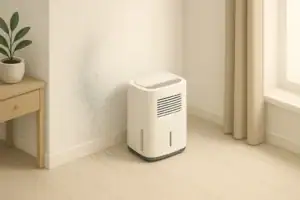
Dehumidifiers are common tools for basements, laundry areas, and other spaces that tend to stay damp. They pull moist air across cooled coils, condense the water, and collect it in a tank or drain it away.
Basic guidelines:
- Size the dehumidifier for the approximate square footage and dampness level of the space, using manufacturer guidance as a starting point.
- Set the target humidity to a moderate level (for example, 45–50% RH as a planning range) and adjust based on results and any condensation you observe.
- Ensure proper drainage or empty the bucket regularly so the unit can continue to operate.
- Clean filters and coils per instructions to maintain performance and energy efficiency.
In some homes, both humidifiers and dehumidifiers are used at different times of year to keep humidity within a comfortable, mold-resistant band.
Air Purifiers, Ventilation, and Humidity
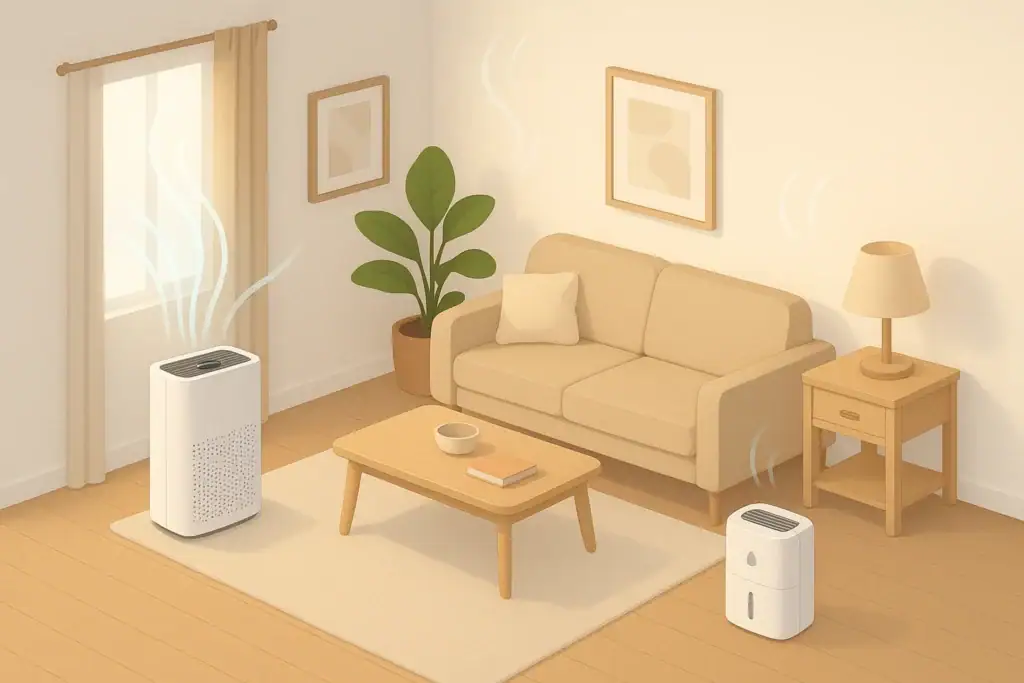
Air purifiers, ventilation systems, and humidity control all work together to support healthier-feeling indoor air and to limit mold growth on surfaces. Each tool serves a different primary role:
- Air purifiers: Focus on removing particles from the air, such as dust, smoke, and some allergens, using filters like HEPA. They do not directly change humidity, but they can help capture airborne mold spores.
- Ventilation: Brings in outdoor air and exhausts stale indoor air, which can help remove excess moisture if the outdoor air is drier than indoor air.
- Humidity control: Uses humidifiers or dehumidifiers to adjust moisture levels directly.
In some situations, increasing ventilation is an effective way to manage humidity, such as on cool, dry days. In other cases, bringing in outdoor air may actually raise indoor humidity, such as during hot, humid weather. Monitoring both humidity and temperature helps you choose the right tool for the current conditions.
Building Materials, Hidden Moisture, and Mold
Humidity is only one part of the moisture picture. Mold also thrives when liquid water is present, even if the air’s relative humidity is moderate. Leaks, spills, and condensation inside walls or under floors can create localized mold problems that do not always show up on a room’s humidity reading.
Common moisture sources include:
- Roof or plumbing leaks
- Poorly sealed showers and tubs
- Groundwater seepage into basements or crawl spaces
- Condensation inside poorly insulated walls or around pipes
Prolonged dampness in these areas can support mold growth even if the main living space appears to have good humidity control. If you notice recurring musty odors, stains, or soft spots in walls or floors, it may indicate hidden moisture that needs to be investigated and corrected.
In addition to fixing leaks and drainage issues, improving insulation and air sealing can help keep surfaces warmer and less prone to condensation, which complements your overall humidity management efforts.
Example values for illustration.
| Goal | Simple actions | Tools | Note |
|---|---|---|---|
| Reduce general mold risk | Keep RH roughly in 30–50% band | Humidity meters, dehumidifier or humidifier | Adjust seasonally based on condensation and comfort |
| Control basement dampness | Run dehumidifier, improve airflow, store items off floor | Dehumidifier, fans | Aim to stay below about mid-50% RH where practical |
| Limit bathroom moisture | Use exhaust fan, keep door open after showers | Exhaust fan, window if available | Try to clear fogged mirrors within about 15–20 minutes |
| Prevent window condensation | Lower humidity setpoint, use fans, improve insulation | Humidity meter, fan | Persistent condensation often means RH is too high for conditions |
| Address musty closets | Declutter, allow airflow, avoid damp items inside | Small fan or louvered doors | Overall home RH still needs to be in target range |
| Respond to small water events | Dry surfaces quickly within about a day | Fans, towels, dehumidifier | Prompt drying reduces the chance that mold will establish |
Putting It All Together for Everyday Home Use
Keeping indoor humidity in a moderate range is one of the most practical steps you can take to reduce the likelihood of mold problems. Aim for an approximate 30–50% relative humidity band, adjusting slightly with the seasons to avoid both excessive dryness and condensation on cold surfaces.
Use simple tools—humidity meters in several rooms, bathroom and kitchen exhaust fans, appropriately sized humidifiers or dehumidifiers, and reasonable ventilation—to nudge your indoor air into this target range. Combine these habits with prompt attention to leaks and damp spots, and you create conditions where mold has a much harder time taking hold.
Indoor air quality depends on multiple factors, including particles, ventilation, and moisture. Managing humidity thoughtfully is a key piece of that bigger picture and can be integrated into regular home maintenance without needing complex equipment.
Frequently asked questions
What is the best indoor humidity level to prevent mold?
For most homes, aim for a relative humidity (RH) of about 30–50%. This range reduces the likelihood that surfaces stay damp long enough for mold to establish, while remaining comfortable for occupants; long periods above about 60% increase mold risk.
How should I adjust humidity in winter to avoid window condensation?
In cold weather, target the lower end of the comfort band—roughly 30–40% RH—and drop toward the low 30s when outdoor temperatures are very cold. If you still see persistent condensation on windows or cold-wall corners, reduce indoor humidity further or improve insulation and ventilation.
Can a dehumidifier eliminate existing mold?
Dehumidifiers lower indoor moisture to slow or stop further mold growth but do not remove mold that is already present on surfaces. Existing mold needs to be cleaned or removed and the moisture source fixed to prevent recurrence.
Where should I place humidity meters and how many should I use?
Use two or three low-cost humidity meters placed in different rooms at breathing height (about 3–6 feet above the floor), and avoid placing them near humidifiers, stoves, or direct sunlight. Multiple meters help spot problem areas like basements, bathrooms, or closets that may differ from the main living spaces.
What humidity target should I use for basements to prevent mold?
Aim to keep basement RH below the mid-50% range where practical—often around 45–50%—and run a dehumidifier if needed. Also improve drainage, ventilation, and storage practices to address longer-term dampness that promotes mold.
Recommended next:
- Clear sizing logic (room size → CADR/ACH)
- HEPA vs carbon explained for real use-cases
- Humidity + ventilation basics to reduce mold risk





About this site
Home Air Quality Lab publishes practical, independent guides about indoor air quality—clear sizing, safer use, and real-world expectations.
Affiliate disclosure
Some links on this site may be affiliate links. If you buy through these links, we may earn a small commission at no extra cost to you. This helps support our content. Learn more.