
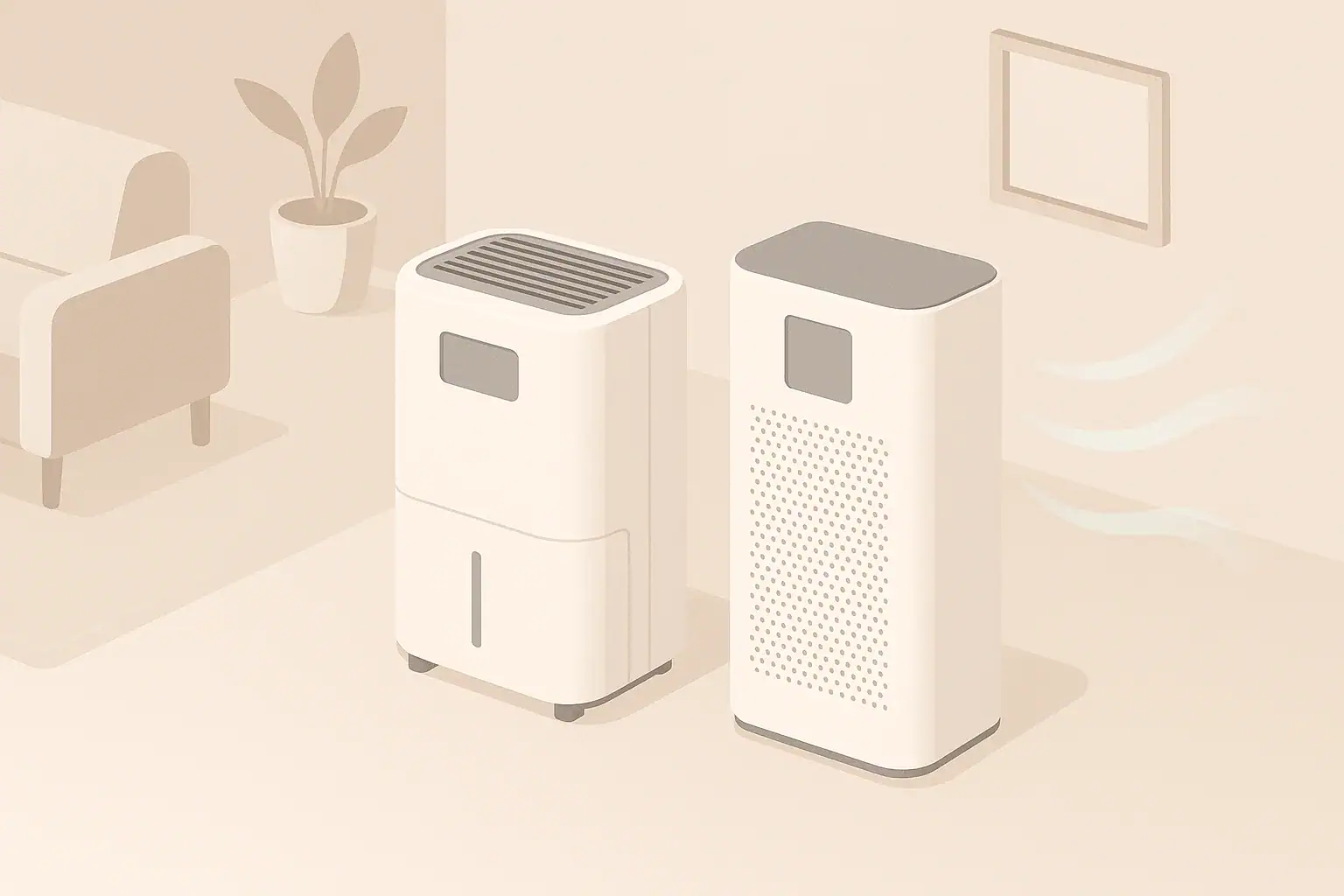
Humidity is a major part of indoor air quality. Too much moisture can encourage mold growth, musty odors, and dust mites, while air that is too dry can feel uncomfortable and irritating. Many U.S. homes use dehumidifiers to keep relative humidity in a more comfortable range, often around 30–50% depending on climate and season.
Dehumidifiers support, but do not replace, other air quality tools such as ventilation and air purifiers. They do not remove fine particles like smoke or dust in any meaningful way, but they can help limit dampness that contributes to mold and general stuffiness.
Two main technologies are used in home dehumidifiers:
- Compressor (refrigerant) dehumidifiers
- Desiccant dehumidifiers
Understanding how each type works will help you choose the right option for your climate, room conditions, and comfort goals.
How Dehumidifiers Fit Into Home Air Quality
How Compressor and Desiccant Dehumidifiers Work
Both compressor and desiccant dehumidifiers have the same basic purpose: pull in moist air, remove some of the water, and return drier air to the room. The difference is in how they remove that moisture.
Compressor (Refrigerant) Dehumidifiers
Compressor dehumidifiers use a refrigeration cycle similar to an air conditioner.
Typical steps:
- A fan pulls humid room air over cold coils.
- Water in the air condenses on the cold surface and drips into a tank or drain hose.
- The air then passes over warmer components and is blown back into the room, slightly warmer and drier.
They tend to work best when room temperatures are moderate or warm, commonly above the mid-60s °F. At cooler temperatures, the coils can ice up and efficiency drops, so many units cycle defrost modes to cope.
Desiccant Dehumidifiers
Desiccant dehumidifiers use a moisture-absorbing material instead of cold coils. The desiccant media might be a wheel or cartridge coated with a material that naturally attracts water molecules.
Typical steps:
- A fan moves humid air through or across the desiccant material.
- The desiccant absorbs moisture from the air.
- A heater warms part of the desiccant to release the trapped moisture, which then condenses and drains away.
Because they are not relying on cold coils, desiccant dehumidifiers can work more consistently at lower room temperatures than many compressor models. They do, however, add more noticeable warmth to the room because of the built-in heater.
| Aspect | Compressor dehumidifier | Desiccant dehumidifier |
|---|---|---|
| Best temperature range (illustrative) | Around 65–95 °F | Around 40–80 °F |
| Typical room warmth impact | Mild warming | Moderate warming |
| Relative energy efficiency at higher temps | Often higher | Often lower |
| Performance in cool spaces | Can drop noticeably | More stable |
| Typical unit weight | Heavier (compressor + coils) | Lighter to moderate |
| Noise character | Compressor hum + fan | Mainly fan + heater sound |
| Common use | Basements, whole rooms in warm seasons | Cool rooms, garages, targeted spaces |
Example values for illustration.
Pros and Cons of Compressor Dehumidifiers
Compressor dehumidifiers are widely used in U.S. homes, especially in warmer and humid regions. They are often the default choice for basements, living areas, and whole-room moisture control.
Advantages of Compressor Dehumidifiers
- Generally more energy-efficient in warm conditions
At typical indoor summer temperatures, compressor units usually remove more moisture per unit of electricity compared with similar-sized desiccant units. - High moisture removal potential
Compressor models are often sized to remove many pints of water per day. This makes them practical for damp basements, large rooms, or homes in consistently humid climates. - Common and easy to find
Because they are widely used, there is a broad range of capacities, physical sizes, and feature sets to choose from. - Often better for continuous summer use
In hot, humid seasons, compressor units align well with typical indoor temperatures and can operate for long periods when sized and drained correctly.
Limitations of Compressor Dehumidifiers
- Reduced performance in cooler rooms
In spaces that regularly drop below the mid-60s °F, the coils can frost and moisture removal declines. Even with defrost controls, overall performance can be limited in unheated basements or garages. - Weight and bulk
The compressor and refrigeration components add weight, which can be noticeable if you need to move the unit between floors or rooms. - Compressor noise
In addition to fan noise, they produce a humming or cycling sound from the compressor. Noise levels vary by design and setting. - Warm air output
Like all dehumidifiers, compressor units warm the air somewhat. In already hot rooms this can be noticeable, especially if the space is small or has limited air circulation.
Pros and Cons of Desiccant Dehumidifiers
Desiccant dehumidifiers use a different principle that can be attractive in specific home situations, especially where temperatures run cooler or where smoother moisture control is desired.
Advantages of Desiccant Dehumidifiers
- Better suited to cooler environments
Because they rely on moisture-absorbing media and internal heating, desiccant units generally maintain more consistent operation at lower room temperatures than many compressor-based models. - Smoother performance across seasons
If a space experiences wide temperature swings, such as a sunroom, seasonal cabin, or partially heated basement, desiccant technology can help maintain moisture control without the sharp efficiency drop seen in some compressor units. - Different noise profile
Without a compressor, the sound is often dominated by the fan and internal air movement. Many people perceive this type of sound as less intrusive than compressor cycling, though overall noise still depends on design and fan speed. - Can help slightly warm cool rooms
The built-in heater that regenerates the desiccant media contributes noticeable warmth. In a cool, damp room, this can feel like a benefit, as long as you do not need the space to stay cold.
Limitations of Desiccant Dehumidifiers
- Energy use at higher temperatures
In warm climates or heated rooms, desiccant units often use more electricity to remove the same amount of moisture compared with a well-sized compressor unit. - Added heat in already warm spaces
The extra warmth they introduce can be uncomfortable in small or poorly ventilated rooms during warm seasons. - Typically smaller capacities
Many residential desiccant units are sized for modest moisture loads. Very damp basements or large open areas may require multiple units or a different approach. - Availability and options
There are generally fewer residential desiccant models on the U.S. market than compressor models, which can limit specific feature combinations or capacities.
Energy Use, Noise, and Maintenance Differences
Beyond basic pros and cons, it helps to consider how each type fits into your day-to-day routine, energy bills, and overall comfort level at home.
Energy Use Considerations
Energy performance varies by design and operating conditions, but some general patterns are common:
- Compressor units in warm, humid rooms often provide more moisture removal per kilowatt-hour, making them practical for long summer runs in many regions.
- Desiccant units in cooler spaces can avoid the steep efficiency drop that compressor coils experience in cold air, so they may be the more realistic option for unheated or lightly heated areas.
- Thermostats and timers can help whichever type you choose run only as needed. Pairing a dehumidifier with a simple humidity target (via built-in or separate hygrometer) can prevent unnecessary operation.
Noise and Comfort
Noise is highly design-dependent, but there are some recurring themes:
- Compressor dehumidifiers combine fan noise with a hum and occasional clicking or cycling from the refrigeration system.
- Desiccant dehumidifiers mainly produce fan noise and airflow sounds, sometimes described as more constant but less mechanical.
For bedrooms, offices, or TV rooms, pay attention to fan speed options and any quiet modes. Placement also matters: keeping the unit away from hard corners and elevating it slightly can reduce reflected noise.
Maintenance and Upkeep
Maintenance needs are broadly similar across both technologies:
- Water removal: Empty the tank regularly or set up a continuous drain if the unit supports it and you have a suitable drain point.
- Filter cleaning: Many units use a basic mesh filter to catch dust. Rinse or clean this as recommended to keep airflow consistent.
- Coil or intake care: For compressor units, keeping intake and exhaust areas free of dust improves efficiency. For desiccant units, maintaining clear airflow paths is equally important.
- General inspection: Periodically check for unusual noises, leaks, or error lights, and follow the manufacturer’s instructions if something seems off.
Regular maintenance reduces the chance of performance dropping or of the unit working harder than necessary.
Best Use Cases for Compressor Dehumidifiers
Choosing the right technology often comes down to the room’s primary conditions and how you use the space. Compressor dehumidifiers tend to be the first choice in several scenarios.
Warm, Humid Basements
In many U.S. regions, basements are damp during warmer months. When the basement is mostly finished or semi-finished and stays above the mid-60s °F, a compressor dehumidifier is usually practical.
They are often used for:
- Finished basements with carpeting or furniture
- Storage areas where you want to discourage musty odors
- Spaces connected to the main living area where moisture migrates upward
Whole-Room Moisture Control in Living Spaces
For large family rooms, open-plan living areas, or main floors that feel sticky during humid seasons, a compressor dehumidifier with suitable capacity can help maintain a more comfortable environment alongside air conditioning and ventilation.
In these settings, consider:
- How open the floor plan is, since air needs to circulate to and from the unit
- Whether continuous drainage is possible to avoid frequent tank emptying
- Where noise is least disruptive while still allowing good airflow
High-Moisture Everyday Activities
Homes with frequent cooking, long showers, indoor laundry drying, or many occupants may generate extra moisture. While ventilation and exhaust fans should be the first line of control, a compressor dehumidifier can help stabilize humidity in shared areas once basic ventilation strategies are in place.
Best Use Cases for Desiccant Dehumidifiers
Desiccant dehumidifiers shine in situations where temperatures are cooler, or where space conditions make compressor operation less effective or less comfortable.
Cool or Seasonally Unheated Rooms
Spaces that spend much of the year below normal living-room temperatures can benefit from desiccant technology, such as:
- Unheated or lightly heated basements that stay cool for most of the year
- Garages or workshops where freezing conditions are possible
- Seasonal cabins or sunrooms that are only occasionally heated
In these rooms, a compressor unit may cycle frequently into defrost or remove moisture slowly, while a desiccant unit can maintain a more predictable level of operation.
Targeted Moisture Control in Small Spaces
Desiccant dehumidifiers are often used in compact areas where fine control of moisture is helpful, for example:
- Closets or small storage rooms with recurring dampness
- Small bedrooms that feel clammy during cool, wet weather
- Home offices or hobby rooms where you want more consistent humidity
The added warmth can be a benefit in these smaller, cooler spaces, as long as the room does not already run warm.
Shoulder Seasons and Mild Climates
In regions with long, cool, and damp shoulder seasons, indoor temperatures may hover below typical summer setpoints. In these weeks, heating may be minimal, but the air can still feel damp. A desiccant unit can help keep humidity in a more comfortable range even when compressor units are less efficient.
Desiccant vs Compressor: How to Choose for Your Home
To decide between desiccant vs compressor dehumidifiers, focus less on the technology label and more on your room conditions, comfort goals, and how the unit fits into your broader indoor air strategy.
Key Questions to Ask
- What is the typical room temperature?
If it usually stays above the mid-60s °F, compressor units are often more energy-efficient. If it spends long periods cooler than that, a desiccant unit may maintain performance more reliably. - How damp is the space?
Very damp or large spaces may require the higher capacities more common in compressor models, or additional moisture control strategies such as drainage improvements and ventilation. - How important is noise type vs level?
Some people dislike compressor hum more than a steady fan sound. Thinking about where the unit will sit relative to sleeping or working areas can guide your choice. - Is extra heat welcome or a drawback?
In a cool, damp room, the additional warmth from a desiccant unit may be comfortable. In a warm, humid room, that same heat could be unwelcome. - Can you support continuous drainage?
Regardless of type, routing a hose to a floor drain, sink, or condensate pump (following product instructions) can make long-term operation more convenient.
Integrating Dehumidifiers with Other Air Quality Tools
Dehumidifiers work best when combined with other basic indoor air practices:
- Ventilation: Use kitchen and bathroom exhaust fans, and open windows when outdoor conditions allow, to remove moisture at its source.
- Air purification: If you are also concerned about particles like dust or smoke, a separate air purifier with appropriate filtration can complement a dehumidifier.
- Humidity monitoring: A simple hygrometer or air quality monitor that displays humidity can help you track trends and adjust settings, without needing to guess.
Viewed this way, the choice between desiccant and compressor is one part of a broader plan to keep your home comfortable and limit excessive dampness.
| Goal | Simple actions | Tools | Note |
|---|---|---|---|
| Reduce basement dampness | Seal obvious water entry paths, run dehumidifier, improve drainage where possible | Compressor or desiccant dehumidifier, hygrometer | Address liquid water issues in addition to humidity control. |
| Limit bathroom moisture buildup | Use exhaust fan during and after showers, keep door slightly open afterward | Exhaust fan, possibly small dehumidifier nearby | Removing steam at the source reduces load on any dehumidifier. |
| Maintain comfortable bedroom humidity | Monitor levels, ventilate when outdoor air is drier, use dehumidifier if consistently high | Hygrometer, small dehumidifier if needed | Avoid overshooting toward very dry air for comfort. |
| Protect stored items in closets | Promote airflow, avoid tightly packed items, use moisture control devices | Small desiccant unit or moisture-absorbing packs | Check periodically for musty odors or visible dampness. |
| Manage seasonal dampness in cool rooms | Use targeted dehumidification, seal drafts, consider modest heating | Desiccant dehumidifier, weatherstripping | Stable temperatures help maintain more even humidity. |
| Plan for laundry moisture indoors | Dry clothes in well-ventilated area, run fan or dehumidifier nearby | Fan, dehumidifier sized for the room | Reducing drying time helps limit moisture buildup. |
Example values for illustration.
Putting It All Together
Desiccant vs compressor dehumidifiers each address the same problem—excess moisture—but excel under different conditions. Compressor models usually fit warm, humid rooms and larger spaces where energy efficiency and capacity matter most. Desiccant models are often better suited to cooler, smaller, or seasonally used rooms where consistent operation and added warmth are acceptable or even helpful.
Whichever type you choose, combining dehumidification with basic ventilation, routine maintenance, and simple humidity monitoring will give you a more predictable and comfortable indoor environment over time.
Frequently asked questions
Which is more energy-efficient: desiccant vs compressor dehumidifiers?
Energy efficiency depends on operating temperature and unit design. Compressor units typically remove more moisture per kilowatt-hour in warm, humid rooms, making them more efficient for summer or heated living spaces. Desiccant units avoid the steep efficiency drop compressors can experience at low temperatures but often use more electricity than compressors in warm conditions.
Can I use a desiccant dehumidifier in an unheated basement or garage?
Yes. Desiccant dehumidifiers perform well in unheated or cool spaces because they do not rely on cold coils, but they add measurable heat to the room and may have lower daily moisture capacity, so confirm the unit is sized for the space and moisture load.
How should I size a dehumidifier for a basement: compressor or desiccant?
Size based on square footage, ceiling height, and how damp the space is; very damp or large basements typically need higher-capacity units. Compressor dehumidifiers commonly offer higher pints-per-day ratings suitable for large or persistently wet basements, while many residential desiccant units are smaller and may require multiple units or alternative moisture control measures for very wet spaces.
Will a desiccant dehumidifier make my room noticeably warmer?
Yes. The regeneration heater in desiccant units adds moderate warmth to the exhaust air, which can be helpful in cool rooms but may be undesirable in already warm or poorly ventilated spaces.
Which type is better for bedrooms or living rooms where noise matters?
Noise varies by model, but the character differs: compressor units add a hum and cycling from the refrigeration system in addition to fan noise, while desiccant units tend to produce a steadier fan/heater sound. For sleeping or quiet living areas, choose low-decibel models, use quiet or low fan settings, and position the unit to minimize reflected noise.
Recommended next:
- HEPA vs Activated Carbon: Best Setup for Allergies, Odors, and Smoke
- Air Purifier vs Dehumidifier: Which One Solves Musty Air?
- Humidifier vs Dehumidifier: When to Add Moisture vs Remove It
- Air Purifier vs Ozone Generator: Safety, Effectiveness, and Myths
- HEPA vs Carbon Filters: When Each One Matters Most
- Air Purifier vs Ventilation: Which Fixes Stuffy Bedrooms Better?
- More in Comparisons →
- Clear sizing logic (room size → CADR/ACH)
- HEPA vs carbon explained for real use-cases
- Humidity + ventilation basics to reduce mold risk


About this site
Home Air Quality Lab publishes practical, independent guides about indoor air quality—clear sizing, safer use, and real-world expectations.
Affiliate disclosure
Some links on this site may be affiliate links. If you buy through these links, we may earn a small commission at no extra cost to you. This helps support our content. Learn more.