
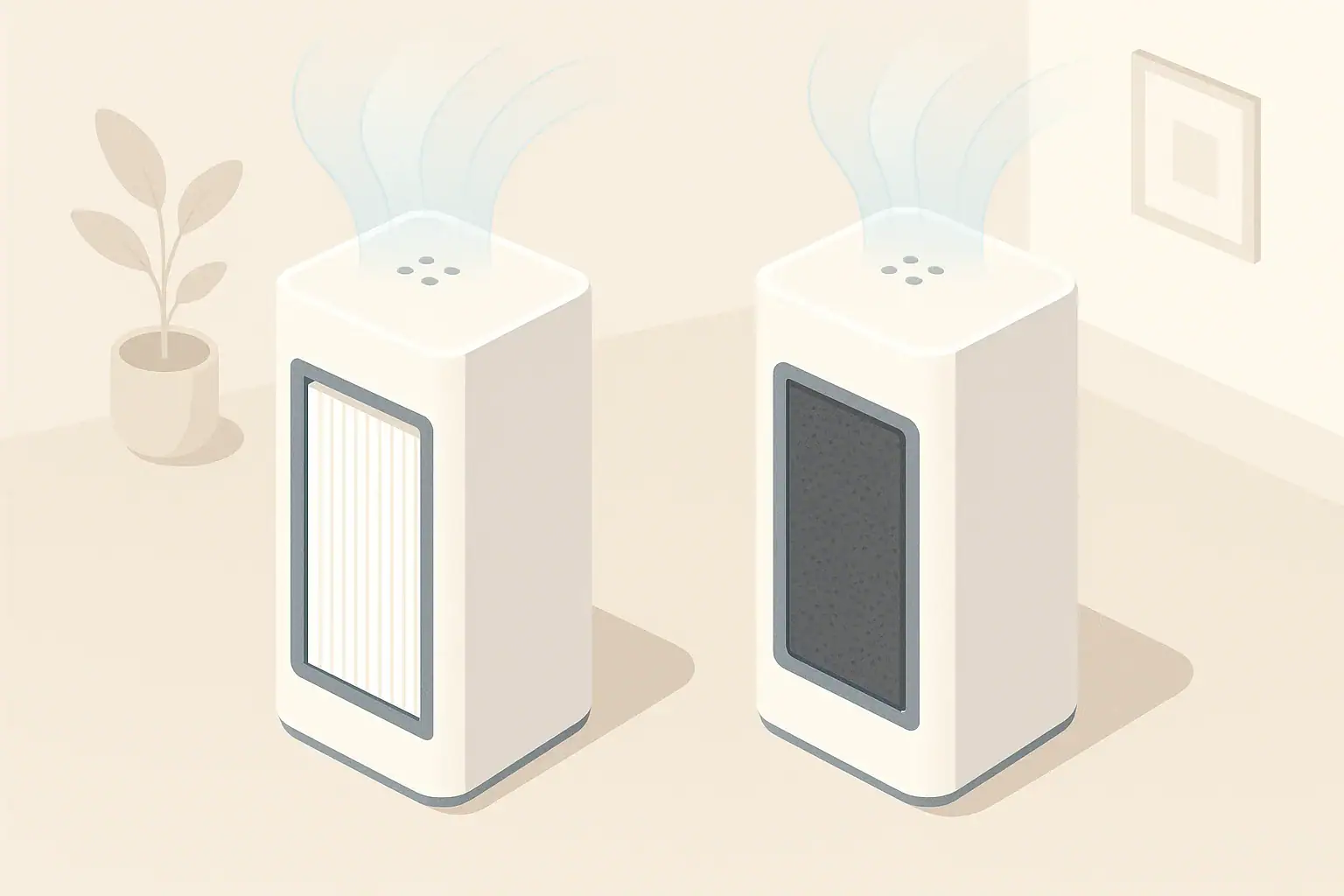
HEPA filters are best for particles like pollen and smoke, while activated carbon is best for odors and many gases; most homes do best with a combination. If you are comparing HEPA vs activated carbon for allergies, pet smells, wildfire smoke, or general indoor air quality, it helps to match the filter type to the specific problem you are trying to solve. This guide explains what each filter can and cannot do so you can choose a setup that fits your rooms and routines.
We will walk through how HEPA and carbon filters work, real-world examples of effective setups, common mistakes, and basic safety and maintenance tips. By the end, you will know how to size a purifier, what specs to look for, and how to avoid wasting money on filters that do not address your main concern.
What HEPA and Activated Carbon Actually Do (and Why It Matters)
High-efficiency particulate air (HEPA) filters and activated carbon filters target different types of indoor air pollutants. HEPA focuses on solid particles; activated carbon focuses on many gases and odors. Understanding this difference is the key to choosing the right configuration for allergies, odors, and smoke.
In most homes, both filter types are used inside a portable air purifier or HVAC system. They sit in the same cabinet, but they do different jobs:
- HEPA filter: Captures airborne particles such as dust, pollen, pet dander, mold spores, and smoke particles.
- Activated carbon filter: Adsorbs certain gases and vapors responsible for odors and some components of smoke.
This division of labor matters because no single filter can remove everything. If you mainly struggle with sneezing and visible dust, HEPA is the priority. If your main complaint is lingering cooking smells or a musty odor, activated carbon becomes more important. For wildfire smoke or tobacco smoke, you typically need both.
Another practical point: stronger or denser filters create more resistance to airflow. If the fan is not powerful enough, the clean air delivery rate (CADR) and air changes per hour (ACH) will drop, and the real-world benefit will be smaller than the filter label suggests.
How HEPA and Activated Carbon Filters Work in Practice
Both HEPA and activated carbon filters sit in the path of moving air, but they work through different physical processes.
How HEPA Filters Work
HEPA filters are dense mats of fibers folded into pleats. As air passes through, particles collide with or stick to the fibers through mechanisms such as interception, impaction, and diffusion. The result is a high capture rate for fine particles, especially in the PM2.5 range that affects lungs and visibility.
- What HEPA targets: Dust, pollen, pet dander, dust mite debris, mold spores, and fine smoke particles.
- What HEPA does not do well: Gases and most odors, because gas molecules are much smaller and do not behave like particles.
- Efficiency labels: Terms like “true HEPA” or higher-grade HEPA media usually mean better capture of very small particles, but they also tend to increase resistance to airflow.
In a real room, a moderately efficient HEPA filter running at a higher airflow can sometimes outperform a very high-grade filter that only runs on a low, quiet setting. Airflow and run time matter as much as the label on the filter media.
How Activated Carbon Filters Work
Activated carbon is a form of carbon that has been processed to create a huge internal surface area full of tiny pores. When air passes through a carbon bed, many gas molecules and odor compounds stick to the surface in a process called adsorption.
- What carbon targets: Many odors from cooking, pets, smoke, and some volatile organic compounds (VOCs) from cleaners, paints, or furnishings.
- What carbon does not do: It does not capture solid particles, so it is not a substitute for a particle filter like HEPA.
- Capacity and thickness: Thicker, heavier carbon filters usually have more capacity and last longer before they saturate, but they also add more resistance to airflow.
Once carbon is saturated, it cannot hold additional gases effectively. At that point, odors break through more quickly, even if the filter still looks clean to the eye.
Choosing the Right Tool for the Job
Because HEPA and activated carbon target different pollutants, your ideal setup depends on your main concern. The table below summarizes typical priorities for common home air quality problems.
| Main concern | Priority filter type | Support filter type | Typical best setup idea |
|---|---|---|---|
| Seasonal allergies (pollen) | HEPA or similar high-efficiency particle filter | Optional carbon for minor odors | Strong HEPA coverage in bedroom and main living area |
| Dust and pet dander | HEPA plus pre-filter for hair and larger dust | Carbon if pet odors are noticeable | HEPA purifier with washable pre-filter near pet areas |
| Cooking odors (light smoke) | Carbon for gases and smells | Fine particle filter for grease and droplets | Ventilation plus purifier with meaningful carbon stage |
| Wildfire smoke | HEPA for fine smoke particles (PM2.5) | Thicker carbon for smoke gases and smell | Combined HEPA + carbon purifier sized for high ACH |
| Tobacco or incense smoke | HEPA while smoke is present in the air | Carbon for lingering odor and some gases | Combined HEPA + carbon plus strong source control |
| General musty or chemical odor | Carbon for gases; HEPA if dust is also an issue | HEPA if visible dust or spores are present | Carbon filtration plus moisture and source investigation |
Real-World Examples: Allergies, Odors, and Smoke Scenarios
Translating HEPA vs activated carbon into daily life is easier with concrete examples. The following scenarios show how different setups can work in typical homes and apartments.
Scenario 1: Bedroom Allergies and Dust
A person with seasonal allergies wakes up congested and notices visible dust on furniture. The main pollutants are pollen, dust, and pet dander.
- Primary tool: HEPA or similar high-efficiency particle filter in a bedroom air purifier.
- Optional add-on: Thin carbon layer for minor odors from laundry or nearby bathroom.
- Practical setup: Run the purifier on medium all night, with the unit placed so it is not blocked by furniture and can circulate air across the room.
In this case, upgrading the HEPA coverage or improving room air changes per hour will usually make more difference than adding a very thick carbon filter.
Scenario 2: Open-Plan Living Area with Cooking Odors
A family cooks frequently in an open kitchen that flows into the living room. Even with a range hood, food smells linger for hours. The main complaint is odor, not sneezing or visible dust.
- Primary tool: Activated carbon filter with enough thickness and weight to handle recurring cooking odors.
- Support filter: Fine particle filter to capture grease droplets and smoke particles when frying or searing.
- Practical setup: Run the purifier on a higher speed during cooking and for 30–60 minutes afterward, then switch to a quieter setting.
Here, investing in more carbon capacity and using kitchen exhaust effectively typically brings more benefit than upgrading to an ultra-high-grade HEPA filter.
Scenario 3: Wildfire Smoke Infiltrating a Small Apartment
During wildfire season, outdoor air quality is poor, and smoke smell seeps into a small apartment. Windows are kept closed, but a haze is visible near windows and doors.
- Primary particle control: HEPA filter sized to provide several air changes per hour in the main living/sleeping area.
- Gas and odor control: A reasonably thick activated carbon stage to reduce smoke smell and some gases.
- Practical setup: Seal gaps as well as possible, run the purifier on a higher setting when smoke is heavy, and move it between the main room and bedroom as needed.
In this situation, both filter types matter. Without HEPA, fine particles remain high; without carbon, the smoke smell may linger even when particle readings improve.
Scenario 4: Musty Basement with Mild Odor
A finished basement smells slightly musty, but there is no visible mold. The main concerns are odor and long-term moisture.
- Primary tool: Carbon filter to reduce musty odor compounds in the air.
- Support strategies: Humidity control and inspection for hidden moisture sources.
- Practical setup: Use a purifier with carbon plus a dehumidification or ventilation strategy to keep humidity in a moderate range.
HEPA may still help if dust or spores are present, but it will not fix the underlying moisture problem that often drives musty smells.
Common Mistakes and Troubleshooting HEPA vs Carbon Setups
Many people buy a purifier with good filter media but use it in a way that limits its benefit. Recognizing common mistakes can help you troubleshoot poor results.
Frequent HEPA-Related Mistakes
- Relying on HEPA for odors: Expecting a HEPA-only purifier to remove strong cooking or pet smells, then being disappointed when the room still smells the same.
- Undersizing the purifier: Using a small unit in a large open-plan space, leading to low ACH and only modest particle reduction.
- Running only on the quietest speed: Keeping the fan on low at all times, especially during high-pollution events, which limits how quickly the air is cleaned.
- Ignoring filter bypass: Not seating the filter properly or leaving gaps around the frame, so air leaks around the filter instead of through it.
Frequent Activated Carbon Mistakes
- Using very thin carbon for heavy smoke: Expecting a thin carbon sheet to handle prolonged wildfire or tobacco smoke, leading to rapid saturation and quick odor return.
- Not replacing saturated carbon: Assuming the filter is fine because it looks clean, even though it no longer adsorbs gases effectively.
- Ignoring source control: Relying on carbon to fix strong, ongoing odor sources such as indoor smoking or chronic moisture instead of reducing the source.
Simple Troubleshooting Cues
The table below pairs common symptoms with likely causes and practical next steps.
| Symptom | Likely cause | What to check or adjust |
|---|---|---|
| Room still smells smoky after hours of use | Insufficient or saturated carbon; strong outdoor infiltration | Check carbon thickness and age, seal gaps, increase fan speed or run time |
| Odor disappears briefly, then returns quickly | Carbon reaching saturation | Replace carbon filter sooner; consider a thicker carbon stage |
| Visible dust settles quickly despite purifier | Low ACH or bypass around HEPA | Confirm room size vs purifier rating, increase speed, check filter seating and seals |
| Purifier is loud but air still feels stuffy | Undersized unit or blocked airflow | Move away from walls, clear intake/outlet, consider additional unit for large spaces |
| Musty odor persists even with carbon filter | Underlying moisture or hidden mold | Check humidity, look for leaks, improve dehumidification and ventilation |
| Allergy symptoms worse in morning | Insufficient overnight filtration in bedroom | Run purifier continuously at moderate speed, verify filter condition, close windows during high pollen |
Safety Basics When Using HEPA and Activated Carbon Filters
Properly used, HEPA and activated carbon filters are generally safe and can improve comfort and perceived air quality. A few simple precautions help you avoid unintended issues.
Avoid Ozone-Producing Add-Ons
Some devices combine particle or carbon filters with technologies that intentionally generate ozone or reactive gases. While HEPA and carbon are mechanical and adsorptive processes, ozone is a lung irritant and is not needed for effective filtration.
- Prefer filtration-based devices that rely on filters rather than chemical reactions in occupied spaces.
- If a device has an optional ionizing or ozone-generating mode, use it cautiously or leave that feature off in regularly occupied rooms.
Maintain Adequate Airflow and System Health
Overly clogged filters can restrict airflow. In a portable purifier this mainly reduces performance; in an HVAC system it can also stress the blower motor and reduce efficiency.
- Replace or clean filters on the schedule recommended for your environment, not just the maximum interval listed on the package.
- Listen for changes in fan noise that might indicate excessive strain or blockage.
Handle Used Filters Carefully
Used filters can hold captured dust, allergens, and smoke residue.
- Turn off the purifier before opening the housing.
- Remove filters slowly to avoid shaking out dust.
- Place used filters directly into a bag before disposal, especially after heavy smoke events or in allergy season.
Consider Ventilation and Moisture
Filters reduce certain pollutants but do not add oxygen or remove humidity. In some situations, relying on filtration alone without ventilation or humidity control can leave air feeling stale or damp.
- When outdoor air quality is reasonable, use ventilation to dilute indoor pollutants and carbon dioxide.
- Use dehumidification or moisture control if you notice condensation, musty smells, or persistently high humidity.
Maintenance and Long-Term Use
Consistent, moderate use and timely filter changes usually provide better results than occasional, high-speed bursts. Planning ahead for replacement intervals can keep both HEPA and carbon working as intended.
Typical Filter Lifespans (Adjust for Your Home)
- Pre-filters: Often washable or vacuumable; cleaning every few weeks helps protect the HEPA filter from clogging with hair and large dust.
- HEPA filters: Commonly last many months to over a year, depending on dust levels, run time, and fan speed.
- Thin carbon sheets: May need replacement every few months in homes with frequent cooking or odor sources.
- Thicker carbon cartridges: Can last longer but may still require more frequent replacement during wildfire season or in homes with ongoing smoke exposure.
Usage Patterns That Extend Filter Life
- Use a pre-filter to catch larger particles and protect the HEPA stage.
- Run on low or medium most of the time and reserve maximum speed for events such as cooking, vacuuming, or nearby outdoor smoke.
- Keep doors and windows closed during high outdoor pollution to reduce the load on filters.
Storage Between Seasons
If you use a purifier mainly during allergy or wildfire seasons, off-season storage can affect filter condition.
- Store the unit in a dry area to avoid moisture exposure to HEPA and carbon media.
- Seal spare filters in their packaging until needed to prevent them from slowly adsorbing ambient odors.
- When restarting after storage, inspect filters for visible dust, damage, or odor before relying on them for heavy use.
Putting It All Together: Practical Takeaways and Specs to Look For
Choosing between HEPA vs activated carbon is really about matching the filter setup to your main indoor air concerns, then making sure the purifier is sized and used correctly.
- If you mainly have allergies and dust, prioritize HEPA coverage and adequate ACH in bedrooms and main living areas.
- If you mainly have odors from cooking, pets, or mild chemical smells, prioritize a meaningful activated carbon stage and use ventilation whenever outdoor air allows.
- If you are dealing with wildfire or tobacco smoke, use both HEPA and carbon, and focus on sealing, higher fan speeds during events, and timely filter replacement.
Specs to Look For When Comparing HEPA and Carbon Setups
When you compare air purifiers or filtration setups, these practical specs and design details can help you choose a system that matches your home and health priorities:
- Filter types included: Confirm that there is a dedicated high-efficiency particle filter and a separate or layered activated carbon stage if you care about both particles and odors.
- Carbon amount and thickness: Look for information on the weight or thickness of the carbon media, especially if you expect regular smoke or strong odors.
- Clean Air Delivery Rate (CADR): Check that the CADR is appropriate for your room size and ceiling height; higher CADR generally means more air can be cleaned per minute.
- Air changes per hour (ACH): Aim for several air changes per hour in priority rooms, especially during allergy or smoke seasons.
- Fan noise vs usable speeds: Consider whether you can comfortably use medium or higher speeds for extended periods; a powerful unit that is always stuck on low will not deliver its full potential.
- Sealing and construction: Look for gaskets, rigid filter frames, and solid latches that help prevent air from bypassing the filters.
- Filter access and replacement cost: Check how easy it is to access and replace filters and estimate ongoing costs for both HEPA and carbon stages.
- Pre-filter design: A washable or easily replaceable pre-filter can extend the life of the more expensive HEPA and carbon filters.
With a clear understanding of how HEPA and activated carbon work together, plus a focus on room size, airflow, and realistic maintenance, you can build a balanced setup that addresses your particular mix of allergies, odors, and smoke without overspending on features you do not need.
Frequently asked questions
Which specs or features should I prioritize when choosing between HEPA and activated carbon?
Prioritize a dedicated HEPA particle stage plus a meaningful carbon stage if you care about odors or gases. Also check CADR or ACH ratings for your room size, the amount/thickness of carbon media, fan performance at usable speeds, and filter sealing and replacement costs.
Can I rely on a HEPA-only purifier to remove odors and gases?
No. HEPA filters capture particles but do not adsorb most gases or odor molecules; an activated carbon stage or other adsorbent is needed to reduce smells and many VOCs. For persistent odors or smoke gases, combine HEPA with sufficient carbon capacity.
What is a common mistake people make when using carbon filters?
A common mistake is relying on very thin carbon sheets for heavy or prolonged smoke and odor sources, which leads to rapid saturation and quick odor return. Match carbon capacity to the expected load and replace it promptly when adsorption performance declines.
Are HEPA and activated carbon air purifiers safe to use around children, pets, and people with respiratory conditions?
Yes when used as intended: HEPA and carbon work mechanically or by adsorption and do not produce ozone. Avoid devices that intentionally generate ozone or other reactive gases, follow basic handling precautions for used filters, and keep units properly maintained.
How often should I replace HEPA and carbon filters in a typical home?
HEPA filters often last many months to over a year depending on dust levels and run time, while thin carbon layers may need replacement every few months in homes with frequent cooking or smoke. Use manufacturer guidance as a baseline and replace sooner during heavy-use periods like wildfire season.
Where is the best place to put an air purifier for optimal results?
Place the purifier in the room where pollutants originate or where occupants spend the most time, and keep it away from walls or obstructions so intake and outlet airflow are clear. For bedrooms, position it near the bed; for open-plan areas consider multiple units or a centrally located high-CADR unit.
- Clear sizing logic (room size → CADR/ACH)
- HEPA vs carbon explained for real use-cases
- Humidity + ventilation basics to reduce mold risk