
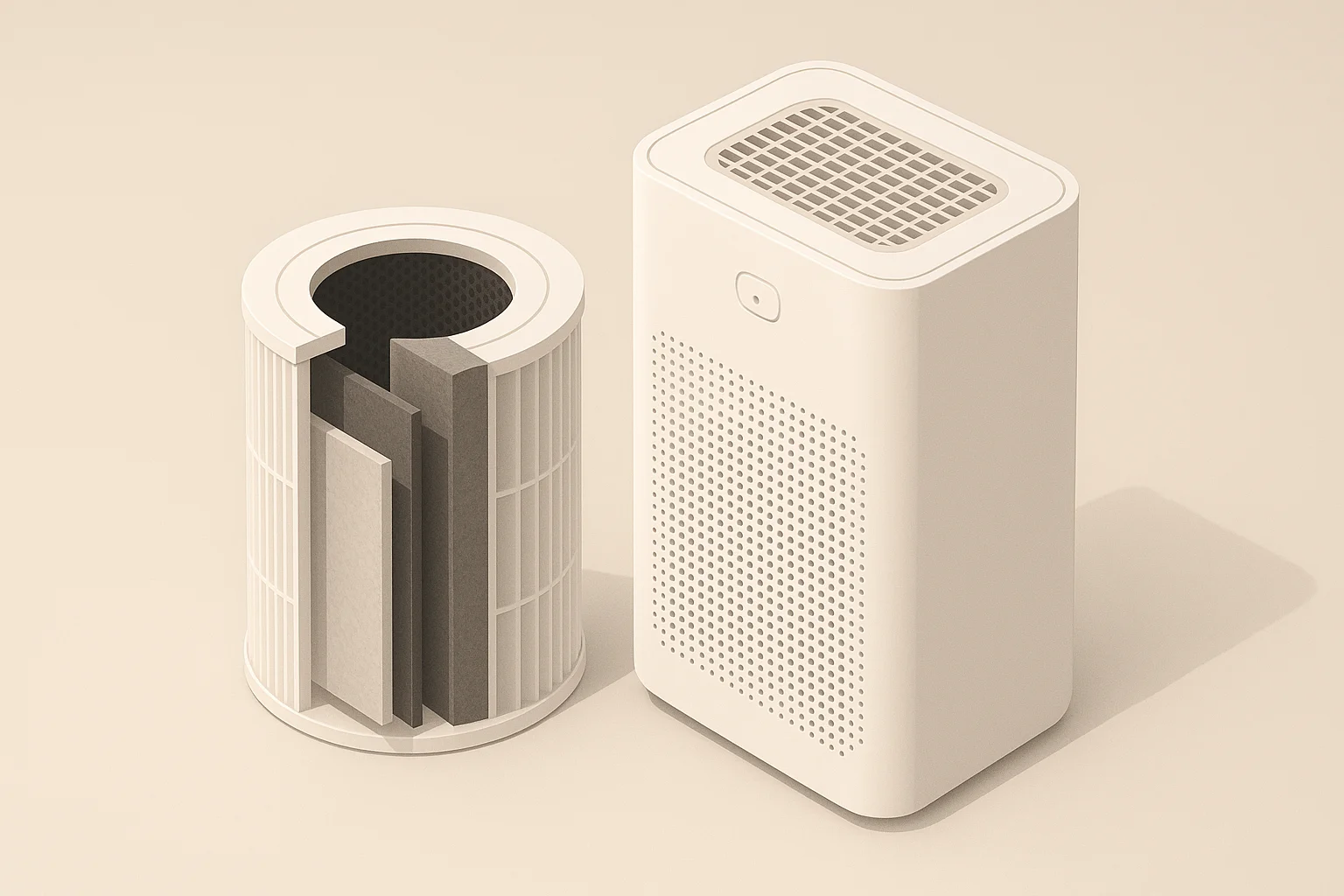
Many air purifiers and HVAC accessories are marketed with washable or reusable filters that use words like “HEPA-type,” “HEPA-style,” or “HEPA-like.” These terms can be confusing, especially if you are trying to understand what happens to filtration performance over months or years of use.
In most cases, washable filters are not certified true HEPA filters. True HEPA refers to filters that meet a specific particle capture efficiency when tested under a standard, usually capturing at least 99.97% of very small particles under controlled conditions. Washable filters typically use different materials and designs that allow cleaning with water or gentle washing, but this convenience comes with tradeoffs.
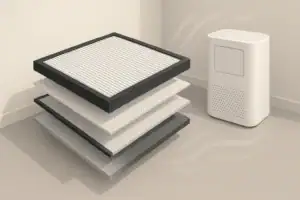
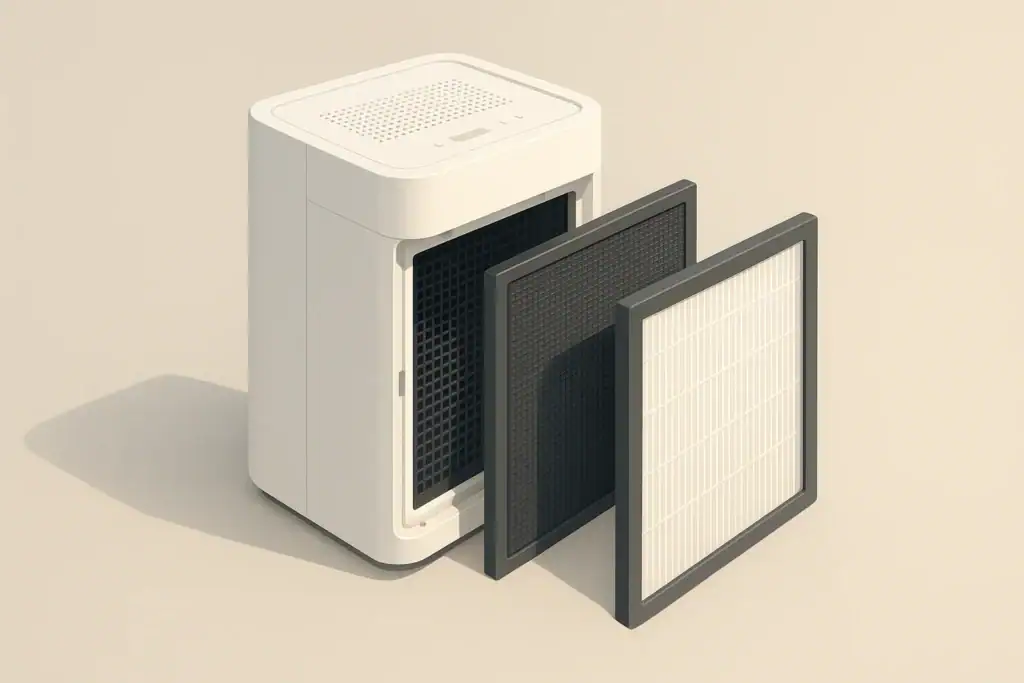
Common types of washable or reusable filters include:
- Permanent electrostatic filters that use charged fibers or mesh to attract particles and can be rinsed.
- Foam or mesh pre-filters that capture larger dust and hair before air reaches a finer filter.
- Washable fiber pads with looser weave compared to dense HEPA media.
What Are Washable “HEPA” Filters?
Some devices combine a washable pre-filter with a non-washable true HEPA filter. In that setup, only the pre-filter is intended for washing, and the HEPA filter is replaced periodically. When people talk about washable “HEPA” filters, they are often referring to these reusable pre-filters or to HEPA-type filters that do not meet full HEPA standards.
Why True HEPA Media Is Rarely Washable
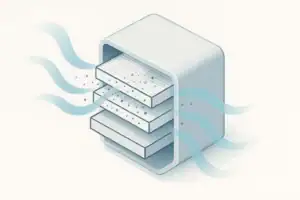
To understand performance over time, it helps to know how HEPA-type filters work. Fine particle filters rely on a dense mat of fibers. As air flows through, particles are captured by several mechanisms, including interception, impaction, and diffusion. The balance between efficiency (how many particles are removed) and resistance (how hard the fan has to work to push air through) is very delicate.
True HEPA media is usually designed to be dry-only. When saturated with water and then dried, the fibers can shift, clump, or break. This can create small gaps or change the pore structure of the filter. Over time, repeated washing may:
- Lower particle capture efficiency, especially for the smallest particles.
- Increase air leakage through microchannels or weak spots.
- Cause the filter material to shed fibers or deform.
Because of these risks, certified HEPA filters are almost always specified as disposable. If a filter is advertised as fully washable and also called HEPA, it is usually safer to assume it is a HEPA-type or high-efficiency filter, not a standard lab-tested HEPA cartridge.
Example values for illustration.
| Filter type | Typical maintenance | Fine particle capture (relative) | Airflow resistance (relative) | Notes |
|---|---|---|---|---|
| Washable mesh pre-filter | Rinse every few weeks | Low | Low | Good for hair and large dust; protects main filter. |
| Washable electrostatic panel | Rinse monthly | Low to medium | Low to medium | Performance depends on design and airflow speed. |
| Washable HEPA-type cartridge | Rinse as directed | Medium (may decline with age) | Medium | Efficiency and durability vary widely. |
| Disposable pleated MERV-style | Replace every few months | Medium to high | Medium to high | Used in many HVAC systems. |
| Disposable true HEPA cartridge | Replace every 6–18 months (example) | High | High | Designed for tested efficiency, not washing. |
How Washable “HEPA” Filters Change With Use
All filters change over time as they collect particles. With washable filters, performance shifts in two main ways: how well they stop particles and how easily air can move through them.
Efficiency vs. Airflow Over the Filter’s Life
Right after you install a clean filter, it usually has its highest airflow because the media is not yet loaded with dust. As time passes:
- Particle capture efficiency can increase slightly in the early phase as dust partially blocks tiny pores, helping catch smaller particles.
- Airflow resistance almost always increases as dust accumulates, making the fan work harder to move the same amount of air.
For washable HEPA-type filters, this cycle repeats each time you clean the filter. However, cleaning never fully restores the filter to its original state. Small particles can embed deeply in the fibers, and mechanical action during washing can reshape the material.
Over many wash cycles, some users observe one or more of the following trends:
- Airflow gradually returning closer to “new” levels after each wash, but not quite matching it.
- Efficiency against the finest particles slowly declining as the media loosens or fibers degrade.
- Visible staining that does not rinse out, suggesting persistent embedded material.
Mechanical Wear and Tear From Washing
Water and physical handling introduce stresses that dry filters do not experience. Each wash can contribute to:
- Fiber fatigue from bending, squeezing, or shaking.
- Bond failure where layers or pleats are glued or heat-bonded.
- Edge damage where the filter meets the frame, increasing the risk of bypass leaks.
These effects usually happen slowly, so they may not be visible after just a few cycles. However, the cumulative impact over dozens of washes can be significant for both performance and structural integrity.
Risk of Bypass Leakage
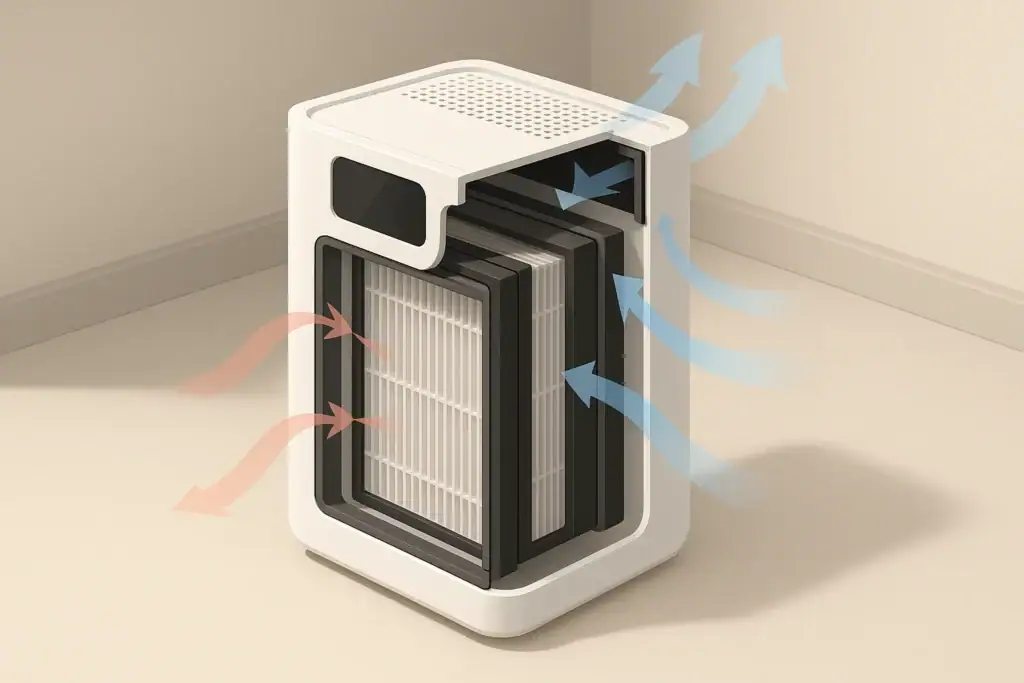
Even if the filter media itself is still effective, performance can drop if air finds an easier path around it. This is called bypass leakage. For washable filters, leakage risk can increase over time when:
- The frame warps slightly from repeated wetting and drying.
- Gaskets or seals become compressed, cracked, or misaligned.
- Edges fray, creating small gaps between the media and the frame.
Because household air purifiers often rely on tight seals, a small crack or warp can noticeably reduce the overall clean air delivery, even if the filter material still appears intact.
Cleaning Methods and Their Impact on Performance
How you clean a washable HEPA-type filter strongly influences how well it will perform over time. Manufacturers often specify certain methods for a reason. Deviating from those directions can accelerate wear or affect filtration.
Rinsing vs. Washing With Detergent
Simple rinsing with lukewarm water is usually the gentlest option for compatible filters. It can remove loose dust without aggressive mechanical action. Using detergents or soaps may seem helpful but can introduce other issues:
- Residual surfactants may stay on fibers, potentially changing how particles interact with the media.
- Hard scrubbing can stretch or tear delicate fiber mats.
- Strong chemicals can weaken glues or plastic frames.
Unless directions say otherwise, a light rinse, sometimes paired with vacuuming the surface, is generally less risky than a full soapy wash.
Drying Time and Moisture Concerns
Filters must be fully dry before being reinstalled. If a washable HEPA-type filter goes back into service while damp:
- It can increase resistance to airflow until it dries.
- Fine particles may clump on the surface rather than distribute through the depth of the media.
- Moist conditions in the fibers can encourage unwanted biological growth.
Drying can take many hours, depending on filter thickness and ambient humidity. For people who rely on continuous air cleaning, this downtime is important to consider.
Cleaning Frequency and Diminishing Returns
It is tempting to wash a filter as soon as it looks dusty, but over-cleaning can shorten its useful life. Most washable HEPA-type filters function best when cleaned at intervals that balance airflow, noise, and energy use with long-term durability.
Signs that a filter may need cleaning include:
- Noticeably louder fan noise on the same speed setting.
- Reduced perceived airflow from the outlet vents.
- Dust build-up that does not brush or vacuum off easily.
If performance feels acceptable and manufacturer guidance allows, stretching the time between full washes may slow down mechanical wear and keep long-term efficiency higher.
How Performance Changes Compare With Disposable Filters
Both washable and disposable filters gradually load with particles, but their end-of-life behavior is different. Disposable HEPA filters are designed with a predictable decline: as they fill, resistance rises, and eventually the filter is replaced entirely, restoring both airflow and efficiency.
With washable HEPA-type filters, the curve is more complex. After each wash, the filter regains some of its airflow and some of its efficiency, but rarely to the original level. Over a long timeline, this can look like a gentle downward slope in performance with occasional partial resets.
Cost, Convenience, and Indoor Air Plans
Washable filters appeal because they reduce the number of replacements needed. However, there are tradeoffs that matter for overall indoor air quality planning:
- Lower ongoing material cost but more time spent cleaning and drying.
- Less waste from discarded filters, but potentially more energy use if reduced efficiency requires running fans at higher speeds for similar results.
- Less predictable performance over time, since changes depend on real-world handling and cleaning habits.
For people focusing on fine particle reduction (such as smoke, traffic particles, or very small dust), it can be helpful to think of washable filters as part of a broader strategy that may also include replace-only HEPA filters, source control, and ventilation.
Example values for illustration.
| Filter type | Typical interval range (example) | What changes the interval | Reminder |
|---|---|---|---|
| Washable pre-filter | 2–8 weeks between rinses | Pet hair, visible dust, fan speed use | Inspect visually; clean when clearly dusty. |
| Washable HEPA-type main filter | 3–12 months between deep washes | Particle levels, smoke exposure, cleaning method | Avoid harsh scrubbing to extend life. |
| Disposable HEPA filter | 6–18 months before replacement | Usage hours, fan speed, indoor dust | Follow device indicator or scheduled checks. |
| HVAC return filter (pleated) | 1–3 months before replacement | Seasonal use, occupants, renovations | Check more often during heavy use. |
| Carbon or odor filter | 3–12 months before replacement | Cooking, smoking, chemical use | Odor control fades before airflow is affected. |
Practical Tips for Using Washable “HEPA” Filters
For households that choose washable HEPA-type filters, a few practical habits can help keep performance more consistent over time.
Match Expectations to Filter Type
First, identify exactly what role the washable filter plays in your setup:
- If it is a pre-filter, its main job is to protect a finer filter by catching larger particles. In this case, small changes in its efficiency are less critical.
- If it is the only filter stage in a device, its long-term behavior matters more, since you rely on it for most particle capture.
- If it sits in front of a true HEPA filter, cleaning it regularly can help extend the life of the non-washable HEPA stage.
Use Gentle Cleaning and Careful Handling
To minimize long-term performance loss:
- Follow any written directions for water temperature and cleaning frequency.
- Avoid twisting, wringing, or bending the filter media.
- Let the filter air-dry fully on a clean surface before reinstalling.
- Inspect seals, gaskets, and frames for warping or cracks as the filter ages.
Track Subjective Performance Over Time
You may notice gradual changes before any indicator light or schedule suggests maintenance. Helpful checkpoints include:
- Fan noise at usual settings compared with when the device was new.
- Airflow strength felt by hand at the outlet.
- General dust accumulation on nearby surfaces over weeks.
Basic particle monitors that display general PM levels can also help you see trends, though readings can be influenced by many factors such as outdoor air, cooking, and cleaning activities.
Plan for Event-Based Extra Cleaning
Special situations can put extra load on any filter, washable or not:
- Nearby wildfires or heavy outdoor smoke.
- Home projects that create dust, such as sanding or cutting.
- Moving into a space that has been closed up for a long period.
After such events, a gentle extra cleaning of washable components and an inspection of non-washable filters can help keep your system working closer to its intended performance.
Consider Backup Options
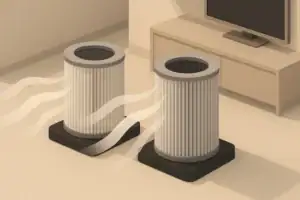
Because washable filters require downtime for drying, some households keep a spare filter or an additional device available. This allows air cleaning to continue while a washed filter dries thoroughly. For people who rely heavily on air purification for comfort, such as during pollen season or smoky periods, this redundancy can make day-to-day use more flexible.
Over time, understanding how your specific washable HEPA-type filters respond to regular use and cleaning will help you balance convenience, cost, and indoor air quality in a way that fits your home.
Frequently asked questions
How many wash cycles can a washable HEPA-type filter tolerate before performance declines?
There is no universal count because tolerance depends on the filter’s materials, construction, and how gently it is cleaned. Many washable filters withstand multiple wash cycles, but repeated rinsing and handling will gradually loosen fibers, weaken bonds, and increase the chance of frame or seal damage. Monitor airflow and capture ability over time and follow manufacturer guidance for replacement.
Will washing restore a washable HEPA-type filter to its original filtration efficiency?
Washing typically removes surface dust and can restore some airflow, but it rarely returns the media to the exact performance of a brand-new filter. Fine or embedded particles can remain trapped and mechanical stresses from washing can alter fiber alignment. Expect partial improvement rather than a full reset in fine-particle capture.
Can washing washable HEPA-type filters cause mold or other hygiene problems?
If a filter is reinstalled while still damp, the moisture can encourage microbial growth and temporarily reduce performance. To avoid this, always dry the filter completely on a clean surface before putting it back into service, and replace the filter if you detect odors or visible mold. Using gentle cleaning and thorough drying minimizes hygiene risks.
What cleaning method best preserves washable HEPA-type filter performance?
The gentlest approach is a lukewarm water rinse and light surface vacuuming when recommended; avoid aggressive scrubbing, twisting, or wringing unless the manufacturer explicitly allows it. Do not use detergents or chemicals unless specified, since residues and solvents can alter fibers or adhesives. Handle frames and gaskets carefully and let the filter fully air-dry before reinstalling.
How do I know when to stop washing and replace a washable HEPA-type filter?
Replace the filter when cleaning no longer improves airflow or particle removal, or when you observe structural problems such as warped frames, frayed edges, cracked seals, or persistent staining and odors. Regular performance checks—visual inspection, airflow feel, or particle monitor trends—help determine when the filter has reached the end of useful service. Follow any manufacturer replacement recommendations as a baseline.
Recommended next:
- True HEPA vs HEPA-Type: What the Labels Really Mean
- HEPA H13 vs H14: Differences, Efficiency, and When It Matters
- How Often Should You Replace a HEPA Filter?
- Do HEPA Filters Remove Viruses, Bacteria, and Allergens?
- HEPA Grades Explained (H10–H14): What’s Relevant for Homes?
- True HEPA vs HEPA-Type vs “HEPA-Like”: Label Tricks to Avoid
- More in HEPA Filters →
- Clear sizing logic (room size → CADR/ACH)
- HEPA vs carbon explained for real use-cases
- Humidity + ventilation basics to reduce mold risk
About this site
Home Air Quality Lab publishes practical, independent guides about indoor air quality—clear sizing, safer use, and real-world expectations.
Affiliate disclosure
Some links on this site may be affiliate links. If you buy through these links, we may earn a small commission at no extra cost to you. This helps support our content. Learn more.