
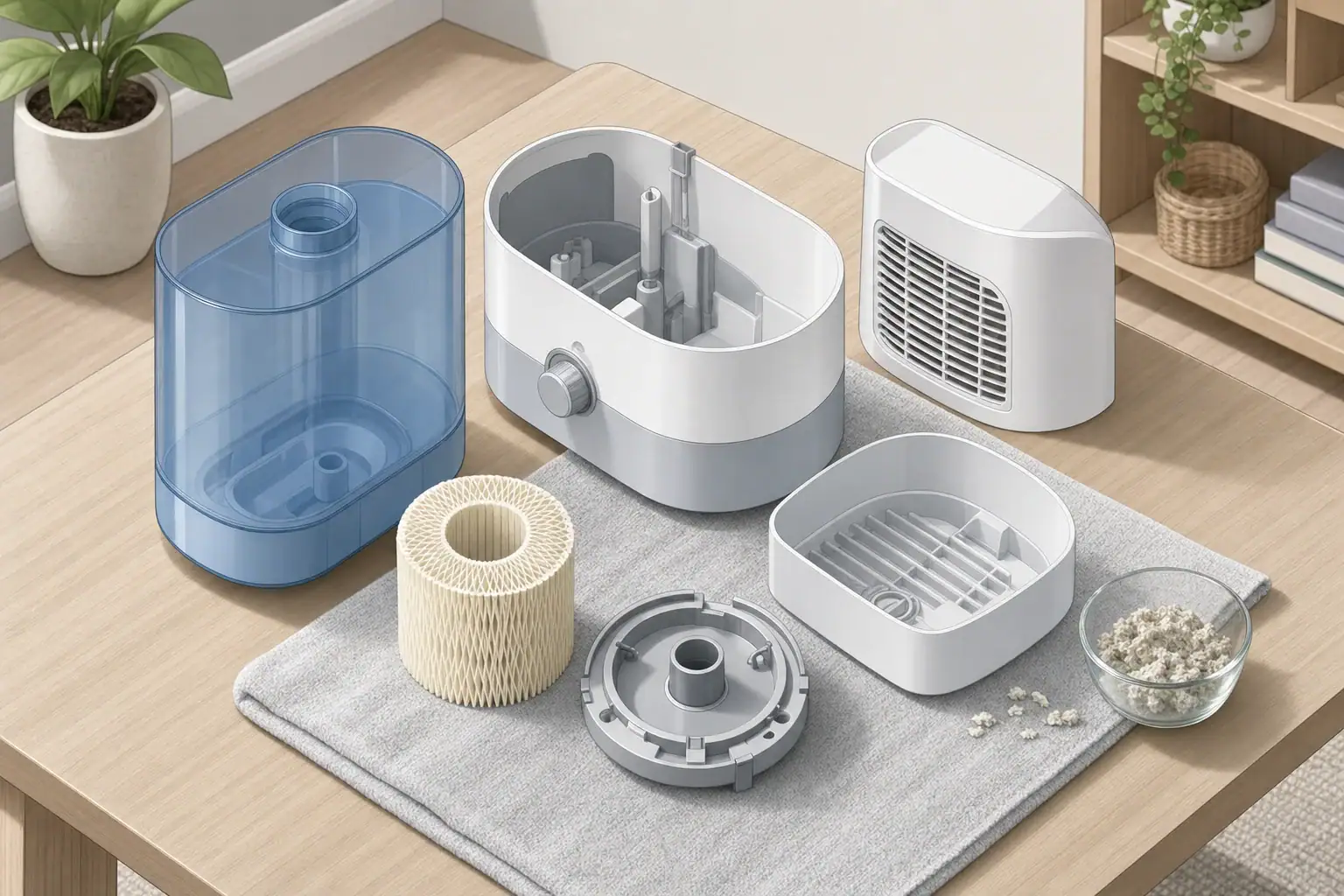
What low output usually means
Suddenly low humidifier output usually comes from restricted water flow, mineral buildup, a dry or clogged wick, reduced airflow, or an incorrect setting. Start by confirming that output has actually fallen, then inspect the water path before cleaning or replacing parts.
Visible mist is not a reliable test for every design. Evaporative humidifiers normally release invisible moisture, while ultrasonic and warm-mist units may produce a visible plume. A room hygrometer and water use under comparable settings provide better clues.
Check the simple causes first
- Review the controls. Confirm the desired humidity setting, output level, sleep mode, timer, and automatic mode. A unit may reduce output when its sensor detects that the set point has been reached.
- Check placement. Put the humidifier on a stable, level, water-resistant surface with its air inlet and outlet unobstructed. Follow the clearance instructions in the manual.
- Reseat the tank. Remove and reinstall it carefully. A misaligned tank, cap, float, or valve can prevent water from reaching the base.
- Look for warning indicators. A low-water light that remains on with a full tank may point to a stuck float, poor tank seating, or a sensor issue.
Inspect the water supply and flow
Unplug the humidifier before removing the tank, wick, cover, or other serviceable parts. Let a warm-mist model cool before handling its water chamber.
- Verify that the reservoir contains water and that its cap is tightened as directed.
- Check accessible tank valves and floats for free movement. Do not bypass an interlock or force a valve open.
- Inspect the tank, cap seal, and base for cracks, leaks, or displaced gaskets.
- Rinse away loose residue from removable, washable parts according to the manual.
- Use the water type recommended for the model. Water with a high mineral content can accelerate deposits in some humidifiers.
If the tank remains full while the base or wick stays dry, the likely problem is restricted delivery from the reservoir rather than low fan or mist output.
Remove mineral scale correctly
Scale can narrow water passages, coat an ultrasonic membrane, insulate a warm-mist heating surface, or keep a float from moving. Deposits often appear as a white, tan, or chalky crust.
Follow the manufacturer’s descaling procedure and use only cleaners approved in the manual. Do not mix cleaning products, immerse the electrical housing, or scrape a mist membrane or heating surface with a hard or sharp tool. Rinse approved washable parts as directed before reassembly.
If output improves after descaling but drops again quickly, more frequent maintenance or a different manufacturer-approved water choice may be needed.
Check an evaporative wick or filter
An evaporative wick must absorb water and allow air to pass through it. Output can fall when the wick becomes mineral-crusted, deformed, dry in sections, or installed incorrectly.
- Confirm that the wick is fully seated in the correct orientation.
- Look for hard deposits, collapsed sections, tears, or uneven wetting.
- Check that a rotating wick or wick frame moves as the manual describes.
- Replace the wick when it is damaged or no longer wets and passes air properly.
Do not wash a disposable wick unless its instructions specifically allow it. Resetting a filter indicator does not restore a blocked or worn wick.
Check the fan and airflow
On fan-equipped models, weak airflow limits how much moisture can leave the unit. With the humidifier unplugged, inspect accessible inlet grilles, outlet grilles, and fan areas for dust or blockage. Clean only as directed, typically with a soft brush, cloth, or vacuum at the exterior grille.
After correct reassembly, listen for normal fan operation. A fan that hums, rattles, starts intermittently, or does not move air may require an approved replacement part or qualified service. Do not open a sealed motor housing or add lubricant unless the manual provides that procedure.
Troubleshoot by humidifier type
- Evaporative: Focus on wick wetting, wick condition, tank flow, fan speed, and blocked grilles. A lack of visible mist is normal.
- Ultrasonic: Inspect the water path and gently clean the mist membrane using the specified method. Scale on the membrane can reduce or distort the plume.
- Warm mist: After unplugging and cooling the unit, inspect for deposits in the heating chamber. Follow the manual’s descaling directions.
Confirm whether output has recovered
Reassemble the humidifier completely, fill it as directed, and operate it at the same setting used before troubleshooting. Compare water use and room humidity over a similar period under similar conditions. Open doors, outdoor air leakage, room size, temperature, and ventilation can all change how quickly humidity rises.
Stop using the humidifier if it leaks from the housing, has a damaged cord or plug, smells electrically hot, repeatedly trips power, or contains inaccessible contamination. Seek manufacturer guidance or qualified service rather than bypassing controls.
Related guides: How to Clean a Humidifier Properly (And How Often) • Humidifier Mineral Build-Up: Cleaning Scale Without Damaging Parts • Ultrasonic vs Evaporative Humidifiers: Pros, Cons, and Which to Buy
Frequently asked questions
Why is my humidifier tank still full but the wick or base is dry?
This usually indicates that water is not leaving the reservoir properly. Check that the tank is seated correctly and inspect accessible valves, floats, cap seals, and gaskets for misalignment, sticking, or damage.
Is it normal for a humidifier to run without visible mist?
Yes. Evaporative humidifiers typically add moisture without producing a visible plume. Compare room humidity and water use under similar settings instead of using visible mist alone to judge output.
When should I replace an evaporative humidifier wick?
Replace the wick if it is mineral-crusted, torn, collapsed, unevenly wet, or no longer allows air to pass through properly. Follow the model instructions, since disposable wicks should not be washed unless the manufacturer specifically permits it.
Summary
For low humidifier output, check settings and tank seating first, then trace water flow, remove scale using the approved method, inspect the wick, and clear accessible airflow restrictions. If correct cleaning and reassembly do not restore output, a failed fan, sensor, valve, heater, or mist-producing component may require service or replacement.
- Clear sizing logic (room size → CADR/ACH)
- HEPA vs carbon explained for real use-cases
- Humidity + ventilation basics to reduce mold risk