
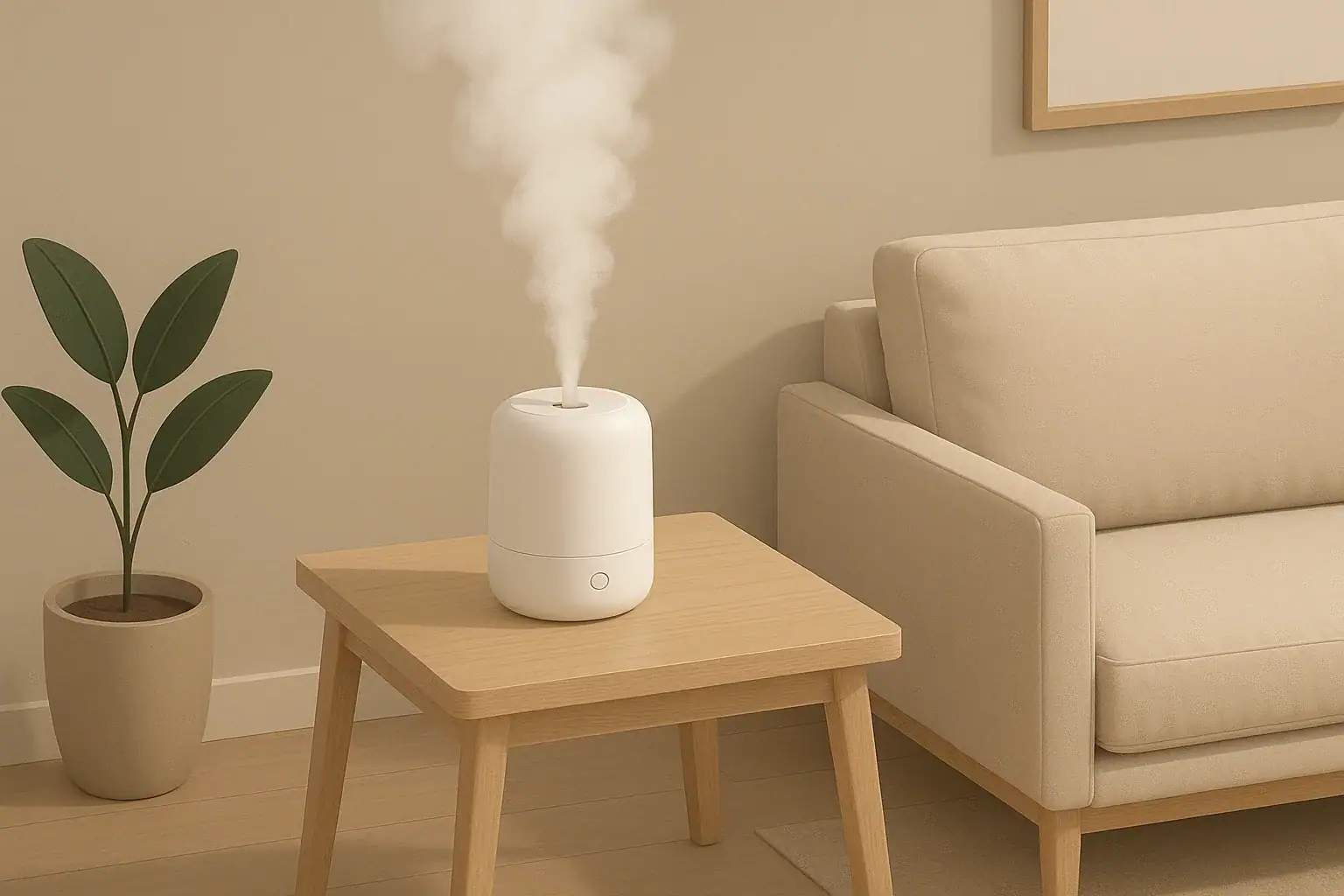
For most homes, ultrasonic humidifiers are better when you want very quiet, compact moisture, while evaporative humidifiers are better when you want less mineral dust and more self-regulating humidity. Both can work well if you match the type to your room size, water quality, and cleaning habits. Understanding the differences helps you avoid problems like white dust, condensation, or mold while still fixing dry indoor air.
This guide explains how ultrasonic and evaporative humidifiers work, what they are best at, and where they commonly cause issues. You will see practical room examples, common mistakes to avoid, basic safety tips, and what specs to look for before you buy. Use it as a decision tool to choose the right cool mist humidifier for your bedroom, nursery, or living space and to run it confidently day after day.
What Ultrasonic and Evaporative Humidifiers Are and Why They Matter
Both ultrasonic and evaporative humidifiers add moisture to dry indoor air, but they do it in different ways and behave differently in real rooms. That matters for comfort, surface cleanliness, energy use, and long-term indoor air quality.
Ultrasonic humidifiers use a vibrating plate to turn water into a visible cool mist. They are usually very quiet, compact, and energy efficient, but they can spread minerals from tap water as white dust and can easily over-humidify a small room if you are not watching the humidity level.
Evaporative humidifiers pull air through a wet wick or filter so water can naturally evaporate into the air. They are less likely to create white dust and tend to be more self-limiting, but they use a fan that makes noise and need regular wick replacements.
Choosing the right type helps you hit a comfortable humidity range, reduce dry skin and irritated airways, and avoid avoidable risks like window condensation, damp corners, and musty odors from over-humidifying.
How Ultrasonic and Evaporative Humidifiers Work
Knowing the basic mechanics of each type makes it easier to predict how they will behave in your home and what kind of upkeep they will need.
How Ultrasonic Humidifiers Work
Ultrasonic humidifiers use high-frequency vibrations to create a fine mist.
- A small metal or ceramic plate vibrates at ultrasonic frequency.
- These vibrations break water into tiny droplets.
- A fan or natural convection carries the cool mist into the room.
Key implications:
- Very quiet: Only a soft hum and water sounds, which is helpful for bedrooms and nurseries.
- Minerals go airborne: Any dissolved minerals in the water travel out with the mist and later settle as fine dust.
- Humidity can rise quickly: Output is not naturally limited by room humidity, so levels can climb fast in smaller or closed rooms.
How Evaporative Humidifiers Work
Evaporative humidifiers rely on natural evaporation, sped up by a fan.
- A wick or filter absorbs water from the tank.
- A fan pulls dry room air through or across the wet wick.
- Water molecules evaporate into the air; minerals mostly stay behind in the wick.
Key implications:
- Self-limiting output: As room humidity rises, evaporation slows, which helps prevent overshooting comfortable humidity.
- Less white dust: Minerals accumulate in the wick and tank instead of on nearby furniture.
- Fan noise: You hear airflow, similar to a small fan on low to medium speed.
| Aspect | Ultrasonic humidifier | Evaporative humidifier |
|---|---|---|
| How moisture is added | Vibrating plate creates visible cool mist | Fan blows air through wet wick for natural evaporation |
| Typical noise impression | Very quiet hum and water sounds | Fan noise similar to a small room fan |
| Mineral behavior | Higher chance of white dust on surfaces | Minerals mostly stay in wick and tank |
| Risk of over-humidifying | Higher in small, closed rooms on high output | Lower because evaporation slows as humidity rises |
| Ongoing consumables | Sometimes optional cartridges; usually no main wick | Regular wick or filter replacement needed |
| Best fit for | Quiet bedrooms, home offices, soft water or distilled water use | Hard-water areas, dust-sensitive users, larger shared spaces |
Real-World Examples: Matching Type to Room and Habits
The same humidifier can work well in one room and poorly in another. These scenarios show how ultrasonic vs evaporative models behave in common situations.
Small Bedroom or Nursery
Typical situation: Closed door at night, central heat running, one or two people sleeping.
- Ultrasonic: Very quiet and comfortable for light sleepers. However, on high output, humidity can climb quickly above a comfortable range, especially in a small room. You may notice condensation on windows by morning if the unit runs nonstop.
- Evaporative: Fan noise is more noticeable but can act as white noise. Humidity usually rises more gradually, and the self-limiting nature of evaporation makes overshooting less likely if the unit is reasonably sized.
Practical pick: Ultrasonic often wins on noise, but only if you monitor humidity and keep settings moderate. Evaporative often wins if you want a “set it and forget it” approach with less risk of over-humidifying.
Medium Living Room or Family Room
Typical situation: Open to nearby rooms, people moving around, TV or conversation noise in the background.
- Ultrasonic: Quiet and easy to place on a side table, but the visible mist may not travel far in a larger, open area. You may see localized dampness if the mist hits nearby surfaces.
- Evaporative: A floor or tabletop evaporative unit with a decent-size wick can move more air and distribute moisture more evenly. Fan noise is easier to ignore in a busy living space.
Practical pick: Evaporative units often feel more effective in open living areas because they move more air and distribute moisture more broadly.
Home Office with Electronics
Typical situation: Desk with computer, monitor, and other electronics; dry air from forced-air heating or air conditioning.
- Ultrasonic: Very quiet and compact, but white mineral dust from hard water can settle on electronics, screens, and keyboards. This can be annoying and may require frequent cleaning.
- Evaporative: Less white dust, but a small fan may be audible during calls or recordings.
Practical pick: If you use tap water and want to protect electronics from dust, an evaporative unit is often easier to live with. If you are willing to use distilled or low-mineral water, an ultrasonic can work well.
When to Pause Use and Reassess
Stop and reassess your setup if you notice any of the following:
- Persistent condensation on windows, walls, or ceilings near the unit.
- Visible mold spots or fuzzy growth on nearby surfaces.
- Strong, recurring odors from the humidifier even after cleaning.
- Unusual noise, rattling, or overheating of the device.
In these cases, reduce run time, lower the setting, improve ventilation, or consider whether the unit is oversized for the room.
Common Mistakes and Troubleshooting Cues
Many complaints about both ultrasonic and evaporative humidifiers come from a few predictable mistakes. Recognizing the early warning signs helps you correct issues before they turn into damage or persistent odors.
Common Ultrasonic Humidifier Mistakes
- Using very hard tap water and high output: Leads to white dust on furniture, electronics, and floors. If you see a light powder near the unit, that is a cue to change water type, reduce output, or consider an evaporative model.
- Placing the mist outlet too close to walls or windows: Causes damp patches, peeling paint, or condensation streaks. If you notice wet spots or beads of water, move the unit farther into the room and elevate it.
- Ignoring humidity levels: Running on high all night in a small room can push humidity high enough to fog windows and make surfaces feel clammy. A simple humidity monitor can show you when to turn the setting down.
- Infrequent cleaning: Leads to slimy film, discoloration, or musty odors from the tank or base. Any smell when you turn the unit on is a cue to stop and clean before further use.
Common Evaporative Humidifier Mistakes
- Not replacing the wick on time: A dark, stiff, or crusty wick can dramatically cut output and may smell stale. If your unit sounds normal but humidity is not rising, the wick is a likely culprit.
- Running the fan on high in a very small room: Can still over-humidify and may feel drafty or noisy at night. If you see window condensation or feel dampness, step down to a lower fan speed.
- Blocking air inlets or outlets: Placing the unit in a corner or against furniture can reduce airflow and moisture output. If you hear the fan but feel little air movement, check for obstructions.
- Letting water sit between uses: Stagnant water in the tank or base can develop film and odor. If you only use the unit occasionally, empty and dry it between uses.
| Symptom | Likely cause | What to check or adjust |
|---|---|---|
| White powder on nearby surfaces | Minerals from hard water in ultrasonic mist | Try lower-mineral water, reduce output, or switch to evaporative |
| Musty or sour smell when unit runs | Standing water or biofilm in tank/base | Stop use, clean thoroughly, and dry parts before refilling |
| Windows wet or fogged in the morning | Humidity too high overnight | Lower setting, shorten run time, or use humidity control |
| Humidifier sounds normal but humidity barely changes | Clogged wick (evaporative) or heavy scale (ultrasonic) | Inspect wick or mist outlet, replace or descale as needed |
| Wet ring on table or floor around unit | Mist hitting nearby surfaces or small leaks | Elevate unit, increase clearance, and use a waterproof mat |
When to Pause Use and Reassess
Stop and reassess your setup if you notice any of the following:
- Persistent condensation on windows, walls, or ceilings near the unit.
- Visible mold spots or fuzzy growth on nearby surfaces.
- Strong, recurring odors from the humidifier even after cleaning.
- Unusual noise, rattling, or overheating of the device.
In these cases, reduce run time, lower the setting, improve ventilation, or consider whether the unit is oversized for the room.
Safety Basics for Using Humidifiers Indoors
Humidifiers are generally low-risk appliances, but using them carelessly can create moisture problems, electrical hazards, or hygiene issues over time. A few habits keep both ultrasonic and evaporative units safer.
Moisture and Mold Risk
- Avoid chronically damp surfaces: Check windowsills, exterior walls, and corners behind furniture. If they stay damp, reduce humidity and improve airflow.
- Watch for musty odors: A persistent musty smell is a sign that moisture may be supporting mold or microbial growth somewhere in the room.
- Use moderate humidity targets: Aim for a comfortable middle range rather than pushing humidity to the upper limit of what your space can handle.
Electrical and Placement Safety
- Keep cords and outlets dry: Place the unit where leaks or spills will not drip onto outlets, power strips, or extension cords.
- Use a stable, level surface: Prevent tipping, especially in homes with children or pets.
- Provide clearance: Leave space around the unit so mist or moist air does not blow directly into walls, curtains, or electronics.
Water and Hygiene Practices
- Refresh water regularly: Avoid letting water sit unused in the tank for days. Empty and refill with fresh water before each new run whenever practical.
- Follow cleaning guidance: Regular cleaning reduces scale, film, and odor and helps the unit operate as designed.
- Do not add unapproved substances: Avoid adding oils, fragrances, or household chemicals to the tank unless the product is specifically designed for that use.
Maintenance, Storage, and Long-Term Use
Both ultrasonic and evaporative humidifiers work best and last longer when you stay consistent with simple maintenance. This also keeps operating costs and indoor air side effects under control.
Daily and Weekly Habits
- Daily or frequent tasks: Empty and refill the tank with fresh water, check for drips, and quickly inspect for visible scale or film.
- Weekly tasks: Rinse the tank and base, and follow any recommended mild cleaning routine. Check cords, plugs, and the area around the unit for dampness.
Ultrasonic-Specific Maintenance
- Descale the ultrasonic plate: Mineral buildup on the vibrating plate can reduce mist output and cause noise. Follow the manufacturer’s descaling method and avoid harsh scraping that can damage the surface.
- Check optional cartridges: If your unit uses mineral-reducing cartridges, replace them on schedule and note the cost when comparing long-term ownership.
- Monitor mist output: If visible mist weakens even with a full tank, check for scale in the outlet or on internal parts.
Evaporative-Specific Maintenance
- Replace wicks or filters: Expect more frequent replacements in hard-water areas or when running the unit many hours per day.
- Inspect fan and air path: Dust buildup on the fan or grilles can reduce airflow. Gently clean accessible areas as recommended in the manual.
- Check for uneven wetting: If only part of the wick is wet, output may drop. Make sure the wick is properly seated and the tank is filling the base as intended.
Off-Season Storage
- Drain all water from the tank and base.
- Clean and fully dry internal surfaces before storage.
- Remove and discard used wicks or cartridges; install new ones when you restart the unit next season.
- Store in a dry place where dust and pests are unlikely to get inside the unit.
Choosing the Right Humidifier and Key Specs to Look For
By this point, you know that ultrasonic humidifiers are typically quieter and more compact, while evaporative humidifiers are typically better at reducing white dust and limiting over-humidification. The best choice depends on your room, water, and habits.
Quick Decision Guide
- Choose ultrasonic if: You are very sensitive to noise, have soft or low-mineral water (or plan to use distilled water), and are willing to monitor humidity levels and clean regularly.
- Choose evaporative if: You have hard water, dislike white dust on surfaces, want more self-limiting humidity, and do not mind low-level fan noise or replacing wicks.
Specs and Features to Look For
When you compare specific models, these specs help you match a humidifier to your space and expectations:
- Room size rating: Check that the stated coverage roughly matches your room’s floor area and ceiling height. Oversized units need careful control; undersized units may never reach comfortable humidity.
- Output control: Multiple output levels or a variable dial make it easier to fine-tune moisture without overshooting.
- Built-in humidistat or humidity setting: Helps the unit cycle on and off or adjust output automatically once your target humidity is reached.
- Noise level expectations: Look for low-noise or sleep modes if the unit will sit in a bedroom or nursery.
- Tank capacity and run time: Larger tanks run longer between refills but are heavier to carry. Match run time to how often you want to refill.
- Maintenance access: Simple tank shapes, wide openings, and removable parts make cleaning easier and more likely to happen regularly.
- Filter or wick availability: For evaporative units, check that replacement wicks or filters are easy to find and reasonably priced.
- Water treatment options: Consider whether you will use tap, filtered, or distilled water and whether the unit supports optional mineral-reducing components.
- Safety features: Automatic shutoff when the tank is empty and stable, tip-resistant design are helpful in busy households.
By combining the right humidifier type with realistic expectations about noise, maintenance, and water quality, you can keep indoor humidity in a comfortable range through the dry season while minimizing dust, condensation, and moisture-related problems.
Frequently asked questions
Which humidifier specifications should I prioritize for my room size and needs?
Prioritize a unit’s room-size coverage, adjustable output levels, and a built-in humidistat so the device can control humidity automatically. Also consider noise level, tank capacity/run time, and how easy the unit is to clean or maintain. These features together determine how well a model fits your space and routine.
Why does my ultrasonic humidifier leave white dust and how can I reduce it?
White dust comes from dissolved minerals in tap water that become airborne in ultrasonic mist. Reduce it by using distilled or low-mineral water, lowering output, cleaning surfaces regularly, or using a demineralization cartridge; switching to an evaporative model also limits dust. Regular cleaning prevents buildup on nearby surfaces.
Are humidifiers safe to use around children and pets?
Humidifiers are generally safe when used with basic precautions: place them on stable surfaces away from outlets, keep units out of reach of children and pets, and avoid adding oils or unapproved substances to the tank. Monitor humidity and ventilation to prevent excess moisture that can encourage mold, and use automatic shutoff features when available.
How often should I clean my humidifier and replace wicks or filters?
Empty and refill tanks daily when in frequent use, rinse and perform a deeper clean at least weekly, and follow manufacturer guidance for descaling ultrasonic plates. Replace evaporative wicks or filters on the schedule recommended by the manufacturer or when they become discolored or smell; replacement frequency depends on run hours and local water hardness.
Can I use tap water in an ultrasonic humidifier?
Tap water can be used, but in ultrasonic units it often causes white dust and faster mineral buildup. Distilled or demineralized water reduces dust and descaling needs; evaporative units handle minerals better but still require wick or filter maintenance. Consider local water hardness when choosing which water to use.
How can I tell if my humidifier is causing excess moisture or mold in the room?
Signs of excess moisture include condensation on windows, damp walls or baseboards, musty odors, and visible mold growth. Check indoor relative humidity with a hygrometer—if it consistently exceeds about 50%, reduce run time, improve ventilation, or relocate the unit. Address any mold promptly and stop using the humidifier until conditions are corrected.
- Clear sizing logic (room size → CADR/ACH)
- HEPA vs carbon explained for real use-cases
- Humidity + ventilation basics to reduce mold risk