
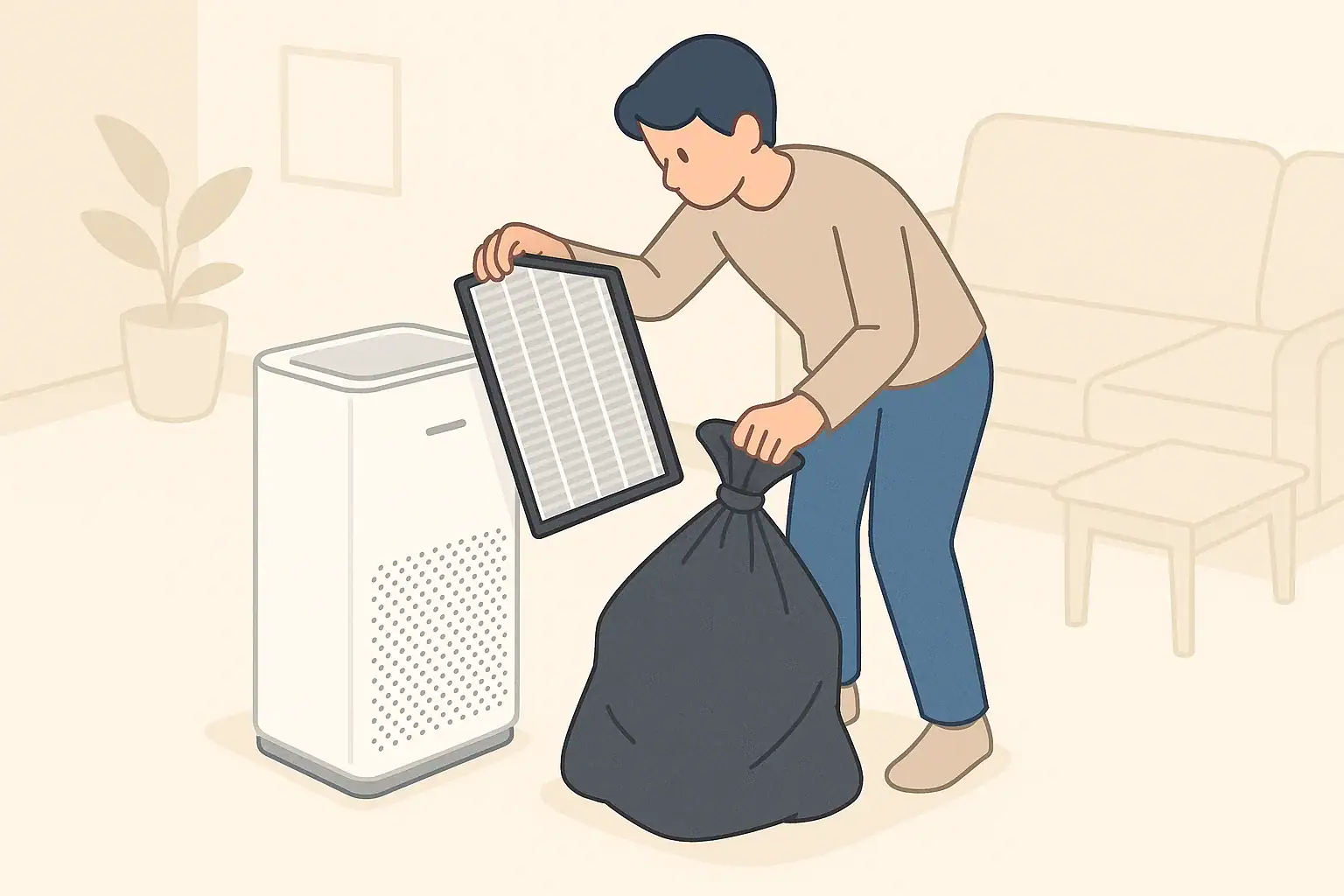
To dispose of used air filters safely, turn off the unit, carefully remove the filter, place it in a sealed bag, and put it in regular household trash unless your local rules say otherwise.
Used filters from home air purifiers, HVAC systems, and small appliances usually go in the trash, but how you handle them matters for dust control, safety, and basic hygiene. Some parts, like plastic frames, may be recyclable if they can be separated and cleaned, while others should never be opened, washed, or burned.
- Turn off the purifier or HVAC system before removing any filter.
- Handle used filters gently and bag them (plastic trash bag tied shut) to limit dust release.
- Dispose of most used home filters in regular household trash unless local rules say otherwise.
- Do not burn filters, cut them open, or shake them out indoors to “clean” them.
- Check local waste or recycling guidelines if you have metal or plastic housings that can be separated.
- Wash reusable pre-filters only if the manufacturer clearly states they are washable.
Why Safe Filter Disposal Matters
Air filters do their job by trapping particles, dust, and sometimes gases or odors. When you remove a used filter, that captured material can be released again if the filter is handled roughly or disposed of carelessly. Safe disposal is mostly about minimizing that release and respecting basic waste rules in your area.
In a typical home, used filters from portable air purifiers and HVAC systems are not classified as hazardous waste. They mainly contain common household dust, pollen, pet dander, and smoke particles. However, they can be messy, and in some situations (heavy smoke events, renovation dust, or mold issues), you want to be especially careful to avoid stirring up what they have collected.
Good disposal habits also support the rest of your indoor air quality strategy. Replacing filters on time and discarding them properly keeps your equipment working as intended and prevents clogged or damaged filters from becoming a source of dust blowback.
Key Filter Types and What That Means for Disposal
How you dispose of a filter depends partly on what type it is and whether any part of it is reusable. Most residential filters fall into a few main categories.
Fiberglass and Basic Panel Filters
These are thin, inexpensive filters often used in central HVAC systems. They usually have a cardboard frame with a fibrous mat inside.
- Disposal: Typically go directly in household trash.
- Recycling: Not practical to separate; dispose as one piece.
- Handling: Handle gently; the fibers can shed if bent or crushed.
Pleated HEPA-Style and High-Efficiency Filters
Many portable air purifiers and upgraded HVAC filters use pleated media, sometimes marketed as HEPA or HEPA-style. True HEPA and high-efficiency media are usually made from dense fiber mats.
- Disposal: Bag and place in household trash; the media is not designed to be opened or washed.
- Recycling: Frames may be cardboard or plastic; in most homes, they are discarded as a whole because separating cleanly is difficult.
- Handling: Avoid crushing or shaking, especially if they have captured fine smoke or dust.
Activated Carbon and Odor/VOC Filters
These filters contain carbon granules or impregnated media to help reduce odors and some gases (VOCs). They may be standalone filters or combined with particle filters.
- Disposal: Typically bag and place in household trash once saturated.
- Recycling: Home-scale carbon filters are usually not recycled; reactivation requires specialized facilities.
- Handling: Do not cut them open or pour out the carbon; that can create dust and mess.
Washable Pre-Filters
Many air purifiers include a coarse pre-filter to catch hair, lint, and larger dust. Some of these are washable or vacuumable.
- Disposal: Only discard them once they are damaged or no longer effective.
- Reuse: Rinse or vacuum according to manufacturer instructions, and fully dry before re-installing.
- Handling: Clean outdoors or over a trash can if possible to avoid releasing dust indoors.
Specialty Filters (UV, Ionizer, or Combination Units)
Some systems include UV lamps, ionizing elements, or catalytic surfaces along with filters. The filter part is usually removed and discarded like other filters, while lamps or electronic modules may have separate disposal rules.
- Disposal: Follow the manual; UV bulbs and electronics may need e-waste or lamp recycling.
- Handling: Avoid touching UV bulbs with bare hands and never break them intentionally.
| Filter type | Common use | Reusable part? | Typical end-of-life handling |
|---|---|---|---|
| Fiberglass panel | Basic HVAC intake | No | Bag and put in regular trash |
| Pleated HEPA-style | Portable purifiers | No | Bag, avoid crushing, trash |
| High-MERV HVAC | Upgraded furnace/AC | No | Bag and trash; follow local rules |
| Activated carbon | Odor/VOC reduction | No (home scale) | Keep sealed, place in trash |
| Washable pre-filter | Hair/lint capture | Yes | Clean and reuse; trash when damaged |
| UV or electronic module | Specialty units | Sometimes | Refer to e-waste or lamp recycling |
Example values for illustration.
Common Mistakes to Avoid When Disposing of Filters
Most disposal errors are simple to avoid once you know what to look out for. The main risks are making a big dusty mess, damaging your equipment, or ignoring local waste rules.
Shaking or Beating Filters to “Extend” Their Life
Shaking, banging, or blowing out disposable filters to make them last longer can release captured dust back into the air and may damage the filter media. Once a disposable filter is loaded, its resistance to airflow increases and its performance declines. At that point, it should be replaced, not cleaned.
Cutting Filters Open or Trying to Separate Layers Indoors
Cutting open used filters to “recycle the parts” seems appealing but often causes more problems than it solves. The trapped dust, soot, and fibers can spread, especially if you work indoors. In addition, many recycling programs do not accept mixed or contaminated materials from filters.
Burning Used Filters
Burning used air filters in fireplaces, fire pits, or outdoor burners is not recommended. Filters may contain synthetic fibers, adhesives, and collected particles that can release unwanted fumes or smoke when burned. Household trash guidelines typically advise against burning this type of material.
Ignoring Local Regulations
While most residential filters can go in regular trash, local rules vary. For example, some municipalities may have specific guidance for construction dust, wildfire cleanup, or filters used in home workshops. Checking your area’s solid waste or sanitation website once can clarify how they want you to handle these items.
Step-by-Step: How to Dispose of Used Filters Safely
A simple, consistent routine helps you swap filters without stirring up dust or damaging your equipment. The basic idea is to turn things off, remove the filter gently, contain it, and then clean the surrounding area if needed.
1. Prepare the Area
- Turn off the air purifier or HVAC system before opening any panel or grille.
- Have a trash bag open and ready nearby so you can place the filter directly into it.
- If possible, crack a window or ensure some ventilation while you work, especially if the filter is very dusty.
2. Remove the Filter Carefully
- Open the access panel or cover slowly to avoid jarring the filter.
- Hold the filter frame, not the media, and pull it out gently.
- Keep the filter as upright as possible; avoid twisting or bending.
3. Bag and Seal the Filter
- Place the used filter directly into the trash bag without setting it down elsewhere.
- If the filter is very dusty, you may double-bag it for extra containment.
- Tie or seal the bag closed before taking it to your main trash bin.
4. Inspect and Wipe the Housing
- Use a slightly damp cloth or a vacuum with a brush attachment to clean dust from the filter slot or housing.
- Avoid using wet cleaners directly on electrical components.
- Let any damp surfaces dry before installing the new filter.
5. Install the New or Cleaned Filter
- Check airflow arrows or markings so the filter faces the correct direction.
- Ensure the filter sits flat and the access panel closes securely; gaps can cause air bypass.
- Turn the system back on and confirm normal airflow and noise.
Real-World Scenarios and Disposal Tips
Different home situations can change how often you are dealing with filters and how careful you may want to be during disposal. Here are a few examples.
After a Dusty Home Project
If you have done sanding, drywall work, or other dusty projects, your filters may load up quickly. In that case:
- Expect to replace filters sooner than usual (sometimes right after the project).
- Bag them promptly; renovation dust can be fine and easily stirred up.
- Consider wearing a basic dust mask while changing especially dirty filters.
Following a Wildfire Smoke Event
Wildfire smoke can clog HEPA and HVAC filters faster than normal usage. Smoke particles are very fine and can darken filter media.
- Replace heavily darkened or smoky-smelling filters once outdoor air improves.
- Handle gently and bag them to keep fine soot from becoming airborne.
- Ventilate the area while changing filters if outdoor conditions permit.
In a Home With Pets
Pet hair and dander can accumulate on pre-filters and main filters.
- Clean washable pre-filters regularly to extend the life of the main filter.
- Bag used filters promptly to avoid hair and dander spreading when you carry them through the house.
- Consider changing filters a bit more often than the default schedule if you see visible buildup.
When Mold or Moisture Is Involved
If a filter has been exposed to visible mold, water damage, or persistent dampness, it is best to treat it with extra caution.
- Avoid touching the media directly; hold the frame only.
- Place the filter in a sealed bag and remove it from living spaces promptly.
- Address the moisture source (humidity, leaks, condensation) so the new filter does not face the same issue.
Safety, Standards, and Local Guidelines
There are no universal national rules that apply to every household filter, so local guidance is important. However, a few general principles can help you stay aligned with common safety and waste practices.
Household vs. Hazardous Waste
Standard home air filters used for dust, pollen, and smoke are generally treated as regular household waste. They are not usually considered hazardous unless they have been used in a situation involving regulated contaminants (which is uncommon in typical homes).
If a filter has been used in a home workshop or for specific chemicals, check your local hazardous waste guidelines or contact your waste authority for clarity.
Electronics, UV Lamps, and Ionizer Components
Electronic air cleaners, UV-C units, and some ionizers may contain components that should be handled differently from simple fiber filters.
- UV lamps may fall under the same rules as fluorescent or specialty bulbs and need drop-off at designated sites.
- Electronic modules may belong in e-waste recycling if your area offers it.
- Paper or fiber filters that run alongside these electronics usually still go in household trash.
Ozone-Generating Devices
Some older or specialty devices may generate ozone intentionally. While this article does not cover modifying or operating such devices, any filters or parts you remove should be handled like other used filters: bag, seal, and dispose of according to local rules. Avoid trying to alter or repurpose components in ways not described by the manufacturer.
Filter Maintenance, Replacement Timing, and Cost Planning
Safe disposal fits into the broader picture of filter maintenance. Knowing when filters are due for replacement helps you plan costs and keep the process simple.
Typical Replacement Intervals
Manufacturers usually provide a recommended range, but actual life depends on usage, room size, outdoor air quality, and how dusty or busy your home is. Many home users follow these general patterns:
- HVAC filters: roughly every 1–3 months in active use, with shorter intervals in dusty conditions or heavy use.
- Portable HEPA filters: roughly every 6–12 months of regular use, sometimes longer in light-use settings.
- Carbon filters: often every 3–6 months, or sooner if odors are persistent.
- Washable pre-filters: rinsed or vacuumed every 2–4 weeks, depending on dust and pet hair.
Signs a Filter Should Be Replaced Sooner
- Visible thick dust, lint, or discoloration across most of the surface.
- Noticeably reduced airflow from vents or your purifier, despite normal fan settings.
- Persistent odors even after running the purifier or HVAC for a while.
- Noise changes, such as the fan working harder than usual.
Budgeting for Filters and Disposal Supplies
Filters are an ongoing cost of owning air purifiers and HVAC systems. Including trash bags, occasional masks or gloves, and proper storage space for spare filters in your planning can make disposal feel routine rather than disruptive.
- Keep a small stock of replacement filters so you are not tempted to overextend dirty ones.
- Store them in a dry area away from direct sunlight and strong odors.
- Mark replacement dates on a calendar or set reminders based on your typical schedule.
| Filter type | Typical interval range | What affects the interval | Reminder idea |
|---|---|---|---|
| Basic HVAC panel | About 1–3 months | Seasonal use, dust load, pets | Check at the start of each month |
| High-MERV HVAC | About 1–2 months | Continuous fan settings, renovations | Inspect every 4–6 weeks |
| Portable HEPA | About 6–12 months | Daily runtime hours, room size | Note the install date on the filter |
| Carbon odor filter | About 3–6 months | Cooking, smoking, strong odors | Replace when odors persist |
| Washable pre-filter | Clean every 2–4 weeks | Pet hair, visible dust | Align with regular house cleaning |
| UV lamp module | About 9–12 months | Hours used, on/off cycling | Follow device hour counter or label |
Example values for illustration.
Related guides: Best Air Purifiers for Allergies: What to Look For (CADR, HEPA, Carbon) • How Often Should You Replace a HEPA Filter? • Air Purifier Maintenance Checklist: Filters, Sensors, and Cleaning
Key Takeaways for Safe Filter Disposal
Safe disposal of used air filters is straightforward when you focus on containment and basic cleanliness. Turn off the system first, remove filters gently, and place them directly into a sealed trash bag. Most residential filters go in regular household trash unless your local waste authority advises otherwise.
Avoid shaking, cutting, or burning filters, and do not attempt to wash media that is not designed to be washable. Clean the filter housing lightly before installing a fresh filter, and keep track of replacement intervals so filters are changed before they become overloaded. With these simple habits, filter disposal becomes a routine, low-stress part of maintaining indoor air quality at home.
Frequently asked questions
How should I dispose of a HEPA or pleated filter heavily loaded with wildfire smoke?
Place the used HEPA or pleated filter directly into a trash bag without shaking or compressing it, then seal the bag to contain fine soot. Wear a basic mask and handle the filter gently, and follow any local guidance if wildfire cleanup rules differ in your area.
Can I recycle the plastic or metal parts of an air filter?
Some frames and metal components may be recyclable if they can be separated cleanly and are accepted by your local recycling program. If separating the parts would create dust or require cutting the filter media, it’s usually safer to bag the filter and dispose of it as household trash and check recycling rules for intact components.
What should I do if a filter has visible mold or has been water-damaged?
If a filter is moldy or water-damaged, avoid touching the media and place it in a sealed bag to remove it from living spaces promptly. Address the moisture source before installing a replacement, and consult local waste guidance if you suspect significant contamination.
How do I clean and reuse a washable pre-filter safely?
Follow the manufacturer’s instructions: remove the pre-filter, vacuum or rinse it outdoors or over a trash can to limit indoor dust, and allow it to dry completely before reinstalling. Do not use harsh chemicals or high heat unless the instructions explicitly permit those methods.
Do UV bulbs and electronic purifier components need special disposal?
Yes; UV bulbs and electronic modules often fall under lamp or e-waste recycling rules and should be taken to designated drop-off sites when available. Do not intentionally break UV bulbs, and dispose of the filter media separately by bagging it according to normal household waste guidance unless local rules state otherwise.
Recommended next:
- Air Purifier Maintenance Checklist: Filters, Sensors, and Cleaning
- When to Replace Carbon Filters (And How to Tell They’re Spent)
- How to Clean and Calibrate an Air Quality Monitor
- Air Purifier Maintenance Checklist: Monthly and Seasonal Tasks
- Filter Replacement Schedules: HEPA, Carbon, and Pre-Filters
- Cleaning Air Purifier Sensors and Intakes: What Not to Do
- More in Maintenance & Replacement →
- Clear sizing logic (room size → CADR/ACH)
- HEPA vs carbon explained for real use-cases
- Humidity + ventilation basics to reduce mold risk