
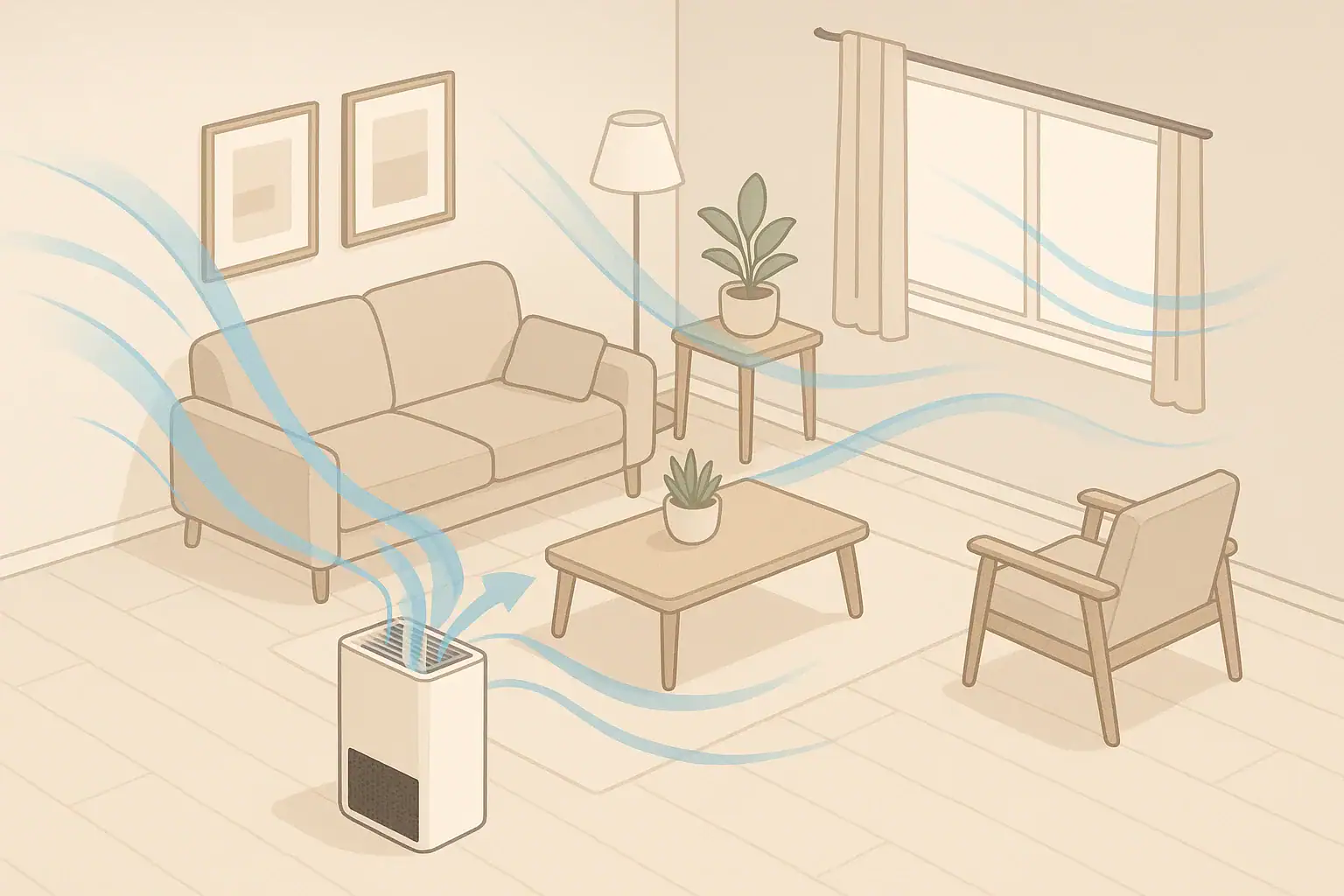
Formaldehyde in homes comes mainly from building materials, furniture, household products, and combustion sources, and you reduce it by controlling sources, improving ventilation, managing humidity, and using the right type of air cleaning. Indoor formaldehyde is a common volatile organic compound (VOC) that can irritate the eyes and airways and may contribute to long-term health risks, especially for sensitive people.
If your home is newer, recently renovated, tightly sealed, or full of pressed-wood furniture, you are more likely to have elevated formaldehyde levels. You cannot see it, but you can often connect it to patterns: irritation that feels worse indoors, strong chemical odors in certain rooms, or symptoms that flare when the home is warm and humid.
This guide explains where formaldehyde comes from, what typical exposure looks like in real homes, and how to make practical, step-by-step improvements without rebuilding your house. You will see concrete examples, comparison tables, and simple checklists you can use when choosing materials, operating ventilation, or shopping for air-cleaning equipment.
What Formaldehyde Is and Why It Matters Indoors
Formaldehyde is a colorless gas with a sharp, chemical odor. Indoors, it is one of the most important VOCs because it is released by many common materials and can build up in closed spaces. Even at relatively low concentrations, it can irritate the eyes, nose, and throat and trigger symptoms in people with asthma or other breathing problems.
Manufacturers use formaldehyde-based resins and binders in products such as composite wood panels, some textiles, and certain coatings and adhesives. These materials slowly release small amounts of gas into the air, a process called off-gassing. Off-gassing is strongest when products are new and when the air is warm and humid.
Formaldehyde matters in home air quality for several reasons:
- It is widespread. Most homes contain at least a few formaldehyde-emitting materials or products.
- It accumulates indoors. Tighter, energy-efficient construction can trap gases if ventilation is limited.
- It affects sensitive groups. Children, older adults, and people with asthma or chronic respiratory conditions can react at lower concentrations.
- It has long-term health implications. Long-term exposure to elevated levels is associated with chronic irritation and increased cancer risk in some exposure scenarios.
Understanding what formaldehyde is and how it behaves indoors is the first step toward deciding which actions make the biggest difference in your specific home.
Key Sources, Exposure Patterns, and How Formaldehyde Behaves
Formaldehyde in homes rarely comes from a single source. Instead, many small sources combine to create the total indoor level. Knowing where it comes from and how it behaves helps you prioritize changes that matter most.
Major Indoor Sources of Formaldehyde
- Building materials and finishes
- Composite wood products such as particleboard, MDF, and some plywood
- Cabinets, shelving, and built-ins made from engineered panels
- Engineered wood or laminate flooring and some underlayments
- Certain insulation products, especially older ones with formaldehyde-based binders
- Wall panels, trim, and decorative elements using strong adhesives
- Furnishings and textiles
- Pressed-wood furniture, desks, and bookcases
- Upholstered furniture and mattresses with certain treatments
- Wrinkle-resistant or “easy-care” fabrics, curtains, and bedding
- Carpets and carpet pads with specific backings or adhesives
- Household and personal products
- Some cleaning agents and disinfectants
- Glues, craft adhesives, paints, and varnishes
- Certain cosmetics and nail products that release small amounts of formaldehyde
- Combustion sources
- Cigarette, cigar, and other tobacco smoke
- Unvented or poorly vented gas stoves, ovens, and space heaters
- Fireplaces and wood stoves, especially when burning inefficiently
- Candles and incense used in small, poorly ventilated rooms
How Formaldehyde Levels Typically Vary
Formaldehyde levels are influenced by product age, ventilation, temperature, and humidity. Newer materials and higher heat and moisture generally mean more off-gassing.
| Home situation | Relative formaldehyde risk | What usually drives levels |
|---|---|---|
| New construction or full remodel (0–12 months) | Higher | Large areas of new composite wood, flooring, and finishes off-gassing at once |
| Older home with limited recent changes | Lower to moderate | Residual emissions from older materials plus everyday product use |
| Tightly sealed, energy-efficient home | Moderate to higher | Reduced air exchange, especially if windows rarely open |
| Home with heavy indoor smoking or frequent unvented gas use | Higher during use | Combustion byproducts and poor exhaust ventilation |
| Humid, warm climate with limited dehumidification | Moderate to higher | Increased off-gassing from materials at higher temperature and humidity |
Short-Term vs. Long-Term Health Effects
Health effects depend on both concentration and exposure time:
- Short-term (acute) effects
- Burning or watery eyes
- Runny nose, nasal congestion, or scratchy throat
- Coughing, chest tightness, or headaches
- Skin redness or irritation after contact with certain products
- Long-term (chronic) concerns
- Persistent eye and airway irritation
- Worsening of asthma or other respiratory diseases
- Increased sensitivity to other indoor pollutants over time
- Elevated cancer risk at sufficiently high and prolonged exposures
People who are most at risk include infants and young children, older adults, those with asthma or chronic lung disease, and anyone who spends many hours per day inside a single home, such as remote workers or people with limited mobility.
Real-World Home Scenarios and Practical Reduction Strategies
Turning general guidance into room-by-room action makes it easier to lower formaldehyde in a realistic way. The goal is not perfection but steady reduction of avoidable sources and better control of the indoor environment.
Scenario 1: Newly Renovated or Newly Built Home
Typical situation: New cabinets, flooring, trim, and furniture were installed within the last year. There is a noticeable “new house” or “new furniture” smell.
- Ventilate aggressively for the first several months by opening windows when weather and outdoor air quality allow.
- Run kitchen and bathroom exhaust fans longer than usual, even outside of cooking and showering.
- Use your central HVAC fan setting to circulate air through filters more often, if available.
- Consider a room air cleaner with gas-phase media in bedrooms and main living areas where people spend the most time.
- Keep indoor temperatures and humidity at moderate levels to slow off-gassing.
Scenario 2: Older Home with New Bedroom Furniture
Typical situation: A new pressed-wood bed frame, dresser, and nightstands were installed within a few weeks of each other. One person wakes up with irritated eyes and stuffy nose that improve later in the day.
- Open windows in that bedroom daily for short airing periods, especially in the first few months.
- Run a portable air cleaner with gas-phase media on a higher setting for several hours before bedtime.
- Pull furniture slightly away from walls to improve airflow around surfaces.
- Wash new bedding and curtains to remove surface residues.
- If symptoms remain strong, consider moving the most odorous piece (for example, a nightstand) to a better-ventilated area temporarily.
Scenario 3: Home with Gas Cooking and Limited Ventilation
Typical situation: The kitchen has a gas range and oven, but the range hood is weak or recirculating only. The home is often closed up due to weather or noise.
- Always use the range hood on its highest effective setting while cooking.
- Crack a nearby window during high-heat cooking to improve dilution.
- Avoid using the oven to heat the home for long periods.
- Schedule basic appliance maintenance to ensure proper combustion.
- Place an air cleaner with gas-phase media near the kitchen or adjacent living area if cooking is frequent.
Scenario 4: Humid Basement or Lower Level
Typical situation: The basement has older paneling, stored paints and adhesives, and noticeable musty or chemical odors, especially in summer.
- Use a dehumidifier to keep relative humidity in a moderate range.
- Seal and store paints, adhesives, and solvents in tightly closed containers; move them to a detached or better-ventilated area if possible.
- Improve air movement with fans so that stagnant corners do not trap pollutants.
- Ventilate during hobbies like woodworking, painting, or crafting that use strong products.
- If the basement is directly connected to living spaces, consider air sealing gaps between levels to limit pollutant transfer.
Room-by-Room Quick Wins
- Living room and bedrooms
- Limit the number of new pressed-wood items brought in at the same time.
- Place air cleaners with gas-phase media where people sit or sleep.
- Open windows periodically when outdoor conditions allow.
- Kitchen
- Use and maintain exhaust fans during every cooking session.
- Store strong cleaners in sealed containers away from living areas.
- Bathrooms and laundry
- Run bath fans during and after showers to control humidity.
- Ventilate when using strong cleaners or products with noticeable odors.
- Basement, garage, and storage
- Keep VOC-heavy products contained and away from sleeping areas.
- Use dehumidification where dampness is persistent.
Common Mistakes and Troubleshooting Signs
Even when people are trying to improve indoor air quality, a few common missteps can limit progress. Recognizing these patterns helps you troubleshoot whether formaldehyde is still a problem in your home.
Common Mistakes That Keep Formaldehyde Levels Higher
| Mistake | What it looks like in real life | Better approach |
|---|---|---|
| Relying on particle-only filters | Using a HEPA air cleaner and assuming it removes gases like formaldehyde | Choose units that include gas-phase media in addition to particle filtration |
| Bringing in many new items at once | Filling a room with new cabinets, furniture, and flooring in a short time | Phase in purchases when possible and ventilate aggressively after large projects |
| Ignoring humidity and temperature | Allowing the home to stay hot and humid for long periods | Use air conditioning or dehumidifiers to keep conditions moderate |
| Running exhaust fans for only a minute or two | Turning off kitchen or bath fans as soon as cooking or showering ends | Run fans for at least 15–20 minutes after activities that generate pollutants |
| Storing VOC-heavy products in living spaces | Keeping paints, solvents, and strong adhesives in closets or under beds | Move them to detached or better-ventilated areas and keep containers sealed |
Clues That Formaldehyde May Still Be an Issue
- Symptom patterns
- Eye, nose, or throat irritation that is clearly worse at home and improves when you are away for several hours.
- Symptoms that are strongest in specific rooms, such as a newly furnished bedroom or finished basement.
- Asthma or breathing symptoms that flare in warm, humid conditions indoors.
- Odor patterns
- Persistent sharp or antiseptic-like odors near new cabinets, flooring, or furniture.
- Smells that intensify when the home is closed up for several days.
- Home history
- Recent renovation with large amounts of new composite wood, flooring, or paneling.
- Frequent use of unvented gas heaters or indoor smoking.
If these clues match your situation, it may be worth prioritizing ventilation, source reduction, and, if needed, targeted testing to better understand actual concentrations.
Safety Basics for Managing Formaldehyde in Homes
While most homes do not reach the very high concentrations seen in some industrial settings, it is sensible to treat formaldehyde as a pollutant to minimize, especially for sensitive occupants. A few basic safety principles can guide decisions about materials, activities, and equipment.
Reduce Exposure for Sensitive People
- Locate bedrooms and main living spaces away from garages, storage rooms, or hobby areas that use strong products when possible.
- Ventilate thoroughly after painting, floor refinishing, or installation of new cabinetry, and avoid having children or people with asthma in those areas until odors clearly diminish.
- Do not smoke indoors, and avoid heavy use of candles or incense in small, enclosed rooms.
- If someone in the home has asthma or chronic lung disease, consider using gas-phase air cleaning in that person’s bedroom and main living area.
Use Combustion Appliances Safely
- Have gas stoves, ovens, and space heaters inspected and serviced as recommended to ensure proper combustion.
- Always use kitchen exhaust fans while cooking on gas burners, and run them long enough to clear the air.
- Make sure fireplaces and wood stoves are vented correctly and that chimneys or flues are maintained.
- Never use outdoor grills, generators, or gasoline-powered tools inside the home or attached garage.
Handle VOC-Heavy Products with Care
- Read labels and follow ventilation instructions when using paints, adhesives, and coatings.
- Limit the amount of strong cleaners or solvents used at one time; choose milder options when they are adequate for the task.
- Keep containers tightly closed when not in use, and avoid long-term storage in closets that open directly into bedrooms or living rooms.
Long-Term Management, Testing, and Ongoing Maintenance
Managing formaldehyde is not a one-time project. Materials continue to age, new products enter the home, and ventilation patterns change with seasons. A long-term approach keeps levels from creeping back up.
When and How to Test
- Short-term test kits can give a snapshot over several hours or days and are useful after major renovations or when symptoms suddenly appear.
- Longer-term samplers that stay in place for a week or more provide a better picture of typical exposure in frequently used rooms.
- Professional assessments can combine targeted measurements with a walkthrough to identify likely sources and ventilation gaps.
- General VOC monitors are helpful for tracking overall VOC trends but usually do not report formaldehyde specifically; they are better for spotting changes than for exact numbers.
Maintenance for HVAC and Air Cleaning Equipment
- Replace central HVAC filters on a regular schedule so they continue to capture particles that can interact with gases and impact overall air quality.
- For air cleaners with gas-phase media, follow the recommended replacement interval; saturated media becomes less effective over time.
- Keep vents, returns, and air cleaner intakes free of obstructions so that airflow is not restricted.
- Check that exhaust fans actually move air to the outdoors rather than simply recirculating it, and clean fan grilles as needed.
Material and Product Decisions Over Time
- When replacing flooring, cabinets, or furniture, favor simpler designs and materials with fewer glued layers.
- Spread out major purchases so that not everything is new at once, especially in small or poorly ventilated rooms.
- Wash new textiles such as bedding, curtains, and washable slipcovers before use, especially if they have a strong chemical odor.
- Revisit storage areas annually to remove or relocate old paints, solvents, and adhesives that are no longer needed.
Practical Takeaways and Specs to Look For
Reducing formaldehyde in homes is about stacking small, practical steps rather than searching for a single perfect fix. Focus first on major sources, then on ventilation and environmental control, and finally on targeted filtration where it offers clear benefits.
In most homes, the biggest improvements come from limiting high-emitting materials, using exhaust ventilation consistently, keeping humidity moderate, and choosing air-cleaning solutions that are actually designed to remove gases rather than just particles.
Quick Takeaways You Can Act on This Month
- Identify rooms with the strongest chemical odors or symptom patterns and prioritize them for ventilation and air cleaning.
- Use kitchen and bathroom exhaust fans longer and more consistently, especially during and after cooking or cleaning.
- Keep indoor humidity in a moderate range with dehumidifiers or air conditioning as needed.
- Store paints, adhesives, and strong cleaners outside main living areas whenever possible.
- When buying new furniture or doing renovations, phase in changes and allow new items to air out before heavy use.
Specs to Look For When Choosing Air-Cleaning and Ventilation Solutions
When you are ready to invest in equipment or upgrades that can help with formaldehyde and other VOCs, use this checklist to compare options.
- For room air cleaners
- Includes a dedicated gas-phase filtration stage (such as activated carbon or other sorbent media), not just a particle filter.
- Provides clear information on the amount of gas-phase media and recommended replacement intervals.
- Has a clean air delivery rate (CADR) or airflow rating appropriate for the size of the room.
- Offers multiple fan speeds so you can run it quietly at night and higher during the day.
- For central HVAC upgrades
- Filter options that combine adequate particle filtration with optional gas-phase media modules.
- Fan settings that allow continuous or extended circulation when extra filtration is desired.
- Professional evaluation of ductwork and return placement to ensure even air distribution.
- For ventilation improvements
- Kitchen and bathroom fans rated for sufficient airflow for the size of the room.
- Fans that exhaust directly outdoors rather than recirculating air.
- In tight homes, consideration of balanced mechanical ventilation with heat or energy recovery to maintain comfort and manage energy use.
By combining thoughtful material choices, consistent ventilation, humidity control, and appropriately specified air-cleaning equipment, you can steadily reduce formaldehyde in your home and create a more comfortable, healthier indoor environment over time.
Frequently asked questions
Which air cleaner features matter most for reducing formaldehyde in a home?
Look for a dedicated gas-phase filtration stage (for example, activated carbon or another sorbent) with enough media to provide meaningful contact time, clear replacement intervals, and an airflow rating appropriate for the room size. Particle-only technologies such as HEPA do not remove gases effectively, so gas-phase media and sufficient airflow are key.
Is using a HEPA air purifier enough to remove formaldehyde?
No. HEPA filters are excellent at removing particles but do not capture gaseous pollutants like formaldehyde. To reduce formaldehyde you need air cleaning that includes gas-phase sorbents; combining ventilation and humidity control also helps.
What precautions should I take to protect children and people with asthma from formaldehyde?
Prioritize source reduction (avoid or limit high-emitting materials), maintain good ventilation especially after renovations, and control temperature and humidity to reduce off-gassing. Consider placing gas-phase air cleaning in bedrooms or main living areas for sensitive occupants and avoid indoor smoking or unvented combustion appliances.
How can I tell if formaldehyde may be a problem in my home without specialized testing?
Watch for symptom patterns (eye, nose, or throat irritation that improves away from home), persistent sharp chemical odors near new furniture or finishes, and recent renovations involving composite wood. These clues suggest testing or targeted interventions may be warranted, since symptoms and odors are only indirect indicators.
How long does off-gassing from new composite wood furniture usually last?
Off-gassing is typically strongest in the first weeks to months after installation, with emissions declining over time, but low-level release can continue for a year or more depending on the material, temperature, and humidity. Keeping items well-ventilated and maintaining moderate indoor humidity speeds up the reduction in emissions.
Will dehumidifiers, air conditioning, or HVAC filters reduce formaldehyde levels?
Controlling temperature and humidity with air conditioning or dehumidifiers reduces the rate of off-gassing from materials, which lowers indoor concentrations indirectly. Standard HVAC particle filters do not remove gases unless they include specific gas-phase media; for direct removal, use dedicated sorbent media or add room air cleaners with gas-phase stages along with good ventilation.
- Clear sizing logic (room size → CADR/ACH)
- HEPA vs carbon explained for real use-cases
- Humidity + ventilation basics to reduce mold risk