
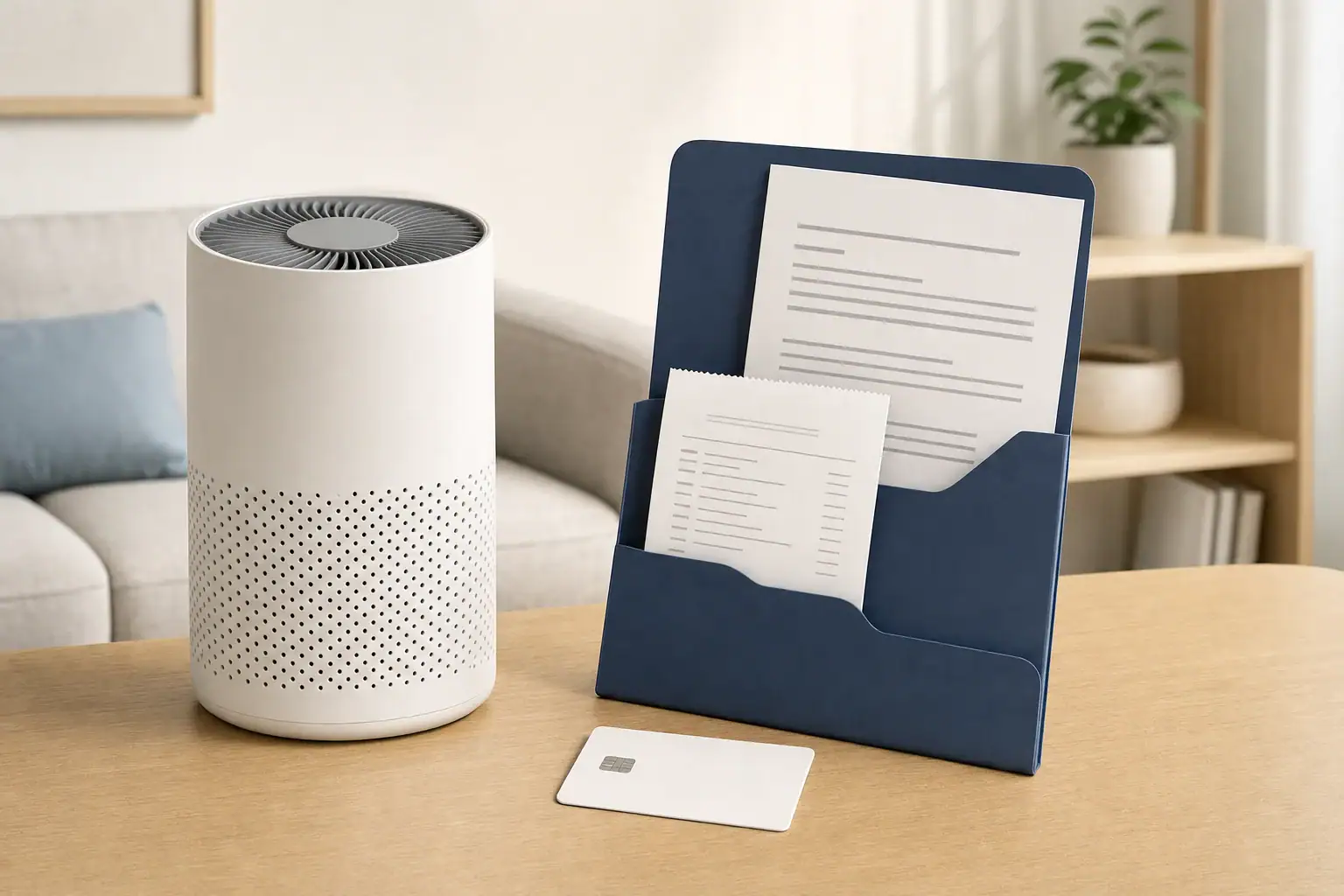
Are air purifiers HSA eligible under federal rules?
Sometimes—but the purchase is not automatically a qualified HSA expense. The federal starting point is the medical-expense definition in IRS Publication 502. It includes equipment needed for the diagnosis, cure, mitigation, treatment, or prevention of disease, but excludes expenses that are merely beneficial to general health.
The IRS publication does not specifically list or approve air purifiers. For that reason, the relevant question is whether, based on the buyer’s facts, the purifier is primarily for medical care of a disease or disability rather than general cleaner air, comfort, odors, or wellness.
A diagnosed condition and a clinician’s recommendation may help document medical purpose, but neither creates automatic eligibility. This is general information, not personal tax or medical advice.
HSA distributions versus FSA and HRA claims
An HSA is a tax-advantaged account owned by the individual. Under IRS Publication 969, a distribution is generally tax-free only when used for qualified medical expenses. The HSA owner is responsible for maintaining records that substantiate the distribution.
Flexible spending arrangements (FSAs) and health reimbursement arrangements (HRAs) are different. Their plan administrators commonly review claims under the plan’s procedures and may require documents before reimbursement. A decision by an FSA, HRA, retailer checkout service, or card processor does not itself determine federal HSA tax treatment.
| Issue | HSA | FSA or HRA |
|---|---|---|
| How payment may occur | The owner may pay from the account or reimburse themselves for a qualifying expense. | Reimbursement follows the employer plan’s claim process. |
| Who keeps substantiation? | The account owner must retain records supporting the distribution. | The administrator may require and retain claim documentation. |
| Does card acceptance settle eligibility? | No. It does not establish federal tax treatment. | No. The plan may still request substantiation or deny a claim. |
Conditions for a tax-free HSA distribution
Publication 969 says qualified medical expenses paid or reimbursed from an HSA must generally meet all of these conditions:
- The expense was incurred after the HSA was established.
- It qualifies as a medical expense under the applicable federal rules.
- It was not reimbursed by insurance or another source.
- It is not also claimed as an itemized medical-expense deduction.
The IRS says taxpayers must keep records showing that HSA distributions were used for qualified medical expenses, were not reimbursed from another source, and were not taken as an itemized deduction. Those records are generally retained by the taxpayer rather than attached to the tax return. See the current Instructions for Form 8889 for HSA reporting details.
A distribution that is not used for qualified medical expenses is generally taxable and may also be subject to an additional 20% tax, subject to statutory exceptions described in Publication 969.
When medical-purpose documentation can help
A clinician’s written recommendation or Letter of Medical Necessity (LMN) can help connect a purifier to medical care rather than general wellness. Federal publications do not identify an LMN as an automatic requirement for every HSA expense, and a letter is not an IRS preapproval.
Still, a detailed letter may make the file clearer. As a practical documentation approach, ask the clinician to address:
- The patient and the relevant diagnosed condition.
- The recommended purifier, or medically relevant filtration or performance specifications.
- How the device relates to treatment, mitigation, or prevention of that condition.
- The expected duration of use, if relevant to later replacement-filter purchases.
- The clinician’s name, credentials, signature, and date.
Before submitting an FSA or HRA claim, ask the plan administrator whether it requires a particular form, a letter dated before purchase, or a description of the exact product. HSA custodians can explain their reimbursement process, but their procedures do not replace the federal medical-expense test.
Documentation paths by purchase situation
| Purchase situation | Possible documentation path | Questions to ask | Records to retain |
|---|---|---|---|
| Purchased for general cleaner air, comfort, or odor control | The medical basis may be weak unless the facts establish a primary medical purpose. | Is there a documented medical-care basis for this expense? | Receipt and any written guidance received; consider tax advice before treating it as qualified. |
| Clinician recommends a purifier for a diagnosed condition | Obtain medical-purpose documentation and an itemized receipt. | Does the plan require an LMN? Must it identify a model or specifications? | Letter or recommendation, itemized receipt, payment record, and product information. |
| Retailer offers HSA/FSA checkout or an LMN service | Save every document produced during the transaction. | Who is making the decision, and must the documents be submitted or only retained? | Receipt, any LMN, transaction confirmation, and correspondence. |
| Purifier also has fan, heater, humidifier, or other functions | Document the medical relevance of the purification function; a full-cost claim should not be assumed. | Does the administrator require an allocation or price comparison for nonmedical features? | Specifications, price breakdown, receipt, medical documentation, and written response. |
| Replacement filter for a medically documented purifier | Link the filter to the continuing documented medical use of the device. | Does existing documentation cover replacement filters and for what period? | Original documentation, purifier receipt or model details, and each filter receipt. |
| Paid first with personal funds | Consider HSA reimbursement only after confirming the expense qualifies. | What reimbursement method and documents does the custodian accept? | Itemized receipt, proof of payment, medical documentation, and reimbursement confirmation. |
No air-purifier-specific IRS rule was identified in the cited federal publications for replacement filters or multifunction devices. These items need the same facts-and-purpose analysis; they should not be presumed eligible.
What to keep with the receipt
Keep an itemized receipt that connects the payment to the product claimed. A useful record identifies the merchant, purchase date, product description or model, and amount paid. If available, retain the purchaser or patient name as well.
Also save separate charges for accessories, subscriptions, warranties, shipping, or unrelated products. A credit-card statement can help establish payment, but it may not identify what was purchased. Keep it alongside, not instead of, the itemized receipt.
Hypothetical claim-preparation checklist
Example assumptions: An HSA has already been established; a patient has a diagnosed condition; a clinician recommends a specified purifier or filtration specifications for that condition; and no insurer, FSA, HRA, or other source will reimburse the purchase. This example is not a determination that any real purchase qualifies.
- Confirm timing. Verify that the expense was incurred after the HSA establishment date.
- Document the medical connection. Obtain a clinician’s recommendation that identifies the patient, condition, and medical reason for the purifier or specifications.
- Check documentation requirements. For an FSA or HRA, ask the administrator whether it requires an LMN or a particular form. For an HSA, retain records that support the distribution.
- Save itemized purchase records. Retain the receipt showing the merchant, date, model or description, and amount.
- Separate nonmedical additions. Do not assume optional accessories, service plans, subscriptions, or multifunction features are covered by the same rationale.
- Prevent duplicate reimbursement. Record that the same cost was not reimbursed by insurance, an FSA, HRA, or another payer.
- Build one file. Keep the medical documentation, receipt, payment evidence, product details, reimbursement confirmation, and relevant communications together with tax records.
Under the stated assumptions, this file documents why the purchaser believes the expense meets the medical-purpose test. It does not guarantee that the full cost qualifies or that the IRS would reach the same conclusion if the facts differ.
If a card is declined or the expense is questioned
A declined HSA card can reflect merchant or account transaction controls; it does not by itself decide whether the expense is qualified for federal tax purposes. Ask the custodian about its reimbursement procedure and preserve complete records if you pay using personal funds.
Likewise, successful card acceptance is not a final federal eligibility decision. If a plan administrator requests substantiation, provide the itemized receipt, required medical documentation, payment record, and an explanation of any multifunction or replacement items. For uncertain or high-cost claims, consult a qualified tax professional.
Bottom line
An air purifier can potentially support a tax-free HSA distribution when it is primarily for medical care and all other HSA rules are met. The strongest file ties a specific condition to the recommended device, includes an itemized receipt and payment record, and shows there was no duplicate reimbursement. Retailer labels and card approval may simplify a transaction, but they do not replace the federal medical-purpose standard.
Related guides: Best Air Purifiers for Allergies: What to Look For • Asthma Triggers Indoors: A Practical Checklist • Filter Replacement Schedules: HEPA, Carbon, and Pre-Filters
Frequently asked questions
Is a Letter of Medical Necessity required for an air purifier?
Federal IRS publications do not identify an LMN as an automatic requirement for every HSA expense. However, it can help document that a purifier’s primary purpose is medical rather than general wellness. An FSA or HRA administrator may set its own substantiation requirements.
Does HSA card approval mean an air purifier is eligible?
No. Card acceptance does not establish that a purchase is a qualified medical expense under federal tax rules. The HSA owner remains responsible for keeping records that support the distribution.
Can I reimburse myself from an HSA after paying with a credit card?
Potentially, if the expense was incurred after the HSA was established and otherwise qualifies. Retain the itemized receipt, payment evidence, medical-purpose documentation, and records showing that no other source reimbursed the same expense.
Recommended next:
- Best Air Purifiers for Allergies: What to Look For (CADR, HEPA, Carbon)
- How to Choose the Right Air Purifier for Your Room Size
- Air Purifier Placement: Where to Put It for Best Results
- Do Air Purifiers Help With Smoke and Odors?
- Air Purifier Noise: What dB Levels Are Quiet Enough for Sleep?
- Best Air Purifiers for Pets: Dander, Odors, and Filter Costs
- Clear sizing logic (room size → CADR/ACH)
- HEPA vs carbon explained for real use-cases
- Humidity + ventilation basics to reduce mold risk