
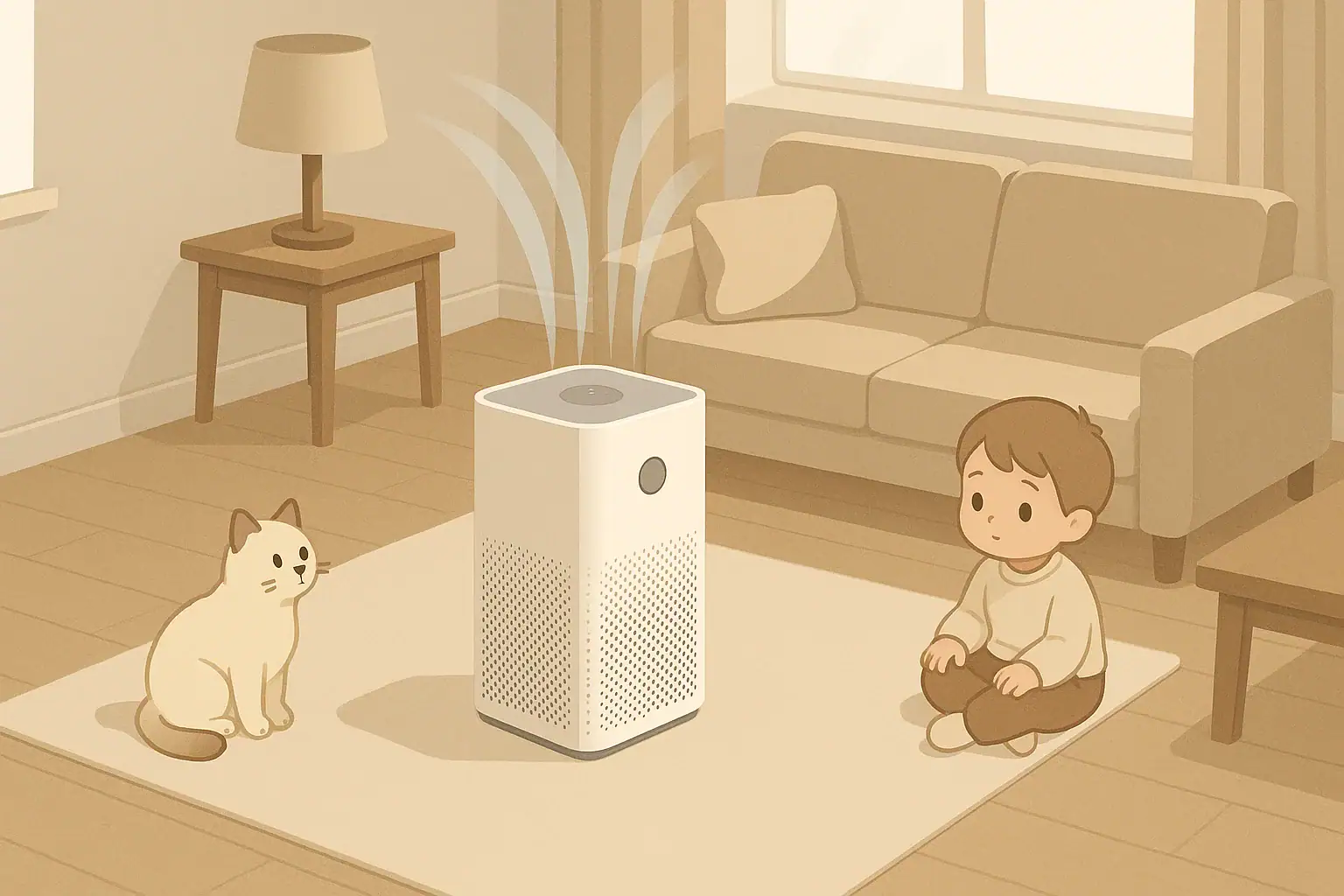
Air purifier safety for kids and pets mainly comes down to stable placement, secure cords, and choosing units that do not emit ozone or expose sharp or hot parts.
Most portable air purifiers are designed for everyday household use, but curious children and animals introduce extra considerations. Paying attention to where you put the purifier, how you route cords, and which features you use can reduce tipping risks, avoid tripping hazards, and keep fingers, paws, and noses away from moving parts.
- Place purifiers on the floor or sturdy surfaces, at least 3–5 ft from cribs, pet beds, and play zones.
- Use a dedicated, grounded outlet; keep cords tight to the wall and out of walkways or chewing range.
- Choose purifiers that are labeled ozone-free and avoid ozone generators around kids and pets.
- Aim for 12–18 in clearance around air inlets/outlets while still keeping devices out of high-traffic paths.
- Use child locks (if available) and avoid placing units where they can be easily pulled down by cords.
- Check filters and exterior surfaces monthly for dust buildup, damage, or loose panels.
Why air purifier safety matters around kids and pets
In homes with children and animals, air purifiers are just one more appliance in the environment. While their primary purpose is to improve indoor air quality, they also introduce moving air, electrical cords, and sometimes elevated placements that may attract attention.
Safety concerns fall into a few broad categories: physical hazards like tipping and tripping, electrical concerns from cords and outlets, and air-quality issues such as unintended ozone or strong air drafts near sensitive occupants. None of these are unique to air purifiers, but they should be considered when you plan where and how to use a unit in family spaces.
Understanding these basic risks helps you set up an air purifier so it does its job quietly in the background, without becoming a toy, step stool, or scratching post.
Key placement concepts: stability, airflow, and distance
Good placement balances safety with performance. Purifiers need clear airflow to clean the room effectively, but they should not be placed where a child can climb on them or a pet can easily knock them over.
Stability and tipping
- Low center of gravity: Floor placement is generally safer than putting a purifier on a tall, narrow table or shelf.
- Weight and base size: Heavier units with wider bases tend to be more stable than narrow, top-heavy designs.
- Away from edges: Keep any elevated purifier several inches back from furniture edges so it cannot be pulled down.
Airflow and clearance
- Intake and outlet space: Most purifiers benefit from about 12–18 inches of clearance on all sides for efficient air circulation.
- Far from obstacles: Avoid pushing the unit tightly into corners or behind thick curtains that can block airflow or get drawn into vents.
- Room coverage: Central or semi-central locations usually clean the space more evenly than tucked-away spots, but safety and cord routing may adjust that ideal.
Distance from kids and pets
- Sleeping areas: Placing purifiers 3–5 feet away from cribs, beds, and pet resting spots reduces direct drafts and access to controls.
- Play zones: Avoid placing units in the middle of play mats, toy storage areas, or pet feeding stations.
- Reachable controls: If toddlers can press buttons or open filter doors, consider relocating the unit or using built-in child locks.
Combining these concepts helps you select spots that feel natural for your furniture layout and still maintain both performance and safety.
Example values for illustration.
| Task | Why it matters | Notes |
|---|---|---|
| Keep 12–18 in clearance around unit | Allows air to flow freely into and out of purifier | Avoid curtains, walls, and large furniture blocking vents |
| Place 3–5 ft from beds and cribs | Reduces direct airflow on faces and curious contact | Still close enough to benefit local air quality |
| Use floor or low, sturdy surface | Reduces chance of tipping from climbing or bumps | Avoid tall, narrow stands or wobbly furniture |
| Route cords along walls | Prevents tripping and pulling unit down by cord | Use cord clips or covers where needed |
| Avoid high-traffic paths | Less likely to be bumped by running kids or pets | Corners with open airflow often work well |
| Keep away from water sources | Reduces electrical hazard from spills or splashes | Do not place directly next to aquariums or sinks |
Common safety mistakes with kids and pets
Many safety issues come from everyday habits rather than rare failures. Recognizing common mistakes can help you avoid them when setting up or moving a purifier.
Using cords as handles or toys
Children or pets may pull on cords out of curiosity. This can drag a purifier off a table or cause it to tip over. Loose, dangling cords can also become chew targets for some pets.
Avoid coiling excess cord on top of furniture or letting it hang within easy reach. When possible, plug in near the device and keep the cord short and flat against the wall.
Perching purifiers on unstable furniture
Putting a unit on a lightweight end table, top of a dresser, or on stacked books introduces tipping risk, especially if kids might bump or lean on the surface. Even if the purifier itself is stable, the furniture may not be.
Choose heavy, low furniture if you must elevate the purifier, and position it far from the edge.
Blocking vents with toys, blankets, or pet beds
Items can migrate over time. A blanket may slip down in front of an intake or a pet bed may inch closer to the purifier. This can reduce performance and, in some cases, cause the device to run hotter than intended.
Check regularly that intakes and outlets remain clear and that nothing soft is resting directly against the unit.
Ignoring child locks and control locks
If a purifier includes a control lock feature, not using it can lead to frequent setting changes by curious hands. Units might be turned off, set to high speeds during naps, or have safety timers disabled.
Using available lock functions can keep your chosen settings consistent and reduce surprises.
Practical guidance: room-by-room safety placement
Thinking about where children and pets spend time in each room helps you place air purifiers in a way that naturally reduces risk.
Nurseries and kids’ bedrooms
- Place the purifier on the floor or a low, sturdy surface several feet from the crib or bed.
- Orient the outlet so that airflow is not blowing directly onto a baby’s face or into a bassinet.
- Use any available dim or night mode to reduce light and noise at night.
- Keep the power cord behind furniture when possible, away from small hands and feet.
Family living rooms
- Position the unit along a wall or near a corner that still has open airflow, not in the main walking or running path.
- Keep 3–5 feet of distance from play mats, low bookshelves with toys, and common pet resting zones.
- Use cord clips to keep cables flat against baseboards, especially where children run or where there are mobility aids.
- Consider how furniture might shift over time and verify vents stay unblocked.
Pet zones
- Avoid placing the purifier directly next to litter boxes, food bowls, or scratching posts where pets frequently dig or jump.
- For cats that like to climb, choose locations they cannot easily reach or use as launch pads.
- For dogs, especially large or energetic ones, keep the unit out of chasing or wrestling zones.
- Observe your pet’s behavior for a few days after placement and adjust if they seem overly interested in the device.
Cord management and electrical safety
Cords are a central part of air purifier safety, particularly in households where kids or pets may tug, chew, or trip on them. Simple cord habits go a long way toward preventing incidents.
Routing and securing power cords
- Use the closest suitable outlet: This minimizes cord length running across open floor space.
- Run cords along walls: Place cords where they are less likely to be walked on or played with.
- Secure with clips or covers: Cord clips, low-profile raceways, or floor covers can keep cords in place and reduce chewing access.
- Avoid pinch points: Do not route cords under heavy furniture legs or doors that can damage insulation.
Outlet considerations
- Dedicated outlets: Avoid overloading outlets or power strips with many high-wattage devices.
- Grounded outlets: Use three-prong grounded outlets where possible for better safety.
- Childproofing: Consider outlet covers or tamper-resistant receptacles in areas where children can reach.
- Dry environments: Keep purifiers away from bathtubs, sinks, and other water sources to prevent moisture-related hazards.
Chewing and scratching concerns
Some pets, especially young ones, may chew on cords or scratch at vents. If this is a concern in your home, consider:
- Using cord protectors or channels to cover exposed wires.
- Placing the cord entirely behind furniture or inside cable tracks.
- Observing early interactions between the pet and the purifier, and relocating if chewing starts.
Filter types, emissions, and kid/pet-safe choices
Most mechanical air purifiers use fans and filters that simply move air through a physical medium. These are typically considered suitable for homes with children and pets, when used as directed. Some technologies, however, can produce byproducts like ozone, which you may wish to avoid indoors.
Mechanical filters (HEPA and pre-filters)
- HEPA-style filters: Designed to capture fine particles such as dust and pollen. They do not generate ozone.
- Pre-filters: Capture larger particles like pet hair and lint, helping protect the main filter.
- Safety profile: Primary considerations are keeping the unit intact so filters are not accessible to children and pets.
Activated carbon filters
- Odor and gas reduction: Activated carbon is often used to reduce common household odors.
- Kid/pet safety: Carbon is usually enclosed inside the filter frame. The main concern is preventing ingestion of loose filter material if a panel were damaged or opened.
Ionizers, UV-C, and ozone concerns
- Ionizers: Some devices include ionization features. These can sometimes generate small amounts of ozone as a byproduct.
- UV-C lamps: Used in some purifiers for surface disinfection inside the unit. Properly enclosed lamps are designed to avoid direct UV exposure.
- Ozone generators: Devices marketed primarily for ozone production can introduce higher ozone levels and are generally not recommended for occupied spaces, especially with children or pets.
When possible, look for air purifiers that are labeled as not intentionally producing ozone and avoid using dedicated ozone generators in living areas.
Maintenance habits that support safety
Routine maintenance keeps an air purifier working effectively and can prevent safety issues caused by neglect, such as overheating from blocked filters or loose panels children can open.
Regular filter checks
- Visual inspections: Once a month, briefly turn off and unplug the purifier, then check for dust buildup, damage, or warped filters.
- Replacement intervals: Follow the manufacturer’s general guidance for changing filters, adjusting for heavier use (for example, wildfire smoke events, construction dust, or multiple shedding pets).
- Secure reassembly: Ensure filter doors and panels close fully and latch so kids and pets cannot easily open them.
Cleaning the exterior safely
- Always unplug before wiping surfaces or vacuuming intakes.
- Use a dry or slightly damp cloth; avoid getting water into vents or controls.
- Vacuum pre-filter grilles gently with a brush attachment to remove dust and pet hair.
Monitoring noises and odors
Changes in sound or smell can signal an issue. If the purifier rattles, smells hot, or emits unfamiliar odors, turn it off and unplug it before investigating. Check for blocked vents, clogged filters, or foreign objects in the intake path.
FAQs: everyday safety questions about kids, pets, and purifiers
Can I run an air purifier in a baby’s room all night?
Many families run air purifiers continuously in nurseries. To do this safely, place the unit several feet from the crib, use a stable floor location, route cords out of reach, and choose a quiet setting that does not create strong drafts near the baby.
Is the noise from a purifier harmful to children or pets?
Most consumer air purifiers operate at sound levels similar to fans or white noise machines. Many people find this background noise acceptable or even soothing. If someone seems bothered, switch to a lower speed or move the unit farther away.
Can pets be allergic to the purifier itself?
Pets can react to dust released during filter changes or to strong new-plastic odors from fresh devices. Changing filters outdoors or in a ventilated space and airing out new units for a short time before use can help reduce these effects.
Is it safe if my cat sits on top of the purifier?
This depends on the unit’s design and weight. If the purifier is stable and on the floor, a light pet may not pose an issue, though fur may accumulate faster. If the unit rocks, vibrates, or is on a table, relocate it or find a more stable placement to prevent tipping.
Should I turn the purifier off when I leave the house?
Many air purifiers are intended for continuous use. If you choose to run one while away, make sure it is on a stable surface, away from flammable materials, with unobstructed vents and intact cords. Follow the manufacturer’s instructions regarding unattended operation.
Example values for illustration.
| Filter type | Typical interval range (example) | What changes it | Reminder |
|---|---|---|---|
| Pre-filter (washable or vacuumable) | Every 1–3 months | High dust, pet hair, visible buildup | Check monthly; clean more often with shedding pets |
| HEPA or fine particle filter | Every 6–12 months | Heavy smoke seasons, construction dust, high use | Replace sooner if airflow drops or odors persist |
| Activated carbon filter | Every 3–6 months | Cooking odors, litter box smells, tobacco smoke | Change when odors are no longer reduced effectively |
| Combined HEPA + carbon cartridge | Every 6–12 months | Hours of daily use, pollution events | Follow indicator lights plus visual and odor checks |
| Specialty filters (e.g., added layers) | Varies by design | Local air quality and specific pollutants | Review manual and note replacement timing on a calendar |
Related guides: Air Purifier Maintenance Checklist: Filters, Sensors, and Cleaning • Best Air Purifiers for Pets: Dander, Odors, and Filter Costs • Air Purifier for Baby’s Room: Noise, Safety, and Filter Choices
Key takeaways for safer air purifier use with kids and pets
Safe air purifier use in family homes hinges on simple, consistent habits. Place units on stable surfaces with enough space for airflow, but away from cribs, play zones, and pet hangouts. Route cords along walls, keep them out of reach, and use grounded outlets.
Choose purifiers that rely on mechanical filtration and are labeled as not intentionally producing ozone, especially in rooms where children and pets spend a lot of time. Maintain filters on a regular schedule, keep vents clean, and act on unusual noises or smells promptly. With these basics in place, an air purifier can operate quietly in the background, supporting indoor air quality without becoming a safety concern.
Frequently asked questions
How close can an air purifier be to a baby’s crib or a pet bed?
Position purifiers about 3–5 feet away from cribs, beds, and pet resting areas to reduce direct drafts and limit access to controls. Also maintain roughly 12–18 inches of clearance around intakes and outlets so airflow isn’t obstructed and the unit runs efficiently.
Are ionizers or ozone-producing purifiers safe around children and pets?
Avoid devices that intentionally produce ozone for occupied spaces, as ozone can irritate lungs and be harmful to sensitive children and pets. If you’re uncertain, choose mechanical-filter purifiers (HEPA and carbon) and look for models labeled as not intentionally producing ozone.
What should I do if my pet chews cords or tries to access the filter compartment?
Secure cords along walls or in protective channels and place the unit where pets cannot reach panels. Check filter doors monthly, ensure panels latch properly, and relocate the purifier if a pet persists in chewing or pawing at it.
Is it safe to run an air purifier overnight or when the house is empty?
Running a purifier continuously is generally acceptable if it’s on a stable surface, has unobstructed vents, and cords are intact and secured; follow the manufacturer’s guidance on unattended operation. Do not run ozone-generating devices in occupied or pet-filled spaces, and investigate any unusual noises or smells before leaving a unit running.
What electrical precautions help keep kids and pets safe around purifiers?
Use a grounded outlet, avoid overloading power strips, and keep cords flat against baseboards or in cord covers to reduce tripping and chewing risks. Consider outlet covers in reachable areas and never place purifiers where they could be exposed to water sources.
Recommended next:
- Do Air Purifiers Produce Ozone? What to Avoid and What to Buy Instead
- UL 2998 ‘Zero Ozone’ Explained (What It Certifies and What It Doesn’t)
- HEPA, CADR, and Other Certifications: A Buyer’s Cheat Sheet
- Ozone and Ionizers: What “Zero Ozone” Certifications Mean
- AHAM CADR Ratings Explained: How to Compare Air Purifiers Fairly
- More in Safety & Standards →
- Clear sizing logic (room size → CADR/ACH)
- HEPA vs carbon explained for real use-cases
- Humidity + ventilation basics to reduce mold risk