
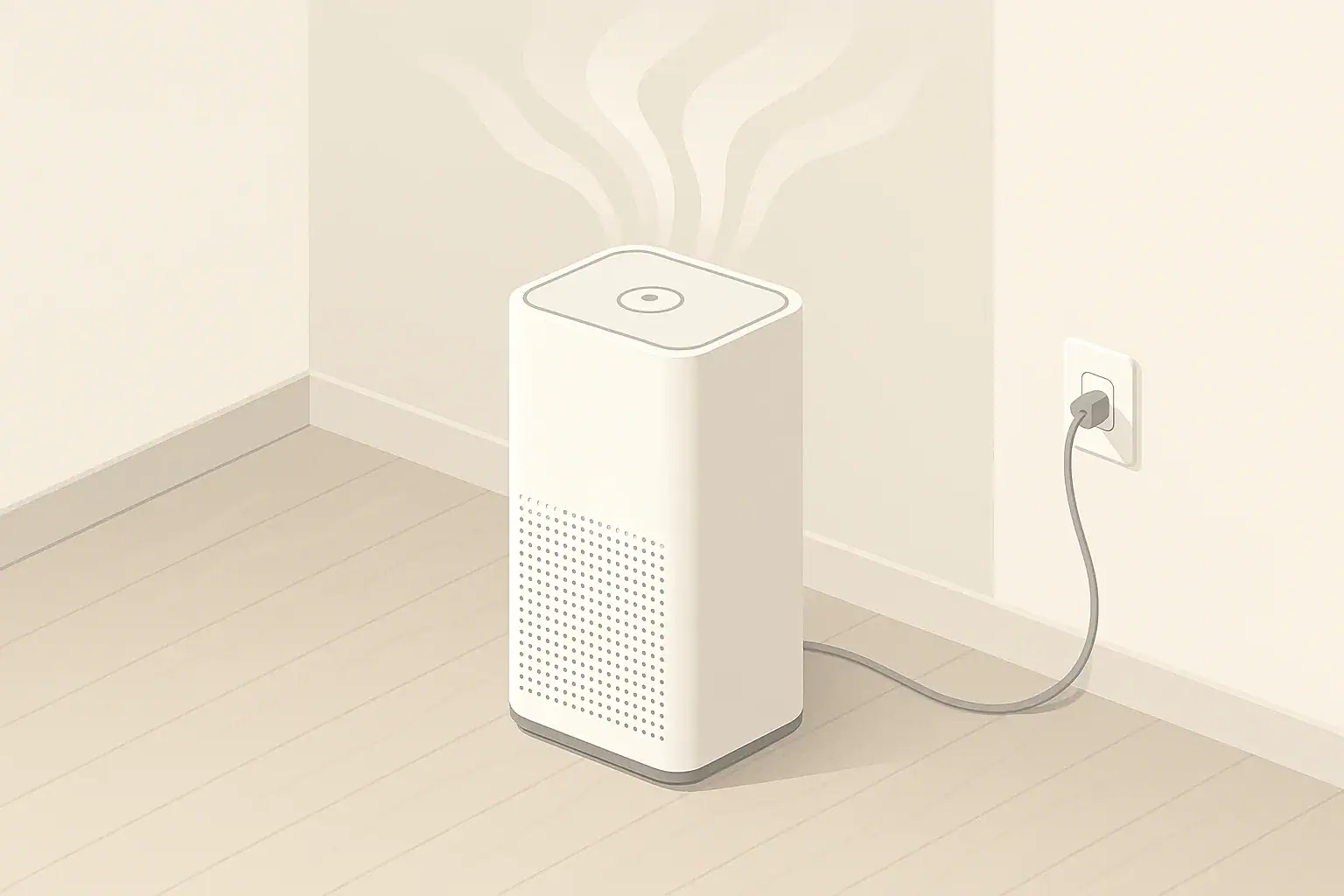
Most home air purifiers use far less electricity than high-heat appliances, but they may run for many hours at a time. That makes the outlet, cord rating, shared loads, and placement more important than the purifier alone.
Quick answer
- Use a wall outlet when possible; if an extension cord is needed, choose one rated for at least the purifier load and in good condition.
- For planning, estimate amps as watts divided by 120 volts; a 120-watt purifier is about 1 amp.
- As general guidance for long run times, keep continuous load around 80% or less of the circuit rating, such as about 12 amps on a 15-amp circuit.
- Avoid sharing the same circuit with space heaters, portable air conditioners, irons, or other high-wattage devices.
- Keep cords uncoiled, uncovered, dry, and out from under rugs, doors, furniture legs, and walkways.
What Air Purifier Extension Cord Safety Means
Air purifier extension cord safety is about matching the purifier, cord, outlet, and room layout so the device can run without overloading the circuit or creating a physical hazard. It does not mean every extension cord use is automatically unsafe. It means the cord should be the right type, used in the right location, and treated as part of the electrical setup rather than an afterthought.
Many air purifiers are designed for long operating periods. Some run overnight, during wildfire smoke events, while cooking odors clear, or as part of a general indoor air quality routine. A device that runs continuously should not rely on a thin, damaged, hidden, or loosely connected cord.
The main concerns are straightforward: load on the outlet and circuit, heat buildup in cords or plugs, nuisance trips or repeated breaker trips, and placement that blocks airflow or creates a trip hazard. Addressing these issues usually requires simple checks, not complicated electrical work.
Outlet Load Basics for Air Purifiers
In the United States, standard household outlets are typically on 15-amp or 20-amp, 120-volt circuits. The outlet face is not always enough to tell what else is on the circuit. One breaker may serve multiple receptacles and lights in the same room or nearby rooms.
The basic estimate is:
- Amps = watts divided by volts
- Using 120 volts as a planning number, a 60-watt purifier is about 0.5 amps.
- A 120-watt purifier is about 1 amp.
- An 180-watt purifier is about 1.5 amps.
These examples are modest compared with high-heat appliances, but the total circuit load matters. A purifier plugged into the same circuit as a space heater, hair dryer, microwave, or portable air conditioner can contribute to an overload even if the purifier itself is not the main load.
For devices that may run for many hours, a practical planning target is to keep continuous loads at roughly 80% or less of the circuit rating. That means about 12 amps on a 15-amp circuit or about 16 amps on a 20-amp circuit. This is a general planning approach, not a substitute for local code requirements or an electrician’s review.
| Check | Why it matters | Practical note |
|---|---|---|
| Purifier wattage | Helps estimate amp draw | Watts divided by 120 volts gives an approximate amp load |
| Circuit sharing | Other devices add to the same circuit load | Be cautious with heaters, kitchen appliances, and portable AC units |
| Cord rating | The cord must handle the electrical load | Use a cord rated at least for the connected load |
| Grounding match | Plug design should not be altered | Do not remove a ground pin or force a plug to fit |
| Cord condition | Damage can raise risk of heat or fault trips | Do not use cracked, frayed, loose, or warm cords |
| Run time | Long operation magnifies small problems | Wall outlet use is preferred for everyday continuous operation |
| Placement | Heat and trip hazards are preventable | Keep cords visible, uncoiled, dry, and uncovered |
Why Breakers, GFCIs, or Power Strips May Trip
A trip is a signal that something in the electrical system needs attention. It may be a simple overload, a worn cord, a loose connection, or a protective device responding as intended. Repeatedly resetting a breaker or power strip without identifying the cause is not a good long-term practice.
Overloaded breaker
A standard breaker trips when circuit current exceeds its rating for long enough. If a purifier trips a breaker only when a heater, vacuum, or window air conditioner is also running, the combined load is likely the issue. Move one device to a different circuit or reduce simultaneous use.
GFCI trip
A GFCI outlet or breaker is designed to respond to current imbalance, often used in kitchens, bathrooms, laundry areas, garages, basements, and outdoor locations. An air purifier used near moisture, a damp floor, or a damaged cord may trip a GFCI. Keep purifiers and cords dry, and do not use indoor-only cords in damp locations.
AFCI trip
An air purifier maintenance checklist can help you spot the loose plug, damaged cord, or failing switch issues that sometimes contribute to AFCI trips. AFCI protection responds to certain arcing conditions. A loose plug, damaged cord, failing switch, or internal electrical problem can contribute. If trips repeat with the same purifier or cord, unplug it and stop using that setup until the cause is corrected.
Power strip or extension cord reset trips
Some power strips include overload protection. If the reset trips, the connected devices may exceed the strip rating, or the strip may be worn or damaged. Avoid daisy chaining power strips and extension cords. A purifier should not be part of a crowded outlet cluster with chargers, lamps, fans, and high-wattage devices all sharing one strip.
Placement Rules for Cords and Air Purifiers
Good purifier placement is usually about airflow, but electrical placement matters too. A purifier needs enough open space for air intake and exhaust while staying close enough to a safe outlet that the cord does not cross traffic paths.
Use these placement guidelines as a practical starting point:
- Place the purifier on a stable, level surface unless the manual allows another setup.
- Keep air intakes and outlets open, with several inches of clearance at minimum or more if the manual states it.
- Route the cord along a wall where it remains visible and is not stretched tight.
- Do not run a cord under rugs, mats, bedding, or furniture.
- Do not pinch cords through doors, windows, recliners, or bed frames.
- Keep the cord away from heat sources, water bowls, humidifier mist, sinks, tubs, and wet floors.
- Leave the plug accessible so the purifier can be unplugged easily if needed.
If the only workable location requires a cord across a walkway, the room layout may need adjustment. Moving a small table, selecting a different outlet on the same wall, or repositioning the purifier can reduce both airflow obstruction and trip risk.
Practical Checklist Before Using an Extension Cord
If an extension cord is unavoidable, treat it as a temporary or carefully managed setup. The goal is to avoid hidden heat buildup, loose connections, and unnecessary circuit loading.
- Check the purifier label. Look for watts or amps on the nameplate, power adapter, or manual.
- Select the right cord type. Use an indoor cord for dry indoor spaces and an outdoor-rated cord only where appropriate. Do not use a cord that feels flimsy for long-running equipment.
- Match the plug. If the purifier has a three-prong plug, use a grounded three-prong cord and grounded receptacle. Do not modify the plug.
- Keep it short. Use the shortest cord that reaches safely without tension. Longer cords add more resistance and more opportunities for damage.
- Uncoil the cord. Coiled cords can retain heat. Lay the cord out in a visible, open path.
- Feel for warmth. After the purifier has run for a while, the plug and cord should not feel hot. Slight warmth can occur with some electrical connections, but noticeable heat is a warning sign to stop using that setup.
- Do not stack adapters. Avoid plug adapters, multi-tap cubes, and daisy-chained power strips for a continuously running purifier.
When in doubt, use a different outlet, reduce other loads on the circuit, or ask a qualified electrician to evaluate the receptacle and circuit.
Real-World Examples of Safer Setups
Different homes create different constraints. These examples show how to think through common situations without relying on a specific product or brand.
Bedroom purifier near the bed
A small or medium purifier may draw well under 2 amps, but the cord can still be a problem if it crosses the path from the bed to the door. A better setup is usually a wall outlet near the purifier with the cord routed behind furniture without being pinched. Avoid placing the purifier where bedding can cover the cord or block the intake.
Living room with shared electronics
A purifier near a media console may be competing for outlets with a television, speakers, chargers, a lamp, and game equipment. The total load may still be modest, but crowded power strips can loosen plugs and trap heat. If the purifier will run daily, give it a dedicated wall outlet when possible.
Apartment with limited outlets
Older apartments may have fewer receptacles. A properly rated extension cord may be a practical bridge, but it should remain visible and not pass under rugs or across doorways. If a breaker trips regularly, note which devices were running at the time and contact building maintenance rather than repeatedly resetting it.
Basement, laundry, or damp area
Air purifiers are not dehumidifiers and should not be placed where water can reach the cord or plug. In damp spaces, keep the purifier elevated if allowed by the manual, away from laundry sinks and floor drains, and plugged into a properly protected outlet. If moisture is the problem, address humidity and water sources separately.
Safety Standards and Features to Treat Neutrally
Electrical safety depends on the whole setup, not just one mark or feature. Still, recognized safety listings can provide useful assurance that a cord, power strip, or appliance was evaluated to applicable product safety standards. Look for a listing mark from a nationally recognized testing laboratory, and use the product only as intended.
Surge protectors and power strips are not the same as adding circuit capacity. A surge protector may help with voltage spikes, but it does not make an overloaded circuit safe. A air purifier placement setup that avoids crowding also helps reduce the temptation to add too many devices to one receptacle.
Some air purifiers include ionizers, UV-C lamps, or other add-on technologies. From an extension cord safety standpoint, the main issue is still electrical load, plug condition, and placement. From an indoor air quality standpoint, ozone-producing settings should be approached cautiously, and users who prefer ozone-free operation can choose units or settings that do not intentionally generate ozone.
Do not open, modify, bypass, or rewire an air purifier, power cord, plug, breaker, GFCI, AFCI, or safety interlock. If a device repeatedly trips protection, smells unusual, sparks, shuts off unexpectedly, or has a damaged cord, stop using it and seek repair or replacement through appropriate channels.
Maintenance and Upkeep That Affect Safe Operation
Filter maintenance is mainly an air performance issue, but it can also affect how the purifier runs. A heavily loaded filter may reduce airflow and cause the fan to work less efficiently. Some units may become noisier, run at higher settings longer, or show a filter alert sooner in dusty or smoky conditions.
Keep the outside of the purifier free of dust buildup, especially around vents. Unplug the unit before routine cleaning when the manual instructs it. Avoid spraying cleaners directly into vents, controls, or electrical openings. If the plug or receptacle appears discolored, cracked, loose, or heat-damaged, do not continue using that outlet for the purifier.
Also check the extension cord periodically if one is being used. Look for flattened insulation, cuts, fraying, bent blades, loose plug fit, or areas that feel warm during operation. Replace damaged cords rather than repairing them with tape.
| Item | Typical interval range | What changes it | Reminder |
|---|---|---|---|
| Washable prefilter | Every 2 to 4 weeks | Dust, pet hair, cooking particles | Clean only as the manual allows |
| Disposable prefilter | Every 1 to 3 months | Visible loading or reduced airflow | Do not vacuum if the manual says replace only |
| HEPA-type main filter | About 6 to 12 months | Smoke, dust, run time, room conditions | Follow the unit indicator and manual |
| Activated carbon filter | About 3 to 6 months | Odors, VOC sources, cooking, smoke | Carbon can saturate before it looks dirty |
| Exterior vents | Monthly check | Dusty rooms and pet hair | Unplug before cleaning if directed |
| Power cord and plug | Monthly visual check | Movement, furniture pressure, age | Stop use if damaged or unusually warm |
Frequently asked questions
Can I use an extension cord with an air purifier every day?
A wall outlet is the safer everyday choice, especially for a purifier that runs for many hours at a time. If an extension cord must be used, it should be properly rated, in good condition, and kept visible and uncoiled. If the setup feels warm, looks damaged, or trips protection repeatedly, stop using it.
How do I know what extension cord size I need for an air purifier?
Check the purifier’s watts or amps, then compare that with the cord’s rating. As a planning step, watts divided by 120 volts gives approximate amps, and the cord should be rated for at least that load. For longer run times, shorter and heavier-duty cords are generally safer than thin, long ones.
Is it okay to plug an air purifier into a power strip?
It can be acceptable if the strip is properly rated and the total load stays within its limit, but a direct wall outlet is often better for continuous use. Power strips do not add circuit capacity, and crowded strips can loosen plugs or trap heat. Avoid daisy chaining strips or combining a purifier with high-wattage appliances on the same strip.
Why does my air purifier trip the breaker or GFCI outlet?
A breaker trip usually points to too much total load on the circuit, while a GFCI trip often points to moisture, a damaged cord, or a grounding or leakage issue. An AFCI trip can happen if there is arcing from a loose plug or failing cord. Repeated trips mean the setup should be checked before being used again.
Where should I place the cord so it is safer?
Run the cord along a wall where it stays visible and away from walkways, doors, rugs, furniture legs, bedding, and moisture. The cord should not be pinched, tightly bent, or covered. Keeping the plug accessible also makes it easier to disconnect the purifier quickly if needed.
What are warning signs that I should stop using the cord?
Stop using it if you notice fraying, cracks, loose plugs, discoloration, melted spots, or unusual warmth at the plug or cord. Repeated breaker trips, sparks, burning smells, or intermittent power are also warning signs. Replace the cord or move the purifier to a safer outlet rather than trying to patch the problem.
Related guides: Air Purifier Placement: Where to Put It for Best Results • Air Purifier Safety for Kids and Pets: Tipping, Cords, and Placement • Air Purifier Maintenance Checklist: Monthly and Seasonal Tasks
Summary Takeaways for Everyday Use
For most homes, the safest everyday choice is to plug an air purifier directly into a suitable wall outlet. If an extension cord is needed, use a properly rated, undamaged cord, keep it short and visible, and avoid covering, pinching, coiling, or daisy chaining it.
Estimate load with watts divided by 120 volts, then consider what else shares the circuit. Breaker, GFCI, AFCI, or power strip trips should be treated as useful clues, not annoyances to ignore. A calm check of load, cord condition, moisture, and placement will solve many common issues.
Good purifier safety is practical: maintain the filters, keep airflow clear, keep cords dry and accessible, and stop using any setup that produces repeated trips, unusual heat, sparking, or damaged electrical parts.
Recommended next:
- Do Air Purifiers Produce Ozone? What to Avoid and What to Buy Instead
- UL 2998 ‘Zero Ozone’ Explained (What It Certifies and What It Doesn’t)
- HEPA, CADR, and Other Certifications: A Buyer’s Cheat Sheet
- Ozone and Ionizers: What “Zero Ozone” Certifications Mean
- AHAM CADR Ratings Explained: How to Compare Air Purifiers Fairly
- Air Purifier Safety for Kids and Pets: Tipping, Cords, and Placement
- More in Safety & Standards →
- Clear sizing logic (room size → CADR/ACH)
- HEPA vs carbon explained for real use-cases
- Humidity + ventilation basics to reduce mold risk