
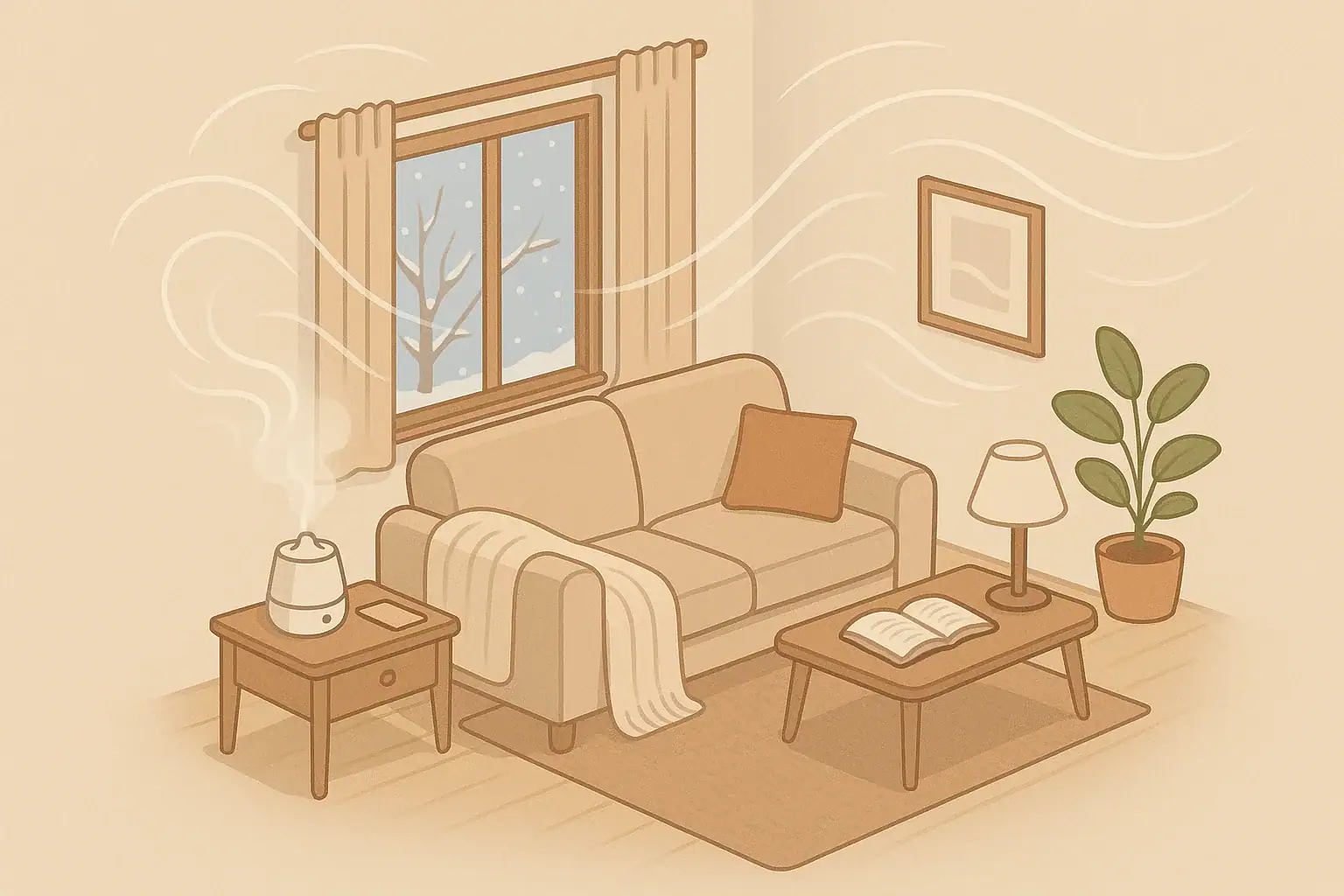
The ideal indoor humidity in winter is generally around 30–40% relative humidity, which balances comfort with a low risk of mold growth in most homes.
Cold outdoor air holds little moisture, so indoor humidity often drops in winter when heating systems run. Raising humidity can ease dry-air discomfort, but pushing it too high increases condensation and mold risk, especially on cold windows and walls. The goal is a practical middle ground, not a single perfect number.
- Aim for ~30–40% indoor relative humidity in typical winter conditions.
- In very cold weather, staying closer to 30–35% helps reduce window condensation.
- Above ~50–55% for extended periods indoors can raise mold and dust mite risk.
- Use a small hygrometer to monitor humidity in several rooms.
- Adjust with humidifiers, bathroom fans, kitchen exhaust, or dehumidifiers as needed.
Why Winter Humidity Matters for Comfort and Mold
Humidity describes how much water vapor is in the air compared with how much it could hold at that temperature, usually expressed as relative humidity (RH). In winter, outdoor air is often very dry, and once warmed indoors, its relative humidity drops even more.
Low humidity can lead to dry-feeling air, static shocks, and faster evaporation from skin and surfaces. Many people find air around 30–40% RH more comfortable than very dry air below 25%.
However, more moisture is not always better. When indoor humidity is too high for the surface temperatures in your home, water can condense on windows, exterior walls, and in hidden spaces. Persistently damp surfaces are a favorable environment for mold and mildew.
Finding the ideal indoor humidity in winter is therefore a balance between comfort and limiting moisture buildup where you cannot easily see it.
Key Concepts: Temperature, Humidity, and Condensation
To understand winter humidity, it helps to look at three linked factors: temperature, relative humidity, and surface temperature.
Relative humidity and temperature
Warm air can hold more water vapor than cold air. If you bring cold, humid outdoor air indoors and heat it up, its relative humidity drops even if no moisture is removed. This is why winter indoor air often feels dry.
For example, air at 30°F outside might be near 80–90% RH. Once that air is brought indoors and heated to 70°F without adding moisture, its relative humidity can drop below 20%.
Condensation and cold surfaces
Condensation happens when warm, moist indoor air contacts a surface that is cold enough that the air right next to it reaches 100% RH. Water then appears as droplets or fogging. Common spots include:
- Single-pane or older double-pane windows
- Uninsulated exterior walls and corners
- Behind large furniture placed against exterior walls
In very cold climates, these surfaces can be much cooler than room air. That means even moderate indoor humidity can cause visible or hidden condensation, raising mold risk.
Why 30–40% is often a practical target
Research and building guidance often point to 30–50% RH as a general comfort range. In winter, many homes cannot safely maintain 45–50% without frequent condensation, especially when outdoor temperatures are well below freezing.
For many U.S. homes, staying near 30–40% in the main living areas is a realistic balance: enough moisture to reduce very dry air discomfort, but usually low enough to limit persistent condensation on reasonably insulated windows and walls.
| Observed situation | Likely humidity issue | Suggested direction | Notes |
|---|---|---|---|
| Hygrometer reads <25% RH, air feels very dry | Humidity likely too low | Add moisture | Consider a humidifier and sealing obvious drafts. |
| Frequent static shocks on carpets and fabrics | Often linked to low humidity | Raise RH slightly | Aim toward upper 30% range if condensation is minimal. |
| Regular window fogging or water on sills | Local humidity near surfaces too high | Reduce moisture | Lower humidifier settings; increase ventilation. |
| Musty odor around closets or exterior corners | Possible localized dampness | Investigate and dry | Improve airflow and check for leaks; avoid over-humidifying. |
| Bathroom mirrors stay foggy long after showers | High humidity spikes | Ventilate | Use or upgrade exhaust fans; keep doors slightly open afterward. |
| Basement feels clammy while main floor feels dry | Uneven humidity by level | Zone control | Consider a basement dehumidifier and targeted humidification upstairs. |
| No condensation, RH around 30–40% | Generally balanced | Maintain | Monitor during cold snaps or large occupancy changes. |
Example values for illustration.
Common Winter Humidity Mistakes and Warning Signs
Many humidity problems come from well-meant but unchecked adjustments. Knowing typical mistakes can help you avoid jumping from very dry to too damp.
Over-humidifying to chase comfort
It can be tempting to set a humidifier to reach 45–50% RH everywhere because it sounds more comfortable. In cold climates or in homes with older windows, that setting can quickly lead to:
- Condensation at the bottom edges of windows
- Peeling paint or swollen wood sills
- Visible mold or dark spots on caulk or window frames
If you see these signs, the indoor humidity is too high for the building’s current conditions, even if a single room reading seems reasonable.
Ignoring room-to-room differences
One humidity reading in a hallway does not describe your entire home. Bathrooms, kitchens, basements, and bedrooms with closed doors can have very different humidity levels. Over-humidifying a central area to fix a dry bedroom may leave other zones damp.
Misreading short-term spikes
Short-lived spikes in humidity, such as during cooking or showering, are normal. The concern is humidity that stays elevated for long periods, particularly above about 50–55% in cool areas. A quick rise followed by a return to normal after ventilation is usually less of a problem than constant moderate dampness.
Overlooking building issues
Water leaks, poor insulation, and inadequate ventilation can create damp conditions even when your average RH is reasonable. If you see mold or persistent condensation in specific spots, do not assume the only answer is lowering humidity everywhere; localized building issues may need attention as well.
Practical Winter Humidity Targets and Simple Rules
Because homes and climates vary, there is no single perfect winter humidity number. Instead, use ranges and adjust based on observation.
General winter indoor targets
- 30–40% RH: A practical target range for many U.S. homes in typical winter conditions.
- 25–30% RH: More realistic in very cold climates during extreme cold snaps to limit condensation.
- 40–45% RH: Often comfortable in milder winter climates or better-insulated homes with modern windows.
Watch your windows and cold corners. If they stay dry and your RH is in the 30–40% range, you are likely in a reasonable balance for comfort and mold risk in most situations.
Adapting to outdoor temperature
As outdoor temperature drops, it becomes harder to maintain higher indoor humidity without condensation. A simple idea:
- When outdoor temperatures are just cool (for example, 40–50°F), 35–45% RH indoors may work well.
- When temperatures are near or below freezing, 30–40% is often more appropriate.
- During very cold spells (well below freezing), staying closer to 30% can reduce window and wall condensation.
These are example ranges; your home’s insulation, windows, and airflow may require slightly different targets.
How to Manage Winter Humidity: Step-by-Step
Managing ideal indoor humidity in winter is mostly about measurement, moderate adjustments, and paying attention to surfaces.
1. Measure humidity in more than one spot
- Use a simple digital hygrometer.
- Check several rooms: main living area, at least one bedroom, kitchen, and basement if applicable.
- Take readings at different times of day, especially during very cold weather or periods of heavy cooking or showering.
2. Address very low humidity
If readings are consistently below about 25–30% and you notice dry-air discomfort, consider:
- Portable humidifiers in main living spaces and bedrooms, set to modest target levels.
- Reducing unnecessary ventilation when outdoor air is extremely dry, while still using exhaust fans during moisture-producing activities.
- Improving air sealing around windows, doors, and obvious drafts so you are not constantly drying the air with outside infiltration.
3. Prevent overly high humidity and mold risk
If humidity readings are often above about 50% in winter, or you see condensation and musty smells, consider:
- Lowering humidifier settings or turning units off when outdoor temperatures drop sharply.
- Using exhaust fans in bathrooms and kitchens during and after moisture-generating activities.
- Running a dehumidifier in basements or other consistently damp areas, especially if they are cooler than the rest of the home.
- Moving furniture a few inches away from exterior walls to improve airflow.
4. Combine humidity management with air cleaning
Humidity control and air-cleaning devices are related but separate aspects of indoor air quality. For example:
- Air purifiers with particle filters can reduce dust and some allergens but do not usually change humidity.
- Balanced humidity (around 30–50% over the year) can help reduce dust resuspension and may influence how comfortable air feels.
- For mold prevention, controlling moisture and cleaning visible mold growth are key; filters alone cannot stop growth on damp surfaces.
Real-World Winter Scenarios
These simplified scenarios show how humidity decisions can differ by home and climate.
Scenario 1: Cold climate, older windows
A home in a northern state with winter temperatures often below 20°F and older double-pane windows may see condensation as soon as RH creeps above the mid-30s. In this case:
- Aim for around 30–35% RH during cold stretches.
- Use portable humidifiers only in occupied rooms, not hallways.
- Check window corners and sills daily for moisture; wipe dry as needed.
Scenario 2: Mild winter climate with good insulation
A newer, well-insulated home in a milder climate where winter temperatures often stay above freezing may tolerate slightly higher humidity without condensation problems. In such a home:
- Targets around 35–45% RH may be comfortable and practical.
- Condensation may be rare; still check around windows and south-facing walls during cold snaps.
- Ventilation through kitchen and bathroom fans remains important.
Scenario 3: Dry upstairs, damp basement
A two-story home may have a dry upper floor (bedrooms) and a slightly damp basement due to cooler surfaces and limited sunlight.
- Use a dehumidifier in the basement to maintain moderate RH there, often around 40–50% depending on conditions.
- Use small humidifiers upstairs if RH is below about 30% and occupants feel uncomfortable.
- Keep doors open when possible to help some mixing, but treat each level based on its own readings and condensation behavior.
Safety, Standards, and Device Considerations
Most home humidity management relies on standard appliances and exhaust fans used as intended. A few basic safety and standards-related points help keep things low-risk.
Humidifier safety basics
- Follow manufacturer instructions for cleaning to limit mineral buildup and microbial growth inside the unit.
- Use clean water; if you have very hard water, you may notice white dust from some types of humidifiers.
- Do not aim mist directly at walls, windows, or electronics; disperse it into room air.
- Avoid modifying humidifiers or adding unapproved additives.
Dehumidifiers and ventilation equipment
- Place dehumidifiers so air can circulate freely around them.
- Route collected water safely to a drain or empty the bucket regularly.
- Ensure bathroom and kitchen exhaust fans vent to the outdoors where possible.
Air cleaners and add-on technologies
Some standalone or integrated air-cleaning devices may use technologies such as ionization or UV-C light. When evaluating these:
- Look for information about ozone generation; many sources advise avoiding devices that intentionally produce ozone indoors.
- Understand that air cleaners handle particles and certain gases, but do not fix underlying moisture problems that lead to mold growth.
- Consider focusing first on basic measures: filtration, humidity control, and ventilation.
Ongoing Maintenance and Monitoring
Keeping winter humidity in a good range is not a one-time task. Conditions change as outdoor weather, occupancy, and home usage shift.
Routine checks
- Glance at hygrometer readings daily during the coldest months.
- Do a quick window check in the morning when surfaces are coolest.
- Look occasionally behind furniture on exterior walls for signs of dampness or odor.
Appliance care
- Clean humidifiers as instructed, often weekly during heavy use.
- Rinse or replace any internal filters or cartridges on the schedule recommended by the manufacturer.
- Clean dehumidifier filters and coils periodically to maintain performance.
Seasonal adjustments
- As winter ends and outdoor humidity rises, reassess the need for humidifiers; many homes can turn them off in spring.
- In humid summers, shift focus from adding moisture to removing it and ventilating.
- Re-check humidity settings and habits at the start of each heating season.
| Goal | Simple actions | Tools | Notes |
|---|---|---|---|
| Reduce very dry air discomfort | Add controlled moisture to main living areas. | Portable humidifier, hygrometer. | Target around 30–40% RH when practical. |
| Limit window condensation | Lower humidity during cold nights and wipe sills. | Hygrometer, towels, window coverings adjusted. | Aim closer to 30–35% RH in cold snaps. |
| Keep bathrooms dry after showers | Run exhaust fan during and after use. | Bathroom fan, door slightly open afterward. | Try to clear mirror fog within about 15–20 minutes. |
| Prevent basement dampness | Remove moisture and improve airflow. | Dehumidifier, fans. | Check RH regularly; adjust for season and use. |
| Monitor for hidden mold risk | Inspect corners, closets, and behind furniture. | Flashlight, hygrometer. | Look for spots, peeling paint, or musty odor. |
| Balance humidity with air cleaning | Combine filters, humidity control, and ventilation. | Air purifier, fans, humidifier or dehumidifier. | Each tool addresses a different part of air quality. |
Example values for illustration.
Related guides: Humidifier vs Dehumidifier: When to Add Moisture vs Remove It • How to Size a Dehumidifier (Sq Ft, Pints/Day, and Real-World Tips) • Basement Dehumidifier Guide: Targets, Drainage, and Energy Use
Summary: Balancing Comfort and Mold Risk in Winter
Ideal indoor humidity in winter is not a single fixed number, but for many homes, keeping relative humidity around 30–40% offers a practical balance between comfort and mold risk. In very cold weather or homes with less insulation and older windows, aiming toward the lower end of that range helps reduce condensation.
Use simple tools—a hygrometer, humidifiers or dehumidifiers where needed, and existing exhaust fans—to adjust gradually rather than making large changes all at once. Pay close attention to windows, cold corners, and any musty areas. When surfaces stay dry and your readings sit in a modest range, your indoor humidity is likely in a reasonable zone for both comfort and moisture control during the winter months.
Frequently asked questions
What relative humidity should I set a humidifier to for winter comfort without causing condensation?
For many homes, setting a humidifier to maintain around 30–40% RH is a practical balance between comfort and condensation risk. In very cold weather or in homes with older or poorly insulated windows, staying closer to 30–35% reduces the chance of window or wall condensation.
How can I prevent condensation on windows while using indoor humidification?
Lower indoor humidity during very cold nights, increase ventilation during and after moisture-producing activities, and improve window insulation or add storm windows if possible. Regularly checking and wiping window sills and monitoring multiple hygrometers helps spot local condensation early.
Where and how often should I place hygrometers to get an accurate picture of winter humidity?
Place hygrometers in several representative areas: a main living room, at least one bedroom, the kitchen, and the basement if you have one. Check readings daily during cold snaps and after activities that add moisture (like cooking or showering) to distinguish short-term spikes from persistent humidity.
Is it safe to run a humidifier overnight during winter?
Running a humidifier overnight is generally safe if you set it to modest targets (around 30–40% RH) and monitor levels to avoid sustained readings above about 50%. Keep the unit clean per instructions, avoid directing mist at walls or windows, and use a hygrometer to ensure humidity stays within your chosen range.
When is a dehumidifier appropriate during the winter months?
Use a dehumidifier in winter when specific areas—especially basements or ground-level rooms—consistently measure above about 50% RH, show condensation, or have musty odors. Targeted dehumidification combined with fixing leaks, improving drainage, or increasing airflow is more effective than lowering humidity throughout the whole house.
Recommended next:
- Clear sizing logic (room size → CADR/ACH)
- HEPA vs carbon explained for real use-cases
- Humidity + ventilation basics to reduce mold risk