
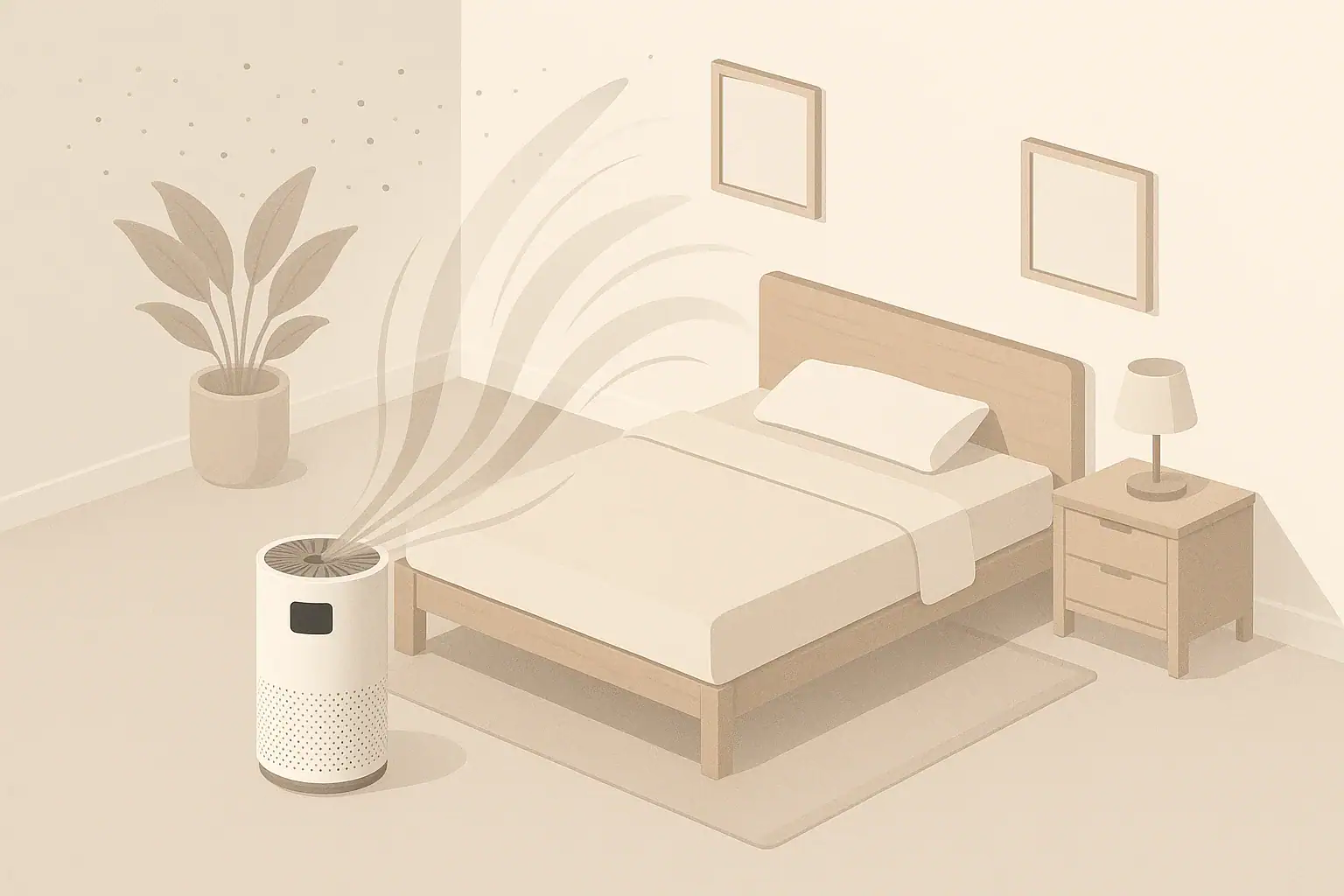
The most effective way to reduce pet dander allergy symptoms is to combine a properly sized HEPA air cleaner with strict bedroom control, surface cleaning, and smart pet habits. Air filtration alone rarely fixes symptoms unless it is part of a full-home routine that targets where dander is produced, where it settles, and where you spend the most time.
If you live with cats, dogs, or other furry pets and react to pet dander, you are dealing with tiny allergen particles that float in the air, cling to dust, and embed in fabrics. A good pet allergy air cleaner setup focuses on capturing those particles before you breathe them in and before they build up on soft surfaces.
This guide explains how pet dander behaves in your home, how to configure air cleaners for real-world rooms, habits that make or break results, and what specifications to look for when you buy or upgrade equipment.
What Pet Dander Allergies Mean for Your Indoor Air
Pet dander allergies are reactions to proteins found in tiny flakes of skin, dried saliva, and urine that your pet constantly sheds into the home. These allergens are much smaller than visible fur, and they easily become part of your indoor dust and air.
Why this matters for air cleaning:
- Particle size: Many pet allergens are in the fine particle range that can stay suspended in the air for long periods.
- Distribution: Dander spreads from pet zones into bedrooms, offices, and even homes without pets via clothing and fabrics.
- Persistence: Once dander settles into carpets, upholstery, and bedding, it can be re-released into the air every time you walk, sit, or vacuum.
For people with allergies or asthma, this continuous circulation of pet allergens can mean morning congestion, itchy eyes, coughing, or chest tightness, even if the pet is not in the same room. That is why a pet dander allergy air cleaner strategy focuses on both the air you breathe and the surfaces around you.
In practical terms, your goals are to lower the background level of airborne pet allergens, slow down how quickly they build up on surfaces, and create at least one lower-exposure room where your body can recover overnight.
How Pet Dander Moves, Settles, and Gets Captured
Understanding how pet dander behaves indoors helps you decide where to place an air cleaner, how powerful it needs to be, and which filters matter most.
Sources and movement of pet allergens
- Continuous shedding: Pets shed microscopic skin flakes all day, not just when they visibly shed fur.
- Grooming and saliva: When pets lick their fur, saliva dries on the hair and skin, adding allergen proteins that later break off into the air.
- Litter and bedding: Litter boxes, cages, and bedding can release dust that carries allergen proteins, especially when disturbed.
Once released, these particles behave in two main ways:
- Airborne phase: Fine particles float and follow air currents from HVAC vents, fans, and people walking through a room.
- Settled phase: Over time, they land on floors, shelves, bedding, and upholstery, then get kicked back into the air when disturbed.
Why filtration type and airflow matter
Air cleaners work by pulling room air through filters that trap particles. For pet dander, two aspects matter most:
- Filtration quality: A true HEPA filter captures a high percentage of small particles, including many pet allergen sizes. Basic or “HEPA-type” filters are less reliable for the finest particles.
- Airflow and room coverage: The device must move enough air for the size and layout of the room. Otherwise, much of the dander never reaches the filter.
Odor control is a separate but related issue. Activated carbon or similar media can help with pet, litter box, or cage smells, but they do not replace HEPA filtration for allergen capture.
| Room type | Approximate size (sq ft) | Suggested air cleaner capacity | Priority for pet dander control |
|---|---|---|---|
| Small bedroom | 100–150 | Unit rated for at least this size on a medium setting | Very high (overnight exposure) |
| Medium living room | 200–300 | Unit sized for full area, or two smaller units in open layouts | High (pet rest and family activity zone) |
| Home office | 80–150 | Compact unit close to the desk area | Moderate to high (hours of close-range breathing) |
| Hallway near litter box or cage | 50–100 | Small unit focused on odor and dust capture | Targeted (odor and localized allergen) |
In many homes, starting with the bedroom and the main pet hangout area gives the most noticeable improvement in symptoms.
Real-World Pet Dander Control Setups and Habits
Combining air cleaners with targeted habits is what usually makes the difference between slight improvement and clear allergy relief. Here are practical examples of how to set up your home.
Example 1: Allergic person with a bedroom cat
- Bedroom strategy: Move toward a pet-reduced or no-pet bedroom. Keep the door closed at night to limit new dander entering.
- Air cleaner placement: Place a HEPA air cleaner 3–6 feet from the bed, with the outlet pointed toward the center of the room, not directly at your face.
- Run pattern: Run on a quiet setting 24/7, using a higher speed for 30–60 minutes before bedtime.
- Surface control: Wash bedding weekly in warm water and choose smooth, easy-to-clean nightstands instead of heavy fabric decor.
Example 2: Dog that sheds heavily in the living room
- Pet zone focus: Place the dog bed on a washable mat and keep it a short distance from the main seating area.
- Air cleaner placement: Position a unit between the dog’s main resting spot and the seating area, but not so close that fur blocks the intake.
- Floor and fabric habits: Vacuum carpets and sofas with a machine that has a good filter and sealed body, then run the air cleaner on a higher setting for an hour afterward.
- Grooming: Brush the dog outdoors or in a well-ventilated area to keep loose hair from loading the indoor filters too quickly.
Example 3: Small pets with litter or cage dust
- Location: Keep cages or litter boxes in a room with hard flooring, away from bedrooms if possible.
- Air cleaner: Use a unit with both HEPA and odor media nearby, but leave enough space so litter dust does not immediately clog the intake.
- Cleaning routine: Scoop or change litter slowly to minimize dust clouds, and run the air cleaner on a higher speed for 30–60 minutes afterward.
- Ventilation: When outdoor air is acceptable, briefly open a window in that room during cleaning to dilute odors and airborne particles.
Using humidity and ventilation alongside filtration
- Humidity: Aim for moderate indoor humidity. Very dry air can irritate nasal passages, while very humid air may encourage other allergens such as mold.
- Ventilation: Use bathroom and kitchen exhaust fans and, when outdoor air is good, short periods of window opening to dilute indoor allergens.
These combined steps help your air cleaner work on a lower, more manageable allergen load instead of fighting a constant flood of new particles.
Common Mistakes and Troubleshooting Pet Dander Air Cleaning
Many people buy a good air cleaner but see little improvement because of a few avoidable missteps. Recognizing these patterns makes it easier to troubleshoot.
Frequent setup and usage mistakes
- Undersized unit: Using a small air cleaner in a large, open-plan space where it cannot turn over enough air.
- Wrong location: Hiding the unit behind furniture, next to thick curtains, or in a corner with poor airflow.
- Intermittent use: Running the air cleaner only when symptoms feel bad, instead of continuously in key rooms.
- Neglected filters: Letting pre-filters or HEPA filters clog with hair and dust, which drastically cuts airflow and performance.
- Ignoring surfaces: Expecting the air cleaner to handle dander embedded in carpets, sofas, and bedding without regular cleaning.
Troubleshooting cues by symptom
| Problem you notice | Likely cause | Practical adjustment |
|---|---|---|
| Still wake up congested in the morning | Bedroom not well controlled; pet in bed; air cleaner undersized or off at night | Make bedroom pet-reduced, run unit all night, verify size and placement near sleeping area |
| Visible dust and hair on vents or grilles | Clogged pre-filter or blocked intake | Clean or replace pre-filter, move objects away from intake and outlet |
| Strong pet or litter odor despite filtration | Spent odor media or infrequent cleaning of litter/cage | Replace odor filter, increase cleaning frequency in pet areas |
| Little change in symptoms anywhere in the home | Relying on a single unit in a large home; surfaces not cleaned | Prioritize bedroom and main pet zone, add regular vacuuming and fabric washing |
| Air cleaner seems loud and is often turned off | Unit only effective on high speed; noise not tolerated | Reassess sizing so a larger or more efficient unit can run quietly on a lower setting |
When to reconsider your overall approach
If you have followed basic sizing, placement, and maintenance steps but still have strong symptoms, consider:
- Creating a stricter no-pet or low-pet bedroom boundary.
- Reducing heavy fabric items such as thick curtains, multiple throw pillows, or deep shag rugs.
- Checking for other indoor triggers such as dust mites or mold that may be adding to your symptoms.
Air cleaners are powerful tools, but they cannot fully overcome constant, heavy allergen sources and neglected surfaces.
Safety Basics for Air Cleaners in Pet Allergy Homes
Most filtration-based air cleaners are straightforward to use, but a few safety points are worth keeping in mind, especially in homes with pets and children.
Ozone and reactive technologies
- Avoid intentional ozone generators: Devices that deliberately produce ozone or rely mainly on reactive gases can irritate airways, especially in people with allergies or asthma.
- Prefer mechanical filtration: HEPA and carbon-based systems generally focus on physical filtration rather than chemical reactions in the air.
Electrical and placement safety
- Stable placement: Place units on flat, stable surfaces where pets are unlikely to knock them over.
- Cord management: Route cords where they will not be chewed by pets or create tripping hazards.
- Vent clearance: Keep the intake and outlet free of blankets, toys, or pet beds to prevent overheating and poor airflow.
Filter handling and cleaning safety
- Avoid shaking dusty filters indoors: Shaking or banging filters can release trapped dander back into the room.
- Use gentle handling: When changing filters, handle them slowly and consider placing used filters directly into a trash bag.
- Follow manufacturer guidance: Only wash or vacuum filters that are designed for it; wetting non-washable filters can damage them and reduce effectiveness.
For sensitive individuals, it can help to have someone else handle filter changes or to leave the room while the task is done, then let the air cleaner run for a while before spending extended time there.
Keeping Your Pet Dander Air Cleaner Effective Over Time
Pet homes load filters faster than homes without animals, so long-term performance depends on a simple but consistent maintenance routine.
Filter checks and replacement rhythm
- Pre-filters: Inspect monthly or more often in heavy-shedding seasons. Vacuum or wash if allowed when you see visible hair and dust buildup.
- HEPA filters: Check on the schedule recommended by the manufacturer, but be prepared to replace sooner if you notice reduced airflow or persistent dust.
- Odor media: Replace odor-control layers when pet or litter smells return even after cleaning the source areas.
Many people find it helpful to mark filter change dates on a calendar or in a simple note on the device itself.
Room and device housekeeping
- Dust the unit exterior: Wipe grills and surfaces with a slightly damp cloth to prevent dust from being pulled back into the intake.
- Maintain clear airflow paths: Periodically check that furniture rearrangements, new pet beds, or storage items have not blocked the air cleaner.
- Coordinate with cleaning: Run the air cleaner on a higher setting for a while after vacuuming or changing bedding, when more dander is temporarily in the air.
Seasonal adjustments and storage
- All-year use: For most pet owners with allergies, year-round operation in key rooms is helpful because pets shed and groom continuously.
- If you ever pause use: Store the unit in a dry place, remove heavily used filters, and cover the intake and outlet to keep dust out.
- Restarting after storage: Inspect filters for dust, odor, or damage and replace as needed before returning the unit to daily use.
Putting It All Together: Practical Takeaways and Specs to Look For
Managing pet dander allergies at home means reducing the amount of allergen in the air you breathe and on the surfaces you touch most. The most consistent results come from pairing a well-chosen air cleaner with realistic bedroom rules, targeted cleaning, and thoughtful pet care.
In summary, focus first on the rooms where you spend the most hours, especially the bedroom and main living area. Keep pets and heavy fabrics out of at least one room if possible, and use your air cleaner continuously rather than occasionally.
Checklist: Specs to look for in a pet dander allergy air cleaner
- Filtration type: True HEPA or equivalent fine particle filter for allergen capture.
- Pre-filter: Washable or replaceable layer to catch hair and large dust before it reaches the main filter.
- Odor control (optional but useful): Activated carbon or similar media if pet or litter odors are a concern.
- Room coverage: Rated to handle the size of your bedroom or main living area on a medium or quiet setting.
- Noise level: A low-speed mode quiet enough for overnight use in the bedroom.
- Energy use: Reasonable power draw for continuous operation, especially if running 24/7.
- Filter access: Easy-to-open panels and clearly labeled filters to simplify maintenance.
- Ozone-free design: Filtration-focused operation without intentional ozone production.
- Physical size and placement: Compact enough to fit near your bed or seating area with several inches of clearance on all sides.
Using this checklist, you can match an air cleaner to your rooms, your pets, and your daily routines. When combined with consistent grooming, cleaning, and bedroom control, it becomes a powerful tool for making pet dander allergies more manageable while keeping your animals at home with you.
Frequently asked questions
Which air cleaner specifications or features most affect removal of pet dander?
Filtration efficiency for fine particles (true HEPA-level capture), adequate airflow for the room size, and a washable or replaceable pre-filter for hair all matter most. Optional activated carbon helps with odors but does not replace particle filtration. Together these features determine how effectively the unit reduces airborne pet allergens.
Why might an air cleaner not reduce my allergy symptoms?
Common reasons include an undersized unit for the space, poor placement or blocked airflow, intermittent use, or heavy allergen loads on surfaces that keep reintroducing dander. Neglected filters can also dramatically reduce performance. Addressing sizing, continuous operation in key rooms, and surface cleaning usually improves results.
Are ozone-generating or ionizing air cleaners safe for people with pet allergies?
Devices that deliberately produce ozone or rely primarily on reactive chemistry can irritate the airways and are generally not recommended for people with allergies or asthma. Mechanical filtration (HEPA) and carbon-based odor control avoid intentional ozone generation and are safer choices. Always choose units that specify they do not emit harmful levels of ozone.
How long does it usually take to notice symptom improvement after improving air cleaner setup and habits?
Some people notice reduced symptoms within a few days when bedroom exposure and main pet zones are controlled and air cleaners run continuously. More complete improvements, especially where dander is embedded in fabrics, can take several weeks of combined filtration and surface cleaning. Consistent maintenance speeds meaningful change.
How often should I check or replace filters in a home with shedding pets?
Inspect washable pre-filters monthly and clean them as needed during heavy-shedding periods; HEPA and odor filters should be checked on the manufacturer’s recommended schedule but may need earlier replacement if airflow drops or dust buildup is visible. Marking change dates and watching performance cues helps prevent reduced efficiency. Faster replacement is common in pet homes.
Can grooming and cleaning replace the need for an air cleaner?
Grooming pets and regular cleaning significantly reduce dander but rarely eliminate airborne allergens on their own, especially in shared living spaces. Air cleaners help capture fine particles before you breathe them and reduce background levels between cleanings. Best results come from combining grooming, surface cleaning, bedroom rules, and targeted air filtration.
- Clear sizing logic (room size → CADR/ACH)
- HEPA vs carbon explained for real use-cases
- Humidity + ventilation basics to reduce mold risk