
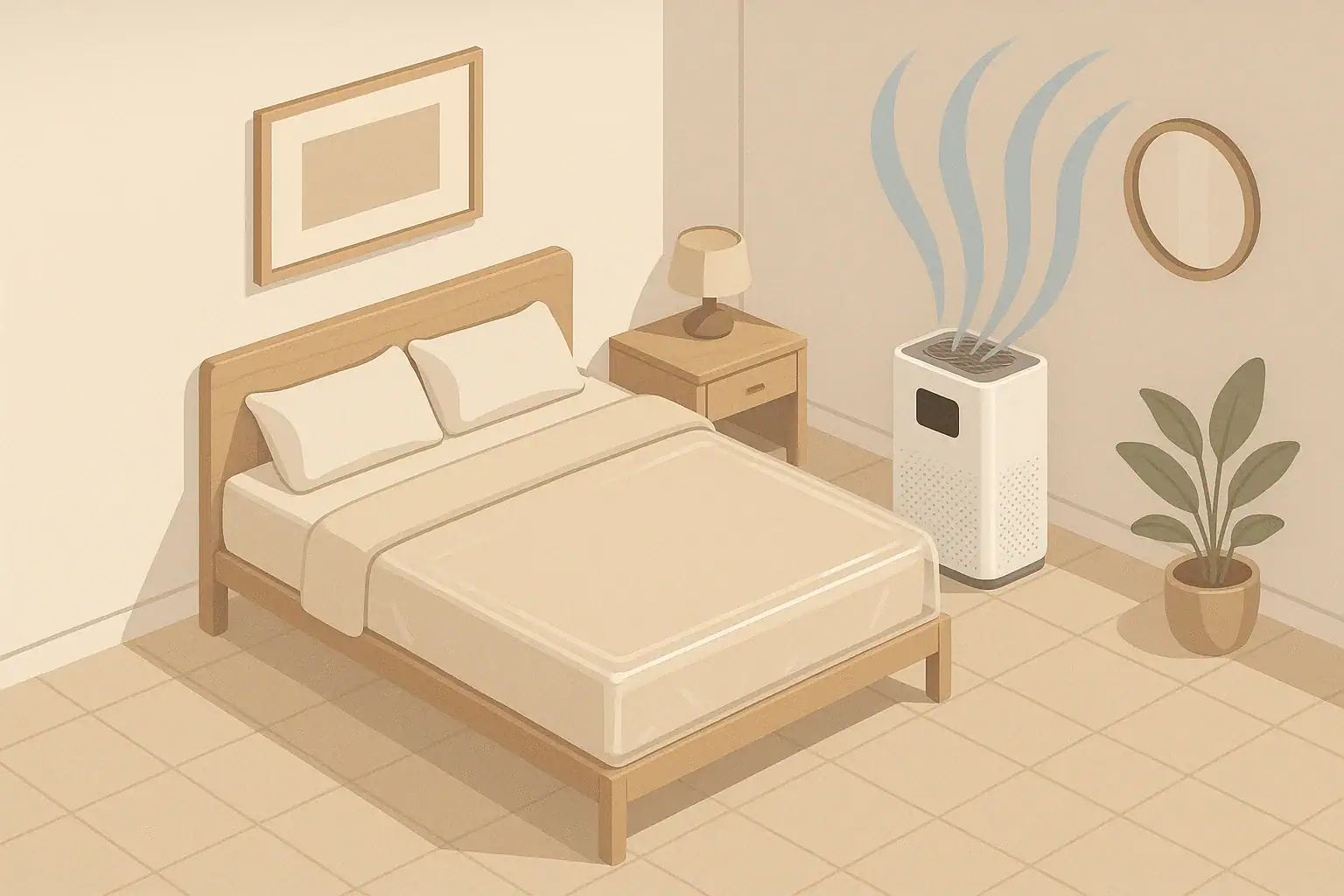
The most effective humidity target for dust mite allergy is generally 40–50% relative humidity, combined with allergen-proof bedding and good air filtration. Keeping indoor air in this range over weeks, not just days, helps limit dust mite growth while staying comfortable for people. When you pair that with washable bedding, mattress encasements, and a well-sized air cleaner, you can noticeably reduce allergy symptoms at night.
This guide explains how dust mites respond to moisture, what humidity levels to aim for, and how to set up your bedroom, bedding, and filtration so the whole system works together. You will also see concrete examples, simple comparison tables, and common mistakes to avoid, so you can focus on changes that actually matter in everyday life.
Whether you are dealing with dust mite allergy, perennial allergic rhinitis, or asthma that worsens in bed, these steps will help you turn a high-risk bedroom into a lower-allergen zone you can maintain long term.
What Dust Mite Allergy Is and Why Indoor Conditions Matter
Dust mite allergy is an immune reaction to proteins in the bodies and droppings of microscopic mites that live in fabric and dust. The mites themselves stay hidden in mattresses, pillows, carpets, and upholstery, but their allergen becomes airborne whenever these surfaces are disturbed.
Typical symptoms include year-round sneezing, congestion, itchy or watery eyes, and worsening nasal or chest symptoms in bed or right after waking. For people with asthma, dust mite exposure can also trigger wheezing and shortness of breath.
Dust mites thrive where three conditions come together:
- Moderate warmth (typical bedroom temperatures)
- Enough humidity in the air and in fabrics
- A steady supply of shed human skin cells
Because of this, managing the bedroom environment is usually more impactful than focusing on the rest of the home first. Humidity targets, bedding choices, and filtration all influence how much allergen you actually breathe while sleeping.
Instead of looking for a single “magic” device, it is more realistic to stack several moderate improvements: control moisture, block contact with mite reservoirs, remove settled dust, and filter the air you breathe most often.
Key Humidity and Allergen Concepts: How Control Actually Works
Dust mites do not drink water; they absorb moisture from the air and from the fabrics they live in. That makes relative humidity (RH) a key lever you can control.
Target Humidity Range for Dust Mite Control
For most homes, a practical target range is:
- 40–50% RH in bedrooms and main living spaces
This range is low enough to stress dust mites and slow population growth, but usually high enough to avoid very dry-air problems like nosebleeds or cracked skin. People with severe dust mite allergy may aim closer to 40% if the climate and building allow it without causing other issues.
Short dips below 40% or brief spikes above 55% matter less than the average over weeks. Mites are protected deep in fabric, so consistent conditions over time are what gradually reduce populations.
How Humidifiers and Dehumidifiers Fit In
Which device you need depends on your climate and your home:
- Dry-climate or winter homes: Humidifiers can raise very low RH into the 40–50% comfort band. The risk is overshooting and accidentally creating a better environment for mites if RH regularly climbs above about 50%.
- Humid-climate or damp homes: Dehumidifiers help pull moisture out of the air when RH tends to sit above 55–60%. Bedrooms above damp basements, or homes with poor insulation, often benefit from dedicated dehumidification.
A standalone hygrometer or a monitor with a humidity readout keeps you from guessing and lets you see how weather, showers, cooking, and laundry affect indoor RH.
Humidity, Bedding, and Filtration Working Together
Humidity control makes the environment less friendly to mites, but it does not remove the allergen already in your bed and carpets. That is where encasements, hot-water washing, and air filtration come in:
- Bedding encasements create a physical barrier between you and mite reservoirs in mattresses and pillows.
- Regular hot-water washing of sheets and blankets removes mites and allergen from the top layers you touch.
- Air filtration captures airborne allergen fragments when you move in bed, vacuum, or walk on carpets.
Think of humidity control as slowing new mite growth, while bedding and filtration reduce what you breathe tonight.
Humidity Targets Compared to Comfort and Mold Risk
The table below compares typical humidity ranges and what they mean for dust mites and general indoor comfort.
| Average indoor RH | Dust mite conditions | Comfort and other risks | Typical actions |
|---|---|---|---|
| Below 30% | Mites stressed; population tends to shrink over time | Dry skin, nose, and throat; static shocks more common | Consider modest humidification if symptoms of dryness are bothersome |
| 30–40% | Less favorable for mites; good for allergy control in many homes | Comfortable for many people, slightly dry for some | Often ideal in cold climates if not causing dryness issues |
| 40–50% | Balanced: acceptable for most households, still limiting mite growth | Comfortable range for most; helps avoid very dry air problems | Common target range for dust mite and general indoor air quality |
| 50–60% | Supports dust mite survival; populations can grow | Air feels more humid; risk of condensation in cool spots | Use dehumidification and ventilation to bring RH down |
| Above 60% | Very favorable for mites; allergen levels tend to be higher | Increases risk of mold and musty odors | Address moisture sources and consider a dehumidifier |
Real-World Setups and Routines That Reduce Dust Mite Exposure
Turning theory into practice is easier if you think in terms of specific rooms and routines rather than the whole house at once. Bedrooms, especially for the person with allergy or asthma, are the priority.
Example Bedroom Setup: Humid Climate
Consider a ground-floor bedroom in a humid region where indoor RH often sits around 60–65% in summer:
- Install a dehumidifier in or near the bedroom and set it to maintain about 45–50% RH.
- Run the bathroom exhaust fan during showers and for at least 20 minutes afterward.
- Use tightly woven encasements on the mattress, pillows, and box spring.
- Wash sheets and pillowcases weekly in the hottest water safe for the fabric, then dry completely.
- Place a portable air cleaner near the side of the bed where the allergic person sleeps, and run it on a quiet but continuous setting at night.
- Vacuum carpets and upholstered furniture in the bedroom at least once per week with a vacuum that has effective particle filtration.
Within several weeks, many people notice less morning congestion and fewer nighttime flare-ups.
Example Bedroom Setup: Dry Winter Climate
Now imagine a home in a cold, dry climate where indoor RH in winter falls to 20–25%:
- Use a room humidifier with a built-in control or external hygrometer and aim for 35–40% RH during the coldest months.
- Keep the humidifier output moderate to avoid visible condensation on windows or walls.
- Still use mattress and pillow encasements, because existing mite allergen remains even when the air is dry.
- Wash bedding weekly; consider lighter, washable blankets instead of heavy, rarely washed comforters.
- Run a portable air cleaner in the bedroom if symptoms remain bothersome, especially during vacuuming or bed making.
In this situation, the main goal is to avoid overshooting humidity with the humidifier while keeping bedding and filtration optimized.
Practical Bedding and Laundry Routine
A realistic weekly routine for a dust-mite-sensitive person might look like this:
- Weekly: Wash sheets and pillowcases in hot water and dry on a hot setting; vacuum bedroom floor and rugs; wipe bedside surfaces with a slightly damp or microfiber cloth.
- Every 1–2 months: Wash blankets and duvet covers if washable; vacuum the mattress surface (through or before opening the encasement if designed for that); wash washable stuffed animals or rotate them out of the bed.
- Yearly or as needed: Replace older pillows that cannot be washed; reassess whether carpets or heavy curtains near the bed can be replaced with easier-to-clean options.
How Filtration Fits into Daily Life
For dust mite allergy, air filtration is most useful when it is running:
- During sleep, when exposure to airborne allergen near your face matters most.
- For at least 30–60 minutes before bedtime, to reduce particles stirred up by evening activity.
- While vacuuming or dusting, to help capture particles that are temporarily kicked into the air.
Position a portable air cleaner so that it draws air from the room and returns cleaner air toward the breathing zone, without blowing directly on your face if that feels uncomfortable or drying.
Common Mistakes and Troubleshooting Dust Mite Control
Many people invest in devices or special bedding but still feel stuck with symptoms. Often the problem is not effort, but a few key gaps or conflicting habits.
Frequent Pitfalls That Undermine Humidity and Allergen Control
The table below summarizes common mistakes, what you might notice, and simple fixes.
| Common mistake | What you may notice | Simple adjustment |
|---|---|---|
| Running a humidifier without checking RH | Windows fogging, musty smell, worsening congestion over time | Use a hygrometer; reduce output or runtime to keep RH near 40–50% |
| Buying encasements but not covering all main bedding pieces | Some improvement, but persistent symptoms when using the bed | Encasements for mattress, main pillows, and box spring if fabric-covered |
| Rarely washing heavy comforters or decorative pillows | Nighttime symptoms despite clean sheets | Switch to washable layers or wash/replace bulky items more often |
| Using an air cleaner on the lowest setting for short periods | Little change in symptoms or dust levels | Run it longer at a speed that still allows sleep; size it to the room |
| Vacuuming with poor filtration or a leaking vacuum | Symptoms flare during or right after cleaning | Use a vacuum with effective particle filtration and good seals; empty carefully |
| Ignoring hidden moisture sources (leaks, damp basements) | Humidity stays high despite a dehumidifier; recurring musty odors | Fix leaks, improve drainage or ventilation, and close off very damp areas if possible |
Quick Troubleshooting Checklist
If you have already made changes but symptoms are still strong, consider these questions:
- Is bedroom RH actually staying below about 50% most of the time? Check with a hygrometer in both humid and dry seasons.
- Are all main sleep surfaces encased? Mattress, pillows, and box spring or foundation if it has fabric.
- Is bedding washed frequently enough? Weekly for sheets and pillowcases; monthly or as allowed for blankets and covers.
- Is there wall-to-wall carpet in the bedroom? If so, are you vacuuming regularly with good filtration, or can flooring be simplified over time?
- Is the air cleaner sized for the room and run long enough? Check the recommended coverage and adjust speed and runtime accordingly.
Improving even one or two weak areas can make the rest of your efforts more effective.
Safety Basics for Humidity Devices, Cleaning, and Filtration
Dust mite control strategies are generally low risk, but a few safety basics help you avoid trading one problem for another.
Safe Use of Humidifiers and Dehumidifiers
- Avoid standing water: Empty and dry humidifier and dehumidifier tanks regularly to prevent bacterial or mold growth inside the unit.
- Follow cleaning schedules: Use the cleaning methods recommended for your device to keep mineral buildup and biofilm under control.
- Watch for condensation: If you see persistent moisture on windows, cold walls, or around vents, reduce humidifier output or adjust airflow.
- Electrical safety: Place plug-in devices on stable surfaces, away from bathtubs, sinks, or places where water can be spilled onto cords or outlets.
Safe Cleaning and Laundry Practices
- Hot water caution: When washing bedding in hot water, avoid overloading the machine and use care when handling hot, wet laundry.
- Avoid harsh fumes in small spaces: If you use strong cleaners for mold or heavy soil, ventilate the area and avoid mixing products such as bleach and ammonia.
- Vacuuming and asthma: People with asthma or severe allergy may want to stay out of the room during vacuuming and for a short period afterward.
Filter and Dust Safety
- Mask use for heavy dust: When changing very dirty filters or cleaning long-neglected areas, a simple particle mask can reduce inhalation of dust.
- Dispose of filters carefully: Place used filters directly into a trash bag, seal it, and remove it from the living space to avoid releasing captured dust.
- Check for overheating: If a fan, air cleaner, or dehumidifier feels unusually hot, smells like burning, or trips a breaker, unplug it and have it inspected or replaced.
Long-Term Maintenance and Seasonal Adjustments
Dust mite reduction is not a one-time project; it is an ongoing set of habits that become easier once they are built into your routine.
Seasonal Humidity Adjustments
- Spring and fall: Track how outdoor humidity changes and how your home responds. You may need less dehumidification or humidification during these transitional seasons.
- Summer in humid climates: Expect to rely more on dehumidifiers and air conditioning to keep RH in the target range.
- Winter in cold climates: Balance humidifier use with condensation risk on cold windows and walls. If condensation is frequent, lower your humidity target slightly.
Filter and Device Maintenance Over Time
- Air cleaner filters: Replace or clean them on the schedule recommended for your usage level. Homes with pets, smokers, or heavy dust may need more frequent changes.
- HVAC filters: Change central system filters regularly, especially during heating and cooling seasons when the system runs more often.
- Humidifier and dehumidifier care: Clean reservoirs, coils, and intake grilles as recommended so the devices remain effective and hygienic.
Bedding and Soft Furnishing Refresh Cycle
- Pillows: Wash washable pillows according to care instructions or replace non-washable pillows every few years, sooner if heavily used.
- Mattress: Vacuum the mattress periodically and check encasements for tears or worn zippers; repair or replace them if they no longer seal well.
- Soft clutter: Periodically review stuffed animals, extra cushions, and heavy throws in the bedroom. Keep only what you can realistically clean on a regular schedule.
Putting It All Together: Practical Takeaways and Specs to Look For
Effective dust mite allergy control comes from combining humidity management, bedding barriers, regular cleaning, and air filtration in the rooms where you spend the most time, especially the bedroom. Aim for steady humidity near 40–50%, use encasements on mattresses and pillows, wash bedding weekly in hot water, and run a properly sized air cleaner consistently in sleeping areas.
Rather than striving for a perfectly dust-free home, focus on reducing allergen exposure where it matters most and on habits you can maintain year-round. Track how your symptoms respond over several weeks as you adjust humidity, bedding, and cleaning routines.
Specs to Look For When Choosing Devices and Materials
When you are ready to upgrade equipment or bedding, these features help support dust mite and humidity control without locking you into specific brands:
- Humidifiers: Built-in humidistat or compatible with an external hygrometer; adjustable output; easy-to-clean tank and surfaces; automatic shutoff when water is low.
- Dehumidifiers: Clear humidity setpoint control (ideally in percentage RH); continuous drain option if used in very damp spaces; accessible filter or intake screen for cleaning.
- Air cleaners: High-efficiency particle filtration; airflow capacity appropriate for the bedroom size; multiple fan speeds including a quiet night mode; sealed housing to reduce air bypass around the filter.
- Vacuum cleaners: Effective particle filtration and well-sealed body; tools for mattresses and upholstery; easy-to-empty bag or bin without creating a dust cloud.
- Bedding encasements: Tightly woven, breathable fabric designed to block fine particles; fully zippered with seams and closures that do not gap; smooth surface that is comfortable to sleep on.
- Sheets and blankets: Machine washable in hot water; durable enough for frequent laundering; lighter, layered bedding instead of one very bulky, rarely washed item.
By matching these specs to your room size, climate, and cleaning habits, you create a practical setup that manages dust mite allergen exposure over the long term without constant trial and error.
Frequently asked questions
How low should indoor humidity be to reduce dust mites without causing dry-air problems?
A practical target for dust mite control is about 40–50% relative humidity. This range stresses mites over time while avoiding many dry-air symptoms; people with sensitive skin or severe allergy may aim closer to 40% if the home can maintain it without condensation issues.
What device features and specs matter most when choosing humidifiers, dehumidifiers, or air cleaners?
Look for built-in or compatible humidistats and clear RH setpoint control, adjustable output, easy-to-clean tanks or filters, and airflow appropriate for the bedroom size. For air cleaners, high-efficiency particle filtration, sealed housing to prevent bypass, and a quiet night mode are useful for continuous overnight use.
What common mistakes cause humidity or allergen control efforts to fail?
Common issues include not measuring RH, incomplete use of encasements, infrequent washing of bedding, running air cleaners too briefly or at too-low speeds, and ignoring hidden moisture sources like leaks. Addressing even one of these gaps often improves the overall program significantly.
Are humidifiers and dehumidifiers safe to use around people with asthma or severe allergies?
Yes—when properly maintained. Empty and clean tanks regularly, avoid visible condensation that can promote mold, and monitor indoor RH to stay within recommended ranges; poor maintenance or persistent condensation can worsen allergen or mold exposure.
How often should bedding and air cleaner filters be cleaned to reduce dust mite exposure?
Wash sheets and pillowcases weekly in the hottest water safe for the fabric; wash blankets and duvet covers every 1–2 months or per care instructions. Check air cleaner filters monthly for heavy use and replace or clean them on the manufacturer-recommended schedule or more often if you have pets or high dust levels.
Can a portable air cleaner alone control dust mite allergen in a bedroom?
No—air cleaners help capture airborne allergen fragments but do not remove reservoirs in mattresses, pillows, and fabrics. Combine filtration with humidity control, encasements, and regular laundering to reduce both airborne and settled allergen effectively.
- Clear sizing logic (room size → CADR/ACH)
- HEPA vs carbon explained for real use-cases
- Humidity + ventilation basics to reduce mold risk