
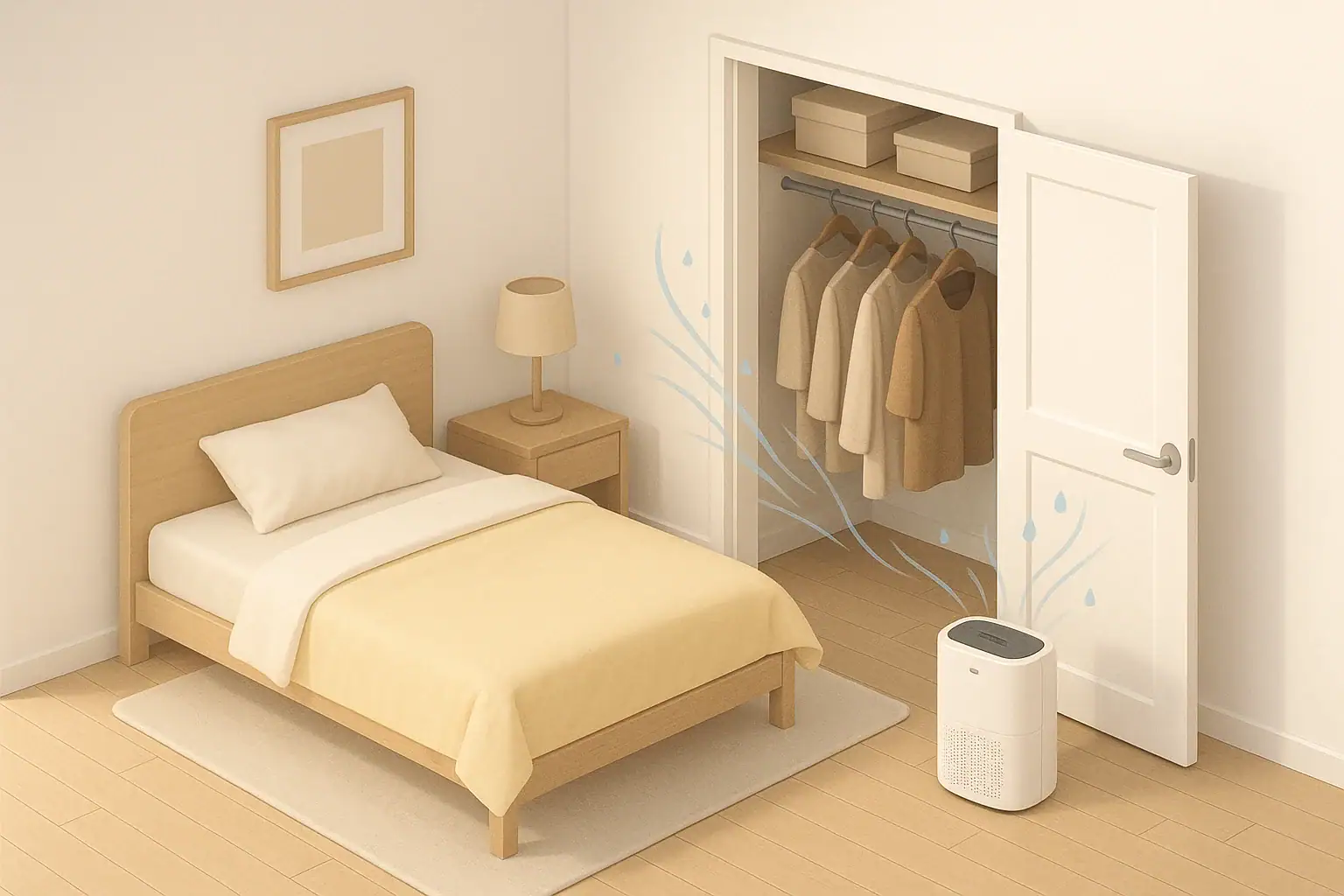
A musty smell in closets usually comes from excess moisture and poor air circulation allowing mold, mildew, or odors to build up on surfaces and fabrics.
Closet air often becomes stale because doors stay closed, airflow is limited, and walls are cooler than the rest of the room. When humidity runs high or items are stored while slightly damp, small enclosed spaces like closets become prime spots for musty odors. Understanding where that moisture comes from makes it easier to dry things out and keep the smell from coming back.
- Keep indoor humidity around 30–50% as a general comfort range to discourage musty odors.
- Check for hidden moisture sources: damp clothes, exterior walls, bathrooms nearby, or leaks.
- Add airflow: crack the closet door, create gaps between items, and improve room ventilation.
- Clean visible mold or mildew with a mild cleaning solution and dry surfaces thoroughly.
- Use moisture control tools when needed, such as a small dehumidifier or passive desiccant tubs.
- Store only dry items and avoid blocking supply/return vents with boxes or hanging clothes.
What a Musty Closet Smell Usually Means
A musty smell in a closet is typically a sign that moisture and organic material are sitting together long enough for microbes and odors to develop. It does not always mean there is a serious mold problem, but it usually means conditions are damp or stagnant enough that mold or mildew could grow.
Common odor sources in closets include:
- Damp fabrics such as towels, workout clothes, or coats stored before they are fully dry.
- Porous materials like cardboard boxes, shoes, leather items, or wood shelving that slowly absorb moisture.
- Dust and skin flakes that settle into carpet, clothing, and shelves and can support microbial growth in damp air.
- Hidden mold or mildew on walls, baseboards, behind stored items, or on the back of doors.
A light musty smell that comes and goes with weather changes often points to intermittent humidity issues, while a constant or worsening odor can indicate ongoing dampness, such as a leak or chronically high humidity in that part of the home.
Key Moisture Sources in and Around Closets
Most musty closets trace back to one or more moisture sources, combined with low airflow. Identifying the main source helps you choose the right remedy.
Indoor humidity and seasonal changes
In many homes, indoor humidity rises during rainy seasons, in humid climates, or when the home is tightly closed up. Moist air can condense on cooler surfaces such as closet walls, especially exterior or corner walls. Over time, this creates a slightly damp environment in an enclosed space.
As general comfort guidance, many households aim to keep indoor relative humidity roughly between 30% and 50%. Above this range for extended periods, materials may stay slightly damp, and musty odors are more likely to appear.
Adjacent bathrooms, laundry, and kitchens
Closets near moisture-producing rooms can be affected by steam and water use. For example:
- A bedroom closet sharing a wall with a bathroom with frequent hot showers.
- A hall closet next to a laundry room with a dryer vent that is partially blocked or leaking indoors.
- A pantry or coat closet near a kitchen where cooking adds moisture to the air.
If these areas are not ventilated well, moisture can migrate into nearby closets and linger there because closet doors stay closed more of the time.
Exterior walls and cooler corners
Closets built along exterior walls or in corners of the house tend to be slightly cooler than the main living space. Warm, humid indoor air can contact these cooler surfaces and release moisture (condensation), especially in winter or during big temperature swings. Over time, this can make drywall, paint, or wallpaper slightly damp and prone to mustiness.
Leaks and building envelope issues
Less commonly, a closet odor may signal a leak or water intrusion. Examples include:
- Roof leaks or ice dams wetting ceiling or upper walls behind shelves.
- Plumbing lines running through closet walls or ceilings with slow drips.
- Poor exterior sealing letting rain water seep behind siding and into wall cavities.
- Basement or first-floor closets near foundation walls with occasional seepage or condensation.
These issues often show up as staining, bubbling paint, soft drywall, or visible mold patches, not just odor.
Example values for illustration.
| Clue you notice | Likely moisture source | Simple first action |
|---|---|---|
| Musty odor only after rainy days | Seasonal high humidity, cooler walls | Measure room humidity, increase ventilation on damp days |
| Smell strongest near floor or back wall | Exterior wall condensation or slab moisture | Pull items away from wall, inspect baseboards and corners |
| Odor near ceiling or upper shelves | Possible roof or plumbing leak above | Check for stains, bubbling paint, or damp drywall |
| Smell increases after hot showers | Bathroom moisture migrating to closet | Run bath fan longer, keep closet door cracked |
| Mustiness mostly from coats or shoes | Items stored while still damp | Dry items fully before storing, clean if needed |
| Visible spots on walls or baseboards | Localized mold or mildew on surfaces | Clean spots safely and dry area thoroughly |
| Carpet feels cool or slightly damp | Floor moisture or high room humidity | Improve airflow, consider dehumidification |
Common Mistakes That Keep Closets Musty
Even when people try to fix a musty smell, certain habits can unintentionally keep the problem going.
Overstuffing and blocking airflow
Closets packed tightly with clothes and boxes trap still air. When nothing can breathe, any moisture in fabrics or on walls takes longer to evaporate. Overstuffing can also block supply vents, return grills, or undercut door gaps that help air cycle through the space.
Masking odors without removing moisture
Using strong fragrances, sprays, or scented products can temporarily hide a musty smell, but they do not dry out damp surfaces. In some cases, added fragrances cling to fabrics and combine with existing odors, making the space smell stale in a different way.
Ignoring small signs of water
Minor signs like slightly warped baseboards, minor discoloration, or a cooler, damp-feeling corner can be easy to overlook. Over time, these small hints can turn into more noticeable smell or surface damage if moisture is not addressed.
Storing items while damp
Putting away bath towels, boots, outdoor gear, or laundry that is not fully dry is one of the quickest ways to introduce musty odors. The enclosed environment slows drying, so microbes and odors have more time to develop.
Practical Checklist to Remove and Prevent Musty Closet Smells
Addressing a musty closet usually means removing existing odor sources, improving drying, and then keeping moisture under control.
Step 1: Empty and inspect the closet
- Remove all clothing, shoes, and storage boxes.
- Check walls, ceiling, baseboards, and shelves for discoloration, peeling paint, or visible mold or mildew.
- Look behind and under large items and along corners where air circulation is weakest.
- Feel for cool or damp spots on carpet, flooring, and lower walls.
Step 2: Clean surfaces and address visible mold
For light surface grime or mildew, many households use a mild detergent or general-purpose cleaner in accordance with product directions. Lightly scrub affected areas and then dry them thoroughly with clean towels and airflow.
For larger or persistent mold growth, or if structural materials are clearly damaged, many homeowners choose to consult local professionals or building specialists, since more extensive work may be needed. Avoid dry brushing, scraping, or sanding moldy areas without appropriate precautions, because that can spread spores and dust.
Step 3: Wash or air out contents
- Launder washable fabrics like clothing, linens, and some curtains according to their care labels.
- Air out items that cannot be washed easily, such as some shoes, suitcases, or certain fabrics, in a drier, well-ventilated room.
- Discard items that are heavily damaged or strongly musty if they do not respond to cleaning.
Step 4: Improve airflow and drying
Once surfaces are clean, help them dry completely:
- Leave the closet door open for several hours or days, if practical.
- Use a fan in the adjacent room aimed toward the open closet to keep air moving.
- If humidity is high, consider using a dehumidifier in the room to help dry the air.
Step 5: Adjust storage habits
- Allow clothes and towels to dry fully before hanging them in the closet.
- Avoid storing wet boots or umbrellas directly inside; let them dry in a better-ventilated area first.
- Use breathable containers (for example, fabric bins) instead of completely airtight plastic bags for long-term textile storage.
- Leave a small gap between items and walls to allow air to circulate behind them.
Step 6: Consider moisture control tools
Depending on how damp your home or region is, it may help to use:
- Room dehumidifiers to keep overall humidity closer to a 30–50% comfort range.
- Passive desiccant containers (moisture-absorbing tubs or pouches) placed on shelves to help in small, enclosed spaces.
- Ventilation improvements such as using bathroom and kitchen exhaust fans more consistently or opening windows when weather allows.
Real-World Closet Scenarios and What Usually Helps
Different types of closets can develop musty odors in slightly different ways. Here are some common patterns and practical responses.
Bedroom closet with an exterior wall
In a typical bedroom closet on an exterior wall, the wall may be cooler, especially during colder months. If indoor humidity is high, this can promote condensation and mustiness in the back corners.
Helpful steps often include:
- Pulling storage bins a few inches away from the exterior wall.
- Limiting how tightly clothes are packed along that wall.
- Monitoring indoor humidity during seasonal changes and using dehumidification if it stays high.
Closet next to a bathroom
A closet whose wall backs onto a frequently used bathroom may absorb steam and moisture through small gaps and temperature differences.
To reduce this effect:
- Run the bathroom exhaust fan during showers and for about 15–20 minutes afterward as a general habit.
- Keep bathroom doors slightly open after showers once privacy is no longer needed, if household routines allow.
- Leave the adjacent closet door cracked open at times to equalize air and avoid long periods of stagnant, moist air.
Basement or first-floor hall closet
Basement-level closets or those near foundation walls can be affected by ground moisture and cooler surfaces. Even if you do not see water, the area can feel more humid.
Possible actions include:
- Using a dehumidifier in the basement or lower level, especially in damp seasons.
- Keeping closet doors open more often to share air with the larger room.
- Storing moisture-sensitive items (like certain paper goods or fabrics) in upper-level closets instead.
Safety and Building Considerations
While many musty odors can be managed with simple housekeeping and moisture control, certain signs call for extra attention.
When a musty smell may indicate a larger issue
Consider seeking input from building, HVAC, or other local professionals if you notice any of the following:
- Persistent strong musty odor that returns quickly after cleaning and drying.
- Visible mold patches covering a large area or spreading over time.
- Significant staining, sagging, or soft spots in walls, ceilings, or floors.
- Evidence of active leaks from plumbing, roofs, or windows.
Addressing the underlying building or plumbing issue is important for long-term odor control and to protect materials in the home.
Devices and add-ons used with caution
Some air-cleaning or odor-control devices use technologies such as ionization or UV-C light. These can have specific operating instructions and safety considerations. Many homeowners prefer to choose systems described as not producing ozone, and to follow manufacturer guidance carefully when using any such devices, especially in small enclosed spaces like closets.
Whenever placing a powered device in or near a closet, maintain clearances recommended in the manual, keep cords away from hanging fabrics, and avoid blocking vents or intakes.
Ongoing Maintenance to Keep Closets Fresh
Once a musty smell is resolved, simple periodic habits help keep it from returning.
Regular inspection and light cleaning
- Dust shelves, baseboards, and door frames on a routine schedule (for example, every 1–3 months).
- Vacuum or clean closet floors, including edges and corners where dust tends to accumulate.
- Check for new stains, peeling paint, or damp patches after heavy rain or seasonal changes.
Monitor indoor humidity and airflow
A simple humidity gauge can help you understand how often your home is above or below your target range. If humidity regularly runs high, more robust moisture control for the whole room or level may be more effective than treating closets one by one.
Keep closet doors at least slightly open when practical, especially in rooms without strong air circulation. Ensure supply and return vents in the room are not covered by furniture or storage.
Rotate and declutter stored items
- Periodically sort through stored shoes, bags, and boxes to avoid long-forgotten damp items sitting in the back.
- Consider donating or discarding rarely used items instead of packing the closet completely full.
- Use shelving or raised platforms to keep items off potentially cooler or slightly damp floors, especially in basements.
Example values for illustration.
| Goal | Simple actions | Tools | Note |
|---|---|---|---|
| Keep humidity in a comfort range | Ventilate on humid days, run exhaust fans, limit indoor moisture | Humidity gauge, bathroom/kitchen fans | Aim roughly for 30–50% RH indoors when possible |
| Dry a musty closet after cleaning | Open door, use a fan to move air from the room into the closet | Portable fan, open interior doors | Focus on steady airflow for hours to days |
| Reduce moisture in a damp basement closet | Dehumidify the larger room, keep closet door ajar | Room dehumidifier, hygrometer | Treat the whole area, not just the closet |
| Protect stored fabrics and paper | Use breathable containers, avoid floor contact, keep space less crowded | Shelves, fabric bins, small desiccant tubs | Allows air to circulate and limits damp spots |
| Handle seasonal humidity spikes | Increase ventilation during mild weather, close windows and dehumidify in very humid weather | Windows, fans, dehumidifier | Adjust approach based on outdoor conditions |
| Check whether odor is returning | Smell and inspect after rain, laundry days, and high-humidity stretches | Flashlight, basic notes or reminders | Catches issues early before they build up |
Related guides: Air Purifier vs Dehumidifier: Which One Solves Musty Air? • Air Purifier for Mold Spores: What Works and What Doesn’t • Desiccant vs Compressor Dehumidifiers: Which Is Better for Cold Rooms?
Key Takeaways on Musty Closet Smells
A musty smell in closets usually points to extra moisture and limited airflow, not just age or dust. Finding where moisture enters the space—through humid indoor air, nearby bathrooms, cooler exterior walls, or occasional leaks—helps you choose the right combination of cleaning, drying, and ongoing moisture control.
Simple steps such as fully drying items before storage, decluttering to improve air circulation, keeping indoor humidity in a comfortable range, and periodically inspecting for early signs of dampness go a long way toward keeping closets fresher over time.
Frequently asked questions
What are the most likely moisture sources that cause a musty smell in closets?
The most common sources are high indoor humidity, damp fabrics stored before they dry, moisture migrating from adjacent bathrooms or laundry areas, condensation on cooler exterior walls, and occasional leaks in roofs or plumbing. Often a combination of these plus low airflow produces the persistent musty odor.
How can I tell if humidity, rather than a leak, is causing the closet smell?
Use a hygrometer to check relative humidity; sustained readings above 50% point to humidity issues. Also look for patterns — if the smell appears after rainy days or during humid seasons it’s likely humidity, while visible staining, bubbling paint, or localized wet spots suggest a leak.
Will air fresheners or scented sprays solve a musty closet smell?
No — masking agents only cover the odor temporarily and do not remove the underlying moisture or microbial growth. Effective solutions are cleaning affected surfaces, thoroughly drying the closet and contents, and addressing moisture sources or improving ventilation.
When should I call a professional about a musty closet smell?
Contact a building, HVAC, or water-remediation professional if the odor persists after cleaning and drying, if you see extensive or spreading mold, or if there are signs of active leaks, structural damage, or large stained areas. Professionals can identify hidden moisture paths and recommend repairs to prevent recurrence.
What moisture-control tools work best for small closets?
Small electric room dehumidifiers or compact desiccant tubs are practical for closets; portable fans to increase airflow and a hygrometer to monitor humidity are also helpful. For persistent whole-room humidity, treating the larger space (e.g., a bedroom or basement) with a properly sized dehumidifier is usually more effective than treating individual closets.
Recommended next:
- Best Indoor Humidity Level to Prevent Mold (With Seasonal Targets)
- Air Purifier for Mold Spores: What Works and What Doesn’t
- How to Stop Condensation on Windows (And Why It Matters for Mold)
- Basement Dampness 101: RH Targets, Dehumidifiers, and Ventilation
- Condensation on Windows: Causes, Dew Point, and Fixes That Work
- Bathroom Mold Prevention: Exhaust Fan Timing and Humidity Control
- More in Mold & Dampness →
- Clear sizing logic (room size → CADR/ACH)
- HEPA vs carbon explained for real use-cases
- Humidity + ventilation basics to reduce mold risk






About this site
Home Air Quality Lab publishes practical, independent guides about indoor air quality—clear sizing, safer use, and real-world expectations.
Affiliate disclosure
Some links on this site may be affiliate links. If you buy through these links, we may earn a small commission at no extra cost to you. This helps support our content. Learn more.