
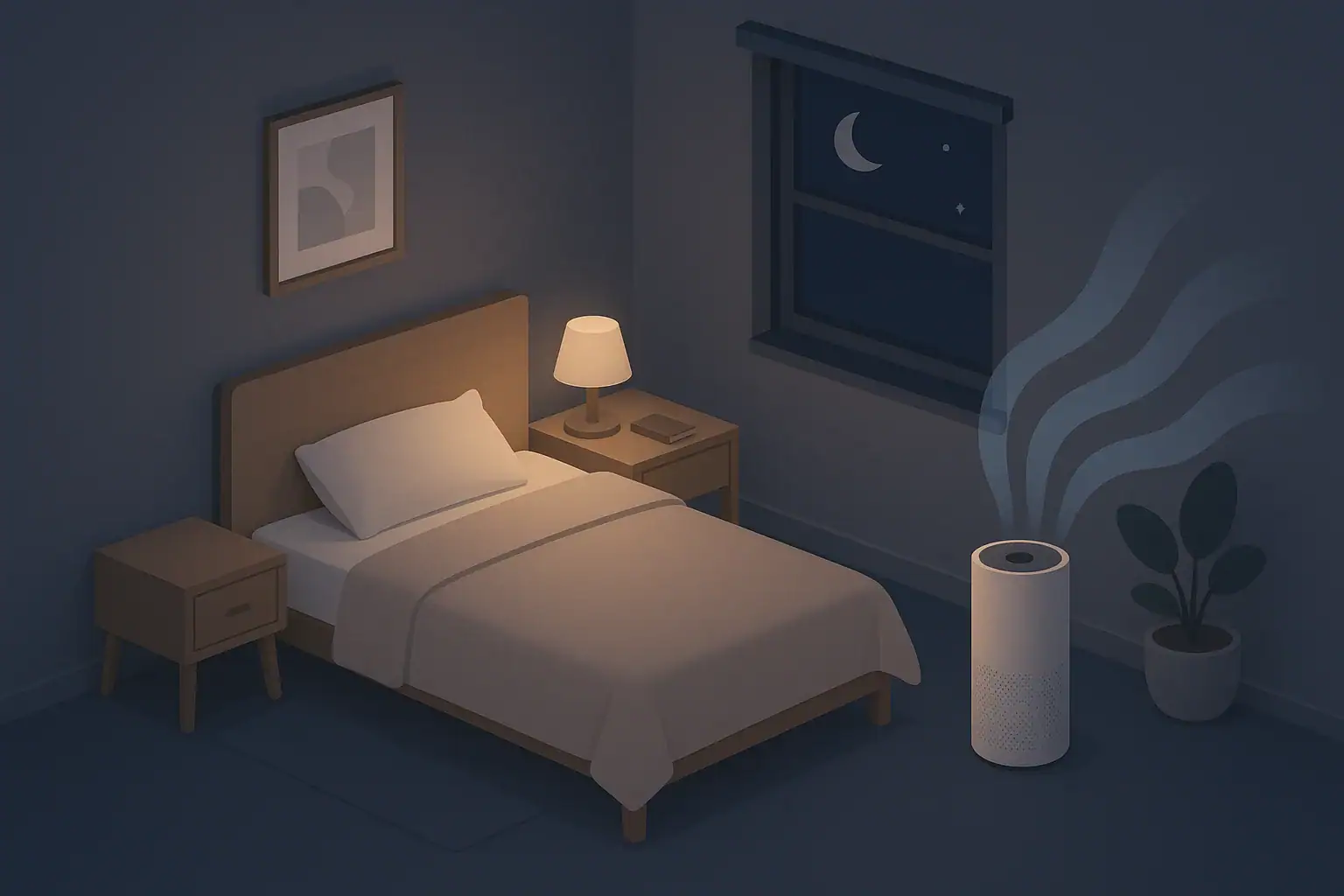
Sleep mode on a bedroom air purifier usually means the fan runs at its lowest speed with dimmed lights, so the unit is quieter but also cleans the air more slowly. For most people, the best approach is to use higher speeds to clean the room before bed, then switch to a quiet setting overnight so you get both cleaner air and less noise.
Quiet air purifiers for bedrooms, night mode, and whisper-quiet filtration all describe the same goal: enough air changes to keep dust, pet dander, and smoke under control without a fan that keeps you awake. Because there is no universal standard for “sleep mode,” you need to understand how your purifier behaves and how to set up the room around it.
This guide explains what sleep mode really does, how it affects noise and air cleaning, and how to use modes, placement, and simple routines to keep your bedroom comfortable, quiet, and less stuffy by morning.
What Sleep Mode Means on Quiet Bedroom Air Purifiers
Sleep mode is a preset designed to make an air purifier less noticeable in a dark, quiet bedroom. It prioritizes comfort over maximum cleaning speed, mainly by reducing airflow and light output.
While details vary, most bedroom air purifiers in sleep or night mode do some combination of the following:
- Drop fan speed to the lowest or near-lowest setting.
- Reduce noise level so the fan sounds more like a soft background hum.
- Dim or shut off display lights so the room stays dark.
- Limit auto mode jumps, so the fan speed does not ramp up suddenly at night.
This matters because air cleaning performance depends on how much air the fan can push through the filters each hour. Lower fan speed means fewer air changes per hour, which can be fine in a reasonably clean room but slow during smoke events, heavy dust, or strong odors.
To use sleep mode effectively, think of it as a maintenance setting: it helps keep already-improved air cleaner and more comfortable overnight, but it is rarely the fastest way to clear a polluted bedroom.
Key Concepts: Noise, Airflow, and Bedroom Sizing
To balance quiet operation with effective bedroom filtration, it helps to understand three basic ideas: noise level, airflow, and room size.
Noise ranges that feel quiet in bedrooms
Manufacturers often list noise in decibels (dB). People perceive sound differently, but many sleepers find these broad ranges useful when comparing quiet air purifiers for bedrooms:
- Low 20s–mid 30s dB: Often perceived as very quiet or whisper-like in a still room.
- Mid 30s–mid 40s dB: Noticeable fan noise; for some people this is pleasant white noise.
- Above mid 40s dB: Can feel loud in a silent bedroom, especially for light sleepers.
Sleep mode is typically designed to land in the lowest of these ranges, but the exact number depends on the model and room acoustics.
Airflow, CADR, and air changes per hour
Two related ideas describe how quickly a purifier can clean bedroom air:
- Clean Air Delivery Rate (CADR): How much filtered air the unit can provide per minute under test conditions.
- Air Changes per Hour (ACH): How many times per hour the purifier can theoretically filter a room’s air volume.
As fan speed drops in sleep mode, effective CADR and ACH drop too. That is why a purifier that is correctly sized for your bedroom can often stay on low or sleep mode at night and still keep up, while a very small unit in a large room may fall behind when pollutants are entering continuously.
Comparing purifier modes for bedroom use
Most purifiers offer several modes that trade off noise and cleaning speed. The table below shows how they typically relate for bedroom use.
| Mode | Relative airflow | Approximate noise perception | Best use in a bedroom |
|---|---|---|---|
| High / Turbo | 100% of rated airflow | Loudest; may require raised voices | Pre-cleaning the room before bed or during smoke/odor spikes |
| Medium | 50–70% of rated airflow | Moderate fan sound | Evening use while awake in the bedroom |
| Low | 25–40% of rated airflow | Soft but noticeable hum | Overnight in moderately sized rooms for most sleepers |
| Sleep / Night | 15–30% of rated airflow | Very quiet; often blends with background | Overnight for light sleepers or very quiet homes |
| Auto | Varies with sensor readings | Can jump from quiet to loud suddenly | Daytime use; manual low or sleep is often better at night |
Real-World Bedroom Setups and Sleep Mode Examples
Because every bedroom and household is different, it helps to look at concrete examples of how quiet air purifiers can be used overnight.
Example 1: Small bedroom, allergy focus
Imagine a 120-square-foot bedroom with one person who has dust and pet dander allergies. The purifier is correctly sized for the room and located a few feet from the foot of the bed.
- Evening routine: Run on medium for 1–2 hours before bed with the door mostly closed.
- Overnight: Switch to low or sleep mode; noise becomes a soft background sound.
- Result: Fewer overnight allergy symptoms, and the room does not feel stuffy by morning.
Example 2: Larger bedroom, wildfire smoke nearby
Now consider a 220-square-foot bedroom in an area affected by seasonal wildfire smoke. The purifier is near the center of the room, away from curtains and corners.
- During smoke events: Run the purifier on high for several hours in the afternoon and evening, with windows closed.
- At bedtime: If outdoor smoke is still heavy, keep the unit on medium; if levels have dropped, switch to low or sleep mode.
- Result: Faster reduction of fine smoke particles before sleep, then quieter maintenance overnight.
Example 3: Very light sleeper sharing a room
In a shared bedroom, one person sleeps lightly and notices every sound. The purifier is placed on the far side of the room, angled so the outlet does not blow directly on either sleeper.
- Evening: Run on medium while reading or watching a show; noise is acceptable while awake.
- Overnight: Use sleep mode only, and disable audible beeps if possible.
- Result: The light sleeper is less disturbed, while the other person still benefits from filtered air.
Example 4: Bedroom with multiple devices
Some bedrooms also have a humidifier, dehumidifier, or fan running. Each device adds sound and airflow.
- Noise layering: A ceiling fan plus purifier on low can create a steady, blended white noise that masks outdoor sounds.
- Staggered operation: Run the loudest device (often a dehumidifier) during the day, and rely more on the quieter purifier at night.
- Placement: Keep devices in different corners to avoid resonance or rattling against each other.
Common Mistakes and Troubleshooting for Bedroom Purifiers
Even a good quiet air purifier can seem ineffective or too loud if it is used in a suboptimal way. Many issues come down to placement, mode choices, or filter condition.
Frequent mistakes with sleep mode and bedroom use
- Relying on sleep mode only even during heavy pollution, which can leave the room feeling hazy or stale.
- Putting the purifier in a corner or tight gap, which restricts airflow and can increase noise from turbulence.
- Placing it directly next to the bed, so any small sound or vibration feels louder than it really is.
- Leaving filters in too long, leading to reduced airflow, more fan strain, and sometimes higher noise.
- Using auto mode overnight, which can jump to high speed suddenly if a sensor detects a spike.
Noise and performance troubleshooting cues
The table below links common symptoms to likely causes and simple steps you can take.
| Symptom | Likely cause | What to check or adjust |
|---|---|---|
| Still smells smoky or stale in the morning | Fan speed too low for room size or pollution level | Use high or medium for 1–3 hours before bed; confirm room is within the purifier’s coverage |
| Fan sounds louder than expected on low | Unit too close to wall, corner, or hard surface | Move it at least several inches away from walls and off tight shelves; place on a stable, level surface |
| Rattling or buzzing at night | Loose panel, filter not seated, or objects on top | Remove items from the top, reseat filters, and ensure access panels are fully latched |
| Sudden loud bursts of fan noise | Auto mode reacting to sensor changes | Switch to manual low or sleep mode before bed to keep fan speed constant |
| Bright display disturbs sleep | Display light settings not adjusted | Enable display dimming or light-off option; if not available, reposition unit so light faces away from the bed |
| Dust buildup on furniture despite running purifier | Insufficient run time or clogged filters | Run the unit more hours per day, check and replace filters as needed, and keep intakes free of visible dust |
When sleep mode may not be enough
Sleep mode alone is usually not sufficient when:
- Outdoor air quality is very poor (for example, strong wildfire smoke).
- There are strong ongoing indoor sources, such as heavy indoor smoking or frequent high-heat cooking nearby.
- The purifier is undersized for the bedroom’s square footage and ceiling height.
In these cases, use higher speeds to reduce pollutant levels first, then step down to the quietest setting you can tolerate once the room feels and smells cleaner.
Safety Basics for Bedroom Air Purifier Use
Most modern air purifiers are designed for safe, continuous operation, including overnight use in bedrooms. Still, a few basic precautions help keep them safe and reliable.
Electrical and placement safety
- Use a proper outlet: Plug the purifier directly into a wall outlet rather than a heavily loaded power strip.
- Keep cords tidy: Route the power cord where it will not be tripped over or pinched by furniture.
- Allow ventilation space: Do not drape blankets, clothing, or curtains over the unit or block the intake or outlet.
- Stable surface: Place the purifier on a flat, stable surface so it cannot tip over easily.
Filter and airflow safety
- Use compatible filters: Only use filters designed for your model so the fan is not overworked by excessive resistance.
- Avoid improvised coverings: Do not tape cloths, paper, or improvised pre-filters over vents; these can restrict airflow and strain the motor.
- Keep away from open flames: Do not place the purifier next to candles or other open flames where airflow might disturb them.
Bedroom comfort and health considerations
- Ozone-producing technologies: For bedroom use, many people prefer purifiers that rely on mechanical filtration rather than technologies that intentionally generate reactive gases.
- Children and pets: In rooms with children or pets, ensure the unit is placed where it cannot easily be knocked over or used as a step.
- Humidity balance: If you also run a humidifier or dehumidifier, avoid directing strong moist or very dry air streams straight into the purifier’s intake.
Long-Term Use, Maintenance, and Seasonal Storage
Quiet performance and effective filtration both depend on consistent maintenance. Over time, filters load with particles, and dust can accumulate on grilles and sensors.
Filter replacement habits
- Follow time or indicator guidance: Many purifiers use a filter timer or indicator light; treat this as a reminder to inspect, not as an absolute rule.
- Adjust for heavy use: If you run the purifier on higher speeds frequently (for example, during wildfire season), filters may need replacement sooner than the default schedule.
- Check visually: Dark, heavily loaded filters, or a noticeable drop in airflow at the same fan speed, can signal that it is time to replace them.
Keeping noise low over time
- Dust the intake and outlet: Gently vacuum or wipe grilles to keep airflow smooth and reduce whistling sounds.
- Reseat filters after cleaning: When you open the unit, ensure filters and panels are firmly back in place to prevent rattling.
- Listen for changes: A new hum, buzz, or vibration often means something has shifted or a filter is overdue for replacement.
Seasonal or temporary storage
- Clean before storage: Remove used filters if they are near the end of life, and gently clean dust from the housing.
- Store in a dry place: Keep the purifier and spare filters in a cool, dry area away from moisture and direct sunlight.
- Inspect before reuse: When bringing the unit back into service, check for odors, visible mold on filters, or damage before running it in a bedroom.
Putting It All Together: Quiet Bedroom Setup and Specs to Look For
Using sleep mode well is less about a single button and more about a simple routine: clean the air more aggressively before bed, then maintain it quietly overnight with a right-sized, well-placed purifier.
- Use higher fan speeds when noise is less of a concern, especially after cooking, cleaning, or during smoke events.
- Switch to low or sleep mode at bedtime if the room already feels and smells clean.
- Place the purifier a few feet from the bed, away from corners and obstructions, with clear space around the intake and outlet.
- Keep filters fresh and grilles clean so the fan does not have to work harder (and louder) than necessary.
Specs to look for in a quiet bedroom air purifier
When you compare quiet air purifiers for bedrooms, these specifications and features help you predict both noise and performance:
- Room size rating that comfortably covers your bedroom’s square footage at a moderate to high ACH.
- Published noise levels for low and sleep modes, ideally in the low 20s to mid 30s dB range.
- Multiple manual fan speeds, including a true low or sleep setting you can lock in overnight.
- Display dimming or lights-off option so the room stays dark while you sleep.
- High-efficiency particle filter (often described as HEPA-type or similar) for fine dust, pollen, and smoke particles.
- Optional gas/odor filter stage (commonly activated carbon) if you are concerned about smells or certain indoor gases.
- Timer or scheduling function so you can automate pre-cleaning on higher speeds before bedtime.
- Filter indicator to remind you when it is time to inspect and replace filters.
- Compact footprint and stable design that fits safely in your bedroom layout without blocking walkways.
With these points in mind, you can choose and use a quiet bedroom air purifier in a way that supports both cleaner air and better sleep, instead of relying only on the label “sleep mode.”
Frequently asked questions
Which technical specs most affect how quiet and effective a bedroom air purifier is?
Look for the unit’s CADR or ACH rating relative to your room size, published noise levels for low/sleep settings, and the number of manual fan speeds. Filter type and resistance (for example, a true HEPA or equivalent) also affect performance and how hard the fan must work. Together these specs predict how well the unit can clean while staying quiet.
Can I rely on sleep mode alone to keep my bedroom air clean overnight?
Sleep mode reduces airflow to lower noise, so it often maintains already-low pollutant levels but is not ideal for rapid cleanup during heavy pollution events. For best results, run higher speeds to reduce spikes in particles or odors before switching to sleep mode overnight. If pollutants are continuous or outdoor air is very poor, keep the fan at a higher setting.
What safety precautions should I take when running an air purifier in a bedroom overnight?
Plug the purifier directly into a properly rated wall outlet, keep the intake and outlet unobstructed, and place the unit on a stable surface where it cannot be knocked over. Use compatible filters and avoid covering vents or using improvised coverings that restrict airflow. Also keep the unit away from open flames and excessive moisture.
How should I position a quiet air purifier in my bedroom for best results?
Position the purifier a few feet from the bed, away from corners, walls, curtains, and other obstructions so intake and outlet airflow are clear. Avoid placing it directly next to the head of the bed if small sounds bother you, and keep it on a stable, level surface for minimal vibration. Good placement improves both airflow and perceived noise.
How often should I change filters if I run the purifier overnight?
Filter replacement depends on runtime and pollution levels; follow the unit’s indicator or recommended schedule as a baseline and inspect filters visually for heavy loading. Units used heavily during events such as wildfire season or in dusty homes will need new filters sooner than those running lightly. Replacing filters when recommended keeps airflow and quiet performance consistent.
Will sleep mode reduce allergy symptoms and dust exposure enough for allergy sufferers?
Sleep mode can help maintain lower particle levels overnight if the purifier is correctly sized and the room was cleaned on higher speeds beforehand. However, allergy sufferers often need a unit that provides adequate ACH even at low settings and a high-efficiency particle filter to see consistent symptom improvement. Combining pre-cleaning, correct sizing, and regular filter changes gives the best results.
- Clear sizing logic (room size → CADR/ACH)
- HEPA vs carbon explained for real use-cases
- Humidity + ventilation basics to reduce mold risk