
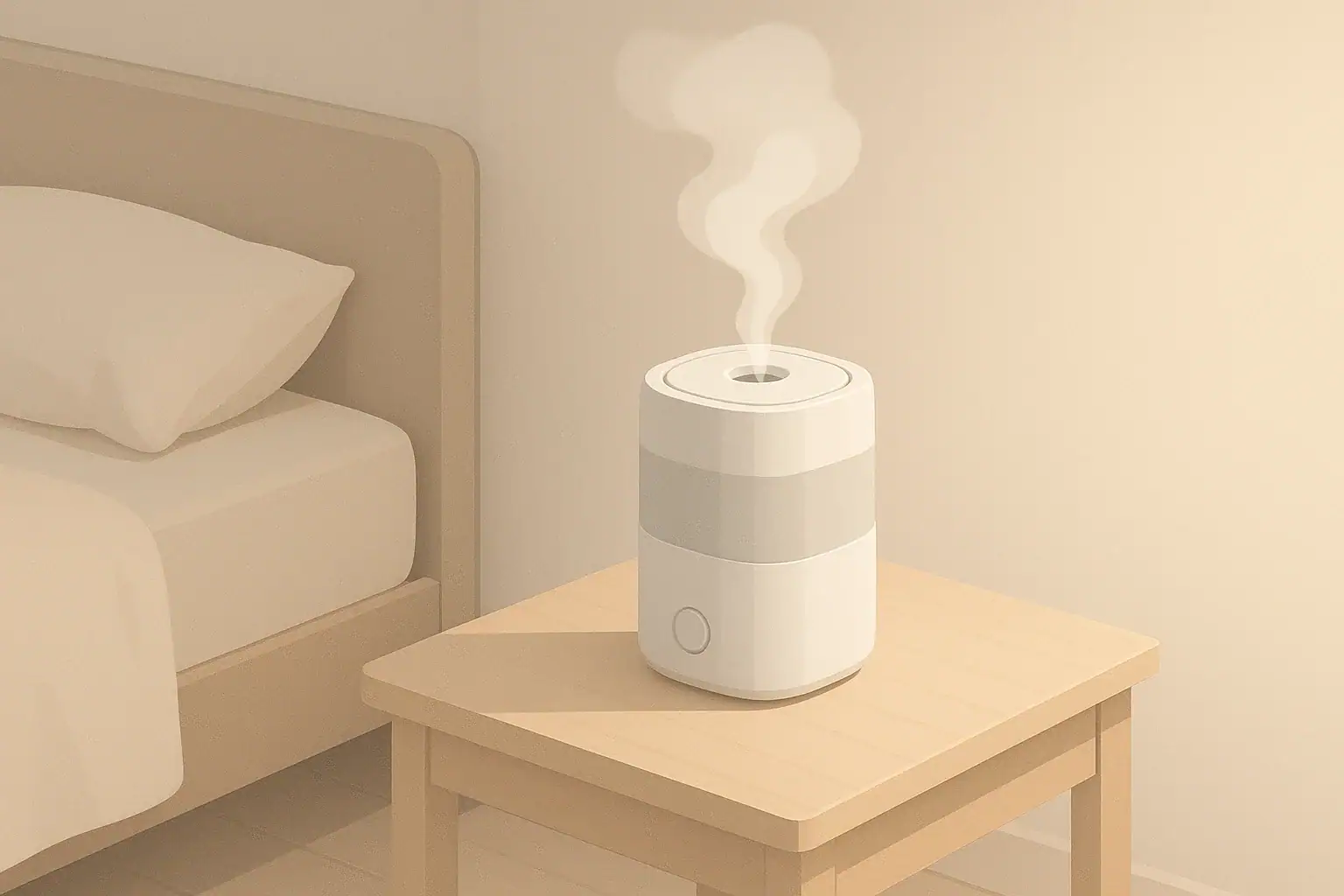
A humidifier smells bad when stagnant water, mineral buildup, biofilm, residue, or an overused wick creates odors that the mist or fan carries into the room. The fix is usually simple: empty old water, clean the tank and base, remove scale, replace worn consumables, and keep indoor humidity in a reasonable range. Odors are also a useful cue that the unit may need a different water source or a more consistent cleaning routine.
Quick answer
- Empty and dry the tank daily when the humidifier is in use, then refill with fresh water.
- Clean most portable humidifiers at least weekly; clean more often if water sits, odor returns, or mineral scale builds quickly.
- Aim for roughly 30% to 50% indoor relative humidity as general comfort guidance; avoid persistently damp rooms.
- Use distilled or demineralized water if you notice white dust, heavy scale, or recurring mineral odor, especially with ultrasonic models.
- Replace wicks, filters, or cartridges on the schedule in the manual, and sooner if they smell, discolor, harden, or stay slimy.
Why a Humidifier Starts to Smell Bad
A portable humidifier holds water at room temperature, moves air through or over that water, and disperses moisture into a living space. If water remains in the tank or base for too long, small amounts of dust, minerals, and household residue can collect there. Over time, that mixture can create musty, sour, swampy, or plastic-like odors.
The smell does not always mean the humidifier is unusable. In many cases, it means the water path needs to be emptied, cleaned, descaled, and dried. A new odor can also appear after the unit has been stored, after a wick has aged, or after tap water minerals have built up on surfaces.
Humidity level matters too. A humidifier that runs too long can make a room feel damp, especially near windows, exterior walls, carpets, curtains, and bedding. Damp surfaces can hold odors even if the humidifier itself has been cleaned, so look at both the appliance and the room conditions.
How to Read the Smell: Common Odor Clues
The type of odor can help narrow down where to start. Smell is not a precise test, but it is a practical troubleshooting cue. Check the water tank, base, mist outlet, wick or filter, and the area around the humidifier. If you are deciding whether the unit itself is the issue, it can help to compare models in an ultrasonic vs evaporative humidifiers breakdown.
Musty or basement-like
A musty smell often points to stagnant water, damp surfaces, or a wick that is staying wet between uses. It can also come from the room itself if humidity has been high for several days. Emptying the tank daily and letting parts dry can make a noticeable difference.
Sour, stale, or swampy
A sour smell commonly comes from old water in the tank or base, especially if the humidifier has not been run or cleaned for several days. The base can hold a small amount of water even after the tank looks empty, so inspect both areas. For a step-by-step routine, see this how to clean a humidifier guide.
Chalky, dusty, or mineral-like
A chalky odor or visible white powder usually points to hard-water minerals. Ultrasonic humidifiers can disperse minerals from tap water as fine white dust. Evaporative models are less likely to send minerals into the room, but their wicks can become loaded with scale. If that sounds familiar, the problem may be related to humidifier white dust as much as smell.
| Odor or sign | Likely source | First action |
|---|---|---|
| Musty smell | Stagnant water or damp wick | Empty, clean, dry, and inspect consumables |
| Sour smell | Old water in tank or base | Drain all water and clean water-contact parts |
| Chalky smell or white dust | Hard-water minerals | Descale and consider distilled water |
| Plastic or chemical smell | New materials or cleaning residue | Rinse thoroughly and air dry before use |
| Wet cardboard smell | Aged evaporative wick | Replace wick or filter if worn or discolored |
| Odor returns quickly | Hidden residue in base, outlet, or cap | Clean smaller parts and increase frequency |
| Room smells damp | Humidity too high or poor airflow | Check humidity and reduce runtime |
How to Clean a Bad-Smelling Humidifier
Always start by unplugging the humidifier and reading the manual. Designs vary, and some parts should not be submerged. The goal is to remove old water, loosen mineral scale, reduce residue, and let parts dry before the next refill.
Daily reset
When the unit is used regularly, a quick daily reset helps prevent many odors before they start.
- Turn off and unplug the humidifier before handling it.
- Empty the tank and base instead of topping off old water.
- Rinse water-contact parts with clean water.
- Wipe accessible surfaces with a clean cloth.
- Let the tank and base air dry when the unit will not be used right away.
Weekly cleaning
For a deeper cleaning, remove the tank, cap, tray, mist outlet, and other washable parts listed in the manual. A common approach is to soak mineral scale with white vinegar or a manufacturer-approved descaling solution, then scrub gently with a soft brush or cloth. Rinse thoroughly so no cleaning smell is left behind.
Disinfection steps vary by product. If the manual allows a disinfecting step, use the recommended dilution and contact time, then rinse well and dry. Do not mix cleaners, especially bleach with vinegar or ammonia, because mixtures can create irritating fumes.
What not to overlook
Odor can hide in small areas: tank caps, float valves, mist chimneys, removable trays, and rubber gaskets. A clean tank will not solve the problem if the base reservoir or wick is still holding residue. If a part remains slimy, stiff, strongly scented, or discolored after cleaning, replacement may be the better option.
Water Choice: Tap, Distilled, or Demineralized
Water choice affects odor, scale, and maintenance. Tap water is convenient, but it can contain minerals that collect in the tank and base. Those minerals do not necessarily smell bad by themselves, but they create rough surfaces where residue is harder to remove.
Distilled or demineralized water generally reduces scale and white dust. It can be especially helpful for ultrasonic humidifiers, which turn water into a fine mist using vibration. If the water contains minerals, some of those minerals can leave the humidifier and settle as white dust on nearby surfaces.
Evaporative humidifiers use a wick or filter to draw water into airflow. They often leave more minerals in the wick instead of releasing them into the room. That can reduce visible dust, but it means the wick may need replacement when it becomes crusty, smelly, or less absorbent.
Filtered refrigerator or pitcher water may reduce some taste or odor compounds, but it does not always remove enough minerals to prevent scale. Softened water can also vary; check the humidifier manual because some manufacturers discourage certain water types. For recurring odor or mineral problems, distilled or demineralized water is usually the simplest comparison to try. If you want a broader comparison of humidifier water choices, that can help narrow the best option.
Real-World Troubleshooting Scenarios
The humidifier smells bad after one week of use
This usually means water is sitting too long or the base is not drying between refills. Start with a full cleaning, then switch from topping off the tank to emptying it daily. If the unit has a wick, inspect it for discoloration, stiffness, or a wet-cardboard odor.
The room smells damp even after cleaning
Check the room humidity with a basic hygrometer. If readings stay above about 50% for long periods, reduce the humidifier setting, run it for shorter periods, or improve air movement. Move the unit away from curtains, bedding, wood furniture, and exterior walls where moisture may linger.
White dust appears on furniture
White dust is usually a mineral issue, not a sign that the humidifier is broken. Try distilled or demineralized water, clean scale from the tank and base, and avoid placing the unit where mist lands directly on surfaces. If the model uses a replaceable cartridge or filter, follow the manual for replacement timing.
The smell appears only when the fan turns on
For evaporative or fan-assisted models, the odor may be in the wick, filter, air path, or fan grille rather than the water tank alone. Clean accessible parts without forcing open sealed components. Replace consumables if cleaning the tank does not remove the odor.
Safety and Indoor Air Quality Considerations
A humidifier is meant to add moisture, not to sanitize a room or replace ventilation. Keep expectations practical. It may improve comfort in dry conditions, but it should not be used to mask persistent odors, dampness, smoke, or ventilation problems.
Use the unit on a stable, water-resistant surface and keep mist from spraying directly onto walls, electronics, bedding, books, or furniture. Leave space around the unit so air can circulate. Avoid running an extension cord across wet areas, and unplug the humidifier before cleaning or moving it.
Some devices include optional features such as UV-C chambers, antimicrobial-treated parts, or ion-related functions. Treat these features as secondary to basic cleaning, fresh water, correct humidity, and replacement of worn parts. Do not modify appliances, bypass safety features, or intentionally generate ozone indoors.
If a humidifier continues to smell after careful cleaning and replacement of consumables, stop using it until the source is clear. Cracked tanks, damaged seals, inaccessible residue, or persistent odors can make replacement more practical than repeated cleaning attempts.
Maintenance Schedule and Prevention Checklist
The easiest way to prevent humidifier odor is to keep water moving, surfaces clean, and the room from becoming too damp. A small routine is more effective than occasional aggressive cleaning. The exact schedule depends on water hardness, runtime, device type, and storage habits.
- Every use: Start with fresh water and check that the tank and base look clean.
- Daily during use: Empty leftover water, rinse, and let parts dry when practical.
- Weekly: Descale and clean water-contact parts according to the manual.
- Monthly or as needed: Inspect wicks, filters, seals, caps, and mist outlets for odor or buildup.
- Before storage: Clean, dry completely, remove disposable wicks if recommended, and store with the cap off or loose to allow airflow.
Also watch the room. Condensation on windows, damp fabric, a clammy feeling, or humidity readings above the general comfort range are cues to reduce output. A humidifier should add enough moisture for comfort without making surfaces stay wet.
| Goal | Simple actions | Tool or cue | Note |
|---|---|---|---|
| Keep water fresh | Empty and refill daily | Fresh water routine | Avoid topping off old water |
| Limit mineral scale | Descale weekly or as needed | Vinegar or approved descaler | Rinse until odor is gone |
| Reduce white dust | Try distilled or demineralized water | Surface dust check | Most noticeable with ultrasonic mist |
| Avoid damp rooms | Target about 30% to 50% RH | Basic hygrometer | Adjust for climate and comfort |
| Protect wicks | Replace when crusty, smelly, or stiff | Visual and odor check | Follow the manual schedule |
| Store cleanly | Clean and dry before storage | Dry tank and base | Do not store with water inside |
Related guides: Ultrasonic vs Evaporative Humidifiers: Pros, Cons, and Which to Buy • How to Clean a Humidifier Properly (And How Often) • Humidifier White Dust: Why It Happens and How to Stop It • Humidifier Water Choices: Tap vs Filtered vs Distilled
Frequently asked questions
Can a humidifier smell bad from old water even if the tank looks clean?
Yes. Old water can leave residue in the base, cap, float area, or mist path that is not obvious at a glance. If a humidifier smells bad, empty all standing water and clean every water-contact part, not just the visible tank.
How often should I clean a humidifier to prevent odors?
Most portable humidifiers should be cleaned at least weekly, and the tank should be emptied and dried daily during use. If odor returns quickly or scale builds fast, increase cleaning frequency. The exact schedule can vary by model, water hardness, and how long the unit runs each day.
Does distilled water help if my humidifier smells bad?
Distilled water can help reduce mineral buildup and white dust, which often contribute to recurring odor and cleaning problems. It is especially useful for ultrasonic humidifiers. It will not fix biofilm, stagnant water, or a worn wick by itself, so cleaning is still necessary.
Why does the humidifier smell bad only when the fan or mist turns on?
That usually means residue is trapped in the wick, filter, air path, or fan grille rather than only in the tank. When air moves through those parts, it can carry the odor into the room. Cleaning accessible components and replacing smelly consumables often helps.
When should I replace the wick, filter, or cartridge?
Replace consumables when they smell, turn discolored, become stiff, stay slimy, or no longer absorb water properly. Even if a part still looks usable, odor is a sign that performance may be declining. Follow the replacement interval in the manual, but replace sooner if buildup returns quickly.
Summary: What to Do When a Humidifier Smells Bad
When a humidifier smells bad, start with the basics: unplug it, empty all standing water, clean the tank and base, descale mineral buildup, rinse thoroughly, and let parts dry. Replace wicks, filters, or cartridges that remain smelly, slimy, crusty, or discolored.
Use fresh water instead of topping off the tank, and consider distilled or demineralized water if hard-water scale or white dust is a recurring issue. Keep indoor humidity in a practical range, often around 30% to 50% for general home comfort, and reduce runtime if the room feels damp.
A consistent maintenance routine is usually enough to prevent odors from returning. If the smell persists after cleaning, water changes, and consumable replacement, the issue may be hidden residue, damaged parts, or a room humidity problem rather than a simple water refill issue.
Recommended next:
- Best Humidity Level for Winter: Comfort vs Health vs Mold Risk
- Ultrasonic vs Evaporative Humidifiers: Pros, Cons, and Which to Buy
- Humidifier White Dust: Causes, Health Concerns, and Fixes
- How to Clean a Humidifier Properly (And How Often)
- Ideal Indoor Humidity in Winter: Comfort vs Mold Risk
- Humidifier Cleaning Routine: How to Prevent Slime and Odors
- More in Humidifiers →
- Clear sizing logic (room size → CADR/ACH)
- HEPA vs carbon explained for real use-cases
- Humidity + ventilation basics to reduce mold risk