
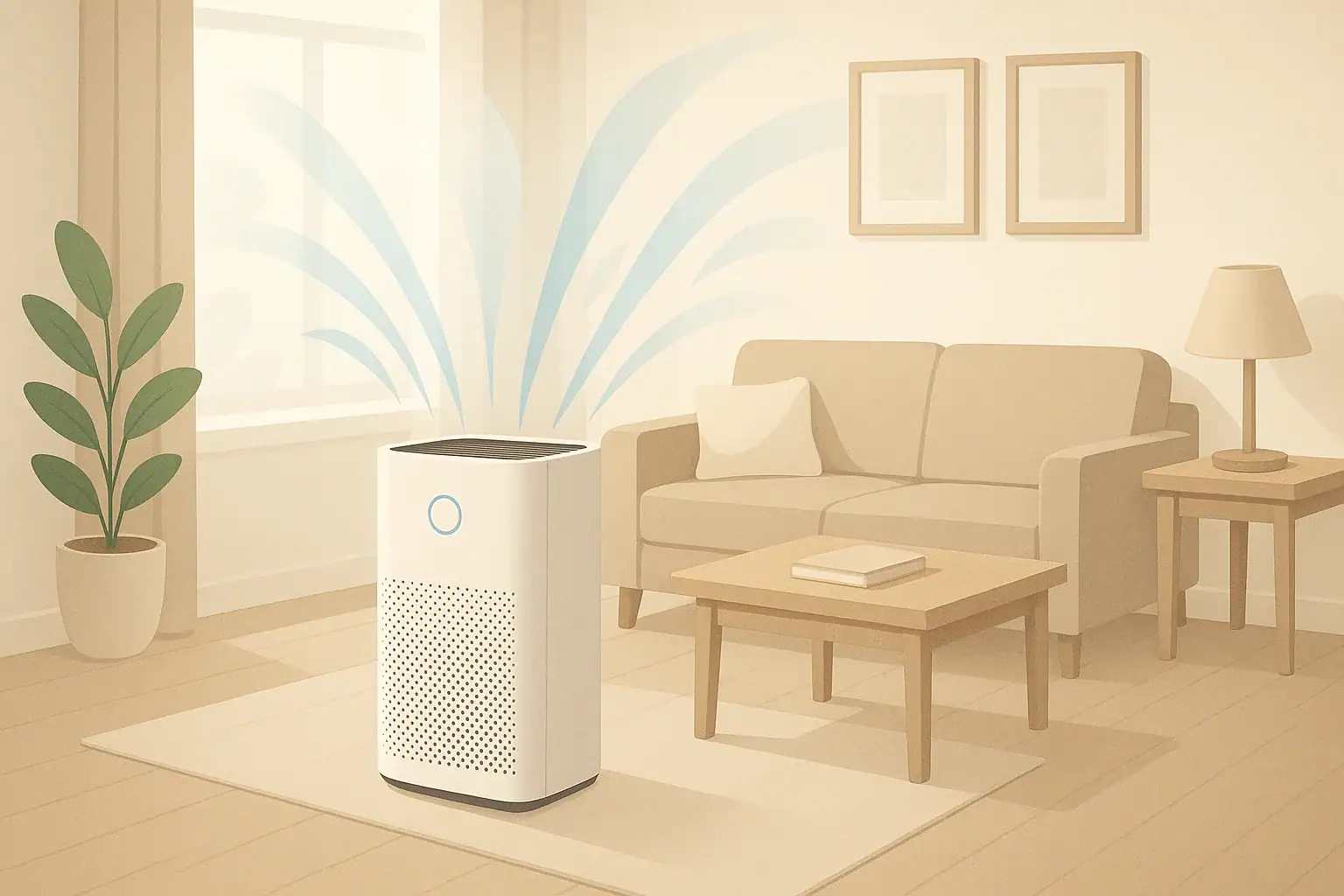
What UL 2998 ‘Zero Ozone’ Actually Means
UL 2998 is a voluntary safety standard that manufacturers can use to show their air-cleaning products emit very low levels of ozone. It is often labeled as “Zero Ozone” or “Verified Ozone-Free,” which can sound absolute, but the standard itself is more nuanced.
In plain terms, a product certified to UL 2998 has been independently tested and found to emit ozone at or below a very small threshold under controlled conditions. It does not mean:
- That the device produces literally no ozone at all
- That the entire home will always have zero ozone when it is running
- That the device is automatically the best choice for cleaning your indoor air
UL 2998 is most relevant for devices that have a known potential to create ozone, such as ionizers, some electronic air-cleaning technologies, and UV-based systems. Mechanical filtration devices that rely mainly on HEPA and carbon filters may also seek this mark to reassure buyers, but the standard is primarily about emission limits, not filtration performance.
How UL 2998 Tests for Ozone Emissions
To understand what UL 2998 does certify, it helps to look at the testing concept. The standard describes how to measure ozone coming from a product when it operates in a controlled test space. The key ideas are:
- Controlled environment: The product is placed in a test chamber with known conditions (such as volume and baseline ozone levels).
- Continuous operation: The device is run at a defined setting (often high or maximum) for a set period.
- Ozone measurement: Sensitive instruments track the ozone concentration in the chamber while the device operates.
- Emissions limit: To meet UL 2998, the measured ozone emissions must remain at or below a very low threshold that is significantly lower than older, more permissive limits for ozone-generating devices.
Because measurements happen in a test chamber, the result is a product emission rating, not a prediction of what ozone levels will be in every home. Room size, ceiling height, ventilation, outdoor ozone, and other factors all influence what you will actually experience indoors.
Example values for illustration.
| Air-cleaning approach | Primary purpose | Typical ozone concern | How UL 2998 is relevant |
|---|---|---|---|
| HEPA-style mechanical filtration | Capture particles (dust, smoke, pollen) | Generally low if no ionizer or UV is used | Certification can confirm low emissions from any added electronic features |
| Activated carbon filtration | Reduce odors and some VOCs | Media itself does not generate ozone | Relevant mainly when combined with ionizers or UV-C lamps |
| Ionizers / electronic precipitators | Charge particles to collect on plates or surfaces | Historically associated with higher ozone potential | UL 2998 can verify that emissions are kept to a low threshold |
| UV-C air treatment | Neutralize microorganisms in air or on coils | Some UV wavelengths can produce ozone | Certification helps confirm low ozone from the UV system design |
| Ozone-generating “odor removal” devices | Deliberately add ozone to indoor air | Designed to release significant ozone | These are not compatible with UL 2998 “zero ozone” claims |
| Whole-house ventilation upgrades | Bring in outdoor air and exhaust stale air | Outdoor ozone can be introduced if not filtered | UL 2998 applies to any integrated air-cleaning components, not the ducts or fans |
What UL 2998 Certification Does Guarantee
When a device has been evaluated to UL 2998, it means an independent laboratory has verified that, under defined test conditions, its ozone emissions stay at or below the standard’s limit. For consumers, this provides several practical assurances:
Very Low Ozone Emissions Under Test Conditions
The core of UL 2998 is an upper limit on ozone emission rate. The exact figures are technical, but the main idea is that the device’s contribution to room ozone is tested to remain very low compared with products that rely on ozone as a primary air-cleaning feature.
This is particularly important for devices that use electrical discharges, corona, or certain UV lamps, where ozone formation is a known side effect of the technology. UL 2998 indicates that the manufacturer has taken design steps to minimize that side effect.
Third-Party Verification Rather Than Self-Claim
Ozone-related marketing terms can be confusing. Phrases such as “ozone-safe,” “low ozone,” or “ozone free” might be used informally without a clear standard behind them. UL 2998 provides a formal, test-based way to back up such claims.
When a product is properly listed, a third-party organization has:
- Reviewed the design and technical documentation
- Measured ozone emissions according to the standard’s test protocol
- Confirmed that results meet the threshold for the “zero ozone” designation under that protocol
Ongoing Compliance and Production Monitoring
Certification is not just a one-time test of a single unit. A listing typically also involves some level of ongoing oversight, such as:
- Periodic retesting or spot checks
- Manufacturing audits or documentation reviews
- Change control when components or designs are updated
This helps reduce the risk that later production versions emit more ozone than the original tested sample.
What UL 2998 Does Not Guarantee
Although UL 2998 can be a useful safety signal, it has important limits. Understanding these helps you keep realistic expectations and avoid over-relying on any single label.
It Does Not Measure Overall Air Cleaning Performance
UL 2998 is about ozone emissions, not how effectively a device removes particles, odors, or gases. It does not tell you:
- Clean Air Delivery Rate (CADR) for particles or smoke
- How fast the device will lower indoor PM2.5 levels
- How well it removes specific volatile organic compounds (VOCs)
- How many air changes per hour (ACH) it can help you reach in a room
To judge cleaning performance, you still need to look at airflow, filter type (e.g., HEPA-style, activated carbon), and how well the unit fits your room size.
It Does Not Control Ozone from Other Sources
UL 2998 only addresses ozone coming from the certified device itself, not from the rest of your environment. Indoor ozone levels are also influenced by:
- Outdoor ozone entering through open windows, doors, or leaks
- Other appliances or tools that may generate ozone as a byproduct
- Chemical reactions between ozone and indoor materials (carpets, paints, cleaning products)
Using a UL 2998-certified device does not guarantee that ozone is absent from your home, especially if outdoor ozone is high or other devices are adding ozone indoors.
It Does Not Address All Safety or Comfort Factors
UL 2998 focuses on ozone. It does not certify:
- Noise levels at different fan speeds
- Energy usage in real homes
- Long-term reliability or maintenance costs
- Whether the device will meet specific comfort goals, such as supporting allergy-friendly conditions
For a well-rounded choice, you still need to consider noise, energy efficiency, filter replacement intervals, and how the device will fit into your room layout.
It Does Not Replace General Ventilation and Humidity Control
An air cleaner, even one with UL 2998 certification, is not a substitute for adequate ventilation, humidity control, and basic cleanliness. For example:
- Ventilation helps dilute indoor pollutants and carbon dioxide.
- Humidity management helps make conditions less favorable for mold growth.
- Regular cleaning reduces dust that can otherwise keep re-entering the air.
UL 2998 is one piece of a broader indoor air quality strategy, not a complete solution on its own.
How UL 2998 Relates to Other Ozone Limits and Terms
Ozone can be discussed in several different ways, which can cause confusion. UL 2998 fits into this picture as an emissions-focused product standard, rather than a guideline for what ozone level is acceptable indoors.
Emission Limits vs. Indoor Air Concentration
UL 2998 sets an upper limit on how much ozone a device may emit in a test chamber. That is different from a limit on indoor ozone concentration in an occupied room. In a home, the actual concentration you experience will depend on various factors, including:
- Room volume and ceiling height
- How long the device runs and at what setting
- Air exchange rate (how quickly indoor and outdoor air are exchanged)
- Other ozone sources and sinks (materials and surfaces that react with ozone)
Because of this, two homes using the same UL 2998-certified device may still see different ozone readings on a sensitive indoor air monitor, especially if outdoor ozone levels differ.
“Ozone-Free” Marketing vs. Tested Standards
Many products advertise themselves as “ozone free” or “no ozone.” Without a formal standard behind the claim, it can be hard to know what that means in practice. UL 2998 is one of the clearer ways for manufacturers to support this type of claim with a recognized protocol.
However, the phrase “zero ozone” is still shorthand. It really means “ozone emissions are at or below a very low test limit,” not that there is literally zero ozone coming from the device or present in the room.
Older Ozone Generator Standards
Some standards historically focused on devices that deliberately generated ozone, such as certain odor control or commercial treatment machines. These may have allowed much higher emission levels, as the intent was to add ozone to the air.
UL 2998 is different in that it is aimed at technologies where ozone is an unwanted byproduct, and the design goal is to keep emissions to a very low level. Devices that purposely produce significant ozone for treatment purposes do not fit the intent of UL 2998.
Using UL 2998 in Real-World Device Selection
When you are choosing air quality equipment for your home, UL 2998 can be one factor in a broader checklist. It is particularly useful if you are cautious about ozone or if anyone in the household is especially sensitive to air pollutants.
When UL 2998 Is Especially Helpful
Consider looking closely for UL 2998 (or similar low-ozone verification) when you are evaluating:
- Air purifiers with ionizers, plasma features, or electronic plates
- Systems that use UV lamps inside ducts or portable units
- Combination devices that combine filtration with active electrical air treatment
For devices that are purely mechanical (filters plus a fan), ozone emissions are usually already quite low. Still, having the UL 2998 mark can offer an additional layer of reassurance, especially if the unit includes any optional ion or UV functions.
Balancing Ozone Safety with Overall Air Quality Goals
While low ozone emissions are important, they are only one part of indoor air quality. A well-rounded approach usually includes:
- Proper sizing: Matching an air purifier’s airflow and CADR to your room size and ceiling height.
- Good filtration: Using filters suited to your main concerns (fine particles, odors, or both).
- Placement and airflow: Positioning the unit so clean air can circulate throughout the room.
- Ventilation: Using kitchen and bathroom fans, or planned window opening, to reduce stale air buildup when conditions allow.
- Humidity management: Keeping humidity in a generally comfortable range to help limit mold-friendly conditions.
UL 2998 fits into this plan as a way to reduce the risk that your air-cleaning efforts themselves add ozone as a side effect.
Example values for illustration.
| Metric | What it generally indicates | Common pitfalls | Action idea |
|---|---|---|---|
| PM2.5 | Fine particle levels from dust, smoke, and other sources | Short spikes from cooking can look alarming but may be temporary | Use a well-sized purifier and kitchen exhaust; focus on longer-term trends |
| TVOC | Combined signal from many volatile organic compounds | Values are not specific to any one chemical and may drift over time | Improve ventilation and reduce strong chemical product use indoors |
| CO2 (non-safety range) | Indicator of how much exhaled air is building up in a space | Some low-cost sensors can be approximate or affected by temperature | Increase fresh air exchange when levels stay elevated for long periods |
| Relative humidity | Moisture level of indoor air | Readings near windows or showers may not reflect the whole home | Use dehumidifiers or humidifiers as needed; monitor in main living areas |
| Ozone (if measured) | Presence of ozone from outdoors or indoor sources | Low-cost sensors can be influenced by other gases and may be less precise | Limit use of ozone-generating devices; close windows during outdoor ozone peaks |
| Temperature | Comfort and interaction with humidity and ventilation | Sunlit areas can read warmer than the rest of the home | Adjust HVAC settings and shading; consider overall comfort, not just one reading |
Practical Tips for a Low-Ozone, Cleaner-Air Home
UL 2998 is one useful tool, but a few everyday habits can also help you keep ozone and other pollutants in check while maintaining comfortable indoor air.
- Favor mechanical filtration: When possible, choose air cleaners that rely on filters and fans rather than devices that intentionally create ozone.
- Check for independent marks: Look for clear, third-party certifications like UL 2998 when you see strong “ozone free” claims.
- Use ventilation thoughtfully: Bring in outdoor air when outdoor pollution is moderate, and rely more on filtration when outdoor ozone or smoke is high.
- Maintain your equipment: Replace filters on schedule, keep air intakes and outlets clear, and follow the manufacturer’s directions for safe use.
- Watch the whole picture: Consider particles, odors, humidity, and comfort together, not just one number or label.
By combining low-ozone equipment choices with basic ventilation, filtration, and upkeep, you can support cleaner, more comfortable air at home while understanding clearly what UL 2998 does—and does not—promise.
Frequently asked questions
What exactly does the UL 2998 “zero ozone” label certify?
UL 2998 certifies that a product’s ozone emissions, when tested in a controlled chamber under defined operating conditions, stay at or below a very low threshold. It is an emissions-focused verification and does not measure the device’s particle- or gas-removal performance or guarantee zero ozone in every real-world room.
Will a UL 2998-certified air cleaner produce no ozone in my home?
No. A UL 2998 listing indicates very low emissions under test conditions, but actual indoor ozone depends on room size, ventilation, outdoor ozone, and other sources. It reduces the risk the device itself will add meaningful ozone, but it cannot eliminate all ozone in every home.
Does UL 2998 tell me how well a purifier removes particles or VOCs?
No. UL 2998 only addresses ozone emissions; it does not provide CADR, particle removal rates, or specific VOC removal performance. For cleaning effectiveness, review airflow, filter type (HEPA, activated carbon), and any independent performance ratings.
Is UL 2998 sufficient protection for people sensitive to ozone?
UL 2998 is a helpful indicator that a device is unlikely to add significant ozone, which can benefit ozone-sensitive individuals. However, it should be one part of a strategy that also includes ventilation control, avoiding other ozone sources, and, if needed, monitoring indoor ozone levels or consulting a health professional.
How does UL 2998 differ from “ozone-free” marketing or indoor ozone concentration limits?
UL 2998 is a formal, test-based standard that limits a product’s ozone emissions in a test chamber, while “ozone-free” marketing may be an unverified claim. Indoor ozone concentration limits (from health agencies) refer to exposure levels in occupied spaces and are influenced by many factors beyond a single device’s emissions.
Recommended next:
- Clear sizing logic (room size → CADR/ACH)
- HEPA vs carbon explained for real use-cases
- Humidity + ventilation basics to reduce mold risk
About this site
Home Air Quality Lab publishes practical, independent guides about indoor air quality—clear sizing, safer use, and real-world expectations.
Affiliate disclosure
Some links on this site may be affiliate links. If you buy through these links, we may earn a small commission at no extra cost to you. This helps support our content. Learn more.