
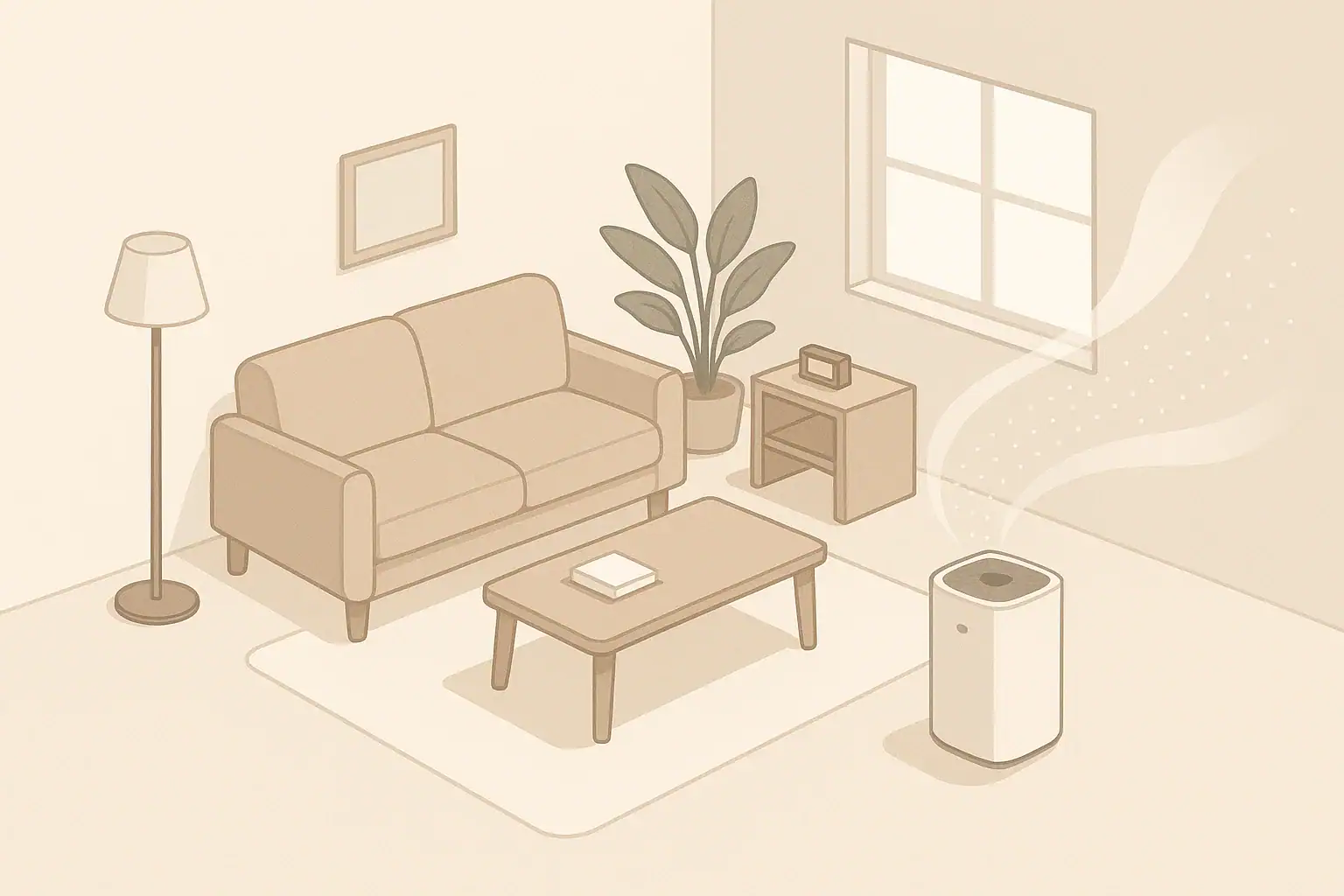
PM2.5 indoors mostly comes from cooking, combustion, outdoor air leaking in, and resuspended dust, and the fastest fixes are ventilation and high-efficiency filtration used correctly.
At home, PM2.5 refers to very small airborne particles that are 2.5 micrometers or smaller. These fine particles stay suspended for hours and can spread throughout open-plan spaces. Managing them is mainly about how you cook, ventilate, clean, and filter the air, not about one single device.
- Aim to cook on back burners with a vented range hood on high and a nearby window slightly open when frying or searing.
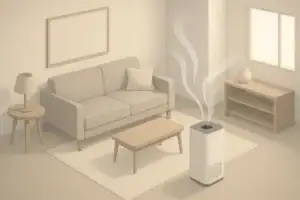
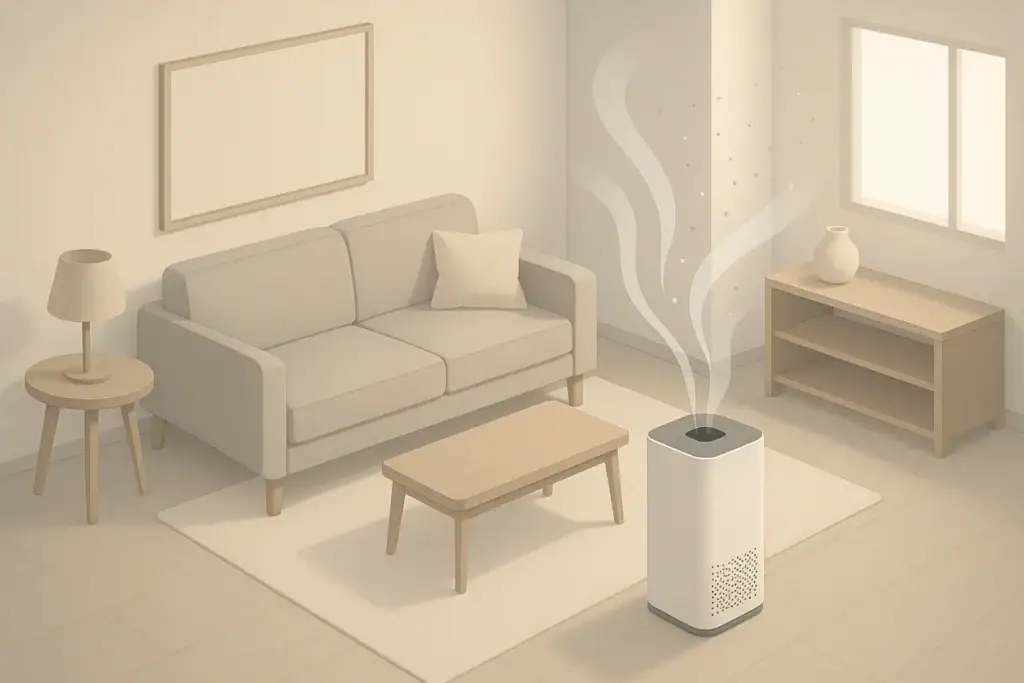
- Use a HEPA-based air purifier sized for at least 4–5 air changes per hour in the room you occupy most.
- Keep windows closed during nearby wildfires or heavy traffic periods and rely on recirculating filtration instead.
- Vacuum with a sealed HEPA vacuum 1–2 times a week to reduce dust that becomes airborne PM2.5.
- Check and replace filters on purifiers and HVAC systems as often as the manufacturer suggests, or sooner in smoky seasons.
What PM2.5 Indoors Means and Why It Matters
PM2.5 stands for particulate matter with a diameter of 2.5 micrometers or less. These particles are smaller than a typical grain of dust and remain suspended in the air for long periods, especially in closed rooms with limited ventilation.
Indoors, PM2.5 is not one single substance. It is a mix that can include cooking smoke and grease, combustion byproducts from candles or fireplaces, outdoor pollution that leaks in, and fragments of dust, skin flakes, fibers, and other small particles. While health research is ongoing, higher fine particle levels are generally considered undesirable from a comfort and air quality standpoint.
For home decisions, the key idea is practical: reduce what you generate, dilute what you cannot avoid, and filter what remains. This is where simple habits (like using your range hood and closing windows at the right times) interact with equipment choices (like HEPA filtration and ventilation strategies).
Key Concepts: Sources, Size, and Simple Measurement
Understanding PM2.5 indoors starts with three ideas: where it comes from, how it behaves, and how people typically keep an eye on it.
Common indoor sources of PM2.5
- Cooking: Frying, grilling, broiling, and toasting can all release fine particles and grease aerosols.
- Combustion indoors: Candles, incense, fireplaces, wood stoves, and smoking all generate PM2.5.
- Outdoor air infiltration: Traffic pollution, wildfires, and neighborhood burning can enter through windows, doors, and leaks.
- Resuspended dust: Walking, making beds, and vacuuming without adequate filtration can re-entrain fine dust.
- Some hobbies and tools: Soldering, 3D printing, and certain craft activities can produce fine particles.
How PM2.5 behaves indoors
Fine particles tend to float and mix through connected spaces. They settle more slowly than larger dust, so activities in one room can influence a nearby hallway or open-plan living area. Air currents from fans, HVAC vents, and open doors help spread or remove them depending on where fresh air and filters are located.
Because PM2.5 is so small, filtration efficiency matters. High-efficiency filters (often labeled HEPA or similar performance) capture these particles more effectively than coarse pre-filters meant mainly for hair and large dust.
Basic home PM2.5 monitoring concepts
Many low-cost indoor air quality monitors show PM2.5 as a number, often in micrograms per cubic meter (µg/m³). These devices vary in accuracy, but they are useful for trends:
- Note how levels spike when you cook or burn candles.
- Watch how quickly levels drop when you open windows or run a purifier on high.
- Compare patterns at different fan speeds or purifier modes.
The goal is not to chase a single perfect number but to learn which actions consistently lead to lower readings in your specific home.
| Source type | Typical trigger | Fastest practical response | Longer-term habit |
|---|---|---|---|
| Cooking aerosols | Frying, broiling, toasting | Run vent hood on high, crack a window, use purifier on high | Favor back burners, use lids, shorten high-heat cooking time |
| Indoor combustion | Candles, incense, fireplaces | Extinguish source, ventilate, use filtration | Limit frequency and duration, prefer flameless alternatives |
| Outdoor smoke | Wildfires, nearby burning | Close windows/doors, seal obvious leaks, run purifier | Identify tightest room as a cleaner-air space during smoke events |
| Traffic pollution | Rush-hour near busy roads | Keep street-facing windows closed at peak times | Use filtration in street-facing rooms, ventilate from cleaner side |
| Resuspended dust | Vacuuming, bed-making | Use HEPA vacuum, run purifier while cleaning | Vacuum and dust regularly, reduce clutter and dust reservoirs |
| Hobbies and tools | Soldering, some crafts | Ventilate to outside, use local exhaust if available | Dedicate a well-ventilated area, limit indoor use |
Common Mistakes That Keep PM2.5 Levels High
Many homes have reasonable equipment but still experience elevated PM2.5 during everyday activities. Often, the issue is how and when tools are used rather than what is installed.
Underusing existing ventilation
- Range hoods not used or set too low: Running the fan only after visible smoke appears lets fine particles spread first.
- Recirculating hoods misunderstood: Some hoods filter and recirculate back into the room instead of venting outside; they may reduce odors but are less effective at removing PM2.5.
- Bathroom or utility fans ignored: These can assist with general air exchange even outside showers.
Misplaced or undersized air purifiers
- Purifier too small for the room: A unit sized for a small bedroom will struggle in an open-plan living area.
- Blocked airflow: Placing purifiers behind furniture or heavy curtains reduces circulation and cleaning speed.
- Always on lowest speed: Quiet modes are useful for background use but may not provide high enough air changes during active pollution events like cooking.
Indoor sources overlooked
- Frequent candle or incense use: These can significantly raise PM2.5 even if the room looks clear.
- Smoking indoors: A major contributor to fine particles; smoking outside and away from entrances significantly reduces indoor load.
- Dust buildup: Rare vacuuming or dusting gives more material that can be resuspended as PM2.5 during daily activity.
Fast Fixes: What to Do When PM2.5 Spikes
When a monitor reading jumps or you know you have just created pollution (for example, from searing food), there are a few reliable ways to bring levels down faster.
1. Use targeted ventilation
- During cooking: Turn on your range hood to its higher setting before you start heating oil, and keep it running for several minutes after you finish.
- Window strategies: In good outdoor air, opening opposite windows (cross-ventilation) can dilute indoor PM2.5 quickly.
- Spot fans: Bathroom or utility fans that exhaust outside can support air exchange when a kitchen hood is weak or absent.
In poor outdoor air (such as wildfire smoke), do the opposite: close windows and rely more on recirculating filtration.
2. Turn filtration up temporarily
- Set your air purifier to a higher fan speed in the room where pollution was generated.
- If your central HVAC system has a reasonably efficient filter and a fan-only mode, running the fan can help circulate and filter air throughout the home.
- Keep doors open between connected spaces if a single purifier is handling multiple areas.
3. Tidy the immediate source area
- Cover or move hot pans off active burners once cooking is complete.
- Extinguish candles or other combustion sources.
- Wipe up visible grease splatter that might later release odors and particles when reheated.
4. Use simple rules of thumb
Some practical, non-medical targets many people adopt for comfort and air quality:
- Aim for visibly faster PM2.5 drop after cooking: readings trending down within 15–30 minutes with ventilation and filtration running.
- In rooms used for sleeping, try to keep routine PM2.5 readings lower than in heavily used cooking spaces by using filtration and keeping windows closed during peak outdoor pollution.
Real-World Scenarios: How PM2.5 Builds Up at Home
Looking at common setups helps translate concepts into everyday adjustments.
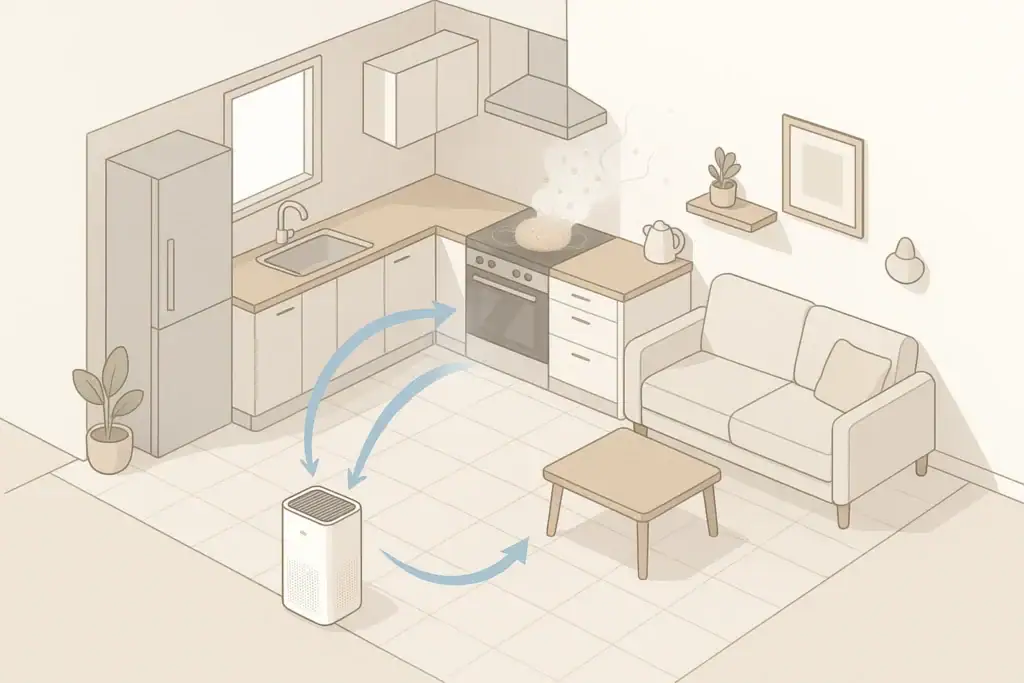
Scenario 1: Apartment with recirculating range hood
An apartment kitchen often has a hood that filters air through a simple grease or carbon pad and returns it to the room. This may reduce odors but usually does not remove much PM2.5.
Practical steps:
- Use the back burners, which sit closer to the hood intake.
- Open a nearby window a small amount during high-heat cooking if outdoor air quality is acceptable.
- Place a HEPA-based purifier in the living area near the kitchen doorway and use higher fan speed while and after cooking.
Scenario 2: Suburban home near a busy road
Homes close to traffic can experience elevated outdoor PM2.5, especially during rush hours.
Practical steps:
- Favor opening windows on sides of the house that face away from major roads.
- Ventilate more during periods of lighter traffic if possible.
- Use filtration in street-facing bedrooms and living rooms, and consider keeping windows closed during the busiest times while purifiers run.
Scenario 3: Wildfire smoke season
Wildfire smoke can push outdoor PM2.5 very high, even far from active fires. In these conditions, the usual advice to open windows for fresh air changes.
Practical steps:
- Keep windows and exterior doors closed as much as practical when smoke is noticeable or reported to be high.
- Identify one or two rooms that can act as cleaner-air spaces, such as a bedroom and a family room.
- Run air purifiers continuously in those rooms on medium or higher settings, and reduce indoor particle sources like candles and high-heat cooking.
Safety, Standards, and Technology Options
When looking for ways to cut PM2.5 indoors, it is common to encounter a range of technologies and claims. A few core concepts help keep choices grounded.
Filtration vs. air cleaning technologies
- Mechanical filtration (HEPA-type filters): Uses dense fiber mats to capture particles, including PM2.5, as air passes through.
- Activated carbon filters: Target gases and odors more than fine particles; often used in combination with particle filters.
- Electrostatic and ionizing devices: Use electric charges to cause particles to stick to plates or surfaces. Some designs may produce ozone as a byproduct; many people prefer to avoid intentional ozone indoors.
- UV-C lamps: Aim to inactivate microorganisms rather than capture particles; they do not substitute for mechanical filtration when the goal is reducing PM2.5.
For reducing PM2.5 specifically, high-efficiency mechanical filtration is typically the primary tool. Other technologies may address different concerns but do not replace the need for filters that physically capture particles.
Ventilation and building standards concepts
Building and ventilation standards focus on overall air exchange and contaminant control but vary by region and building type. For homes, practical takeaways include:
- Balanced ventilation (supplying and exhausting air) tends to provide more consistent air quality than unbalanced exhaust-only or supply-only approaches.
- Mechanical ventilation with filtration allows fresh air exchange even when outdoor air quality is variable, by passing incoming air through filters.
- In older, leakier homes, incidental air exchange through gaps and cracks can be significant, while in newer, tighter homes, intentional ventilation becomes more important.
Maintenance and Long-Term PM2.5 Control
Short bursts of ventilation and high-speed filtration help with spikes, but managing PM2.5 day to day relies on steady habits and upkeep.
Filter replacement and system checks
- Air purifier filters: Replace according to the manufacturer’s schedule, or sooner if you use the unit heavily during events like wildfire smoke.
- HVAC filters: Choose a filter that your system can handle without excessive resistance and change it regularly based on run-time and dust load.
- Range hood and exhaust fans: Clean or replace grease filters so airflow stays strong.
Cleaning practices that support low PM2.5
- Vacuum carpets and rugs with a sealed, high-efficiency vacuum to avoid re-releasing fine particles.
- Damp dust hard surfaces to trap dust instead of pushing it into the air.
- Reduce clutter and soft furnishings that trap dust where practical.
Planning rooms around airflow
Furniture layout and door positions influence how well filtration and ventilation work:
- Keep a clear intake and outlet path for purifiers; avoid placing them directly behind sofas or large objects.
- Allow a few inches of space around wall registers and returns so your HVAC system can move air freely.
- Consider the main sources in each room and place filtration so air flows from cleaner zones toward source areas and then through filters.
Filter Replacement Planning for Ongoing PM2.5 Control
Because PM2.5 management depends heavily on filtration performance, planning when to replace filters helps keep removal efficiency closer to what the device can deliver.
| Filter type | Typical replacement interval example | What shortens the interval | Reminder |
|---|---|---|---|
| Portable purifier HEPA filter | 6–12 months of regular use | Wildfire season, heavy cooking aerosols, dusty homes | Check for reduced airflow or odor; follow device indicators if present |
| Portable purifier pre-filter | 1–3 months for cleaning or replacement | Pets, visible hair and lint, high outdoor dust | Rinse or replace as allowed to protect main filter |
| HVAC system main filter | 1–3 months for many homes | Continuous fan use, renovations, nearby construction | Inspect monthly at first to learn your home’s pattern |
| Range hood grease filter | Monthly wipe or wash when cooking often | Frequent frying, visible residue buildup | Cleaner filters help maintain strong capture near the stove |
| Room air conditioner filter | 1–2 months during heavy use | Dusty environments, always-on operation | Clogged filters reduce both cooling and particle capture |
| Standalone fan pre-screens | Check each season | Pet hair, lint, visible dust mats | Clean screens keep airflow high for dilution of PM2.5 |
Related guides: How to Choose the Right Air Purifier for Your Room Size • Air Purifier Placement: Where to Put It for Best Results • Wildfire Smoke Indoors: Step-by-Step Plan to Lower PM2.5 Fast
Key Takeaways: A Simple PM2.5 Indoor Playbook
Managing PM2.5 indoors is mainly about combining three strategies: reduce what you create, exchange air wisely, and filter what is left. In practice, that means using exhaust fans whenever you cook, keeping combustion sources modest and well-ventilated, and running appropriately sized air purifiers where you spend the most time.
Short monitoring sessions, even with basic sensors, can reveal which actions make the biggest difference in your home. By adjusting daily habits, maintaining filtration systems, and paying attention to outdoor conditions, most households can keep indoor fine particle levels more stable and comfortable over time without relying on complex or risky interventions.
Frequently asked questions
What are the fastest ways to reduce PM2.5 indoors after cooking?
Turn on a vented range hood to high before and during cooking, open a nearby window if outdoor air is clean, and run a HEPA-based air purifier on a high setting in the cooking or adjacent room. Wiping up grease and removing hot pans from heat also reduces continued particle release.
How can I keep wildfire smoke from raising indoor PM2.5?
Keep windows and doors closed, seal obvious gaps, and run recirculating filtration such as HEPA purifiers or an HVAC system with a high-efficiency filter; avoid ventilating from outdoors when smoke is heavy. Identify one or two rooms to act as cleaner-air spaces and run purifiers continuously there.
Do candles and incense significantly increase indoor PM2.5?
Yes—indoor combustion from candles and incense produces fine particles that raise PM2.5 even if visible smoke is minimal. Limiting use, extinguishing sources promptly, or choosing flameless alternatives reduces indoor particle load.
How do I size an air purifier for effective PM2.5 control?
Choose a purifier rated to provide several air changes per hour for your room volume—commonly aiming for about 4–5 ACH in the primary occupied room. Check the device’s clean air delivery rate (CADR) or the manufacturer’s room-size guidance and place the unit where airflow is unblocked.
Will opening windows always lower indoor PM2.5?
No—opening windows only dilutes indoor PM2.5 when outdoor air quality is better than indoors. If outdoor PM2.5 is high (for example during wildfires or heavy traffic), keep windows closed and rely on filtration instead.
Recommended next:
- Clear sizing logic (room size → CADR/ACH)
- HEPA vs carbon explained for real use-cases
- Humidity + ventilation basics to reduce mold risk

About this site
Home Air Quality Lab publishes practical, independent guides about indoor air quality—clear sizing, safer use, and real-world expectations.
Affiliate disclosure
Some links on this site may be affiliate links. If you buy through these links, we may earn a small commission at no extra cost to you. This helps support our content. Learn more.