Why Plan an Annual HEPA and Carbon Filter Budget
Owning an air purifier is not a one-time expense. The main ongoing cost is filter replacement, especially for HEPA and activated carbon filters. A simple filter replacement cost calculator approach helps you plan your annual budget and avoid surprises.
Instead of thinking only about the sticker price of a purifier, it helps to treat filters like any other household consumable, similar to vacuum bags or refrigerator water filters. When you understand how often you will replace filters and what they typically cost, you can make more informed decisions about:
- How many purifiers you can afford to operate long-term
- Which rooms truly need dedicated units
- What fan speeds and runtimes are realistic for your budget
- Whether extra filtration (like more carbon) is worth the added cost
This article walks through a practical, step-by-step way to estimate yearly HEPA and carbon filter costs, using example numbers you can adapt to your own situation.
Key Factors That Drive Filter Replacement Cost
A filter replacement cost calculator for HEPA and carbon filters mainly depends on four things:
- How many purifiers you own
- How many filters each purifier uses (HEPA, carbon, or combo)
- How often you replace each filter type
- The typical price range for each replacement filter
Within those, a few practical details matter.
Number of purifiers and rooms covered
Each additional purifier adds filter costs. A typical home setup might include:
- One purifier in the main living area
- One in the primary bedroom
- Possibly additional units in kids’ rooms, a home office, or a basement
Before you estimate costs, list how many units you actually plan to run year-round versus seasonally (for example, only during wildfire season or peak allergy season).
Filter configuration: HEPA, carbon, or combined cartridges
Most home purifiers aimed at particle removal include a HEPA or HEPA-style filter. Many also have a separate or combined activated carbon layer for odors and gases.
Common arrangements include:
- Separate HEPA + separate carbon filter: Two distinct items; you might replace carbon more frequently.
- All-in-one cartridge: HEPA and carbon in a single combined cartridge, replaced together.
- Pre-filter layer: A washable or replaceable pre-filter that catches large dust and hair, helping extend HEPA life.
Separate filters can give you more control over cost timing because you may choose to change carbon without changing HEPA every time.
Runtime, fan speed, and home air quality
Filter life is strongly influenced by how hard the purifier works and what it is filtering. Key factors include:
- Hours per day: Running 24/7 wears filters faster than a few hours each evening.
- Fan speed: Higher speeds push more air (and particles) through the filter, shortening life.
- Indoor sources: Cooking, candles, smoking, pets, and frequent vacuuming without HEPA collection can all load filters more quickly.
- Outdoor air quality: Areas with frequent wildfire smoke or heavy traffic pollution can reduce filter life when windows are opened or when purifiers draw in outdoor air.
Manufacturers often provide a broad replacement guideline (for example, every 6–12 months) based on typical usage. Real-world needs may be shorter or longer.
Typical cost ranges for HEPA and carbon filters
Exact prices vary, but you can still build a reasonable calculator using general ranges. For many common home units, a single replacement element might fall into these broad example brackets:
- HEPA or HEPA-style filter: roughly low double digits to moderate double digits per filter
- Activated carbon filter or cartridge: roughly mid single digits to low double digits per filter
- Combined HEPA + carbon cartridge: often in the mid to higher double-digit range
These are example ranges only. Your actual costs depend on model, filter size, and where you purchase them.
Example values for illustration.
| Filter type | Example replacement interval range | Example price range (per filter) | Notes for budgeting |
|---|---|---|---|
| Standalone HEPA filter | 6–12 months | Approx. low to mid double digits | May last longer at low fan speeds and in cleaner environments. |
| Standalone carbon filter | 3–6 months | Approx. mid single to low double digits | Odor and gas control often fades before airflow is affected. |
| Combined HEPA+carbon cartridge | 6–12 months | Approx. mid to higher double digits | Simpler to replace, but both media are changed at once. |
| Washable pre-filter | Rinse/clean monthly | Low cost if replacement is needed | Extends HEPA life by capturing large dust and hair. |
| High-capacity HEPA for larger units | 6–18 months | Can reach higher double digits | Higher upfront filter cost but may last longer between changes. |
| High-capacity carbon canister | 6–12 months | Often mid to higher double digits | Useful for stronger odors or higher VOC loads. |
Step-by-Step Filter Replacement Cost Calculator Method
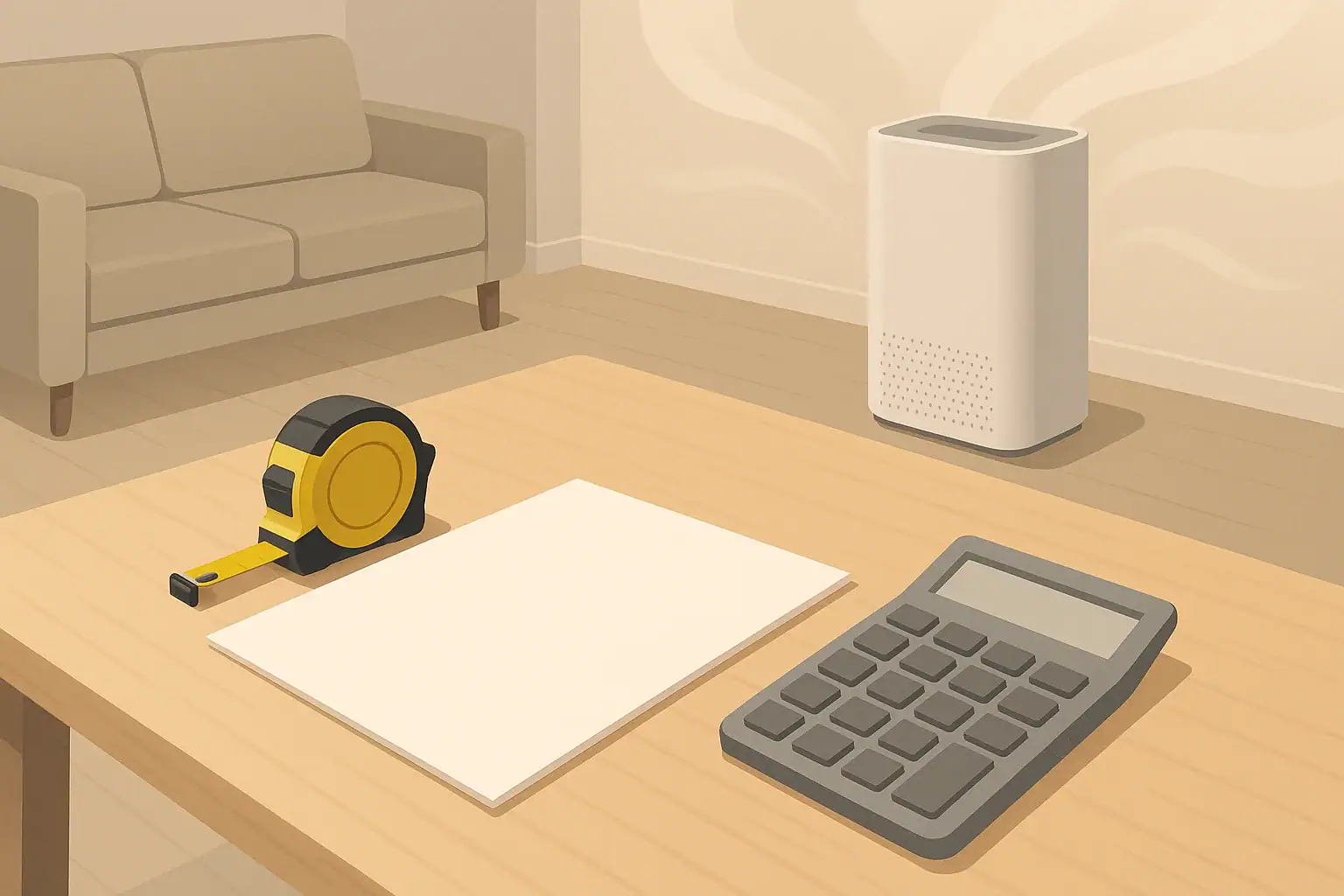
You can build a simple filter replacement cost calculator using a notepad or a spreadsheet. The idea is to estimate yearly costs, then refine the numbers over time as you see how long your filters actually last in your home.
Step 1: List your purifiers and filter types
Create a quick inventory of every purifier you plan to run regularly. For each unit, note:
- Room name (for example, living room, bedroom, office)
- Whether the main filter is HEPA, HEPA-style, or another particle filter
- Whether there is a separate carbon filter or a combined cartridge
- Any pre-filters and whether they are washable or replaceable
This gives you a count of how many HEPA and carbon elements you will be replacing each cycle.
Step 2: Choose replacement intervals based on your usage
Next, choose a starting replacement interval for each filter type, using guidelines and your own habits. Consider:
- Running 24/7 at moderate speed: stay closer to the shorter end of suggested ranges.
- Running part-time or seasonally: you may be able to extend intervals.
- Using auto mode: some devices track operating time and may signal when a filter is due, which you can treat as your real-world interval.
For a first estimate, you might pick:
- HEPA: once per year for typical use
- Carbon: twice per year if odors are a focus
These are only starting points. Over the next year, you can adjust up or down based on visible dust loading, odor control, and airflow.
Step 3: Assign a typical cost per filter
If you already know what your filters cost, use actual prices. If not, you can plug in conservative example numbers that fit the ranges you see when browsing options. For planning, many households choose to slightly overestimate, so the budget has some cushion.
It can help to assign one planning price per category, such as:
- Standard HEPA replacement: a round number in the middle of the double-digit range
- Standard carbon replacement: a round number in the single to low double-digit range
- Combined cartridge: a round number representing a typical mid to higher double-digit cost
Step 4: Calculate annual cost per purifier
Now, for each purifier, calculate:
- HEPA annual cost = (HEPA price) × (number of HEPA replacements per year)
- Carbon annual cost = (carbon price) × (number of carbon replacements per year)
If they are combined, use one line item:
- Cartridge annual cost = (cartridge price) × (number of cartridge replacements per year)
Then add up each purifier’s total. You will end up with something like “Bedroom unit: approximate HEPA + carbon filter cost per year.”
Step 5: Add everything for a whole-home annual estimate
Once you have annual costs per purifier, sum all purifiers to get a whole-home yearly estimate. This number gives you a clear sense of what long-term ownership will reasonably cost.
If that total feels higher than expected, it is better to discover it now, before you buy additional units. You can then adjust room coverage, runtime, or filter type expectations to fit a comfortable budget.
Practical Example: Building a Simple Annual Filter Budget
To see how this works in practice, consider a hypothetical household. These are not recommendations, just an example of how to plug numbers into a calculator approach.
Example home layout and purifier setup
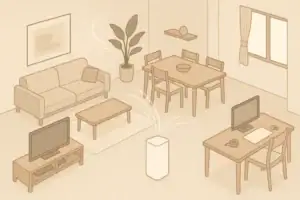
Imagine a small US home with three purifiers:
- Living room purifier: Combined HEPA + carbon cartridge
- Primary bedroom purifier: Separate HEPA and carbon filters
- Home office purifier: HEPA only, no dedicated carbon
The household runs each purifier about 12 hours per day on a moderate setting, more during wildfire season when outdoor smoke is noticeable.
Placeholder intervals and example costs
The homeowner chooses the following planning assumptions for the calculator:
- Living room cartridge: replaced once per year
- Bedroom HEPA: replaced once per year
- Bedroom carbon: replaced twice per year
- Office HEPA: replaced every 12–18 months (budgeted as once per year for safety)
For cost placeholders, they choose example mid-range values that match what they observed when researching similar filters:
- Combined cartridge: a round, mid-range double-digit number
- Standalone HEPA: a rounded mid double-digit number
- Standalone carbon: a low double-digit number
Using these assumptions, they can multiply out each filter type and sum it for a total annual estimate. The final number is an approximate yearly HEPA and carbon budget for the home. Over the first year, they track actual replacement intervals and adjust the calculator to reflect real usage rather than estimates.
How HEPA vs Carbon Filters Behave Over Time
Understanding how HEPA and carbon filters age helps you decide when to replace them and how to fine-tune your budget.
HEPA: particle loading and airflow
HEPA filters specialize in capturing fine particles such as dust, smoke particles, and pet dander. As they load up with particles, two things usually change:
- Airflow resistance increases: Fans may work harder or move less air.
- Noise may change: Some units sound slightly different as filters fill.
Pre-filters and regular dusting or vacuuming around the purifier can slow the rate at which HEPA media loads, which can help extend replacement intervals within the safe range recommended by the manufacturer.
Carbon: odor and VOC adsorption capacity
Activated carbon filters primarily adsorb gases and odors, including common household smells from cooking or pets and certain volatile organic compounds (VOCs). Over time:
- The carbon’s adsorption sites fill up.
- Odor control usually fades before the filter looks dirty.
- Airflow often remains acceptable even when gas removal is reduced.
This means you may replace carbon more frequently than HEPA if odor control is important. From a budgeting standpoint, it can make sense to plan for two or more carbon replacements per year in odor-intensive areas like kitchens or open living spaces, even if the HEPA media still has capacity.
Combined cartridges: balancing convenience and cost
Many purifiers use a single cartridge that includes both HEPA and carbon. This has pros and cons for budgeting:
- Pro: One part to track and replace simplifies planning.
- Con: You may replace HEPA earlier than necessary if carbon capacity is the limiting factor, or vice versa.
If you have a combined cartridge and care a lot about odor control, you might err toward the shorter end of the recommended interval range. Include that shorter interval in your calculator so the annual budget matches your expectations.
Tuning Your Filter Budget With Indoor Air Quality Habits
While the calculator focuses on filter prices and intervals, your day-to-day habits can shift how often you actually need new filters. Small adjustments in how you use your purifiers and handle indoor pollutants can make a noticeable difference.
Use pre-filters and regular cleaning
Pre-filters are usually the first line of defense, catching hair, lint, and larger dust before it reaches the HEPA layer. To keep them effective:
- Rinse or vacuum washable pre-filters at the interval recommended in the manual.
- If the pre-filter is disposable, check it regularly and replace as needed.
- Dust surfaces and vacuum floors (ideally with good filtration) so the purifier is not the only device capturing particles.
Cleaner pre-filters help keep HEPA filters working longer, which can stretch your replacement interval within reasonable limits and smooth your annual costs.
Match runtime to needs instead of running at maximum all the time
Many users run purifiers on higher speeds than needed for the space, which can shorten filter life and add to noise and energy use. For budgeting:
- Check whether a medium or low setting still achieves your air changes per hour goals for the room.
- Use higher speeds temporarily during events like cooking, cleaning, or nearby outdoor smoke.
- Consider running at lower speed continuously rather than cycling between off and very high.
This approach can reduce filter wear while still maintaining generally good indoor air quality levels for comfort.
Limit avoidable indoor pollutants where practical
Simple changes can reduce how fast filters load:
- Use exhaust fans while cooking to reduce grease and smoke buildup.
- Avoid burning candles or incense frequently in rooms where filters are working hard.
- Keep windows closed during high outdoor smoke or dust events if local guidance supports that choice.
These changes may not eliminate the need for regular filter replacements, but they can help your budgeted intervals feel more realistic.
Example values for illustration.
| Filter type | Typical interval range (example) | What changes it | Reminder |
|---|---|---|---|
| HEPA in low-dust bedroom | 9–18 months | Pet presence, open windows, cleaning frequency | Check for dust buildup and airflow every few months. |
| HEPA in living room | 6–12 months | Cooking fumes, foot traffic, nearby roads | Plan toward the shorter end if you cook often. |
| Carbon near kitchen | 3–6 months | Cooking frequency, odor intensity | Replace when odor control noticeably declines. |
| Carbon in bedroom | 6–12 months | Perfumes, cleaning products, outdoor air quality | Track seasons when windows are open more often. |
| Combined cartridge in main zone | 6–12 months | Fan speed, particle levels, VOC sources | Base your schedule on the most demanding season. |
| Spare filters stored at home | Use within a few years | Storage conditions, humidity, dust exposure | Keep sealed and dry; rotate older stock first. |
Creating Your Own Reusable Filter Cost Worksheet
Once you are comfortable with the calculator ideas, it can be helpful to build a reusable worksheet or simple spreadsheet that you update once or twice a year. Include columns such as:
- Room or zone name
- Filter type (HEPA, carbon, combined)
- Planned replacement interval (months)
- Estimated annual replacements (for example, 1, 2, or 0.5)
- Estimated cost per filter
- Calculated annual cost per filter type
- Notes, such as seasonal spikes or special uses
At the end of each year, compare your estimates to what you actually spent and how often you truly changed filters. Gradually, your filter replacement cost calculator becomes tailored to your home, your climate, and your indoor air habits, helping you maintain better air quality while keeping long-term costs predictable and manageable.
Frequently asked questions
How do I calculate an annual filter replacement cost for a home with several purifiers?
List each purifier with its filter types and planned replacement intervals, multiply each filter’s price by the number of replacements per year, then sum those amounts across all units. Using a simple spreadsheet with columns for room, filter type, interval, unit cost, and annual cost makes the calculation quick to update.
What replacement intervals should I use in a filter replacement cost calculator during wildfire season?
During wildfire smoke events, use the shorter end of typical ranges because particle loads accelerate filter loading; for example, plan HEPA closer to 6–12 months and carbon closer to 3–6 months, or increase frequency if smoke is heavy. Track actual performance and adjust the calculator afterward to reflect real-world usage.
Will using a washable or disposable pre-filter reduce my annual HEPA filter costs?
Yes—pre-filters capture large dust, hair, and lint and can significantly slow HEPA media loading when cleaned or replaced regularly, which reduces the frequency of HEPA changes. The savings depend on how consistently you maintain the pre-filter and the indoor particle sources present.
Should I budget separately for carbon and HEPA filters or use combined cartridge costs?
Budgeting separately provides more flexibility because carbon often needs replacement more frequently than HEPA; replacing only the exhausted media can lower annual costs. Combined cartridges simplify maintenance but may force earlier replacement of the longer-lasting media, so include that trade-off in your budgeting decision.
How can I make my filter replacement cost calculator more accurate over time?
Record actual replacement dates, runtimes, fan speeds, and prices, then update your worksheet’s intervals and costs based on that data. Over time you’ll see patterns tied to seasons and activities, allowing you to refine estimates and build a realistic annual budget.
Recommended next:
- Room Size Calculator for Air Purifiers (CADR Rule of Thumb)
- CADR vs Room Size: A Simple Table You Can Use Before Buying
- One Big Purifier vs Two Small Ones: Which Cleans Air Faster?
- CADR Calculator: Room Size + Ceiling Height + ACH Target
- ACH to CADR Conversion: A Simple Formula With Examples
- Square Feet to CADR Cheat Sheet: Quick Sizing Table
- More in Room Size & CADR Calculators →
- Clear sizing logic (room size → CADR/ACH)
- HEPA vs carbon explained for real use-cases
- Humidity + ventilation basics to reduce mold risk