
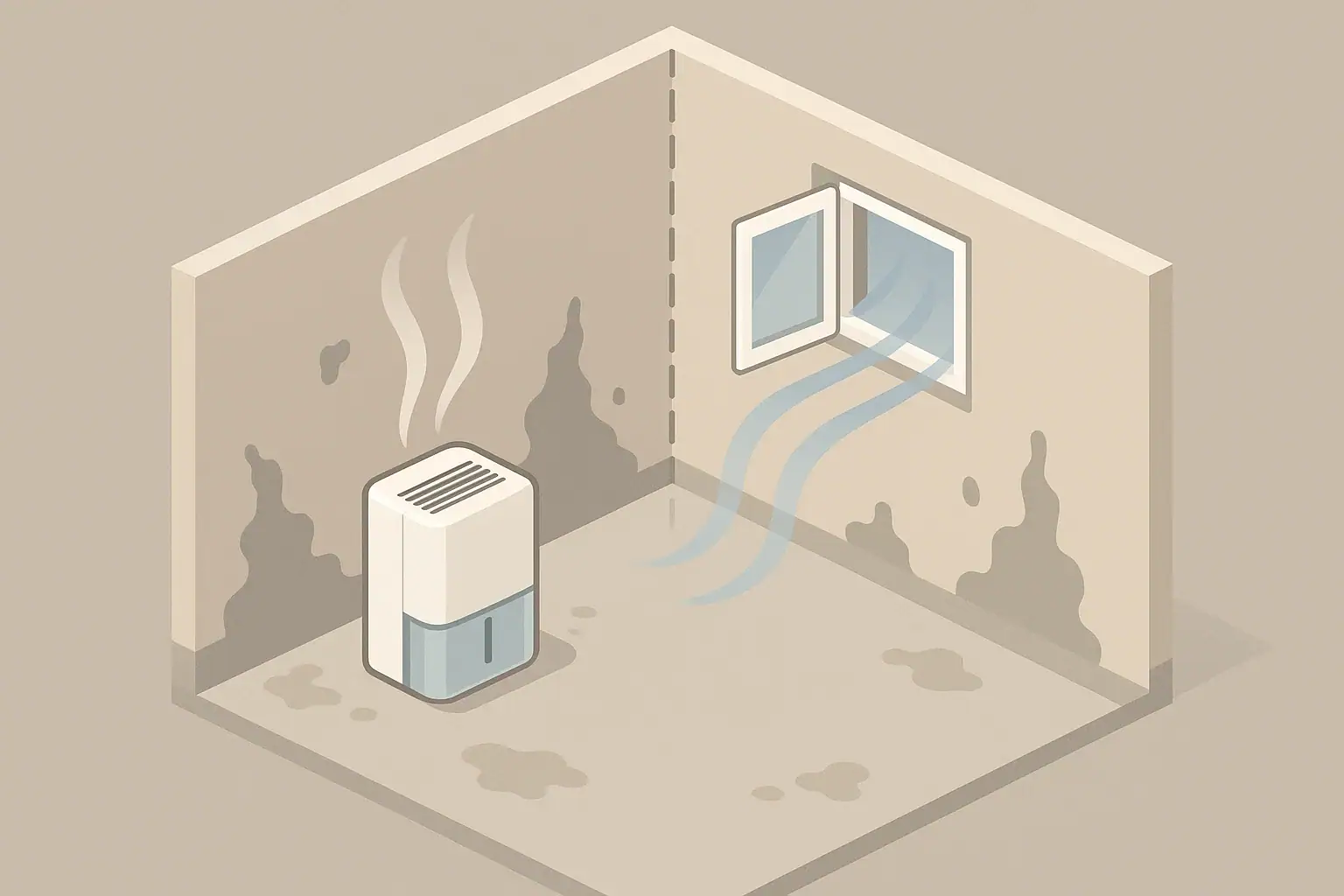
For most damp basements, fix bulk water and obvious ventilation problems first, then use a dehumidifier to keep relative humidity in a practical indoor range. A dehumidifier can control humid basement air, but it cannot solve seepage, poor drainage, or air leaks by itself. Ventilation can help when outdoor air is drier than indoor air, but it can also add moisture during humid weather.
Quick answer
- Aim for about 30% to 50% indoor relative humidity as general comfort guidance; try to stay below 60% in damp-prone spaces.
- Fix liquid water first: leaks, seepage, clogged gutters, grading, or condensation on cold surfaces.
- Ventilate when outdoor air is drier than basement air; avoid bringing in warm, humid air that raises moisture levels.
- Use a dehumidifier when humidity remains high after water control and basic air exchange are addressed.
- Track results with a simple hygrometer placed away from vents, windows, and the dehumidifier outlet.
Why Damp Basements Need Both Moisture Control and Air Exchange
A damp basement is usually not caused by one thing. Moisture can enter as liquid water, water vapor through foundation materials, humid outdoor air, condensation on cool surfaces, or damp items stored indoors. Because the sources vary, the first fix depends on how moisture is getting in.
Dehumidification and ventilation solve different parts of the problem. A dehumidifier removes moisture from indoor air and collects it as water or drains it away. Ventilation replaces some indoor air with outdoor air, which may dilute odors and moisture if the incoming air is actually drier.
The order matters because using the wrong tool first can waste energy and hide the real cause. Running a dehumidifier against an active leak, for example, is like mopping while the faucet is still on. Opening windows during a humid summer afternoon can make the basement wetter, not drier.
Dehumidifier vs Ventilation: What Each One Actually Does
A dehumidifier is an indoor moisture-removal device. It is most useful when the basement air is damp because of normal vapor movement, stored moisture, seasonal humidity, or limited drying. It is also useful when a basement is mostly closed up and humidity stays high for long periods.
Ventilation is air exchange. It may be natural, such as opening windows when conditions are right, or mechanical, such as a code-compliant exhaust or fresh-air system. Ventilation helps most when stale or moist indoor air can be replaced with outdoor air that has a lower moisture load.
The key comparison is not simply air movement versus water removal. It is whether the outside air will help dry the basement. Relative humidity alone can be misleading because warm air can hold more moisture than cool air. In practical terms, if outdoor air feels muggy or causes surfaces to sweat, it is unlikely to be a good drying source.
Example values for illustration.
| Basement condition | First priority | Why it matters |
|---|---|---|
| Visible seepage or puddles | Water source repair | Air equipment cannot correct active liquid water entry |
| Humidity above about 60% | Dehumidification after source checks | High indoor RH supports dampness and must be lowered |
| Stale air but RH is controlled | Ventilation review | Air exchange may improve freshness without over-drying |
| Outdoor air is cool and dry | Timed ventilation | Drier outdoor air can help remove indoor moisture |
| Outdoor air is warm and humid | Limit ventilation; dehumidify | Humid incoming air can raise basement moisture |
| Cold walls or pipes sweating | Condensation control | Surface temperature and humidity must both be addressed |
| Musty storage areas | Declutter, dry, then monitor | Cardboard and fabrics can hold moisture and odors |
Simple Sizing and Target Numbers for a Basement
For general indoor comfort, many homes aim for about 30% to 50% relative humidity. In basements, a common practical goal is to keep RH below 60% and often closer to 45% to 50% during damp seasons. These are general targets, not a guarantee against mold or a substitute for repairing water intrusion.
Measure before choosing a fix. Place a hygrometer in the main basement area, not directly beside a window, supply register, dehumidifier outlet, laundry appliance, or exterior door. Check readings at different times of day and after rain, laundry use, or window opening.
How to think about dehumidifier capacity
Dehumidifier sizing depends on basement square footage, moisture load, temperature, and how often water enters. Larger or wetter basements need more moisture-removal capacity than small, moderately damp spaces. If the basement is cool, performance can drop compared with warmer test conditions, so drainage and source control become even more important.
Continuous drainage is often worth planning if the unit will run daily. A collection bucket works, but it requires regular emptying and can stop the unit when full. Any drain setup should follow the product instructions and local safety expectations, without bypassing built-in controls.
How to think about ventilation amount
Basement ventilation should be intentional. Randomly propping open a window may help on a dry fall day and hurt on a humid summer day. A better approach is to compare indoor humidity trends against outdoor conditions and ventilate during favorable periods.
If the basement includes combustion appliances, attached garages, or radon mitigation systems, ventilation changes can affect pressure relationships. In those cases, it is wise to use qualified help rather than guessing with fans or exhaust changes.
Common Mistakes That Keep Basements Damp
One common mistake is buying a dehumidifier before checking for liquid water. Damp walls, wet floor edges, efflorescence, or water after storms point to moisture entry that should be corrected at the source. Typical first checks include gutters, downspouts, grading, foundation cracks, window wells, and plumbing leaks.
Another mistake is assuming more ventilation is always better. Ventilation dries only when the incoming air has less moisture than the basement air. In many U.S. climates, summer outdoor air can be too humid for basement drying, especially when it meets cool concrete or cool plumbing.
Storage habits also matter. Cardboard boxes, rugs, upholstered furniture, and packed shelving can trap moisture against walls and floors. Leaving air gaps around stored items helps surfaces dry and makes moisture problems easier to see early.
Finally, some people rely on scent products to mask damp odors. Odor coverups do not remove moisture or correct the source. A calmer and more useful approach is to locate damp materials, dry them, clean appropriate surfaces, and keep humidity under control.
What to Fix First: A Practical Basement Checklist
Start with visible water. If there are puddles, active seepage, wet drywall, recurring carpet dampness, or plumbing leaks, address those before relying on air equipment. Dehumidifiers and ventilation are support tools, not waterproofing systems.
Next, look outside. Clean gutters, extend downspouts away from the foundation where appropriate, and check whether soil slopes toward the house. These are basic observations, not a substitute for professional drainage work when water entry is persistent.
Then review indoor moisture sources. Unvented drying racks, frequent laundry, open sump pits, damp stored items, and poorly sealed crawlspace connections can all add moisture. If a bathroom or laundry area is in the basement, confirm that exhaust is routed outdoors and used during moisture-producing activities.
After source checks, decide how to use ventilation. Open windows or bring in outdoor air only when it helps the moisture balance. When outdoor conditions are humid, keep the basement more closed and use dehumidification to control RH.
Finally, set up monitoring. A hygrometer gives faster feedback than smell or feel. If RH drops into the target range and stays there, the strategy is likely working. If readings remain high despite continuous operation, there may be an unresolved moisture source, undersized equipment, poor air circulation, or a very large connected space.
Real-World Examples: Which Choice Comes First
Basement gets wet after heavy rain
The first fix is not ventilation or dehumidification. The priority is finding why water enters after storms. Check drainage, downspouts, grading, foundation openings, window wells, and sump operation if present. A dehumidifier can help dry residual moisture after the water source is controlled.
Basement is dry but smells stale
If RH is already around the target range and there is no visible dampness, ventilation may come first. The goal is controlled air exchange, not simply more fan use. Short periods of outdoor air on dry days may help, while humid outdoor air may not.
Basement RH stays around 65% in summer
If there is no obvious leak, a dehumidifier often becomes the main tool. Keep windows closed during muggy weather, improve air circulation around stored items, and use the dehumidifier to bring RH down toward a more practical range. If the unit runs constantly without progress, reassess the moisture source and equipment capacity.
Condensation forms on pipes or concrete
Condensation suggests warm, moist air is contacting a cold surface. The first step is reducing indoor humidity and limiting humid air entry. Insulating appropriate cold-water pipes or improving surface conditions may also help, but work should be done safely and in line with building practices.
Safety, Maintenance, and Upkeep for Basement Air Quality
Basements can include electrical outlets, sump pumps, floor drains, combustion appliances, and laundry equipment, so moisture control should be done with safety in mind. Keep dehumidifiers on stable surfaces, follow clearance instructions, and avoid extension cords unless the product instructions and electrical safety guidance allow them. Do not bypass bucket switches, grounding, safety controls, or drain protections.
Drain hoses should be checked for clogs, kinks, and secure placement. A blocked hose can stop drainage or send water where it does not belong. If draining to a sump or floor drain, keep the area clean and periodically confirm that water is flowing as intended.
Filters and coils need routine care. Many dehumidifiers have washable intake filters that collect dust and lint. A clogged filter can reduce airflow and make the unit work harder. Clean according to the product instructions, especially during high-use seasons.
Ventilation equipment also needs upkeep. Exhaust grilles, intake screens, and ducts can collect dust or debris. If a fan becomes noisy, weak, or intermittent, inspect accessible grilles and consider professional evaluation for the mechanical components.
Be cautious with add-on air treatment features such as ionizers, ozone generators, or UV-C devices. Ozone should not be intentionally generated in occupied indoor spaces for routine air cleaning. UV-C and ionization systems vary widely and should be evaluated carefully for safety, maintenance, and whether they address the actual basement moisture problem.
Example values for illustration.
| Goal | Simple actions | Tools | Note |
|---|---|---|---|
| Confirm dampness | Measure RH for several days | Hygrometer | Track after rain and during humid weather |
| Stop liquid water | Check leaks, drainage, and wet areas | Flashlight, maintenance checklist | Repair sources before relying on air equipment |
| Reduce high RH | Run dehumidifier as needed | Dehumidifier, drain option | Aim for a consistent practical range |
| Use ventilation wisely | Ventilate during drier outdoor conditions | Windows, fans, approved ventilation | Avoid adding humid outdoor air |
| Improve circulation | Move storage away from walls | Shelving, clear floor space | Air gaps help surfaces dry |
| Maintain equipment | Clean filters and check drains | Vacuum, mild cleaning supplies | Follow product instructions |
Related guides: Basement Dampness 101: RH Targets, Dehumidifiers, and Ventilation • Basement Dehumidifier Guide: Targets, Drainage, and Energy Use • How to Ventilate in Winter Without Freezing: Practical Strategies
Frequently asked questions
Should I buy a dehumidifier before checking basement ventilation?
Not usually. First check for leaks, seepage, drainage problems, and whether outdoor air is actually helping or adding moisture. If the basement is still humid after those issues are addressed, a dehumidifier is often the next step.
When does ventilation help more than a dehumidifier in a basement?
Ventilation helps when the outdoor air is drier than the basement air and can reduce humidity without bringing in extra moisture. It is more useful during cool, dry weather and less useful on warm, humid days. If outdoor air makes surfaces feel damp or sweaty, ventilation is usually not the better first choice.
What humidity level should a basement stay below?
A practical goal for many basements is to stay below 60% relative humidity, with 45% to 50% often being more comfortable when conditions allow. General indoor comfort guidance is usually around 30% to 50%. The best target can vary by climate, temperature, and whether the basement has moisture-prone materials.
Can opening basement windows make dampness worse?
Yes. If the outdoor air is warm and humid, opening windows can raise basement moisture instead of lowering it. Window ventilation is most useful only when outdoor conditions are drier than the indoor basement air.
Why does my basement still feel damp even with a dehumidifier running?
The unit may be undersized, the basement may have an unresolved water source, or humid air may still be entering from outside. Cool basement temperatures can also reduce dehumidifier performance. Check for hidden leaks, drainage issues, and whether the air is circulating well around the space.
What should I fix first if my basement has musty odors but no standing water?
Start by measuring humidity and checking for hidden damp materials, condensation, and small leaks. Musty odors often come from moisture in carpet, cardboard, wood, or stored items even when there is no visible puddle. Once the source is found, dry the area and then decide whether ventilation or dehumidification is needed.
Summary: Choosing the First Fix Without Guessing
The first fix for a damp basement is source control: stop liquid water, reduce obvious moisture entry, and correct basic drainage or leak problems. After that, choose between ventilation and dehumidification based on measured humidity and outdoor conditions.
Ventilation comes first when the basement needs air exchange and outdoor air is drier than indoor air. A dehumidifier comes first when indoor RH remains high, outdoor air is humid, or the basement needs steady moisture removal. In many homes, the long-term answer is not one or the other, but a sequence: stop water, ventilate when it helps, dehumidify when needed, and monitor results.
Use simple targets, steady observation, and routine maintenance. That approach avoids guessing and keeps the focus on practical basement moisture control rather than one-size-fits-all equipment choices.
Recommended next:
- HEPA vs Activated Carbon: Best Setup for Allergies, Odors, and Smoke
- Air Purifier vs Dehumidifier: Which One Solves Musty Air?
- Humidifier vs Dehumidifier: When to Add Moisture vs Remove It
- Air Purifier vs Ozone Generator: Safety, Effectiveness, and Myths
- HEPA vs Carbon Filters: When Each One Matters Most
- Air Purifier vs Ventilation: Which Fixes Stuffy Bedrooms Better?
- More in Comparisons →
- Clear sizing logic (room size → CADR/ACH)
- HEPA vs carbon explained for real use-cases
- Humidity + ventilation basics to reduce mold risk