
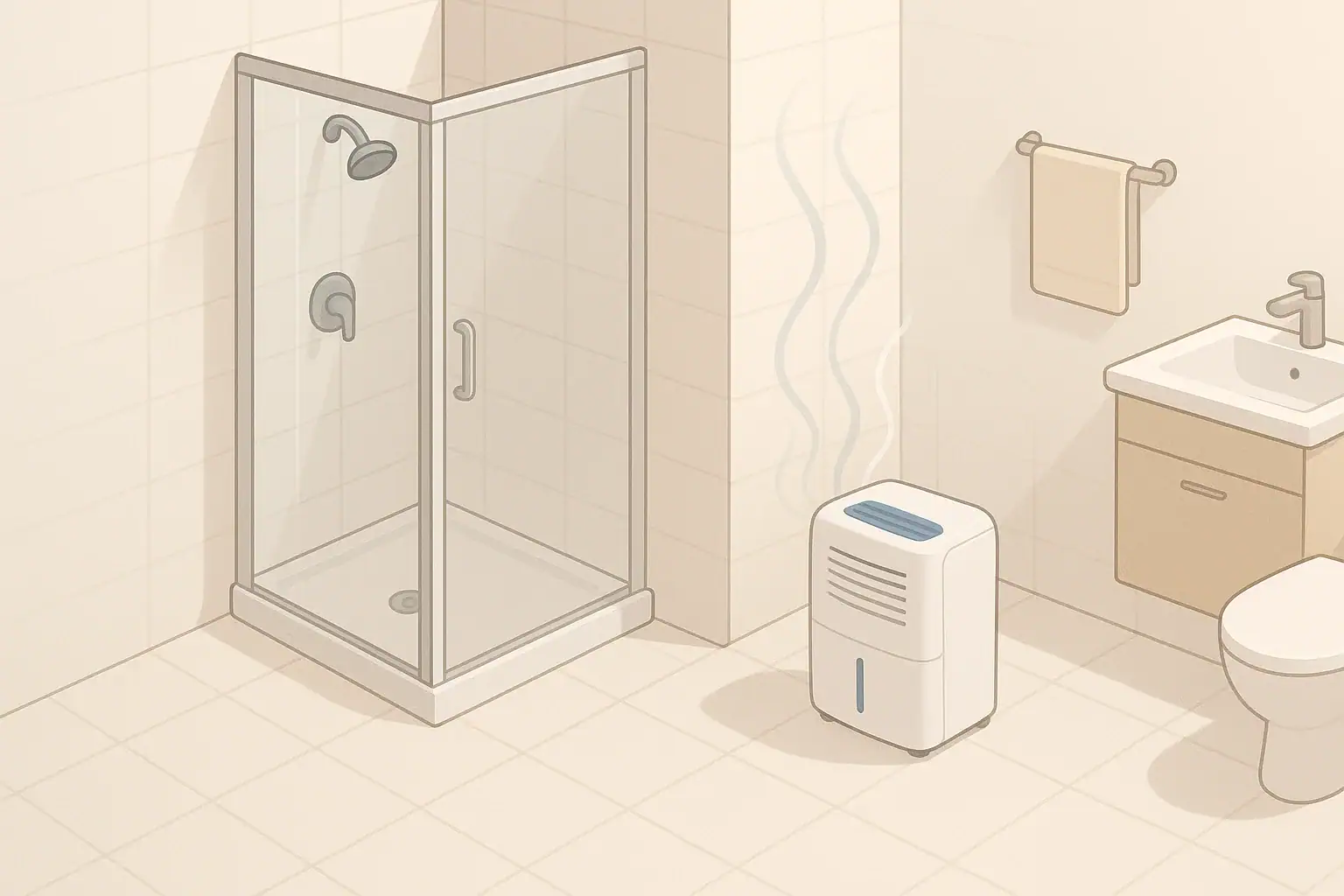
Bathroom mold prevention typically means running the exhaust fan during showers and for about 20–30 minutes afterward while keeping indoor humidity around 40–50% when possible.
Mold grows most easily when warm, moist air lingers on surfaces, which makes bathrooms a common problem area. By combining proper exhaust fan use, basic humidity control, and simple daily habits, you can greatly reduce the chances of mold taking hold on walls, ceilings, grout, and caulking without complicated equipment.
- Run the bathroom exhaust fan for the entire shower and about 20–30 minutes after.
- Aim for indoor relative humidity around 40–50% most of the time; try to keep bathrooms under about 60%.
- Keep the door slightly open after use (if privacy allows) to help moist air escape.
- Use warm (not extremely hot) showers and limit length to reduce steam volume.
- If moisture lingers on mirrors or walls for more than an hour, consider boosting ventilation or using a dehumidifier.
Why Bathroom Mold Forms and Why Timing Matters
Bathroom mold prevention starts with understanding what mold needs to grow. Mold spores are already present in most indoor spaces; what they need is persistent moisture, suitable temperature, and nutrient surfaces such as paint, drywall paper, grout, or caulk. Bathrooms often provide all three.
When you shower, steam raises the relative humidity in a small, enclosed room very quickly. If that moist air is not removed or diluted, it condenses on cooler surfaces like ceilings, windows, and exterior walls. Frequent wetting and slow drying create ideal conditions for mold colonies to establish and spread.
Exhaust fan timing is important because the highest humidity levels usually occur during and right after a shower. Running the fan only while you are in the room often stops the ventilation just as moist air is peaking. Keeping the fan on long enough after bathing allows humid air to be exhausted and surfaces to begin drying before mold can benefit from prolonged dampness.
Humidity control works alongside ventilation. Even with a fan, overall indoor humidity that stays high for long periods (around or above 60% much of the time) makes it harder for bathrooms to dry between uses. Combining fan use, reasonable shower habits, and sometimes dehumidification helps keep moisture in a range that is less favorable for mold growth.
Key Concepts: Exhaust Fan Performance and Humidity Levels
Two main ideas guide bathroom mold prevention: how effectively your exhaust fan exchanges air and what humidity levels you aim for in everyday use. Neither needs to be perfect; practical improvements often make a noticeable difference in moisture behavior.
Air changes and exhaust fan run time
Exhaust fans remove moist air and draw in drier air from the rest of the home. In simple terms, a fan that moves enough air for long enough helps moisture dissipate faster. Bathroom exhaust capacity is often discussed in cubic feet per minute (CFM), but without focusing on exact calculations, some general points are useful:
- Smaller bathrooms usually need less airflow, but they also get steamy faster because the volume of air is small.
- Larger bathrooms with tubs, separate showers, or high ceilings may require more airflow and/or longer fan run times.
- Run time matters even with a reasonably sized fan; turning it off as soon as the shower ends often leaves a lot of moisture behind.
As general guidance, many households find that running the exhaust fan for the full duration of the shower plus about 20–30 minutes afterward helps visible condensation clear within a reasonable time. In a small or poorly ventilated room, longer run times may be helpful.
Indoor humidity targets and bathroom peaks
Relative humidity (RH) is the amount of water vapor in the air compared with how much it can hold at that temperature. Comfortable, general indoor ranges often fall around 40–50% RH, though seasonal and regional differences mean exact values vary from home to home.
For mold prevention in bathrooms:
- Try to keep everyday indoor humidity around 40–50% when practical.
- Short spikes above that during a shower are normal, but the room should trend back down soon after.
- Prolonged periods around or above 60% RH in the bathroom or throughout the house often indicate a higher mold risk.
A simple humidity monitor can help you understand how quickly your bathroom humidity rises and how long it takes to fall back after running the fan. You do not need exact precision; look for patterns such as humidity staying elevated for hours or failing to drop when the fan is on.
This checklist pairs common bathroom tasks with why they matter for mold prevention.
| Task | Why it matters | Practical notes |
|---|---|---|
| Run exhaust fan during shower | Removes steam as it forms | Turn on a few minutes before hot water starts |
| Run fan 20–30 minutes after | Continues drying air and surfaces | Use a timer switch if you often forget |
| Open door after use | Lets moist air mix with drier house air | Even a small opening helps air exchange |
| Use moderate water temperature | Reduces total steam volume | Very hot showers create more condensation |
| Wipe down wet surfaces | Removes standing water mold can use | Focus on shower walls, glass, and window sills |
| Hang towels to dry fully | Prevents constant dampness near walls | Avoid piling towels in a corner or on the floor |
| Check for visible condensation | Quick visual cue for excessive humidity | Fogged mirrors and ceilings that stay wet are signals |
Common Bathroom Mold Mistakes and Warning Signs
Even with a working exhaust fan, everyday habits can keep bathrooms damp longer than necessary. Recognizing common mistakes and early cues of moisture problems lets you adjust before significant mold growth appears.
Ventilation mistakes
- Turning the fan off too soon: Stopping the fan as soon as you leave the bathroom often leaves humidity peaking after you are gone. A post-shower run time of 20–30 minutes is generally more effective.
- Using a fan that vents into an attic or crawlspace: Some older installations may not exhaust outdoors, which can move moisture to another enclosed area instead of truly removing it.
- Blocked or dirty fan grilles: Dust buildup reduces airflow, meaning less moisture removal even if the fan is on.
- Closed doors with no make-up air: If the bathroom door is tightly sealed at the bottom, the fan may struggle to pull air through. A small gap under the door or slightly open door helps.
Humidity and surface cues
- Condensation lasting more than an hour: Mirrors, tiles, or ceilings that remain wet long after a shower suggest that either humidity is too high overall or ventilation is insufficient.
- Peeling paint or bubbling surfaces: These can indicate repeated moisture absorption into walls or ceilings.
- Dark spots along grout or caulk: Early mold or mildew often appears along grout lines, in corners, or around fixtures where water tends to sit.
- Musty odor: A persistent musty smell in or near the bathroom is a common sign of hidden or early mold growth.
Practical Fan Timing and Humidity Control Routines
Turning general guidelines into simple routines makes bathroom mold prevention easier to maintain. The goal is predictable moisture removal and steady drying rather than perfectly precise control.
Daily exhaust fan routine
- Switch the exhaust fan on a few minutes before starting the shower to establish airflow.
- Keep the fan running for the entire shower or bath.
- Leave the fan on for about 20–30 minutes after finishing, especially if there is visible condensation.
- If the bathroom is very small or does not dry quickly, extend run time or run the fan even when not showering after heavy use (such as multiple consecutive showers).
A timer switch can help maintain consistent fan use. If that is not available, using a phone alarm or household routine (for example, leaving the fan on until you finish another regular task) can provide a similar reminder.
Humidity-focused habits
- Shorten or moderate showers where possible to reduce steam volume.
- Use warm, not extremely hot, water to limit peak humidity and condensation.
- Open the bathroom door after showering when privacy allows, so humid air can mix with drier house air.
- Wipe down wet surfaces such as shower walls, glass doors, and window sills to remove standing water.
- Hang towels and bathmats so air can circulate around them; consider drying them outside the bathroom in very humid homes.
If you use a whole-house humidifier in winter, check that it is not set so high that bathrooms and windows stay damp. Small adjustments to whole-home humidity can support bathroom mold prevention.
Real-World Scenarios: Matching Actions to Bathroom Types
Different bathrooms and households face different moisture challenges. The principles are similar, but practical steps vary based on room size, usage patterns, and climate.
Small interior bathroom with no window
A small bathroom located in the middle of a house or apartment usually has no direct outdoor window and relies entirely on a mechanical exhaust fan.
- Fan run time is especially important; aim for full-shower-plus 20–30 minutes, and longer if condensation persists.
- Try to keep the door slightly open after use so dry air can replace moist air more easily.
- If humidity remains high, consider an additional moisture removal method nearby, such as a portable dehumidifier in an adjacent hallway (used according to manufacturer instructions).
Large bathroom with tub, shower, and high ceilings
Larger bathrooms can hold more moisture and often have areas the fan does not reach as well.
- Multiple moisture sources (such as separate tub and shower) may require longer fan operation after use.
- Ensure the fan is appropriately sized for the room and that air can flow in from under the door or adjacent rooms.
- Ceiling fans (if rated for bathroom use) or strategic opening of doors can help reduce stagnant air pockets.
- In very humid climates, using a dehumidifier in or near the bathroom between uses can assist with controlling overall humidity levels.
Shared hallway bath in a humid climate
In regions with long, humid seasons, outdoor air may already be quite moist. Even with a fan, it may be harder for the bathroom to dry quickly.
- Focus on consistent fan use and daily habits like wiping surfaces dry and hanging towels elsewhere when possible.
- Monitor indoor humidity in the hallway or nearby room; if readings stay high, whole-home or room dehumidification may be helpful.
- Check that warm-weather cooling systems are functioning as expected since air conditioning often assists with dehumidification.
Safety, Standards, and Special Features
Bathroom ventilation involves both moisture control and safe operation of electrical and mechanical equipment. Simple checks can help ensure that moisture is actually being removed from the home and that devices are used appropriately.
Proper venting and electrical considerations
- Outdoor venting: Bathroom fans should typically exhaust outdoors, not into attics, crawlspaces, or wall cavities, to avoid shifting moisture problems to another area.
- Weather protection: Exterior vent hoods should be intact and allow air out while limiting backdrafts and pests.
- Electrical safety: Bathroom fans and any dehumidifiers or other devices should be installed and used according to applicable electrical safety standards and instructions, especially in damp locations.
Humidity-sensing fans, heaters, and add-ons
Some bathroom fans include humidity sensors or timers intended to keep the fan running until humidity falls to a preset level. Others include auxiliary heaters to improve comfort. These features can be helpful when used correctly, but they do not replace the need to pay attention to visible condensation and drying times.
- Humidity-sensing fans: May extend run time automatically, but sensor placement and sensitivity affect performance.
- Heaters: Can warm surfaces, which sometimes reduces condensation, but do not remove moisture by themselves; they work best combined with adequate ventilation.
- Air cleaners or UV-type products: Devices marketed to clean air or surfaces should be evaluated cautiously. For bathroom mold prevention, physical moisture control (ventilation, drying, humidity limits) is still the primary strategy.
It is generally advisable to avoid devices that intentionally produce ozone in occupied indoor spaces, as ozone is a respiratory irritant and is not necessary for everyday mold prevention.
Maintenance: Keeping Fans and Surfaces Mold-Resistant
Even good routines can be undermined if the exhaust fan is clogged or bathroom surfaces stay rough and absorbent. Regular, simple maintenance supports long-term moisture control.
Exhaust fan upkeep
- Clean the grille: Dust and lint can collect on the fan cover. Gently vacuum or wipe it every few months.
- Check airflow: With the fan on, hold a small tissue near the grille; it should be pulled toward the intake, indicating airflow.
- Listen for changes: Loud, rattling, or weak-sounding fans may need inspection or replacement to restore effective ventilation.
Managing surfaces, grout, and caulk
- Address leaks promptly: Dripping faucets, loose shower connections, or sweating pipes add to moisture load and can create localized damp spots.
- Repair failing caulk or grout: Cracks or gaps can hold moisture longer and allow water behind surfaces; replacing damaged sections can reduce hidden dampness.
- Clean routinely: Regular cleaning removes soap film and organic residues that can provide nutrients for mold.
Where visible mold appears, follow widely available cleaning and safety guidance suitable for the size and location of the growth. Large or recurring problems may call for professional assessment, particularly if building materials are affected.
Bathroom Mold and Humidity Quick-Plan Table
This table summarizes simple goals and typical tools used to keep bathroom humidity in a mold-resistant range.
Use these example goals and actions as starting points and adjust based on your bathroom and climate.
| Goal | Simple actions | Helpful tools | Notes |
|---|---|---|---|
| Limit everyday humidity to ~40–50% RH | Adjust whole-home humidifiers or dehumidifiers as needed | Basic humidity monitor | Expect short-term spikes during showers |
| Clear condensation within about 30–60 minutes | Run fan before, during, and 20–30 minutes after shower | Bathroom exhaust fan | Extend fan run time if surfaces stay wet longer |
| Prevent persistent damp corners | Wipe down tiles, corners, and window sills after use | Small squeegee or towel | Focus on spots where water tends to collect |
| Reduce moisture from textiles | Hang towels fully open, dry bathmats between uses | Extra towel bars or hooks | Consider drying in a better-ventilated room |
| Control humidity in very damp seasons | Use dehumidification in nearby spaces | Portable or whole-home dehumidifier | Follow device instructions and drain guidelines |
| Catch issues early | Inspect grout, caulk, and corners monthly | Flashlight and cleaning supplies | Look for dark spots, peeling, or musty odors |
Related guides: Air Purifier for Mold Spores: What Works and What Doesn’t • Air Purifier vs Dehumidifier: Which One Solves Musty Air? • How to Stop Condensation on Windows (And Why It Matters for Mold)
Summary: Practical Steps to Reduce Bathroom Mold Risk
Effective bathroom mold prevention rests on simple moisture management: remove humid air, limit how wet surfaces stay, and keep overall humidity within a moderate range. Running the exhaust fan before, during, and for about 20–30 minutes after showers gives steam time to leave the room. Combining that with moderate shower temperatures, open doors when possible, thorough drying of towels and surfaces, and periodic maintenance of the fan and bathroom finishes helps keep moisture from lingering.
While every home and climate is different, watching how long condensation lasts and how often surfaces feel damp provides useful feedback. Small changes in fan timing and humidity habits can significantly reduce the conditions mold needs to grow, supporting cleaner, more durable bathroom surfaces over time.
Frequently asked questions
How long should I run my bathroom exhaust fan after a shower to reduce mold risk?
Run the exhaust fan for the entire shower and generally for about 20–30 minutes afterward to allow humid air to clear and surfaces to begin drying. In very small, poorly ventilated, or high-ceiling bathrooms, you may need longer run times until visible condensation is gone.
Can a humidity-sensing fan reliably replace manual timing for mold prevention?
Humidity-sensing fans can help by extending runtime automatically until RH falls to a preset level, but their effectiveness depends on sensor placement and sensitivity. It’s still wise to watch for visible condensation and perform basic maintenance like cleaning the grille to ensure the fan actually moves air.
Is it acceptable if my bathroom fan vents into an attic or crawlspace?
No, fans should ideally vent outdoors; routing moist air into an attic or crawlspace can create hidden moisture problems and increase mold risk in those spaces. If your fan currently vents indoors, have it redirected to the exterior or consult a professional for proper venting options.
What indoor humidity level should I aim for to help prevent bathroom mold?
Aim for everyday indoor relative humidity around 40–50% when practical and try to avoid prolonged periods at or above 60% RH. Short spikes during showers are normal if the room dries back down within an hour or so.
Do hotter or longer showers increase the chance of mold, and should I change my habits?
Very hot or long showers produce more steam, which raises peak humidity and lengthens drying time, increasing mold risk if ventilation is insufficient. Using warm (not extremely hot) water, shortening showers when possible, and running the fan before, during, and after bathing all help reduce that risk.
Recommended next:
- Best Indoor Humidity Level to Prevent Mold (With Seasonal Targets)
- Air Purifier for Mold Spores: What Works and What Doesn’t
- How to Stop Condensation on Windows (And Why It Matters for Mold)
- Basement Dampness 101: RH Targets, Dehumidifiers, and Ventilation
- Condensation on Windows: Causes, Dew Point, and Fixes That Work
- More in Mold & Dampness →
- Clear sizing logic (room size → CADR/ACH)
- HEPA vs carbon explained for real use-cases
- Humidity + ventilation basics to reduce mold risk







About this site
Home Air Quality Lab publishes practical, independent guides about indoor air quality—clear sizing, safer use, and real-world expectations.
Affiliate disclosure
Some links on this site may be affiliate links. If you buy through these links, we may earn a small commission at no extra cost to you. This helps support our content. Learn more.