
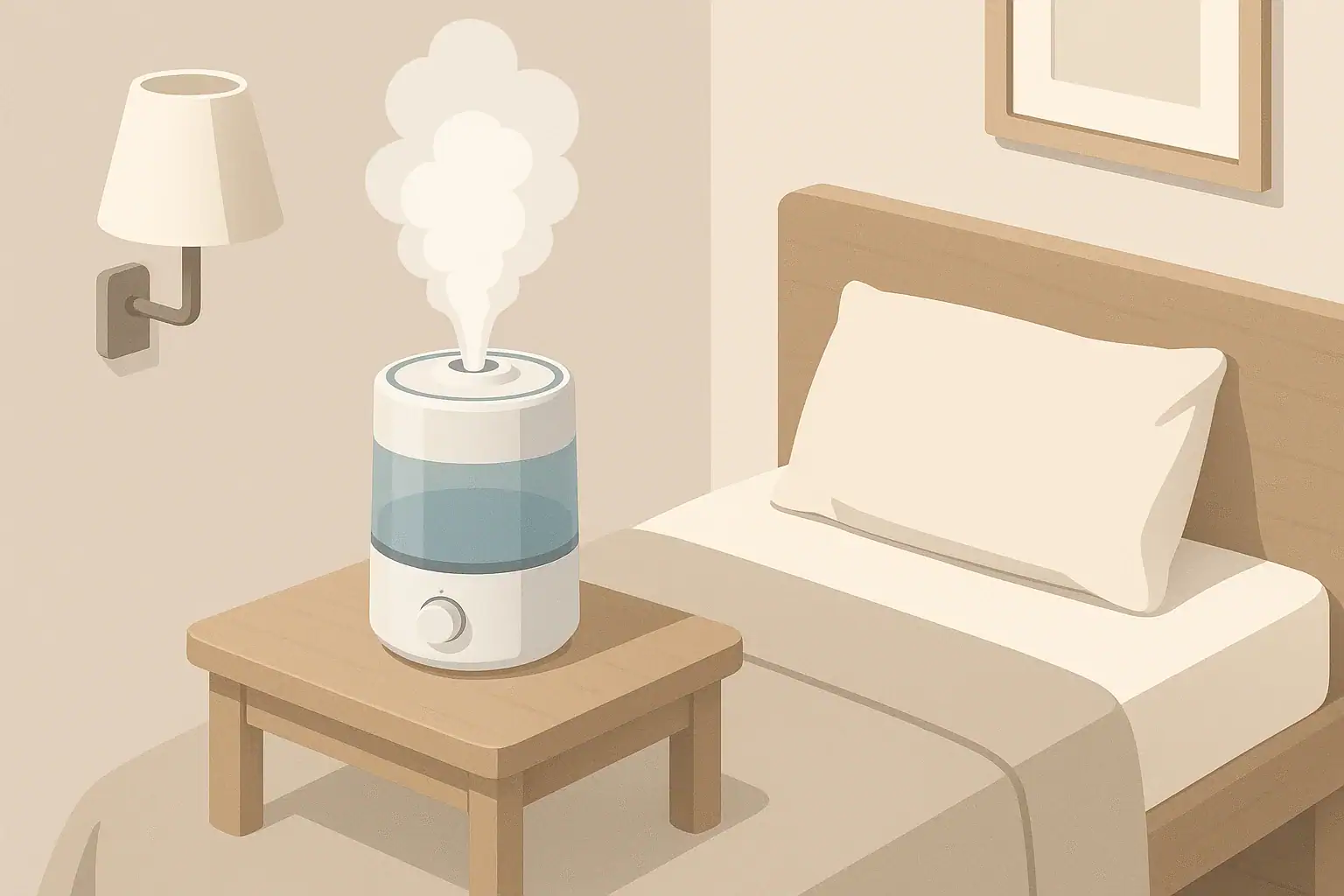
Using a humidifier can ease dryness in skin and sinuses by raising low indoor humidity into a more comfortable range, but it cannot fix every cause of irritation and can create problems if overused or poorly cleaned.
In dry climates or heated homes, indoor air often falls well below comfort humidity levels, which can make your skin feel tight and your nose or throat feel scratchy. Humidifiers are one tool to nudge the air back toward a moderate range, but their benefits depend on type, placement, maintenance, and realistic expectations.
- Aim for indoor relative humidity around 30–50% for general comfort.
- Below ~30% RH, a humidifier may help dry skin, lips, and nasal passages feel less irritated.
- Avoid going much above ~50–55% RH to reduce mold and dust mite concerns.
- Cool-mist (evaporative or ultrasonic) units are common for bedrooms; warm-mist adds heat but not extra moisture benefit.
- Use distilled or low-mineral water when possible and clean tanks and surfaces at least weekly.
- If symptoms are severe, persistent, or unexplained, consult a health professional rather than relying on a humidifier alone.
Why Dry Air Affects Skin and Sinuses
Dry indoor air means there is less water vapor in the space around you. When relative humidity (RH) is low, moisture more readily evaporates from your skin and the lining of your nose and throat. Many people notice this in winter, when heating systems run constantly and outdoor air is already dry.
For skin, lower humidity can contribute to a tight or flaky feeling and may make existing dryness more noticeable. For your upper airways, very dry air can make nasal passages feel stuffy or scratchy and may make it harder to feel comfortable when breathing through the nose.
A humidifier adds water vapor to the air, which can reduce how quickly moisture leaves your skin or mucous membranes. It does not treat underlying medical conditions, but it can change the environment to be less drying and more comfortable for many people.
Key Humidity and Humidifier Concepts
Before choosing or using a humidifier for dry skin and sinuses, it helps to understand a few basic terms and how they interact in a real room.
Relative humidity and comfort ranges
- Relative humidity (RH) is the percentage of water vapor in the air compared with the maximum the air could hold at that temperature.
- Many building and comfort guidelines point to roughly 30–50% RH as a generally comfortable range for most people.
- Below about 30% RH, air often feels dry; above roughly 50–60% RH, the risk of condensation and mold growth on cool surfaces rises.
Humidifier types and what matters for comfort
- Evaporative humidifiers pull air through a wet wick or filter. The air naturally picks up moisture until approaching a limit at that temperature, which can make over-humidification less likely.
- Ultrasonic humidifiers use a vibrating plate to create a fine mist. They are often quiet and efficient, but can disperse minerals from tap water into the air, leaving white dust on surfaces.
- Warm-mist or steam humidifiers boil water to create steam. The added moisture is similar to cool-mist, but the device is hotter and may require more energy.
For dry skin and sinuses, the key factor is the humidity level you achieve in the room, not whether the mist feels warm or cool by the time it reaches you. Temperature still matters for comfort, but both warm- and cool-mist units can help increase RH.
Room size and output
Humidifiers are rated for approximate room sizes, but these are rough estimates. High ceilings, open floor plans, drafts, and frequent door opening all make it harder to raise humidity. For dry skin and sinus comfort, you often do not need to humidify the whole home; focusing on a bedroom or main sitting area is common.
Monitoring with a basic hygrometer (humidity meter) helps you see whether your device can bring a specific room into the 30–50% window without overshooting.
| Option | Helps with dry skin/sinuses? | Key advantages | Key trade-offs |
|---|---|---|---|
| Evaporative cool-mist | Yes, when RH is low | Self-limiting moisture; simple humidity boost | Fan noise; wick/filter to replace |
| Ultrasonic cool-mist | Yes, when RH is low | Very quiet; compact | Mineral “white dust” if not using low-mineral water |
| Warm-mist / steam | Yes, similar moisture effect | Warm output can feel cozy in winter | Hot surfaces; higher energy use |
| Whole-house humidifier | Potentially, when well controlled | Even humidity through ductwork | Installation cost; needs careful RH control |
| Bowl of water near heat source | Mild effect only | No power; very simple | Slow, limited humidity increase |
| Essential oil diffuser (no added water) | Not primarily for humidity | Fragrance only | Does not materially raise RH |
Example values for illustration.
What Helps vs. What Does Not
Many people buy a humidifier hoping it will solve a variety of winter complaints. Some expectations are reasonable; others are less so.
What a humidifier can realistically help with
- General dryness discomfort: When RH is low, raising it into the 30–45% range often makes air feel less harsh on skin and nasal passages.
- Comfort during sleep: A moderate humidity level in the bedroom may feel more comfortable for breathing through the nose, especially when central heating runs overnight.
- Static electricity and dry lips: Slightly higher humidity can reduce static shocks and the very dry feeling on lips or hands that some people notice in winter.
What a humidifier does not do
- It does not diagnose or treat illness: It cannot determine the cause of nosebleeds, sinus infections, or skin conditions. These may need medical evaluation.
- It does not filter allergens or pollutants: Most humidifiers do not remove dust, pet dander, or smoke. For that, an air purifier with appropriate filters is more relevant.
- It does not replace ventilation: Adding moisture to stale air does not remove carbon dioxide, odors, or indoor pollutants. Fresh air exchange still matters.
- It does not help if humidity is already high: If your RH is already near or above 50–55%, adding more moisture can work against comfort and indoor air quality.
When humidity is not the main issue
If your indoor humidity already sits around 35–45% and you still have significant skin or sinus problems, a humidifier alone is unlikely to make a big difference. In that case, it may be more useful to consider other factors such as personal skin care routines, indoor pollutants or fragrances, airflow and ventilation, or medical conditions.
Common Mistakes and Troubleshooting Signs
Even when a humidifier is the right tool, it is easy to use it in ways that reduce comfort or create new issues. Watching for a few practical signs can help you adjust.
Over-humidifying the room
It is possible to swing too far in the other direction. Signs that you might be over-humidifying include:
- Persistent condensation on windows, especially in cold weather
- Musty smells or damp corners on walls or ceilings
- Clammy or stuffy-feeling air even at normal temperatures
If you notice these, reduce the humidifier output, run it for shorter periods, or improve ventilation until RH comes back under about 50%.
White dust on furniture
Ultrasonic humidifiers can aerosolize minerals in tap water. When the mist dries, the minerals settle as a light white powder on nearby surfaces. This can be reduced by using distilled or low-mineral water, or by using a unit that traps minerals before they become airborne.
Odors or slimy surfaces in the tank
Humidifier tanks and internal surfaces that stay wet can allow microbial growth if not cleaned regularly. A musty or unpleasant smell from the unit is a cue to stop using it until it is thoroughly cleaned according to the manual. Regular maintenance helps keep the added moisture as clean as practical.
No noticeable change in humidity
If your hygrometer reading hardly changes even when the humidifier runs, consider:
- Room doors or windows left open, letting moisture escape
- A device too small for the open floor area or tall ceilings
- Very dry incoming outdoor air from continuous ventilation or exhaust fans
In such cases, try closing doors, moving the unit closer to where you sit or sleep, or using a slightly higher output (without overshooting the RH goals).
Practical Setup: How to Use a Humidifier for Comfort
For dry skin and sinus comfort, your goal is not maximum humidity, but a stable, moderate level in the spaces where you spend the most time.
Target ranges and simple monitoring
- Use a basic digital hygrometer to see your current RH in bedrooms and living areas.
- If readings sit below ~30% much of the day or night, a humidifier may improve comfort.
- Adjust settings so typical readings land in the 30–45% range, rarely exceeding about 50% for long periods.
Placement for better results
- Place the humidifier on a stable, water-resistant surface a few feet from the bed or seating area, not right up against walls.
- Aim the mist into open space, not directly at walls, windows, or electronics.
- Allow some clearance around the device so air can circulate.
- Avoid placing it on the floor in corners where airflow is limited and surfaces can stay damp.
Water choices
- Distilled or low-mineral water helps limit mineral buildup and white dust, especially in ultrasonic units.
- If you use tap water, expect more frequent cleaning and possible mineral deposits over time.
- Do not add oils, fragrances, or other substances to the tank unless the manufacturer explicitly states it is safe for that model.
Daily routine checklist
- Check the water level and refill with fresh water, rather than continually topping off stale water.
- Glance at your hygrometer when you turn the unit on or off to confirm you are staying near your target range.
- Turn off or reduce output if windows fog or the room feels stuffy and damp.
Scenarios: When a Humidifier Makes Sense (and When It May Not)
Here are some common household situations and how a humidifier for dry skin and sinuses might fit in.
Winter bedroom with forced-air heating
In many colder climates, central heating can drop indoor RH well below 30%. If you wake up with a dry mouth or tight-feeling skin and your hygrometer shows low humidity, a small cool-mist humidifier running at night may help the room sit closer to 35–45% RH and feel more comfortable.
Apartment in a mild, already humid climate
In some regions, even winter air stays fairly moist. If your indoor RH is often 40–55% without a humidifier, adding more moisture is unlikely to improve comfort and may increase condensation or mold risk. In this case, focusing on ventilation, temperature control, and air purification may be more relevant than humidification.
Child’s room with frequent colds
If the room air is very dry, a carefully controlled humidifier can sometimes make the environment feel less harsh for breathing. However, since children may be more sensitive to hot surfaces and excess humidity, many caregivers prefer cool-mist units, place them out of reach, and monitor RH to avoid overuse. Medical questions about frequent illness are best directed to a pediatric professional rather than to the device.
Home office with static shocks and dry hands
Static buildup around electronics and dry-feeling skin in a home office often occur when RH is quite low. A modest bump in humidity via a small humidifier may make typing and sitting at the desk more comfortable, especially when paired with regular breaks and hand care.
Safety and Indoor Air Quality Considerations
Because a humidifier intentionally adds moisture to your air, it needs to be used with care to avoid creating new indoor air quality concerns.
Moisture and mold
Prolonged high humidity, especially in cooler corners or poorly ventilated areas, can favor mold growth. Keeping RH generally below about 50–55%, using exhaust fans in bathrooms and kitchens, and not directing mist at walls or fabrics helps reduce this risk.
Microbial growth inside the device
Standing water combined with warmth can support bacteria, algae, or biofilm inside tanks and tubing. Follow the manufacturer’s cleaning instructions, which often include emptying and drying the tank between uses, rinsing daily, and performing a more thorough cleaning with a gentle disinfecting step weekly or as directed.
Other home air devices
Some air cleaners and HVAC add-ons use technologies such as ionizers or UV-C lamps. These are separate from humidifiers. If you use such equipment, follow manufacturer guidance carefully and avoid any device that intentionally generates ozone indoors. For dry skin and sinus comfort, safely controlled humidity, adequate ventilation, and, when needed, particle filtration are usually higher priorities than advanced air treatment features.
Maintenance and Cost Planning
A humidifier is not a set-and-forget appliance. Staying ahead of maintenance keeps the moisture you add as clean and predictable as possible.
Regular cleaning tasks
- Daily or every use: Empty the tank, rinse with clean water, and let it air-dry when not in use if practical.
- Weekly (or as directed): Wipe internal surfaces to remove film or deposits and follow the manual for a mild disinfecting step.
- Seasonally: Inspect seals, gaskets, and any removable parts for wear or buildup; deep clean before storing for the summer.
Filters, wicks, and other consumables
Many evaporative models use replaceable wicks or filters. Minerals in tap water can clog these over time, reducing output and potentially affecting cleanliness. Ultrasonic models may include optional demineralization cartridges. Plan for these recurring costs when comparing options.
Energy and water use
Portable humidifiers typically use modest electricity compared with large heating or cooling systems, especially cool-mist models. Steam-based units use more power to boil water. Water use is generally modest but varies with run time and output; you can adjust operation to reach your humidity target without running continuously at maximum.
| Goal | Simple actions | Tools | Note |
|---|---|---|---|
| Reduce dry air discomfort | Run humidifier in main room or bedroom | Portable humidifier, hygrometer | Aim for roughly 30–45% RH |
| Avoid over-humidification | Turn unit down/off if RH nears 50–55% | Hygrometer | Watch for window condensation |
| Limit mold-friendly conditions | Ventilate, use exhaust fans, fix leaks | Fans, dehumidifier if needed | Keep damp rooms below ~50% RH |
| Keep added moisture cleaner | Use fresh water, clean tank regularly | Cleaning supplies, low-mineral water | Follow manufacturer instructions |
| Balance comfort and energy | Humidify occupied rooms, not whole house | Room-sized units, timers | Turn off when not needed |
| Plan for long-term use | Track filter changes and seasonal storage | Spare filters/wicks, calendar reminder | Replace parts before performance drops |
Example values for illustration.
Related guides: Humidifier Cleaning Routine: How to Prevent Slime and Odors • Ultrasonic vs Evaporative Humidifiers: Pros, Cons, and Which to Buy • Humidifier vs Dehumidifier: When to Add Moisture vs Remove It
Summary: Using Humidifiers Wisely for Dry Skin and Sinuses
A humidifier can be a useful tool when dry indoor air contributes to discomfort in your skin and sinuses. Its main value is moving a very dry room toward a moderate humidity range, usually around 30–45% RH, rather than providing direct medical treatment.
Choose a device suited to your room size, place it where air can circulate, use appropriate water, and clean it regularly. Pair humidification with sensible ventilation and, when needed, air filtration for particles. If humidity is already moderate or symptoms are significant despite good air conditions, consider other environmental factors and consult a health professional for personalized guidance.
Frequently asked questions
How humid should my bedroom be at night to improve dry skin and nasal comfort?
Aim for about 30–45% relative humidity in bedrooms; this range often reduces skin and mucous membrane dryness without greatly increasing mold risk. Use a digital hygrometer to monitor levels and adjust the humidifier so readings rarely exceed about 50% for extended periods.
Which humidifier type and water should I choose to minimize white dust and buildup?
Evaporative units are less likely to produce visible white dust, while ultrasonic models can aerosolize minerals from tap water. Using distilled or low-mineral water and following any demineralization cartridge guidance reduces deposits, and regular cleaning prevents buildup.
How often must I clean my humidifier to avoid bacterial or mold growth?
Emptying and rinsing the tank daily and performing a more thorough cleaning and mild disinfection weekly is a practical routine for most units. Always follow the manufacturer’s cleaning instructions and dry components between uses when possible to limit microbial growth.
Will a humidifier cure chronic sinus problems or frequent nosebleeds?
A humidifier can reduce symptoms caused by very dry air but does not diagnose or treat underlying medical conditions that cause chronic sinus issues or nosebleeds. If symptoms are severe, recurrent, or unexplained, seek evaluation from a healthcare professional for appropriate diagnosis and care.
Is it safe to run a humidifier all night or when I’m not home?
Running a humidifier overnight can be safe if you monitor RH and keep it in the recommended 30–45% range; using a hygrometer and timers helps avoid prolonged high humidity. Do not leave it unattended in a closed, poorly ventilated space if condensation is visible, and maintain regular cleaning to reduce risks.
Recommended next:
- Best Humidity Level for Winter: Comfort vs Health vs Mold Risk
- Ultrasonic vs Evaporative Humidifiers: Pros, Cons, and Which to Buy
- Humidifier White Dust: Causes, Health Concerns, and Fixes
- How to Clean a Humidifier Properly (And How Often)
- Ideal Indoor Humidity in Winter: Comfort vs Mold Risk
- Humidifier Cleaning Routine: How to Prevent Slime and Odors
- More in Humidifiers →
- Clear sizing logic (room size → CADR/ACH)
- HEPA vs carbon explained for real use-cases
- Humidity + ventilation basics to reduce mold risk