
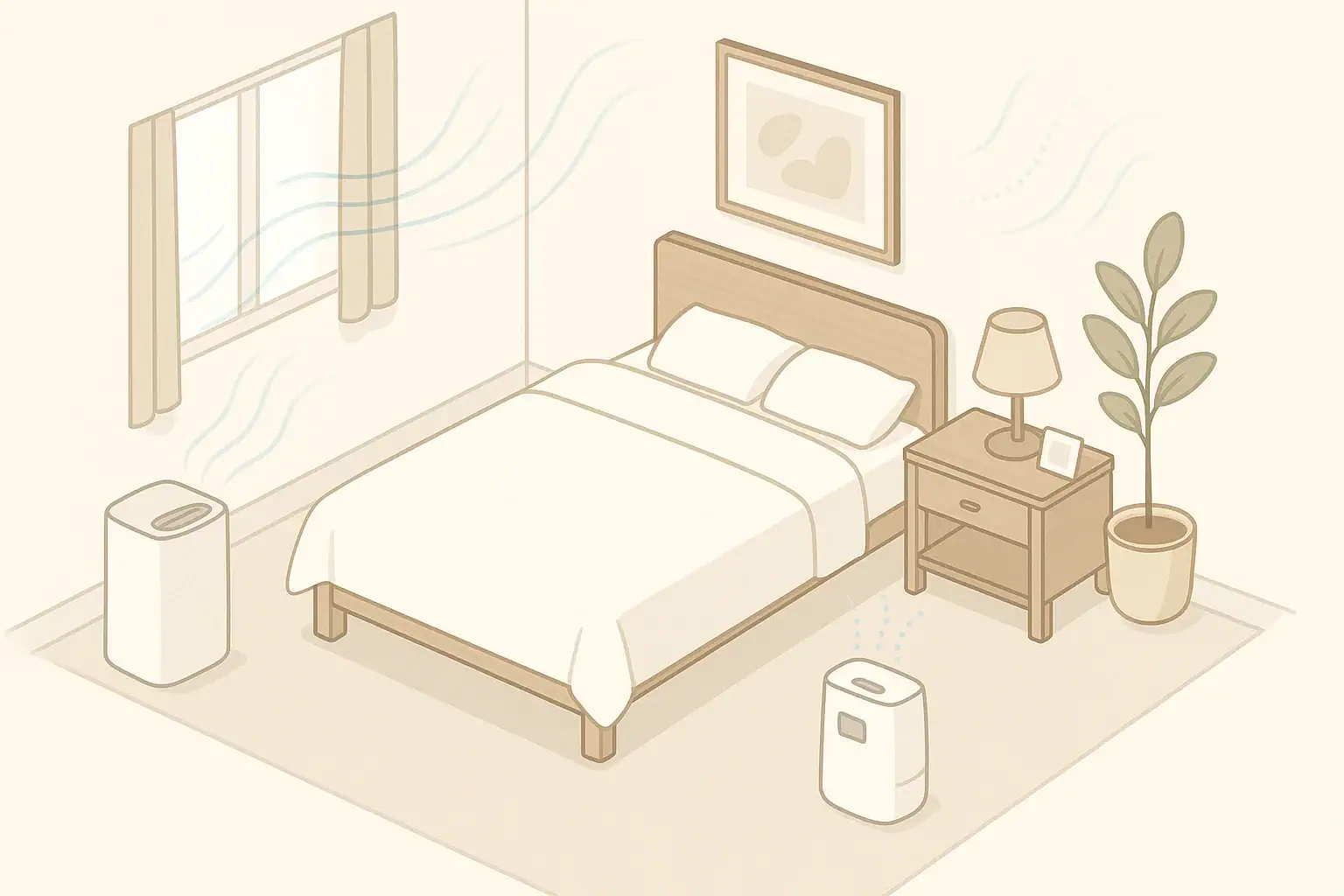
For most homes, keeping indoor relative humidity (RH) around 40–50% tends to reduce dust mite growth compared with more humid conditions while still staying comfortable for people.
Dust mites thrive in warm, damp environments, especially when humidity is high and fabrics stay slightly moist. While it is almost impossible to remove dust mites completely, you can make your home less friendly to them by managing humidity, reducing soft surfaces that trap dust, and cleaning regularly. The goal is not perfection, but steady control of moisture and dust over time.
- A practical indoor target for many homes is about 40–50% RH.
- Below roughly 50% RH, dust mite survival and reproduction generally drop compared with more humid air.
- Avoid staying above about 60% RH indoors for long periods to limit dust mites and moisture problems.
- Short fluctuations are normal; focus on typical daily ranges, not single readings.
- Use a simple hygrometer (humidity meter) in bedrooms and living areas to track RH.
- Combine humidity control with allergen covers, frequent washing, and vacuuming for broader dust reduction.
Why Dust Mites and Humidity Are Connected
Dust mites are tiny arthropods that live mainly in bedding, upholstery, and carpets where they feed on shed human and pet skin flakes. They are too small to see with the naked eye, but their presence is very common indoors.
Humidity matters because dust mites absorb moisture from the air through their bodies; they do not drink liquid water. When the air is fairly humid, they can survive, reproduce, and produce more waste. When the air is drier, they tend to dry out and their populations decline over time.
In many homes, the highest dust mite levels are found in:
- Mattresses and pillows
- Blankets, comforters, and fabric headboards
- Carpets and large area rugs
- Upholstered furniture
- Heavy curtains and stuffed toys
These are also places where humidity can stay slightly higher around the fibers, especially if the room air is moist and the items are thick or layered.
Key Humidity Concepts: RH Ranges and Practical Targets
Relative humidity (RH) is the amount of moisture in the air compared with the maximum it can hold at a given temperature, expressed as a percentage. Warm air can hold more moisture than cool air, so RH changes with both moisture and temperature.
Typical indoor humidity bands
For dust mites and general comfort, these broad bands are often discussed:
- Below ~30% RH: Air can feel quite dry for many people; static and dry skin are more common.
- About 30–40% RH: Often feels slightly dry but comfortable for many; typically not favorable for dust mites.
- About 40–50% RH: Common comfort range for many households and generally less favorable for dust mites than higher RH.
- Above ~60% RH: Air often feels humid; conditions become more favorable for dust mites and other moisture-related issues such as mold.
Exact ranges for dust mite survival and activity vary among studies and by species, but overall, extended periods of higher humidity tend to support larger populations. Keeping indoor RH around 40–50% for much of the year is a realistic compromise for many U.S. homes: generally comfortable for people, less supportive of dust mites than more humid conditions, and also helpful for reducing other moisture issues.
Why we talk about typical range, not single numbers
Dust mites respond to longer-term humidity patterns, not a single reading in one moment. A few hours of higher humidity during cooking or showering are less important than what your bedroom humidity looks like night after night across weeks and months.
Because of this, it is more practical to:
- Check RH at similar times each day (for example, evenings in bedrooms).
- Look for patterns, such as consistently being above ~60% RH in certain rooms.
- Adjust ventilation or dehumidification based on those patterns.
Example values for illustration.
| Typical bedroom RH pattern | Main issue | Priority action | Extra ideas |
|---|---|---|---|
| Frequently >60% day and night | High moisture supports mites and mold risk | Use a dehumidifier, improve ventilation | Reduce fabric clutter, launder bedding more often |
| 40–55% on average, sometimes higher | Generally okay, but peaks add moisture | Run bath/kitchen fans, open windows in mild weather | Run dehumidifier only during humid spells |
| 30–40% in winter, 40–50% in summer | Comfort/dryness balance | Consider light humidification in very dry spells | Keep RH below ~50% when possible |
| <30% much of the time | Very dry air, comfort concerns | Use a humidifier carefully, monitor RH | Avoid over-humidifying above ~50% |
| Large swings (for example 25–65%) | Unstable moisture from weather or habits | Check sources: leaks, ventilation, appliance use | Use programmable fans and dehumidifier if needed |
| Basement bedroom >60% most of summer | Ground moisture and poor air exchange | Dedicated dehumidifier, seal bulk moisture paths | Consider moving sleeping area if control is difficult |
Common Humidity and Dust Mite Mistakes
Managing humidity for dust mites often comes down to everyday habits. Several common patterns work against good control, even when people own the right equipment.
Relying on comfort alone instead of measuring RH
Many people judge humidity by how the air feels or by condensation on windows. Unfortunately, comfort is subjective, and visible moisture only shows up at very high levels. A simple hygrometer is much more reliable for seeing whether your bedroom spends long periods above roughly 60% RH.
Humidifying bedrooms at night without monitoring
Humidifiers are often used for comfort in winter, but running them without checking RH can easily push a room above 50–60%, especially in small or poorly ventilated spaces. This may make the room more supportive for dust mites even while it feels cozy.
Ignoring hidden moisture sources
Even if main living spaces look dry, localized moisture can keep certain areas humid:
- Unvented or weakly vented bathrooms near bedrooms
- Basements and slab-on-grade rooms with cool surfaces
- Leaky windows or roofs causing damp carpets or walls
- Aquariums or large houseplant groupings in small rooms
If certain rooms stay more humid than others, look for these localized sources.
Relying on air cleaning alone
Air purifiers with fine particle filters can help remove dust mite particles from the air, especially during activities like making the bed or vacuuming. However, they do not control humidity or eliminate mites inside mattresses or carpets. Humidity management and surface cleaning are still necessary.
Practical Checklist: How to Use Humidity to Discourage Dust Mites
Because dust mites live mainly in soft furnishings, the most effective approach combines RH control with targeted housekeeping around those items.
1. Measure humidity where dust mites live most
- Place a small hygrometer in each regularly used bedroom and main living area.
- Check RH at least once or twice a day for several days to see patterns.
- Note rooms that stay above about 60% RH for long stretches, especially at night.
2. Aim for roughly 40–50% RH in bedrooms when possible
This range often balances comfort with less favorable conditions for dust mites than more humid air. To move toward it:
- If RH is often above ~60%: use a dehumidifier, ensure bath and kitchen fans are used consistently, and open windows when outdoor conditions are drier and comfortable.
- If RH is often below ~30%: use a humidifier cautiously, adding moisture until readings usually fall in the 30–45% range, and try not to overshoot beyond about 50%.
3. Improve ventilation habits
- Run bath fans during and after showers long enough to clear moisture.
- Use kitchen exhaust when boiling water or cooking for extended periods.
- In mild weather, open windows on opposite sides of the home for cross-ventilation when outdoor humidity is not excessively high.
- Consider leaving bedroom doors open when possible to help air mix with the rest of the home.
4. Reduce dust reservoirs in key rooms
Humidity control makes conditions less supportive for mites, but they still need places to live. In bedrooms, especially:
- Use washable mattress and pillow covers designed to limit dust mite penetration.
- Wash sheets and pillowcases frequently in hot water, if appropriate for the fabric.
- Limit the number of decorative pillows, heavy fabric throws, and stuffed toys on beds.
- Consider smoother flooring surfaces or low-pile rugs in place of thick wall-to-wall carpet, especially in small, hard-to-dehumidify rooms.
5. Combine humidity control with regular cleaning
- Vacuum carpets, rugs, and upholstered furniture regularly using a vacuum with efficient filtration.
- Dust hard surfaces using slightly damp cloths to help capture particles rather than moving them into the air.
- Schedule deeper cleanings of under-bed areas, closets, and behind furniture where dust can build up.
Real-World Scenarios: Applying RH Targets at Home
Each home has different construction, climate, and lifestyle patterns, so humidity management looks different in practice. These simplified scenarios illustrate how the 40–50% RH concept can be used.
Scenario 1: Humid coastal climate, older house
An older home near the coast may have naturally high outdoor humidity, especially in summer. Bedrooms show 60–70% RH most nights on a hygrometer. In this situation, it can be challenging to reach 40–50% RH everywhere, but you can still make progress by:
- Using a dehumidifier in the most used bedrooms and living areas.
- Running air conditioning in occupied rooms as needed, as it removes some moisture.
- Sealing obvious air leaks that bring in moist outdoor air directly to bedrooms or basements.
- Keeping bedding light and washable, and laundering it more frequently.
The goal is to bring indoor RH down where possible and reduce long stretches above roughly 60% in sleeping and lounging areas.
Scenario 2: Cold, dry winter climate with heavy humidifier use
In a cold climate, winter RH indoors can easily drop below 25–30%. Many households use whole-house or portable humidifiers for comfort. Without measurement, it is easy to push certain rooms to 50–60% RH or more, especially bedrooms with closed doors.
In this case, the most useful steps are:
- Checking RH readings in each bedroom while the humidifier is running.
- Adjusting setpoints or runtime so that RH typically remains in a middle range, often around 30–45%.
- Confirming that windows and cool exterior walls are not staying damp, which can encourage mold and mites in nearby fabrics.
Scenario 3: Finished basement bedroom
Basement air is often cooler and moister than the rest of the house. A finished basement bedroom with carpet and upholstered furniture may show 65% RH much of the summer, even if upstairs stays near 45–50%.
Helpful responses include:
- Running a dedicated dehumidifier in the basement and draining it safely.
- Keeping closet doors slightly open so air can move more freely.
- Using mattress and pillow covers and choosing low-pile carpet or washable rugs if renovation is possible.
- Checking for bulk moisture sources such as wall leaks or condensation on foundation surfaces.
Safety and Equipment Considerations
Humidity control often uses dehumidifiers, humidifiers, ventilation fans, and sometimes air conditioning. Each has limitations and safety points to keep in mind.
Dehumidifiers
- Empty or drain the water bucket as directed to prevent overflow and standing water.
- Clean the intake grille and follow manufacturer instructions for filter cleaning or replacement.
- Ensure adequate clearance around the unit for airflow.
Humidifiers
- Use clean water and follow cleaning instructions to reduce mineral buildup and microbial growth in the reservoir.
- Avoid running a humidifier continuously without checking RH to prevent overshooting into a more dust-mite-friendly range.
- Keep humidifiers away from direct contact with walls, furniture, and bedding so surfaces do not stay damp.
Air cleaners and other add-ons
Some devices include ionizers or UV-C features intended to alter particles or microbes in the air. If you use such devices, look for information about ozone generation and follow safety guidance from manufacturers and relevant standards bodies. Many people prefer equipment that is designed to avoid producing ozone. Remember that even effective filtration or supplemental technologies do not replace the need for basic humidity and dust control measures.
Maintenance and Long-Term Habits
Humidity and dust control for dust mites is not a one-time project. Conditions change with seasons, weather, and household routines. A simple maintenance rhythm can keep things steady.
Seasonal checks
- At the start of heating season: Check RH in multiple rooms for a few days, decide whether you truly need humidifiers, and set them to modest targets.
- At the start of cooling or humid season: Monitor RH in basements and bedrooms, set up dehumidifiers if needed, and confirm bathroom and kitchen fans are working well.
Routine tasks
- Wash bedding on a regular schedule suitable for your household.
- Vacuum and dust on a consistent routine, focusing on bedrooms and living areas.
- Inspect for condensation or damp spots on windows, basements, and exterior walls during weather changes.
- Check hygrometers occasionally to ensure they still give reasonable readings (for example, compare two side by side).
Equipment upkeep
- Rinse or replace dehumidifier and HVAC filters as recommended.
- Clean humidifier tanks and components regularly following instructions.
- Listen for unusual noises or reduced performance from fans and dehumidifiers and address issues promptly.
Humidity and Mold: Quick Planning Reference
While this article focuses on dust mites, the same humidity ranges also affect mold growth and other moisture concerns. Keeping RH in a moderate range helps with multiple issues at once.
Example values for illustration.
| Moisture control goal | Simple actions | Tools involved | Notes |
|---|---|---|---|
| Keep RH generally below ~60% | Vent bathrooms, use kitchen exhaust, open windows when outdoor air is drier | Bath fan, range hood, window use | Helps limit both mold and dust mite growth |
| Aim for 40–50% RH in bedrooms | Use dehumidifier in humid months, adjust humidifier in dry months | Dehumidifier, humidifier, hygrometer | Balance comfort with less favorable mite conditions |
| Dry out after water spills or leaks | Remove wet materials, increase airflow and dehumidification | Fans, dehumidifier | Act within hours to reduce mold risk |
| Reduce basement dampness | Seal obvious entry points, run dehumidifier, store items off floor | Dehumidifier, basic sealing materials | Helps protect carpets and stored fabrics |
| Avoid over-humidifying in winter | Set modest humidifier targets, check windows and corners for condensation | Humidifier, hygrometer | Prevents damp spots that can harbor mold and mites |
| Support whole-home moisture balance | Maintain HVAC, use balanced ventilation if available | HVAC system, ventilation system | Steadier RH makes local control easier |
Related guides: Dust Mite Allergy: Humidity Targets, Bedding, and Filtration • Best Indoor Humidity Level to Prevent Mold (With Seasonal Targets) • Basement Dehumidifier Guide: Targets, Drainage, and Energy Use
Summary: Using Humidity Ranges to Make Life Harder for Dust Mites
Dust mites rely on moisture in the air to survive, so indoor humidity plays a central role in how well they do in your home. While eliminating them entirely is unrealistic, you can make your spaces less welcoming by keeping relative humidity in a moderate range—often around 40–50% in frequently used rooms, and avoiding long periods above about 60% when you can.
The most practical approach is steady, not extreme: measure RH with simple meters, adjust ventilation and dehumidification where needed, avoid overshooting with humidifiers, and pair humidity control with good housekeeping in bedrooms and living areas. Over time, these everyday steps help reduce the conditions that support large dust mite populations while maintaining comfort and general indoor air quality.
Frequently asked questions
Can keeping indoor RH at 40–50% eliminate dust mites?
Keeping indoor RH around 40–50% makes the environment less favorable for dust mites and reduces their reproduction, but it will not completely eliminate them because mites persist in fabrics and bedding. Combine RH control with washable covers, frequent laundering, and vacuuming to achieve larger reductions in allergens.
How long must RH stay low to meaningfully reduce dust mite populations?
Dust mite populations respond to sustained humidity patterns over weeks to months rather than hours. Consistently maintaining lower RH in bedrooms and key rooms for several weeks will gradually reduce mite activity and allergen buildup, especially when paired with cleaning.
Will using a humidifier in winter increase dust mite risk?
Humidifiers can raise the risk if they push room RH above about 50–60%, particularly in small or poorly ventilated rooms. Monitor RH and set humidifiers so that typical readings stay in a modest range (often 30–45%) to balance comfort without encouraging dust mites or mold.
Is a hygrometer sufficient to manage dust mites and humidity?
A hygrometer is an essential first step because it reveals actual RH patterns, but it is not sufficient alone to control mites. Use the readings to guide actions—dehumidification, ventilation, or cautious humidification—while also addressing dust reservoirs through cleaning and protective bedding.
What RH should finished basements be kept at to limit both dust mites and mold?
Finished basements are best kept below about 60% RH, with many recommendations aiming for roughly 40–50% in living or sleeping areas. Because basements tend to be cooler and retain moisture, a dedicated dehumidifier and attention to sealing and drainage are often needed to maintain those levels.
Recommended next:
- Pet Dander Allergy: Best Air Cleaner Setup and Habits That Help
- Dust Mite Allergy: Humidity Targets, Bedding, and Filtration
- Asthma Triggers Indoors: A Practical Checklist to Improve Air Quality
- Bedroom Allergy Setup: The Fastest Changes That Reduce Symptoms
- Pollen Season Indoor Plan: Filters, Ventilation Timing, and Cleaning
- More in Allergies & Asthma →
- Clear sizing logic (room size → CADR/ACH)
- HEPA vs carbon explained for real use-cases
- Humidity + ventilation basics to reduce mold risk