
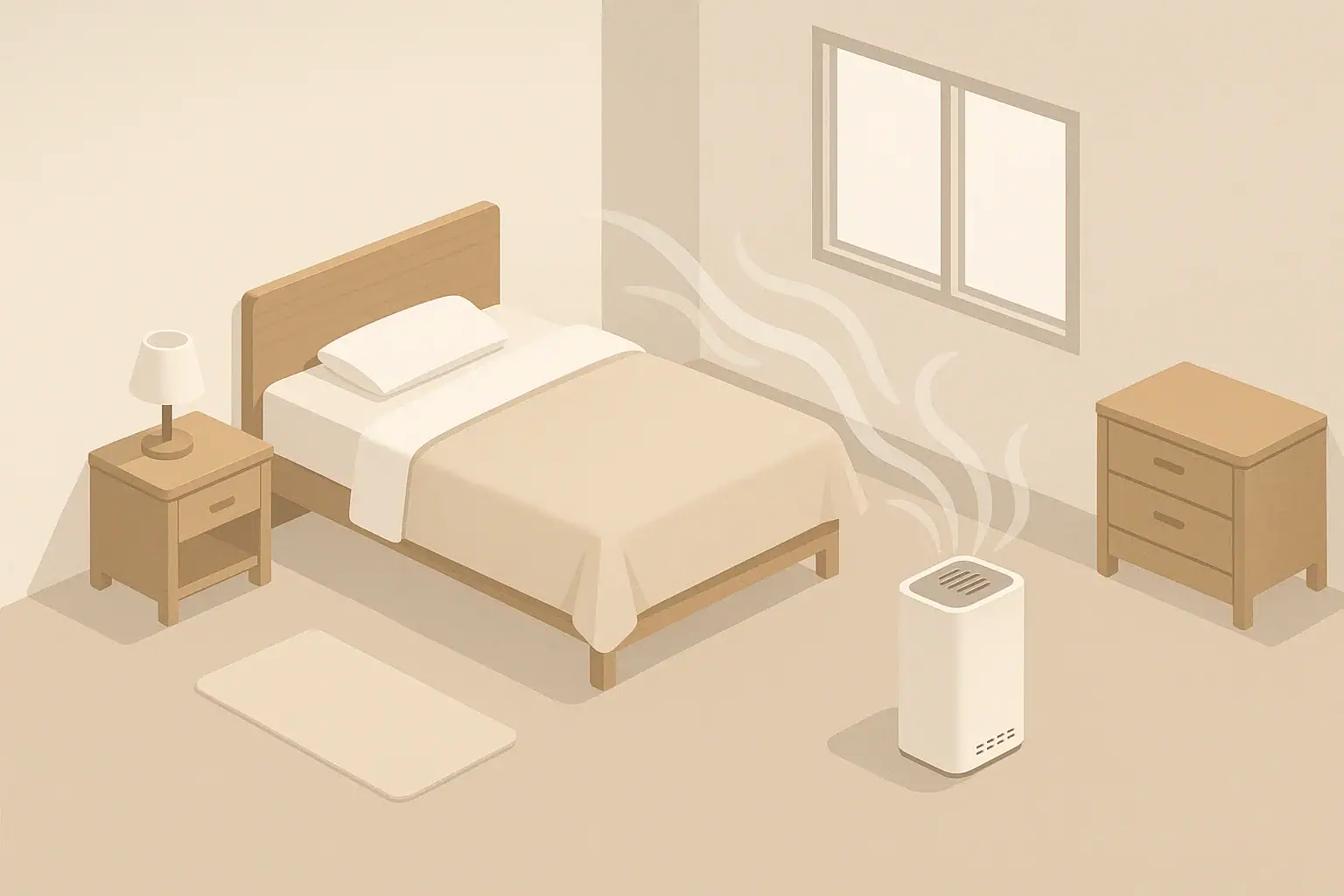
A practical pollen season indoor plan combines high-efficiency filters, timed ventilation, and regular low-dust cleaning to keep indoor pollen levels lower than outdoors.
Instead of trying to block every grain of pollen, focus on a few consistent habits: filter the air, manage when and how you bring outdoor air inside, and keep surfaces and fabrics from building up dust and tracked-in pollen. The goal is not perfection, but a calmer indoor baseline during high-pollen days.
- Aim for at least a MERV 11–13 filter in central HVAC or a HEPA filter in room purifiers for main living and sleeping spaces.
- Ventilate when pollen counts are typically lower (often late night to early morning) and keep windows closed during peak hours.
- Target 4–8 air changes per hour (ACH) in bedrooms using purifiers plus HVAC circulation as an illustrative planning range.
- Vacuum carpets and rugs 1–2 times per week with a vacuum that has a fine particle filter; damp dust hard surfaces 2–3 times per week.
- Set a simple entry routine: shoes off at the door, coats and bags stored in one spot, and regular washing of bedding and frequently used fabrics.
What a Pollen Season Indoor Plan Really Means
Pollen season is a period when outdoor pollen concentrations are elevated, usually in spring and fall in many parts of the United States. Even with windows closed, pollen can enter through doors, leaks in the building envelope, ventilation, and on clothing, shoes, and pets.
An indoor plan for pollen season is about coordinating three things:
- Filtration – Capturing airborne particles that do make it inside.
- Ventilation timing – Getting enough fresh air while avoiding the worst pollen hours when possible.
- Cleaning and habits – Reducing tracked-in pollen and dust so it does not keep re-entering the air.
Instead of relying on any single product or technique, think in layers of protection. Each layer removes a little more pollen or keeps it from building up, so your indoor air is generally calmer than outdoors during the season.
Key Concepts: Filters, ACH, and Pollen Pathways
Planning for pollen indoors starts with a few basic air-quality concepts. Understanding these helps you choose reasonable targets instead of guessing.
Filter types and ratings that matter for pollen
- MERV rating (central HVAC filters) – On a typical 1-inch furnace or air-handler filter, a MERV 11–13 filter is often used as a practical range for capturing fine particles like pollen and many other airborne particles.
- HEPA filters (room air purifiers) – A HEPA (high-efficiency particulate air) filter is designed to capture very small particles, including pollen-sized ones, when air passes through it.
- Carbon filters – These mainly help with odors and some gases; they do not capture pollen, but are often paired with particle filters in the same device.
For pollen, the particle filter (MERV or HEPA) is the primary focus. Carbon filters are optional comfort add-ons, not pollen solutions.
Air changes per hour (ACH) and CADR in simple terms
ACH (air changes per hour) is a way to describe how many times per hour the volume of air in a room is theoretically filtered or replaced. It is a helpful planning idea when you are figuring out if your air purifier is sized reasonably for a space.
As a very simple illustration, you can estimate ACH from a purifier’s clean air delivery rate (CADR) if you know your room size:
- Room volume (cubic feet) ≈ floor area (square feet) × ceiling height (feet).
- ACH ≈ (CADR in cubic feet per minute × 60) ÷ room volume.
During pollen season, many people aim for something in the 4–8 ACH illustrative range for bedrooms or main living spaces using a combination of purifiers and HVAC circulation. This is not a strict rule, but it gives a sense of how much filtered airflow you might want.
How pollen actually enters your home
Pollen usually gets indoors through:
- Open windows and doors – Especially during windy or peak pollen hours.
- Building leaks – Small cracks and gaps in older homes or around window frames.
- Mechanical ventilation – Bathroom fans, kitchen exhaust, and any dedicated fresh-air systems.
- People and pets – Pollen on hair, clothing, shoes, fur, and gear.
The plan is not to reach zero pollen indoors, but to reduce these pathways where reasonable and then filter and clean what does get in.
| Home situation | Main filtration tool | Why it fits | Notes |
|---|---|---|---|
| Central HVAC runs daily | Upgrade to MERV 11–13 filter | Whole-home circulation moves air through one filter | Check system compatibility and airflow; change filter regularly |
| Apartment with no central system | Room HEPA purifier in bedroom and main room | Targets the spaces where you spend most time | Size for room volume and runtime, focus on quiet settings at night |
| Older leaky house | Mix of HVAC filter and room purifiers | Offsets higher infiltration by adding local filtration | Seal obvious gaps around windows/doors for added benefit |
| Home with open-plan living area | Larger purifier or multiple units | Open spaces need more total CADR | Consider one unit central to the space and one near seating |
| Bedroom near busy street trees | Focused bedroom HEPA purifier | Provides a lower-pollen sleeping zone | Keep windows closed during peak and run purifier continuously |
| Home with frequent cooking and odors | Purifier with HEPA plus carbon | Particles plus odor/gas comfort in one device | Carbon filter may need more frequent changes |
Example values for illustration.
Common Pollen-Season Mistakes Indoors
Several habits can quietly undo your efforts to keep indoor pollen levels lower. Being aware of these patterns helps you set a realistic, sustainable plan.
- Running a good filter but not enough air through it – A high-rated filter does little if your HVAC fan rarely runs or your room purifier is undersized or always on low in a large space.
- Leaving windows open during peak hours – Enjoying fresh air is important, but wide-open windows during windy midday hours can bring in a lot of pollen in a short time.
- Dry dusting with fluffy cloths – This can kick pollen and dust back into the air. Lightly damp cloths tend to hold particles better.
- Ignoring textiles – Carpets, heavy drapes, throw pillows, and unwashed bedding can act as reservoirs for settled pollen and fine dust.
- Forgetting entry habits – Wearing outdoor shoes throughout the home or shaking out clothes indoors spreads outdoor pollen across floors and furniture.
- Not checking or replacing filters on time – Clogged or aging filters can reduce airflow and effectiveness.
Step-by-Step Indoor Plan for Pollen Season
You can build a simple plan in four parts: filters, airflow, cleaning, and daily routines. Start with bedrooms and main living spaces, then expand as needed.
1. Set up filtration where it matters most
Bedrooms are usually the top priority because of the hours spent there.
- Use a room air purifier with a HEPA filter sized for your bedroom (aiming for something in a 4–8 ACH illustrative range when running continuously or most of the time).
- Place it so air can circulate (for example, not tight against a wall or under heavy furniture) and avoid blocking the intake or exhaust.
- Run it on a quieter setting continuously or at least several hours before bedtime and through the night.
Main living area comes next:
- If you have a central HVAC system, consider a MERV 11–13 filter and set the fan to circulate more often during pollen season.
- In homes without central systems, use one or more purifiers sized for the combined space and keep them running when you are home.
2. Time your ventilation and window use
You still need fresh air for comfort and indoor air quality, even during pollen season. The goal is to be selective about when and how you bring outdoor air in.
- Check typical local pollen patterns – In many areas, levels are higher in the late morning and afternoon and lower late at night or early morning, but local patterns can vary.
- Ventilate during lower-pollen hours when feasible by opening windows briefly to flush the space, then closing them and relying on filtration.
- On very high pollen or windy days, minimize wide-open windows and consider shorter airing periods instead of leaving windows tilted or cracked all day.
- Use kitchen and bath exhaust fans when cooking or showering to control moisture and odors; just be aware they also pull in outdoor air indirectly through leaks.
3. Adopt a light, regular cleaning routine
During pollen season, the goal is consistent, gentle cleaning rather than occasional deep-clean marathons that stir up dust.
- Vacuum carpets and rugs 1–2 times per week with a vacuum that has a good fine-particle filter.
- Damp dust hard surfaces like shelves, bedside tables, window sills, and baseboards 2–3 times per week.
- Mop hard floors weekly, or more often in entry areas.
- Wash bedding weekly in warm or hot water as fabric care allows.
- Rotate and wash soft items like throw blankets, frequently used pillows, and pet bedding regularly.
4. Adjust daily habits to reduce tracked-in pollen
Small routine changes can have an outsized effect on how much pollen builds up indoors.
- Shoes off at the door – Use a mat outside and just inside, then leave shoes in one contained spot.
- Outer layers in one place – Hang coats, hats, and bags near the entry rather than in bedrooms.
- Quick change after high-pollen time outdoors – Changing clothing and, when practical, rinsing exposed skin and hair can keep less pollen on furniture and bedding.
- Pet routine – Wipe pets gently with a damp cloth after outdoor time and wash pet bedding regularly.
Example Pollen Plans for Different Homes
Every home is different, but a few scenarios can help you picture how the pieces fit together.
Small apartment with no central HVAC
- Filtration: One HEPA air purifier in the bedroom, one in the living area, each sized for the room and run continuously on low or medium.
- Ventilation: Open windows for 10–20 minutes late at night or early morning when outdoor conditions are calmer, then close and use filtration.
- Cleaning: Vacuum rugs weekly, damp dust surfaces twice a week, wash bedding weekly.
- Habits: Shoes off at the door; jackets kept on a wall hook near the entry.
Suburban home with central heating and cooling
- Filtration: MERV 11–13 filter in the central system; bedroom HEPA purifiers in rooms where people spend the most time.
- Ventilation: Use mechanical ventilation or brief window openings at times of lower outdoor pollen if needed for freshness; keep windows closed during very high-pollen days.
- Cleaning: Vacuum carpeted areas 1–2 times weekly; dust frequently touched surfaces and electronics with a damp cloth.
- Habits: Mudroom or entry set up as a buffer zone with mats and coat storage.
Older, drafty house in a high-pollen region
- Filtration: Central filter upgrade if compatible, plus a HEPA purifier in each occupied bedroom and one in the main sitting area.
- Ventilation: Rely more on existing leaks and controlled short window openings during lower-pollen times; avoid leaving windows cracked all day during peak season.
- Sealing: Caulk obvious gaps around windows and doors and use weatherstripping where reasonable to reduce uncontrolled infiltration.
- Cleaning: More frequent light vacuuming and damp dusting, especially near windows and entryways.
Safety, Devices, and Standards to Keep in Mind
Most pollen-focused strategies are straightforward, but a few safety and performance points are worth noting.
- Avoid intentional ozone generators for everyday indoor air cleaning. Ozone is a respiratory irritant; for pollen, simple particle filtration is the key tool.
- Be cautious with ionizers and UV-C add-ons. Some devices include these features; they may be marketed for air cleaning, but filters do the main work for pollen. Follow manufacturer safety instructions and avoid modifying the device.
- Do not over-restrict HVAC airflow. Higher MERV filters can increase resistance to airflow. Make sure your system can handle an upgrade and monitor for signs like unusual noise or reduced comfort.
- Use appliances as intended. Do not alter electrical components, bypass safety switches, or operate devices with damaged cords or housings.
- Follow fire safety and ventilation guidance in kitchens and when using combustion appliances; pollen control should not override basic safety ventilation needs.
Filter and Cleaning Maintenance During Pollen Season
Even the best plan will lose effectiveness if filters and cleaning routines are not maintained. A few simple reminders keep your system working as intended.
Filter replacement and checks
- Central HVAC filters: Many homes change these every 1–3 months, but the right interval depends on usage, filter type, and dust levels. Check monthly during pollen season and replace when dirty or as the manufacturer suggests.
- Purifier HEPA filters: Replacement intervals vary widely. Use the manufacturer’s guidance as a starting point, and consider that running on higher speeds or in dusty homes may shorten the interval.
- Pre-filters: Some purifiers have washable or replaceable pre-filters that collect larger dust and hair. Cleaning these regularly can help maintain airflow and extend HEPA filter life.
Cleaning schedule you can actually keep
Rather than aiming for perfection, plan a realistic routine that fits your household:
- Daily (quick tasks): Put shoes and outdoor items in the same spot; do a brief tidy of surfaces that collect clutter and dust.
- Weekly: Vacuum floors and rugs, wash bedding, and mop hard floors in main traffic areas.
- Every 2–4 weeks: Wash curtains (if washable), launder throw blankets, and wipe baseboards and window frames.
Simple Q&A for Common Pollen Season Decisions
Should I keep windows closed all pollen season?
Many people choose to keep windows closed on the highest-pollen or windiest days and open them selectively during calmer periods, often early morning or later at night. A mix of short airing plus filtration can balance freshness and pollen control.
Is one air purifier enough for my whole home?
In smaller, open apartments, one well-sized unit in a central location can noticeably affect nearby areas. In larger or multi-room homes, separate purifiers for bedrooms and main living spaces are often more effective than a single device in a hallway.
Do I need HEPA if I already have a good HVAC filter?
A MERV 11–13 central filter can reduce pollen and other particles as air cycles through the system. Bedroom HEPA purifiers can add another layer of local filtration, especially where doors are closed or airflow from the central system is limited.
| Filter type | Illustrative interval range | What can shorten the interval | Reminder |
|---|---|---|---|
| Central HVAC 1-inch MERV 11–13 | About every 1–3 months | Continuous fan use, heavy dust, shedding pets | Check monthly during peak pollen and replace when visibly loaded |
| Thicker HVAC media filter (e.g., 3–5 inch) | About every 3–9 months | High system runtime, construction dust | Follow system guidance and inspect if airflow feels reduced |
| Room purifier HEPA filter | About every 6–18 months | 24/7 operation, high fan speeds, smoky or dusty events | Use indicator lights plus visual and odor checks as a guide |
| Room purifier carbon filter or cartridge | About every 3–12 months | Persistent cooking odors, smoke, high VOC sources | Replace when odors break through even with clean HEPA |
| Washable pre-filter screens | Rinse or vacuum every 2–8 weeks | Pets, visible dust buildup | Ensure completely dry before reinstallation |
| Vacuum cleaner fine-particle filter | Check every 1–3 months | Frequent vacuuming, large homes | Maintain good suction to keep pollen out of carpets |
Example values for illustration.
Related guides: How to Choose the Right Air Purifier for Your Room Size • ACH to CADR Conversion: A Simple Formula With Examples • How Often Should You Replace a HEPA Filter?
Summary: A Calm, Layered Approach to Pollen Season
A practical indoor plan for pollen season does not depend on any single device. Instead, it layers a few simple strategies: effective particle filtration in the rooms where you spend the most time, thoughtful timing of window use and ventilation, regular gentle cleaning, and small daily habits that reduce tracked-in pollen.
By focusing on realistic targets—such as using MERV 11–13 or HEPA filtration, aiming for a reasonable range of filtered air changes per hour in key rooms, and keeping a consistent cleaning and filter-replacement schedule—you can generally keep indoor pollen levels lower than outdoors and make your home feel calmer during high-pollen periods.
Frequently asked questions
How do I size a HEPA air purifier to reach about 4–8 ACH in my bedroom?
Estimate your room volume (floor area × ceiling height) and use ACH ≈ (CADR × 60) ÷ room volume to solve for the required CADR. For a target ACH, pick a purifier with CADR ≈ (ACH target × room volume) ÷ 60 and run it continuously on a low–medium setting to maintain the rate. Allow extra capacity if doors are often opened or the room connects to larger spaces.
Will running my HVAC fan continuously help reduce indoor pollen if the filter is only MERV 8?
Continuous fan runtime increases the amount of air passing through the filter, which helps reduce particles compared with intermittent operation. However, a low-rated filter like MERV 8 captures fewer small particles than MERV 11–13, so combining continuous fan use with a higher-rated filter (if the system can handle it) or local HEPA purifiers gives better pollen control. Check compatibility and monitor airflow after any upgrade.
What is the best way to ventilate for freshness without importing a lot of pollen?
Ventilate briefly during local low-pollen periods (often early morning or late at night) to flush indoor air, then close windows and rely on filtration. Avoid leaving windows open during windy, high-count days and use short targeted airing rather than continuous crack openings. Use exhaust fans when needed for moisture and odors but be aware they can draw outdoor air through gaps.
How often should I wash bedding and soft textiles during peak pollen weeks?
Wash bedding weekly in the warmest setting the fabric allows, and launder frequently used throws and pet bedding every one to four weeks depending on exposure. Increase frequency if household members are symptomatic or spend a lot of time outdoors during high pollen periods. Regular rotation and washing reduce the reservoir of settled pollen.
Are ozone generators or ionizers effective and safe for reducing pollen indoors?
Ozone generators are not recommended for routine indoor air cleaning because ozone is a respiratory irritant and does not effectively substitute for particle filtration for pollen. Some ionizers and UV–C add-ons may be marketed for air cleaning, but particle filters (MERV/HEPA) provide the primary, proven removal method for pollen. Follow manufacturer safety guidance and prioritize filtration-based approaches.
Recommended next:
- Clear sizing logic (room size → CADR/ACH)
- HEPA vs carbon explained for real use-cases
- Humidity + ventilation basics to reduce mold risk