
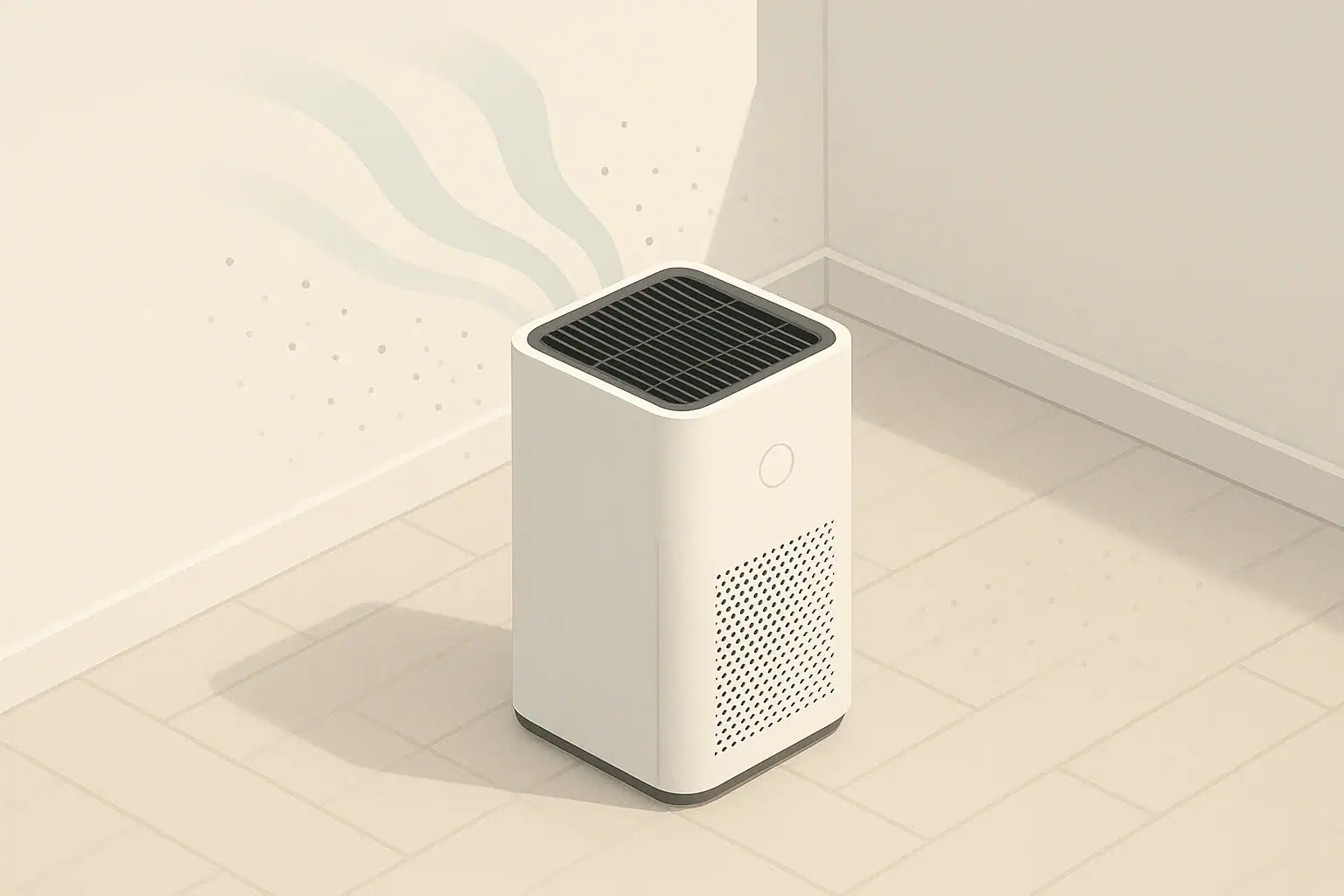
Fine dust after construction should be cleaned from the top down with dry dust removal first, damp wiping second, floor cleaning last, and air purifier use running during and after cleanup to reduce airborne particles.
Construction and remodeling dust can settle repeatedly because fine particles are easily stirred up by footsteps, fans, and vacuum exhaust. A calm, ordered approach works better than cleaning the most visible mess first. The goal is to remove dust from surfaces, limit resuspension, and keep air moving through effective filtration.
- Start with source control: remove debris, bag dust-producing waste, and avoid sweeping dry powder into the air.
- Clean high to low: ceilings, trim, shelves, walls, counters, then floors.
- Use a vacuum with a HEPA filter when possible, followed by lightly damp microfiber wiping.
- Run a portable air purifier with a particle filter continuously during cleanup and for 24 to 48 hours afterward as general guidance.
- For planning, aim for roughly 4 to 6 air changes per hour in the cleanup room when using a portable purifier, if noise and room layout allow.
Why fine dust after construction acts differently than ordinary dust
Construction dust is a mix of materials. Depending on the project, it may include drywall sanding dust, sawdust, joint compound residue, masonry dust, insulation fibers, paint preparation dust, and tracked-in soil. The exact mix matters less for routine cleanup than the fact that many particles are small, dry, and easy to disturb.
Ordinary household dust often contains lint, skin flakes, pet dander, soil, and fibers that collect over time. Construction dust is usually more concentrated and may settle in a short period across horizontal and vertical surfaces. It can also enter closets, vents, drawers, and gaps if the work zone was not well contained.
Fine dust is frustrating because a room can look clean and then appear dusty again the next day. That does not always mean cleaning failed. It often means particles remained on upper surfaces, inside fabrics, on ledges, or in the air long enough to resettle.
Key concepts: particle size, cleaning order, and air purifier sizing
The most useful idea is simple: disturb less dust than you remove. Dry sweeping, aggressive feather dusting, and blowing air across dusty surfaces can spread particles faster than they capture them. Controlled removal is the priority.
Top-down cleaning matters
Cleaning should start above eye level and end at the floor. Dust from ceiling fans, light fixtures, trim, cabinet tops, door frames, and upper shelves will fall or be pulled downward during cleaning. If floors are cleaned first, they may need to be cleaned again.
HEPA filtration and CADR basics
A portable air purifier can help capture airborne particles when it uses a mechanical particle filter and is sized for the room. CADR, or clean air delivery rate, is a common planning number for how much filtered air the unit can deliver. Higher CADR generally supports faster particle removal in a given room, assuming the purifier is operating properly and air can circulate.
A practical planning formula is: room volume in cubic feet multiplied by the target air changes per hour, divided by 60. For example, a 12 by 15 foot room with an 8 foot ceiling is 1,440 cubic feet. At 5 air changes per hour, the rough CADR target is 120 cubic feet per minute. This is an example for planning, not a guarantee of room performance.
| Order | Task | Why it matters | Practical note |
|---|---|---|---|
| 1 | Remove debris and coverings | Reduces the main dust sources | Bag waste before carrying it through clean rooms |
| 2 | Run particle filtration | Captures dust stirred up during work | Place purifier in the cleanup area with open airflow |
| 3 | Vacuum high surfaces | Prevents dust from falling later | Use soft brush tools where suitable |
| 4 | Wipe walls, trim, and ledges | Removes fine residue from vertical areas | Use lightly damp microfiber, not dripping wet cloths |
| 5 | Clean counters and shelves | Captures settled dust at working height | Rinse or replace cloths often |
| 6 | Vacuum floors slowly | Removes heavier settled particles | Use a HEPA-filtered vacuum when available |
| 7 | Damp mop hard floors | Picks up residue left after vacuuming | Change mop water frequently |
| 8 | Repeat after settling | Addresses remaining fine particles | A second light pass after 24 hours is common |
Common mistakes that make construction dust linger
The biggest mistake is dry sweeping fine powder. A broom can push visible debris into a pile, but it also sends smaller particles into the air. If sweeping is necessary for larger debris, use slow movements and follow with vacuuming and damp wiping.
Another mistake is using a household vacuum that leaks fine dust from the exhaust or around the filter housing. A vacuum without good filtration can collect coarse debris while redistributing finer particles. If fine dust appears in the air behind the vacuum, stop and change methods.
Running a ceiling fan during cleanup can also work against you. Fans can be useful later for comfort, but during dust removal they may spread particles to clean areas. Use controlled ventilation or filtration instead of stirring air randomly.
Cleaning fabrics too late can also lead to recurring dust. Upholstered furniture, curtains, rugs, bedding, and open closets can hold construction residue. If the room was exposed during sanding or demolition, include fabric vacuuming or laundering in the cleanup plan where appropriate.
Step-by-step cleaning order for fine construction dust
1. Contain the area before you start
Close doors to rooms that do not need cleanup. If there is visible dust near the work zone, avoid carrying tools, cords, and drop cloths through the rest of the home without wiping or bagging them. Remove protective plastic carefully by folding dusty sides inward.
2. Remove large debris without spreading powder
Pick up scraps, packaging, wood pieces, and coverings before detailed cleaning. Use heavy-duty bags for dusty material. Do not shake tarps, rugs, or cloths indoors.
3. Vacuum before damp wiping
For dry fine dust, vacuuming first usually works better than wiping first. A damp cloth can turn heavy drywall dust into streaks or paste. Vacuum slowly, especially around baseboards, corners, door tracks, window sills, and cabinet edges.
4. Damp wipe with frequent cloth changes
After dry removal, use lightly damp microfiber cloths on hard surfaces. The cloth should pick up residue without leaving water behind. Rinse often, fold to a clean side, or replace the cloth when it looks loaded.
5. Finish floors last
Vacuum hard floors and carpets slowly. For hard floors, damp mop after vacuuming. For carpet, multiple slow vacuum passes may be needed. If dust was heavy, consider cleaning the same floor again after particles settle.
How to use an air purifier during and after construction cleanup
An air purifier is not a substitute for removing dust from surfaces, but it can reduce airborne particles created during cleanup. It works best when paired with source removal, careful vacuuming, and damp wiping.
Placement during cleanup
Place the purifier in or near the dustiest room, not behind furniture or inside a closet. Keep the air intake and outlet clear by at least a small open space on all sides, following the product instructions. If the room is open-plan, place the purifier where airflow can circulate through the main area instead of trapping it in a corner.
Runtime and speed
Run the purifier before cleaning if fine dust is visible in the air, during cleaning if it does not interfere with work, and afterward while dust continues to settle. A practical general range is 24 to 48 hours after cleanup for a recently renovated room. Higher fan speeds usually filter air faster, while lower speeds may be more comfortable for noise.
When ventilation helps
Ventilation can help when outdoor conditions are suitable. Opening windows may dilute indoor particles and odors, but it can also bring in outdoor dust, pollen, smoke, humidity, or cold air. If outdoor air quality is poor or the project involves a dusty neighborhood, filtration may be the better short-term choice.
Real-world examples for common home projects
Drywall sanding in one bedroom
Drywall sanding creates a fine powder that settles broadly. Close the door, clean high surfaces first, vacuum trim and outlets, wipe walls lightly, and clean floors last. Run a purifier in the bedroom with the door mostly closed if the room can still get enough air circulation through the purifier.
Kitchen cabinet installation
Cabinet work often creates sawdust and packaging debris. Remove larger debris first, vacuum inside cabinets before loading dishes, wipe shelves with a damp cloth, and run a purifier in the kitchen or adjacent open area. Pay attention to toe kicks, drawer slides, and the tops of upper cabinets.
Floor refinishing or tile work
Floor projects can spread dust to baseboards, lower walls, vents, and nearby rooms. Clean from the perimeter inward and avoid turning on fans that push dust across newly cleaned surfaces. For hard flooring, a second damp mop after settling can help remove remaining residue.
Apartment renovation next door
If dust enters from a hallway or shared wall area, focus on entry points. Use a doormat, wipe thresholds, keep windows closed when dust is outside, and run a purifier in the room where dust is noticeable. Report building-level dust intrusion through normal property channels if needed.
Safety, standards, and special dust situations
Routine cleanup is different from handling hazardous materials. If a project may involve lead-based paint, asbestos-containing materials, significant mold contamination, or silica-generating work, follow applicable local requirements and consider qualified professionals. Older homes and certain demolition tasks deserve extra caution before disturbing materials.
For air purifiers, choose mechanical particle filtration for dust control. HEPA-type descriptions can vary, so look for clear particle filtration information and a CADR that fits the room. A good cabinet seal also matters because air that leaks around the filter is not being filtered as intended.
Be cautious with ozone generators. Ozone should not be intentionally generated in occupied indoor spaces for routine dust cleanup. Ionizers, plasma features, and UV-C features should be evaluated carefully and used only according to manufacturer instructions. For fine construction dust, the central need is particle capture, not added reactive chemistry.
Respiratory comfort varies from person to person. If someone in the home is sensitive to dust, keep them away from the cleanup area when practical, reduce dust disturbance, and prioritize filtration and containment. This is a comfort-oriented strategy, not a medical treatment.
Maintenance and upkeep after the cleanup
Construction cleanup can load filters faster than normal use. Check the purifier prefilter, main filter, and vacuum filter after the dusty work is complete. A filter that looks heavily coated may reduce airflow even if the calendar replacement date has not arrived.
Washable prefilters should be cleaned only as directed and fully dried before reuse. Disposable filters should not be washed unless the instructions specifically say they are washable. For vacuums, empty canisters or bags carefully and avoid shaking dusty filters indoors.
Continue light maintenance for several days. Wipe horizontal surfaces again, vacuum entryways, and check window tracks, closet shelves, and baseboards. If fine dust keeps returning, look for an ongoing source such as an unsealed work area, dusty HVAC return, untreated fabric, or dust tracked in from another room.
| Filter type | Typical interval range | What can shorten it | Reminder |
|---|---|---|---|
| Purifier prefilter | Every 2 to 4 weeks during dusty periods | Visible coating, pet hair, heavy debris | Clean or replace as instructed |
| Main particle filter | Several months to about a year | Construction dust, high fan use, open-plan rooms | Check sooner after renovation work |
| Activated carbon filter | About 3 to 6 months in many uses | Odors, VOC sources, frequent cooking smoke | Carbon helps odors more than dust |
| Vacuum bag or bin | When partly full or after heavy dust | Drywall powder, sawdust, sanding residue | Empty outdoors or carefully when practical |
| Vacuum HEPA filter | Based on instructions | Fine powder loading and reduced suction | Do not wash unless labeled washable |
| HVAC return filter | Often 1 to 3 months | Renovation nearby, high system runtime | Use a filter compatible with the system |
Related guides: How to Choose the Right Air Purifier for Your Room Size • Air Purifier Placement: Where to Put It for Best Results • Do You Need a Pre-Filter? Extending HEPA Life and Reducing Costs
Frequently asked questions
What is the best cleaning order for fine dust after construction?
The best order is usually high to low: remove debris first, then clean ceilings, trim, shelves, walls, counters, and floors last. Dry removal and vacuuming should come before damp wiping because wet cloths can turn fine dust into paste or streaks. A final light pass after the dust has settled is often needed.
Should I vacuum or wet mop first after construction?
Vacuum first for dry fine dust, then use lightly damp wiping or mopping. This reduces the chance of spreading powder across surfaces or creating muddy residue. For hard floors, vacuuming before damp mopping usually gives the cleanest result.
How long should I run an air purifier after construction cleanup?
A common general guideline is to run the purifier during cleanup and for 24 to 48 hours afterward. If the room was heavily dusty or particles keep resettling, longer runtime may help. The purifier works best when the room has enough airflow and the filter is sized appropriately.
Where should I place an air purifier during dust cleanup?
Place it in or near the room with the most dust, not hidden behind furniture or inside a closet. Keep the intake and outlet unobstructed so air can circulate through the room. In open areas, place it where it can move air through the main space instead of a corner.
Why does fine dust keep coming back after I clean?
Fine dust can resettle from upper surfaces, fabric, vents, or places that were disturbed during cleaning. It can also return if the room was cleaned with dry sweeping, poor filtration, or strong air movement that lifted particles back into the air. Checking hidden ledges, filters, and soft furnishings often helps find the source.
Summary: the practical cleanup order
Fine dust after construction is easiest to manage when the process is orderly. Remove debris first, clean from high to low, vacuum before damp wiping, and finish with floors. Expect a second light cleaning pass after particles settle.
Use an air purifier as support, not as the only cleanup tool. Place it in the affected room, keep airflow paths open, and run it during and after cleaning when practical. For general planning, a room-sized purifier targeting roughly 4 to 6 air changes per hour can be a useful benchmark.
Finally, check filters sooner than usual. Construction dust can load purifier, vacuum, and HVAC filters quickly. A clean filter path, careful surface cleaning, and calm repeatable steps are usually more effective than aggressive sweeping or random air movement.
Recommended next:
- PM2.5 Explained: What the Numbers Mean and What’s a Safe Level Indoors
- How to Reduce Dust in Your Home (Without Constant Cleaning)
- Wildfire Smoke Indoors: Step-by-Step Plan to Lower PM2.5 Fast
- PM2.5 Indoors: Common Sources and the Fastest Fixes
- Cooking PM2.5 Spikes: What to Do Before, During, and After Cooking
- Candles and Incense: How Much Particulate Pollution Do They Create?
- More in Dust, PM2.5 & Particles →
- Clear sizing logic (room size → CADR/ACH)
- HEPA vs carbon explained for real use-cases
- Humidity + ventilation basics to reduce mold risk