
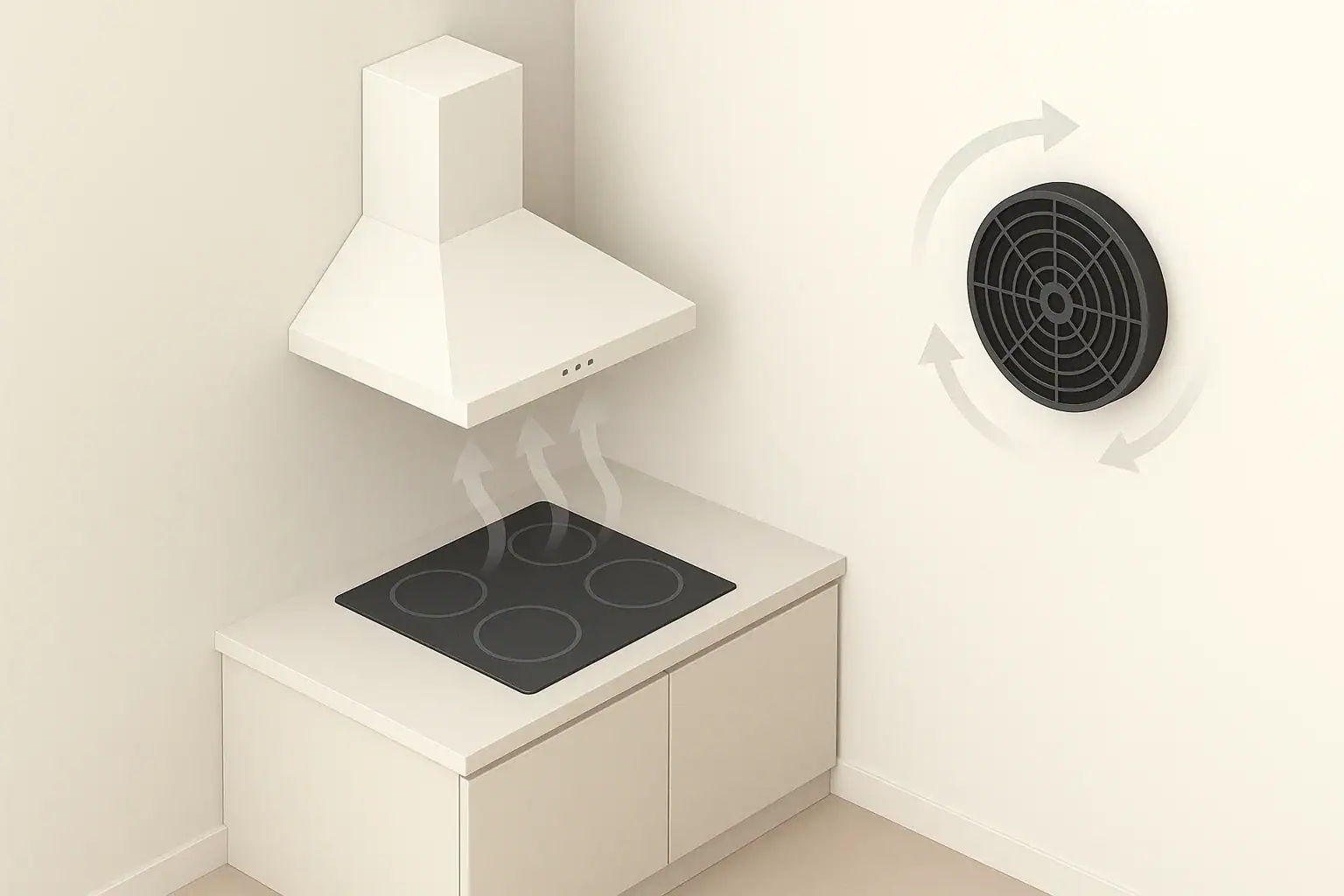
Cooking odors are best controlled by combining a properly vented range hood, activated carbon filtration, and simple ventilation habits tailored to your kitchen.
Smell from frying, searing, and strong spices can linger in fabrics and surfaces even when the visible smoke is gone. Understanding how range hoods, carbon filters, and airflow work together helps you choose realistic strategies that fit your home layout, cooking style, and budget without overcomplicating your setup.
- Aim for a range hood rated around 150–400 cubic feet per minute (CFM) for typical home stoves, or roughly 1–2 CFM per square foot of cooking surface as a general planning idea.
- Use a ducted (vented) hood whenever your building layout allows; it removes moisture, particles, and most odors directly outdoors.
- For recirculating hoods or air purifiers, choose a unit with a real activated carbon stage and plan to replace carbon filters about every 3–6 months with regular cooking.
- Turn the hood on a few minutes before cooking and let it run 10–20 minutes afterward to clear lingering vapors.
- Support odor control with simple steps: lids on pans, lower-heat cooking when possible, opening a window slightly, and laundering textiles that trap smells.
Why Cooking Odors Build Up and Why It Matters
Cooking odors come from a mix of particles (aerosols, smoke) and gases known as volatile organic compounds (VOCs). When oil hits high heat, it produces tiny droplets and combustion byproducts that float through the kitchen and settle on cabinets, fabrics, and walls. Spices, garlic, and onions release aromatic VOCs that cling to soft surfaces.
In a tight home with limited ventilation, these compounds can accumulate and linger for days. While occasional odor is normal, persistent smell can make a home feel stuffy, attract complaints in multi-unit buildings, and signal that particles and vapors are not being effectively diluted or removed. Managing cooking odors is essentially about managing indoor air quality: moving polluted air out, filtering what remains, and preventing buildup on surfaces.
Key Concepts: Range Hoods, Carbon Filters, and Airflow
Cooking odor control relies on three main tools: capture at the source, filtration, and dilution. Each has strengths and limits.
Range hoods: capture and exhaust
A range hood is designed to capture steam, grease, and smoke right above the cooktop and either vent it outdoors (ducted) or filter and return it to the room (ductless or recirculating).
- Ducted hoods: Pull air from above the stove and push it outdoors through a duct. They remove moisture, particles, and much of the odor load, and are generally the most effective option.
- Ductless (recirculating) hoods: Draw air through a grease filter and often a carbon filter, then return it to the kitchen. They help with some odors and grease but do not remove moisture and rely heavily on filter condition.
Hood effectiveness depends on capture area, height above the cooktop, CFM rating, and how consistently it is used. As a broad planning example, many homes do well with something in the 150–400 CFM range, but large gas ranges or frequent high-heat cooking may benefit from higher airflow.
Carbon filters: trapping odor molecules
Activated carbon (or charcoal) is a porous material that adsorbs many odor-causing VOCs onto its surface. You will find it in some range hoods, standalone air purifiers, and combination filters.
- What carbon does well: Reduces many cooking smells from onions, garlic, frying, and some smoke components.
- What carbon does not do: It does not remove particles as effectively as a particle filter (like HEPA), and it gradually becomes saturated, at which point it stops capturing odors.
- Capacity matters: Thicker or heavier carbon beds usually have more capacity than very thin pre-filter strips, but all carbon will eventually need replacement.
Air purifiers and whole-room odor cleanup
Range hoods focus on the cooking zone. Air purifiers with activated carbon can help clear odors that have spread to nearby rooms. They pull room air through carbon and particle filters and recirculate cleaner air. Airflow ratings such as clean air delivery rate (CADR) are useful for sizing purifiers to room volume, but for odors specifically, you should also look at whether the purifier includes a substantial carbon stage and follow the manufacturer’s basic filter life guidance.
Ventilation and dilution
Even with good capture and filtration, some odor will escape. General ventilation helps dilute remaining vapors:
- Opening windows or using trickle vents when weather and outdoor air quality allow.
- Running bathroom or whole-house exhaust fans to promote air exchange.
- Avoiding blocking air supply paths so the range hood can pull comfortably without struggling for make-up air.
Combining these approaches usually works better than relying on a single device.
| Option | Main strength | Main limitation | Best use case |
|---|---|---|---|
| Ducted range hood | Removes air, moisture, particles, and many odors outdoors | Requires duct path; airflow can be noisy at high settings | Homes where routing a vent to outdoors is feasible |
| Ductless (recirculating) hood with carbon | Improves odors and captures grease without exterior duct | Does not remove moisture; depends on timely filter changes | Apartments and condos without access to exterior venting |
| Standalone air purifier with carbon | Helps clear odors that have spread beyond the kitchen | Does not capture steam at the stove; limited by room airflow | Open-plan spaces or nearby living areas after cooking |
| Opening windows | Simple way to dilute and vent odors | Weather and outdoor air quality dependent | Mild days or after high-odor cooking sessions |
| Grease filters (metal or mesh) | Protects fans and ducts by trapping oil droplets | Provides little odor reduction alone | Any hood; needs regular cleaning to stay effective |
| Cooking technique changes | Reduces odor at the source | May not match every recipe or preference | Frequent frying, searing, or high-spice dishes |
Common Mistakes That Let Cooking Odors Linger
Many odor complaints trace back to a few predictable issues. Adjusting these often has a big impact without new equipment.
- Using the range hood too late or not long enough: Turning it on only when smoke is visible means early vapors and moisture already escaped. Starting a few minutes before cooking and running it afterward improves capture.
- Hood installed too high or too shallow: If the hood is far above the cooktop or does not cover front burners, rising plumes can bypass it. This is especially noticeable with powerful front burners.
- Clogged grease filters: Greasy mesh or baffles restrict airflow and reduce capture. Metal filters need periodic cleaning to maintain performance.
- Old or minimal carbon filters: Thin, spent carbon pads in recirculating hoods and purifiers often do little for odor. If smells persist despite airflow, carbon may be saturated.
- No general ventilation: In tightly sealed homes, even a good hood benefits from some make-up air via a slightly open window or nearby open door.
- Textiles soaking up smells: Curtains, upholstered chairs, and range-side towels can hold odor. If the air seems clear but the smell remains, fabrics may be the main reservoir.
Practical Strategies: Layering Solutions in Real Homes
Most kitchens benefit from a layered approach instead of relying on one device. The following steps can be adapted to apartments, small homes, and open-plan layouts.
1. Make the most of your existing range hood
- Turn the hood on at a low or medium setting 1–3 minutes before you start heating pans.
- Use stronger fan settings for high-heat frying, searing, or heavy spice cooking.
- Let the hood continue running 10–20 minutes after cooking so it can pull out lingering vapors.
- Keep pots and pans covered when possible to slow grease aerosol and steam.
2. Decide whether ducted or ductless makes sense
If you are able to choose or upgrade a hood, consider:
- Ducted: Generally better for moisture and odor removal. Works well in single-family homes where a duct can reach an exterior wall or roof.
- Ductless: Often the only option in some apartments and condos. If using ductless, pay special attention to maintaining effective carbon filters and supplementing with window ventilation when feasible.
3. Use air purifiers to protect nearby rooms
For open kitchens connected to living or sleeping areas, consider a purifier with both particle and activated carbon filtration in the adjoining space. General suggestions:
- Place the purifier away from immediate splatter zones but where air can circulate freely (not jammed in a corner).
- Run it during and after cooking at a moderate or higher fan speed, then step it down once odors fade.
- Size it using room volume and airflow guidance, keeping in mind that odor reduction depends on both airflow and carbon capacity.
4. Simple ventilation and habit tweaks
- Crack a nearby window slightly during strong-smelling cooking if outdoor conditions are acceptable.
- Run an adjacent bathroom or laundry exhaust fan to assist overall air movement.
- Keep interior doors partially open so air is not trapped in dead-end rooms.
- Launder dish towels and nearby textiles regularly if they are exposed to grease and steam.
5. Adjust cooking methods for high-odor dishes
When cooking especially aromatic foods, small changes at the stove can help:
- Choose covered simmering over open, high-heat frying where recipe allows.
- Use back burners under the hood’s strongest capture zone.
- Batch-cook high-odor foods at times when you can ventilate more easily.
Real-World Scenarios and How to Approach Them
Small apartment with recirculating hood
If you have a ductless hood and windows that do not open widely:
- Ensure the hood actually has a carbon filter and that it is replaced on schedule.
- Run the hood early and keep it on longer after cooking.
- Add a carbon-equipped air purifier in the living area to handle odors that escape the kitchen.
- Wash kitchen textiles often and consider minimizing heavy oil frying indoors.
Open-plan kitchen and living room
In large spaces where smells spread quickly:
- Use a reasonably strong hood and cook on back burners when possible.
- Position a purifier in the main airflow path between the kitchen and seating area.
- Encourage gentle cross-ventilation with windows on opposite sides of the space when conditions allow.
Older home with weak or no hood
Where upgrading the hood is not practical right away:
- Prioritize window use during cooking and for a period afterward.
- Consider a portable air purifier with activated carbon in the kitchen or nearby room.
- Choose lower-odor cooking methods more often and keep lids on pots.
Safety and Standards Considerations
Any device that moves or treats air should be used within its safety guidelines. For cooking odor control, a few specific points are useful.
- Avoid intentionally adding ozone: Ozone-generating devices are sometimes marketed for odor removal, but ozone is a lung irritant and can react with indoor chemicals to form new byproducts. Many people prefer ozone-free solutions such as mechanical ventilation and carbon filtration.
- Be cautious with add-on ionizers and UV: Some hoods or purifiers include ionization or UV-C features. These can have specific benefits and trade-offs, but they should not be necessary for routine cooking odor management. Follow manufacturer instructions and local guidance if you use them.
- Combustion safety: Powerful ducted hoods in tight homes can create strong negative pressure that interferes with fuel-burning appliances such as older furnaces or water heaters. Where relevant, building professionals may check that makeup air and venting are adequate.
- Heat and clearance: Maintaining the manufacturer-recommended distance between the cooktop and hood reduces fire risk and maintains effective capture.
Maintenance: Keeping Carbon Filters and Hoods Working
Odor performance declines gradually as filters clog or saturate. Regular maintenance is essential to keep your setup functioning as expected.
Range hood care
- Grease filters: Metal mesh or baffle filters generally need cleaning roughly once a month with regular cooking, or more often with heavy frying. Let them dry fully before reinstalling.
- Duct checks (for ducted hoods): Periodically confirm that outdoor vents are not blocked by debris and that flaps can open freely.
- Fan speeds and noise: If a familiar fan setting suddenly seems louder or weaker, filters or ducts might need inspection.
Carbon filter care
Because carbon works by holding odor molecules on its surface, it eventually fills up.
- Plan to replace carbon filters roughly every 3–6 months with daily cooking, or according to device guidance and your own odor observations.
- If you notice that a previously effective hood or purifier no longer reduces smell even with good airflow, worn-out carbon is a likely cause.
- Avoid trying to “recharge” carbon with household methods; replacement is the reliable option.
Air purifier upkeep
- Check pre-filters for visible dust buildup and clean or replace them on schedule to keep airflow strong.
- Replace HEPA or particle filters according to guidance, especially if you also use the purifier for smoke or general dust control.
| Filter type | Typical interval range | What shortens the interval | Reminder |
|---|---|---|---|
| Range hood carbon pad | About 2–4 months with regular cooking | Daily frying, strong spice use, small filter size | Replace sooner if odors linger despite good airflow |
| Air purifier carbon filter | About 3–6 months in active use | Frequent high-odor cooking, smoke, strong VOC sources | Follow device guidance; note odor changes over time |
| Combination HEPA + carbon cartridge | About 6–12 months | Heavy particle load (dust, smoke) plus regular cooking odors | Performance may drop gradually before visible dirt appears |
| Metal grease filter (hood) | Clean about every 1–2 months | Frequent frying, visible oil film | Dishwasher-safe units still need full drying before use |
| Pre-filter on air purifier | Inspect monthly; clean as needed | Dusty homes, pets, open windows near traffic | Keeping it clear supports steady airflow and odor control |
| Recirculating hood intake grille | Wipe down about monthly | Sticky residue, splatter near cooktop | Clean surfaces help air reach the carbon filter |
Related guides: Best Air Purifiers for Allergies: What to Look For (CADR, HEPA, Carbon) • How Much Activated Carbon Do You Need to Remove Odors? • When to Replace Carbon Filters (And How to Tell They’re Spent)
Summary: Building a Simple, Effective Odor Plan
Managing cooking odors comes down to catching as much as possible at the stove, giving remaining vapors somewhere to go, and keeping filters fresh. A ducted range hood with good habits usually provides the strongest foundation, but recirculating hoods, carbon-equipped air purifiers, and basic ventilation can still work together effectively in apartments and small homes.
By understanding what range hoods, carbon filters, and airflow each contribute, you can set realistic expectations, notice when filters need attention, and choose small changes—like using back burners, running the fan longer, or opening a window—that make your kitchen and nearby rooms smell cleaner without major renovation.
Frequently asked questions
How often should I replace carbon filters in range hoods and air purifiers?
Replace carbon filters roughly every 3–6 months with regular daily cooking, or follow the device guidance and replace sooner if odors persist despite good airflow. Thinner carbon pads in recirculating hoods may need replacement more frequently, while larger carbon cartridges in standalone purifiers can last toward the upper end of that range.
Are ductless range hoods with carbon as effective as ducted hoods for removing cooking odors?
Ducted hoods generally remove more odor, moisture, and particles because they exhaust air outdoors, while ductless hoods filter and recirculate air and depend heavily on carbon filter capacity. Ductless units can work well in apartments but require timely carbon replacement and often need supplemental ventilation or a room purifier to manage odors that escape.
What CFM should my range hood have to control cooking odors effectively?
Many homes do well with a hood rated around 150–400 CFM for typical stoves, and a rough planning guideline is about 1–2 CFM per square foot of cooking surface. Higher CFM is beneficial for larger gas ranges or frequent high-heat cooking, but consider capture geometry and hood placement as well.
Can an air purifier remove cooking steam and grease?
Air purifiers can remove particles and many odor-causing VOCs when they include HEPA and activated carbon stages, but they do not capture steam or grease at the cooktop as a range hood does. Purifiers are best used to clean room air after odors have spread, not to replace source capture above the stove.
What simple habits reduce cooking odors without buying new equipment?
Turn the range hood on a few minutes before cooking and leave it running 10–20 minutes after, use lids on pans, prefer back burners under the hood, and crack a window or run nearby exhaust fans when conditions allow. Regularly cleaning grease filters and laundering textiles near the stove also prevents odors from building up on surfaces.
Recommended next:
- Activated Carbon Filters Explained: VOCs, Odors, and What They Can’t Do
- How Much Activated Carbon Do You Need to Remove Odors?
- Carbon Filter vs HEPA: What Each One Removes (And What It Doesn’t)
- Formaldehyde in Homes: Sources, Risks, and How to Reduce It
- Activated Carbon Types: Pellet vs Granular vs Impregnated Carbon
- How Much Carbon Do You Need for Odors? Weight, Depth, and Contact Time
- More in Carbon Filters & VOCs →
- Clear sizing logic (room size → CADR/ACH)
- HEPA vs carbon explained for real use-cases
- Humidity + ventilation basics to reduce mold risk